


Table of Contents
Summer in Korea is a time of heat, humidity, and delicious traditional foods perfect for beating the heat. Whether you are looking for a refreshing cold soup or a spicy noodle dish, plenty of recipes are perfect for a summer meal. Here are some of the most famous traditional dishes Koreans enjoy during summer.

Naengmyeon
Naengmyeon is a Korean cold noodle soup perfect for a hot summer day. The noodles are made from buckwheat, potato, or sweet potato starch, and they are typically served in a bowl of icy cold broth or with ice cubes. The broth and noodles' cold temperature helps lower body temperature, which is especially important during hot and humid summer days. With its cooling effect, naengmyeon is a light, refreshing dish that does not weigh you down.
Naengmyeon can be served in two different styles: mul-naengmyeon, served in a clear broth made from beef or dongchimi (radish water kimchi), and bibim-naengmyeon, which is filled with a spicy sauce made from gochujang (Korean chili pepper paste) and vinegar.
The origins of naengmyeon can be traced back to the early 17th century when it was first introduced in northern Korea, where the cold winters made it difficult to grow rice. Instead, the locals would use buckwheat and other cold-weather crops to make noodles they could store for months. Naengmyeon is enjoyed throughout Korea, a delicious and refreshing dish that is perfect for the summer.
Samgyetang
Samgyetang is a traditional Korean chicken soup believed to have medicinal properties. The dish is made by stuffing a whole young chicken with glutinous rice, garlic, and ginseng and then simmering it in a broth made from Korean dates, ginger, and garlic. Despite being served piping hot, the soup helps regulate body temperature and promote sweating, which can cool the body down in hot and humid weather. As the Korean saying goes, it is about fighting the heat with heat.
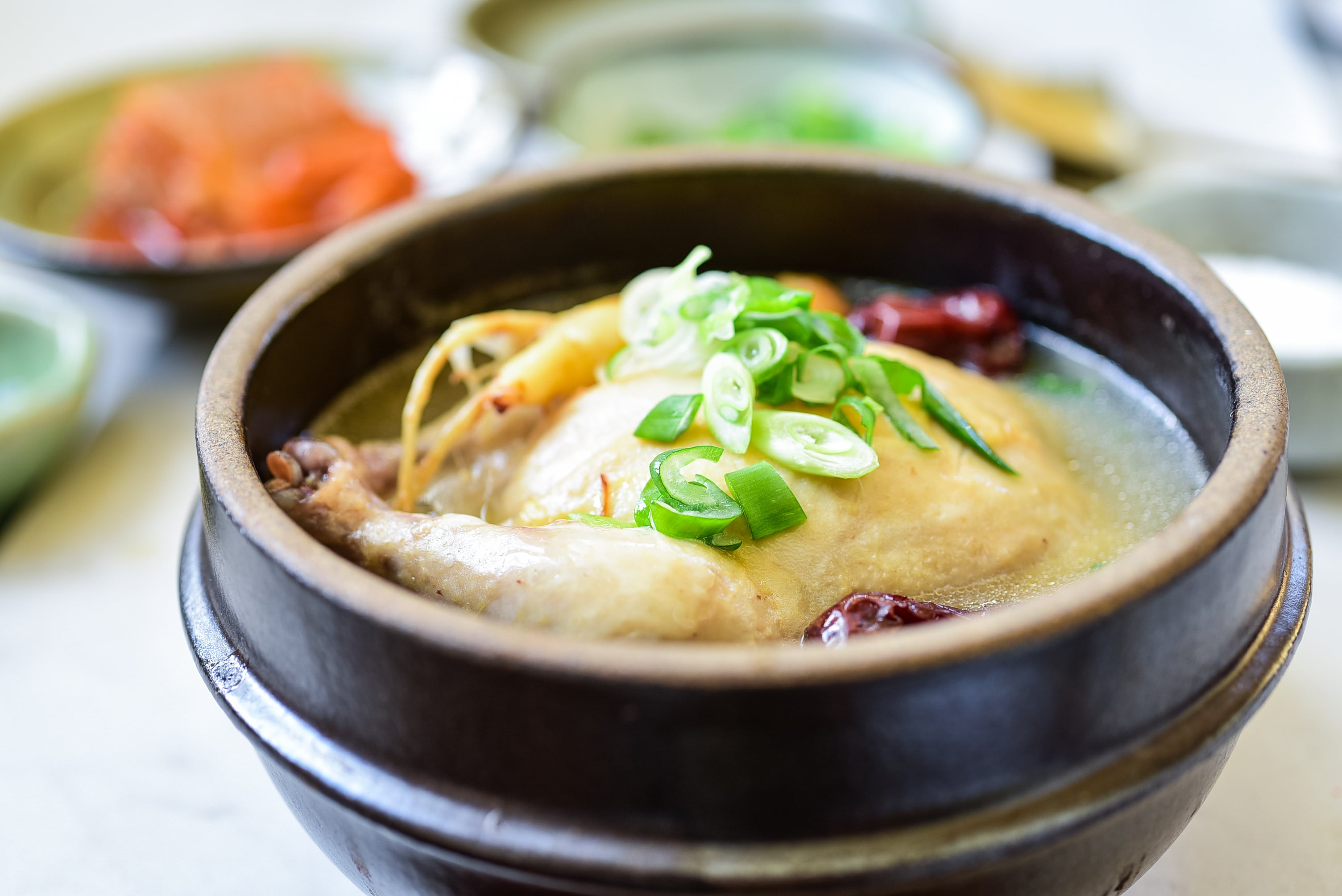
The dish is also known for its refreshing and nourishing properties, which help combat fatigue, improve circulation, and boost immunity. The soup is low in calories and high in protein, making it a healthy and satisfying meal.
Samgyetang is a delicious and nourishing soup that is perfect for the summer. Its therapeutic properties, warming effect, and satisfying flavors make it a beloved and enduring part of Korean cuisine.
Mulhoe
Mulhoe is a spicy cold raw fish soup perfect for a refreshing summer meal. The dish features thinly sliced raw fish, vegetables, and a spicy chili pepper sauce. It is typically served with a side of rice or thin somyeon noodles and helps cool the body down during the hot summer months.

Mulhoe is typically served with side dishes like sliced scallions, shredded lettuce, and sliced pear or cucumber. The dish can also be topped with a dollop of gochujang for extra spiciness.
The dish is believed to have originated in the coastal regions of Korea, where fresh fish was abundant. Over time, it spread throughout the country and became a popular summer dish, especially in port cities like Pohang and Sokcho.
Kimchi Guksu
Kimchi Guksu is a cold spicy noodle dish made with kimchi, the traditional Korean fermented vegetable. The dish is typically made with thin wheat noodles called somyeon, but can also be made with buckwheat or sweet potato noodles. The noodles are tossed with a spicy sauce made from gochujang (Korean chili pepper paste), kimchi juice, vinegar, sugar, sesame oil, and garlic.
Kimchi Guksu is a relatively modern dish that has only existed for a few decades. It is believed to have originated in the Gangwon province of Korea, where cold noodle dishes are popular due to the region's hot and humid summers. The dish was created to combine the refreshing and cooling effect of cold noodles with the spicy and tangy flavor of well-fermented kimchi. Today, Kimchi Guksu is enjoyed throughout Korea and has become a beloved summer dish for locals and visitors alike.
Jap-Chae
Jap-Chae is a stir-fried noodle dish made with sweet potato glass noodles and a colorful mix of vegetables, and can be served with marinated beef. The dish is often served at room temperature or slightly chilled in summer and is seasoned with soy sauce, sesame oil, and a touch of sugar. It is a popular meal enjoyed throughout Korea.
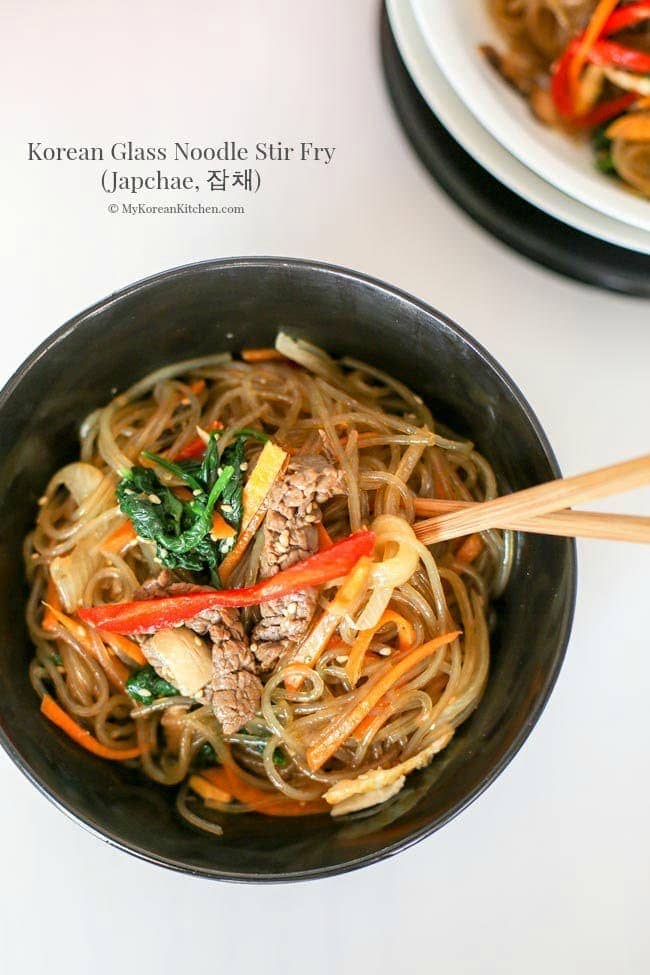
Jap-Chae has a long history and is believed to have originated in the royal palace during the Joseon Dynasty (1392 to 1910). The dish was initially known as japchae, which means mixed vegetables in Korean. It was served as a side dish during royal banquets and was made with various ingredients such as vegetables and meat. Glass noodles were added later in the early 1900s.
Over time, the recipe has evolved into a famous dish people from all walks of life enjoy. Jap-Chae is a staple of Korean cuisine, often served during special occasions, such as weddings and birthdays.
Doenjang Jjigae
Doenjang jjigae is a traditional Korean stew made with doenjang, a fermented soybean paste similar to miso. The stew is typically made with a variety of vegetables, such as onions, garlic, potatoes, and zucchini, and can also include tofu, mushrooms, or meat such as pork or beef. While it is enjoyed year-round, it is a great vegan-friendly summer option when made with vegetable stock and seasonal squash.
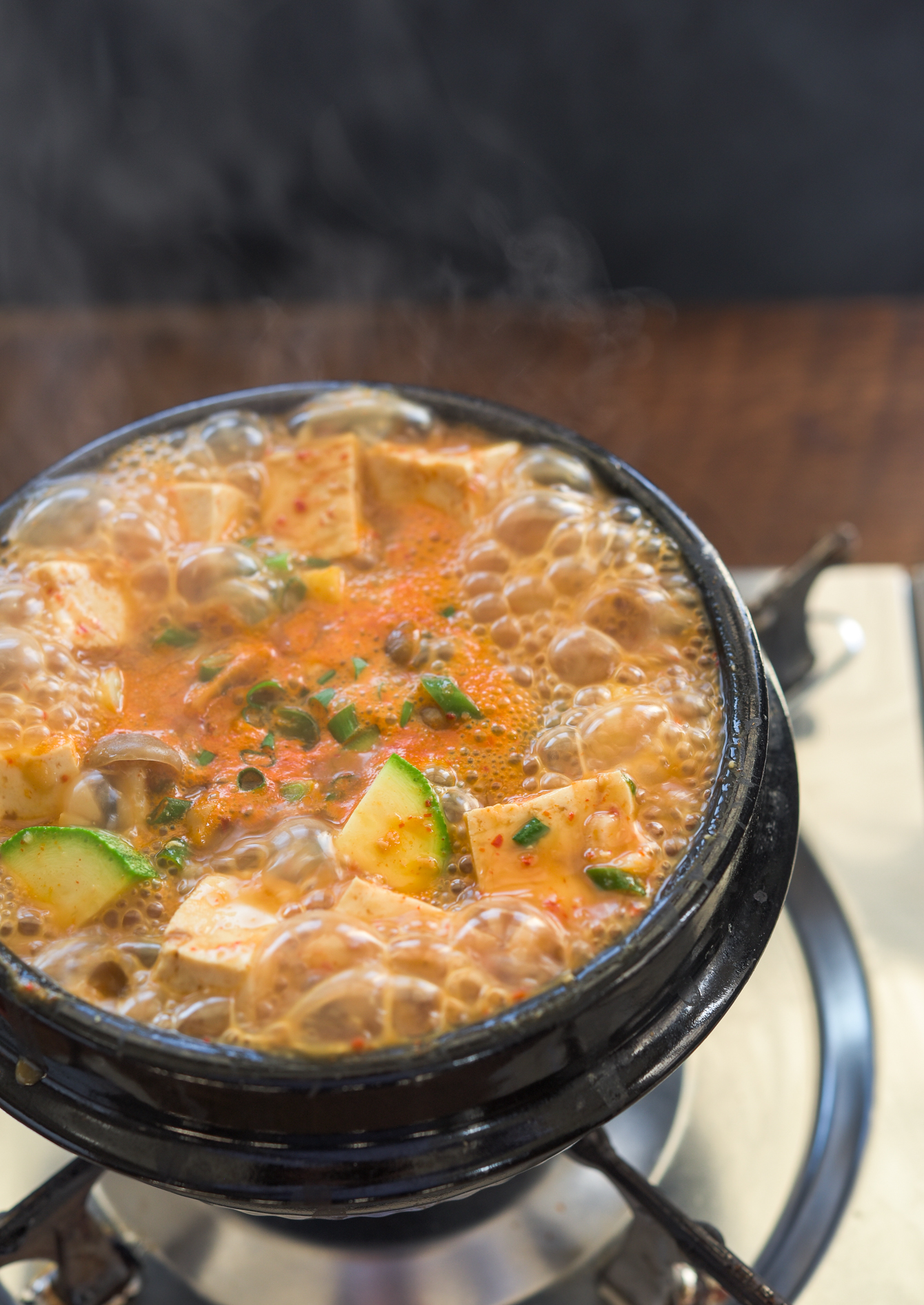
One of the reasons why doenjang jjigae is a popular dish in Korea is its health benefits. Doenjang is high in protein, fiber, and antioxidants and is believed to help improve digestion, boost the immune system, and promote overall health and well-being.
During the Joseon Dynasty, doenjang jjigae was a popular dish among the common people due to its affordability and availability. The stew was typically made with leftover vegetables and meat and was considered a humble but hearty meal. Over time, doenjang jjigae has evolved and been refined, with various vegetables and meats added depending on the season and region.
Grab a Bite!
Traditional Korean dishes are a great way to beat the heat during the summer months. Many options exist whether you are looking for a refreshing cold soup, a chewy noodle bowl, or a savory stew. Try some of these delicious traditional dishes next time you are craving a refreshing meal that captures the spirit of a Korean summer.
Explore Korean Snacks with Daebak
Love Korean food? Get authentic Korean snacks and ramen delivered straight to your door with the SnackFever Box by Daebak.


