


Table of Contents
Here is the statistic that reframes almost every conversation about Seoul as an urban destination. Roughly 27 percent of Seoul's land area is classified as green space, a figure the Seoul Metropolitan Government publishes and that comfortably outpaces Tokyo (around 15 percent) and New York City (around 20 percent). For a metropolis of 10 million residents wedged between mountains and a wide river, that number is not accidental. It is the product of a very deliberate 20-year pivot in which Seoul stopped treating parks as leftover land and started treating them as core infrastructure, on the same policy tier as subways and 5G. I have watched Korean tourism boards pitch this story to international sustainable-travel juries for years, and it is genuinely the best-kept "why Seoul" line the city has, even though most first-time visitors still arrive expecting only palaces, K-pop, and neon.
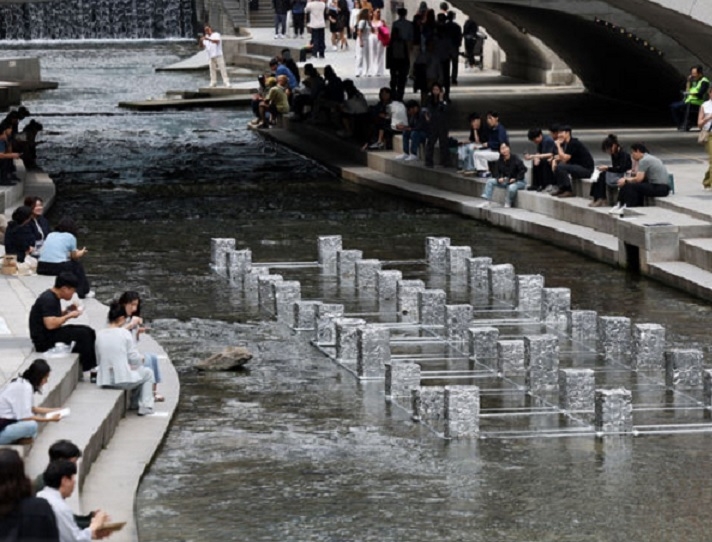
Cheonggyecheon: when Seoul chose the stream over the highway
If you want the one project that explains Seoul's whole green shift, it is 청계천 (Cheonggyecheon). From 1958 to the 1970s, the 5.8-kilometer stream that had run through the old capital since Joseon times was paved over and topped with the Cheonggye Elevated Highway, a symbol of Park Chung-hee era industrial modernization. In 2003, then-Mayor Lee Myung-bak (yes, the future president) staked his political career on tearing the highway down and daylighting the water again. The restoration cost roughly 386 billion won, which converted to about 900 million US dollars at the time, and finished in 2005.
The read on why this matters is not sentimental. Cheonggyecheon proved to Seoul City Hall that removing a piece of car infrastructure could actually raise property values and pull tourists in, not the opposite. Post-restoration, Seoul Facilities Corporation surveys have counted 33 fish species and eight times more fish overall than the pre-restoration baseline, including the shiri, a native species that only survives in clean, oxygen-rich water. That biology matters because it converts an abstract "we planted trees" claim into a hard number that international tourism-award juries can cite. Walk it at dusk in July and you will see office workers eating convenience-store meals with their feet in the water, which is a very Seoul kind of civic reward.
Namsan: the green heart hiding inside a 10 million person city
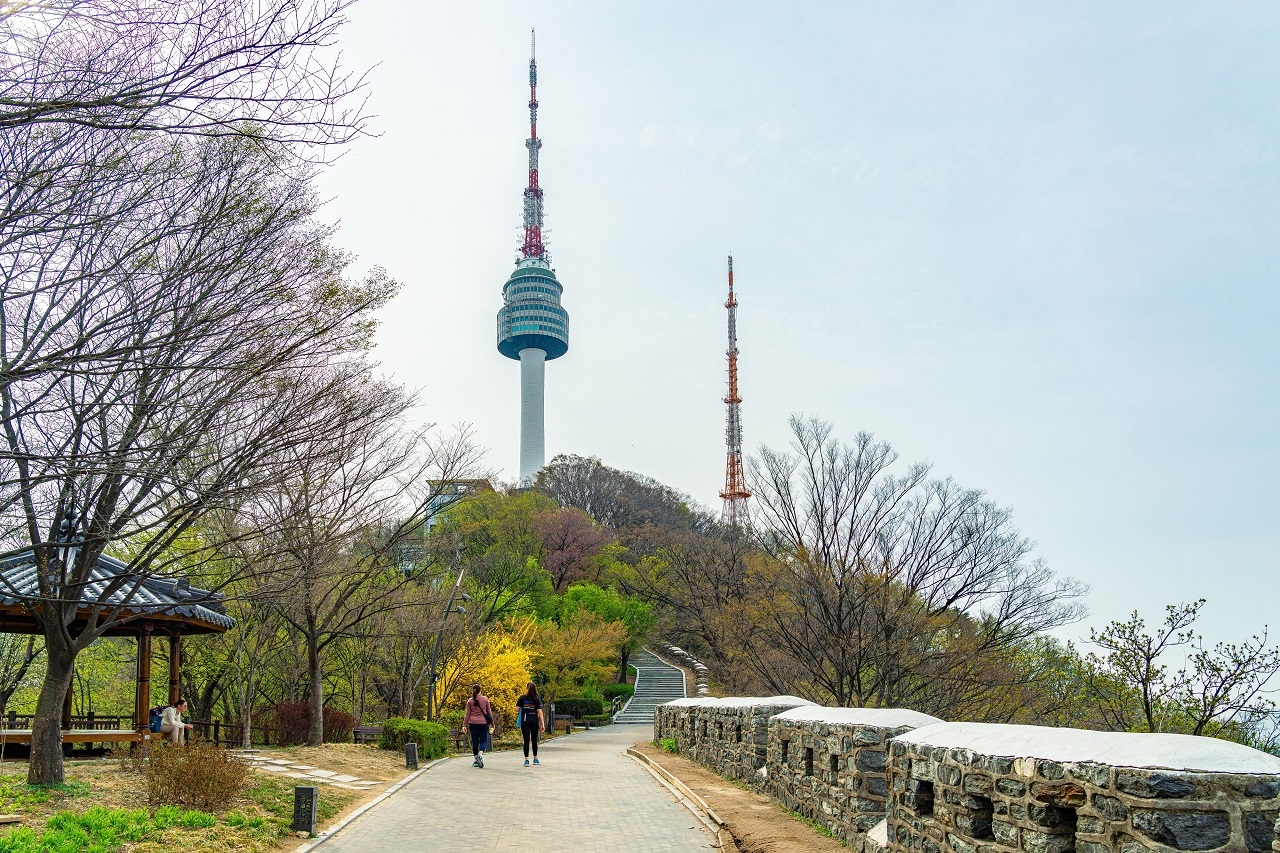
남산 (Namsan) is the mountain you see behind every downtown Seoul skyline shot, crowned by the red-and-white N Seoul Tower. What tourists miss is that Namsan is basically a full mountain park sitting inside Jung-gu, one of the most expensive commercial districts in the country. Namsan Park recorded the highest ratio of positive online mentions of any Seoul city-run park in 2024, per a Seoul AI Foundation analysis, and it ranked fifth by total mentions. That sentiment gap is the interesting number: people talk about Namsan less than trendier parks, but when they do, they overwhelmingly like it.
The appeal here is very specific and often mis-sold. Namsan is not really a hike, it is a walking loop. The Namsan Dulle-gil circles the mountain in about 8 kilometers of paved and boardwalk paths that you can join at any point, and locals treat it like a treadmill with a skyline. Cherry blossoms hit later than lower-lying Yeouido, which is a small hack most K-drama tour packages do not tell you: if you miss peak Yeouido bloom by three or four days, Namsan is often still going. The Seoul Metropolitan Government also announced in late 2025 that it wants to build a 5-minute automated tram to the Namsan summit by 2030, part of a broader push to make Namsan more accessible to elderly and disabled visitors. That accessibility upgrade is what separates a green space that ages well from one that quietly becomes a rich hikers' club.
Seoul Forest: the racetrack that became the Seongsu-dong lung
서울숲 (Seoul Sup, literally Seoul Forest) is the park I would take a first-time visitor to if they only had one afternoon. Opened on June 18, 2005 on 595,000 square meters of what was previously a royal hunting ground, then a Japanese-era horse racetrack, then a water treatment facility, Seoul Forest is Seoul's most talked-about park online, hands down: 33.7 percent of all 2024 mentions of city-run parks, a wide margin over second-place Yeouido at 10 percent. That is not a fluke of park design. It is a location dividend. Seoul Forest sits directly next to Seongsu-dong, the industrial-turned-fashion-district that houses every Korean pop-up you have seen on Instagram since 2023, from Nike labs to indie coffee brands.
The industry mechanic worth understanding: parks in Seoul now function as retail traffic infrastructure. When Musinsa, ADER Error, or a Blackpink solo drop opens a Seongsu-dong pop-up, part of the pitch to brands is "your customers can walk off after and be in Seoul Forest in three minutes." That is why the keyword cluster around Seoul Forest online is "cafe," "walk," "friends," "evening," rather than "trails" or "nature." It is an everyday third space, closer in role to Brooklyn's Domino Park than to Central Park. If you want the postcard photo, the Metasequoia grove and Mirror Lake are the two backdrops K-drama location scouts keep returning to, most recently for scenes shot around Seongsu cafe alleys.

Han River parks: the picnic infrastructure that defines the Seoul weekend
한강공원 (Hangang Gongwon) is not one park. It is 11 riverside parks strung along both banks of the Han River, connected by continuous bike paths, and this network is arguably the single piece of Seoul urbanism most responsible for the "Seoul is livable" narrative that pushed the city onto every 2020s expat top-10 list. Yeouido, Banpo, Ttukseom, Nanji, Mangwon: each has its own personality. Yeouido is the cherry blossom circuit and the political heart, with the National Assembly nearby and roughly 1,800 to 1,900 cherry trees lining the 1.7-kilometer Yunjung-ro boulevard. Banpo has the Moonlight Rainbow Fountain, holder of a Guinness record for world's longest bridge fountain at 1,140 meters. Nanji and Mangwon are the BBQ-and-boat parks where families spend Saturdays.
The unwritten local ritual you should copy is 치맥 (chimaek), fried chicken plus beer, ordered by phone from a Baemin driver who will meet you on the grass and hand it over. This delivery-to-park behavior is quietly one of the biggest reasons Han River parks feel so alive: Korea's food delivery infrastructure treats a picnic mat GPS pin as a legitimate address. That is the kind of small operational detail that global city planners actually visit Seoul to study. If you want the calmest Han River experience, head to Seonyudo, a former sewage treatment plant on an island in the middle of the river that was converted into an ecological park in 2002 and is still a designer's reference for adaptive reuse.

Bukhansan: the only major world capital with real wilderness inside city limits
Now the wild card. 북한산 (Bukhansan) is a 76.9 square kilometer national park whose southern half sits inside Seoul city limits, and there is no other G20-tier capital that can honestly claim a full national park inside its boundary the way Seoul can. Bukhansan National Park, designated in 1983, is home to more than 1,300 species of plants and animals, three named granite peaks (Baegundae at 836.5 meters, Insubong at 810.5 meters, and Mangyeongdae at 799.5 meters), the Bukhansanseong Fortress originally built under King Sukjong of Joseon, and, on its busiest weekends, so many hikers that it has been referenced as the Guinness-record holder for most visited national park per square unit of area.
The appeal-point people underestimate: Bukhansan is not just a park you can visit, it is a park you can visit on a random Tuesday morning without leaving town. Subway Line 3 to Gupabal Station or Line 4 to Bukhansan Ui Station drops you at trailheads in 40 minutes from Myeongdong. The Baegundae route to the summit is a 6-hour round-trip up genuinely exposed granite that most casual hikers find harder than Yosemite's Half Dome cables at the top, so wear real shoes. If that sounds intense, the Bukhansan Dulle-gil is a 71-kilometer necklace of 21 flat sub-trails that circles the park at the base and can be done in 90-minute chunks. Autumn foliage peaks late October to mid-November, and this is when Korean office workers actually take vacation days.
Why Seoul is now marketing this globally, and why it's working
Here is the industry piece most travel writers skip. The Korea Tourism Organization and Seoul Metropolitan Government have been running a very coordinated pitch to international sustainable-tourism juries since around 2018, when Seoul first started collecting global recognition for the Cheonggyecheon restoration and the Han River Renaissance master plan. The city's 2024 announcement of a plan to build 2,000 kilometers of "green corridors" over five years, connecting existing forests, parks, gardens, and even 120 meters of "below-forest paths" inside subway stations, is not just an urban planning document. It is a marketing document, and the target audience is future residents of the "workation" economy plus international award juries at WTM and PATA.
The judgment call I would make if you are planning a trip: skip trying to do all five of these in one visit. Pick two. Cheonggyecheon plus Seoul Forest gives you the whole story of Seoul's post-industrial reinvention in a single afternoon and evening. Namsan plus a Han River park gives you the classic postcard plus the local weekend ritual. Bukhansan is a full day and it deserves that day. What you get from any of these combinations is the version of Seoul that the city itself is quietly proudest of, and it is not the version that showed up in most K-content until very recently. That is starting to change: recent K-drama shooting schedules have moved location scouts into these parks specifically because the industry finally realized global viewers want to see "livable Seoul," not just "shiny Seoul."
Explore More of Korea with Daebak
Want to bring a little piece of Korea into your life? The Daebak Box is packed with the best Korean snacks, ramen, and cultural goodies delivered monthly to your door.


