


Table of Contents
Long before plant based menus, oat lattes, and climate friendly cookbooks took over the West, Korean Buddhist monks were already perfecting a quiet, deeply considered form of vegan cooking inside mountain temples. They called it sachal-eumsik (사찰음식), literally temple food. It is one of the oldest continuously practiced vegan traditions in the world, refined for more than 1,700 years in monasteries where every meal is treated as a spiritual practice rather than a routine.
Today, sachal-eumsik is having a global moment. Netflix's Chef's Table introduced Venerable Jeong Kwan of Baekyangsa Temple to millions of viewers, Seoul's Balwoo Gongyang holds a Michelin star, and the Korea Heritage Service is reviewing temple food for National Intangible Cultural Heritage status. Yet at its heart, the cuisine still answers a simple question that Korean monks have been asking for centuries: how do we eat in a way that is gentle to our bodies, to other beings, and to the seasons around us?
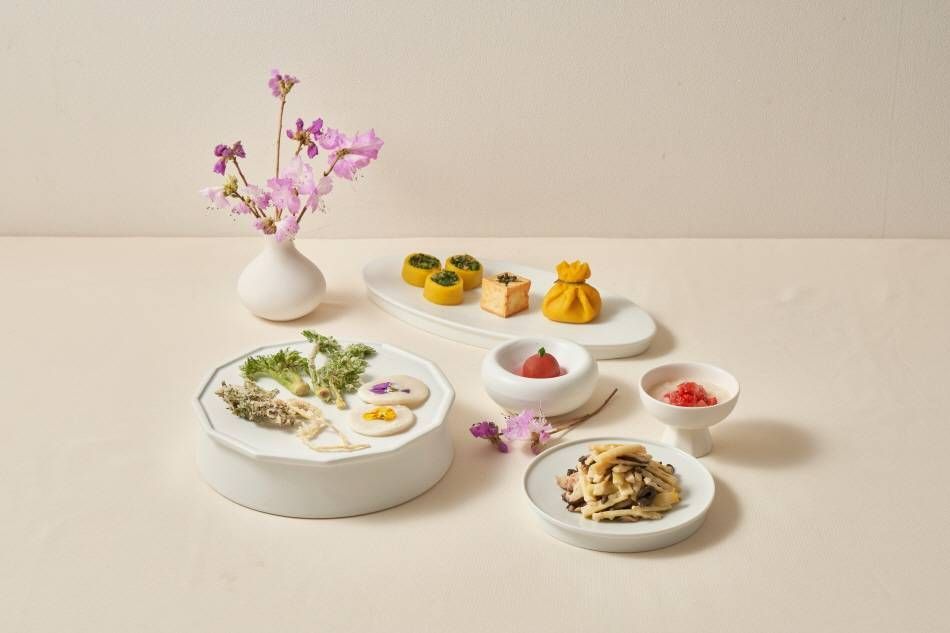
What Defines Korean Temple Food (Sachal-Eumsik)
Korean Buddhist temple food is defined first by what it leaves out. It uses no meat, no fish, and almost never any dairy, in keeping with the Buddhist precept of non-killing. Eggs, animal stocks, and broths from bones or seafood are all excluded. The umami and depth come instead from dried shiitake mushrooms, kelp (dasima), perilla seeds, soybeans, and slow fermented soybean paste (doenjang) and soy sauce (ganjang) that some temples have been brewing for decades.
The second defining rule is the avoidance of the five pungent vegetables known as oshinchae: garlic, green onions, chives, leeks, and scallions (sometimes wild chives or Chinese squill, depending on the lineage). Korean Buddhism teaches that these vegetables agitate the senses and disturb the calm needed for meditation, so they are kept out of every temple dish. The result is food that is clean, mild, and built around the actual character of each ingredient.
The Philosophy Behind Every Bowl
Sachal-eumsik is rooted in three ideas. The first is ahimsa, non-harm to living beings, which is why temple cooking is fully plant based. The second is the idea that food should be gentle on the body, neither too rich, too spicy, nor too stimulating, so the body remains calm enough for long hours of practice. The third is harmony with the seasons: monks cook with what mountain forests, gardens, and tidal flats are offering that week, never with imported luxuries.
This philosophy shows up at the table as well. Traditional monastic meals follow balwoo gongyang, a quiet ritual where each monk receives only as much food as they will eat, eats in silence, and washes their own four nested bowls with water that they then drink. Nothing is wasted. As Ven. Jeong Kwan has put it in interviews, the goal is to eat just enough energy for one day, then empty everything out and begin again, a practice that connects food directly to mindfulness and to the climate question of how much any of us really need.
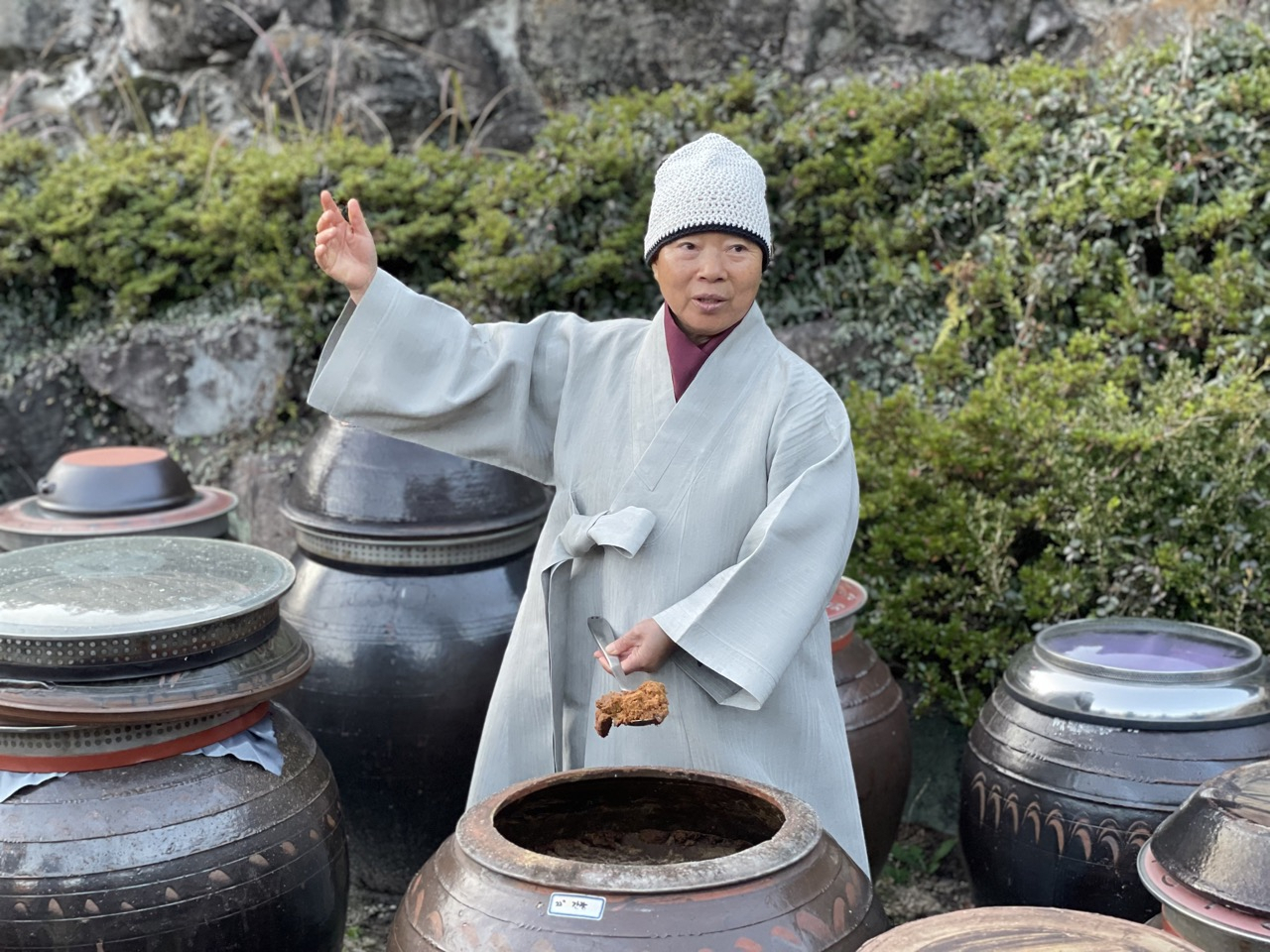
Jeong Kwan Sunim: Korea's Most Famous Temple Food Master
If sachal-eumsik has a global ambassador, it is Venerable Jeong Kwan, a Buddhist nun who has cooked at Chunjinam Hermitage inside Baekyangsa Temple in Jangseong County, South Jeolla Province, for more than 50 years. Famed French chef Eric Ripert of Le Bernardin visited her in 2015, invited her to cook in New York, and helped trigger the international curiosity that led to her 2017 episode on Netflix's Chef's Table.
Since then, she has been awarded the Asia's 50 Best Restaurants Icon Award in 2022 and has guest cooked everywhere from Yale University dining halls to high end festivals across Europe. Her dishes look simple, often just shiitake mushrooms braised in grain syrup, lotus leaf rice, or wild greens with fermented bean paste, but every ingredient passes through her hands and through one of the dozens of soy sauce and doenjang jars she has tended for decades.
Iconic Korean Temple Dishes to Know
Korean temple cuisine is far from monotonous. Across the seasons and across temples, several signature dishes turn up again and again on monastic tables and at temple food restaurants:
- Yeonnipbap (lotus leaf rice): glutinous rice steamed inside a fragrant dried lotus leaf with chestnuts, jujubes, ginkgo nuts, and pine nuts, often considered the centerpiece of a temple meal.
- Beoseot jeongol (mushroom hot pot): a clear, vegetable based hot pot built around shiitake, oyster, king oyster, and enoki mushrooms, simmered with kelp broth and tofu instead of meat or seafood.
- Sanchae banchan (seasonal mountain vegetable side dishes): an ever changing parade of namul made from fern bracken, bellflower root, mugwort, perilla leaves, and other wild greens, lightly seasoned with sesame oil and soy sauce.
- Jat juk (pine nut porridge): a silky porridge of finely ground pine nuts and rice, traditionally served as a gentle restorative dish and a favorite winter offering at temples.
- Ssambap (temple wraps): rice and seasoned vegetables wrapped in perilla, lettuce, cabbage, or pickled radish leaves, often paired with mild ssamjang made without garlic or scallions.
- Buggak and jangajji (crispy fritters and pickles): dried laver, perilla leaves, or kelp coated in glutinous rice batter and lightly fried, plus long aged soy pickles that show off the temple pantry.
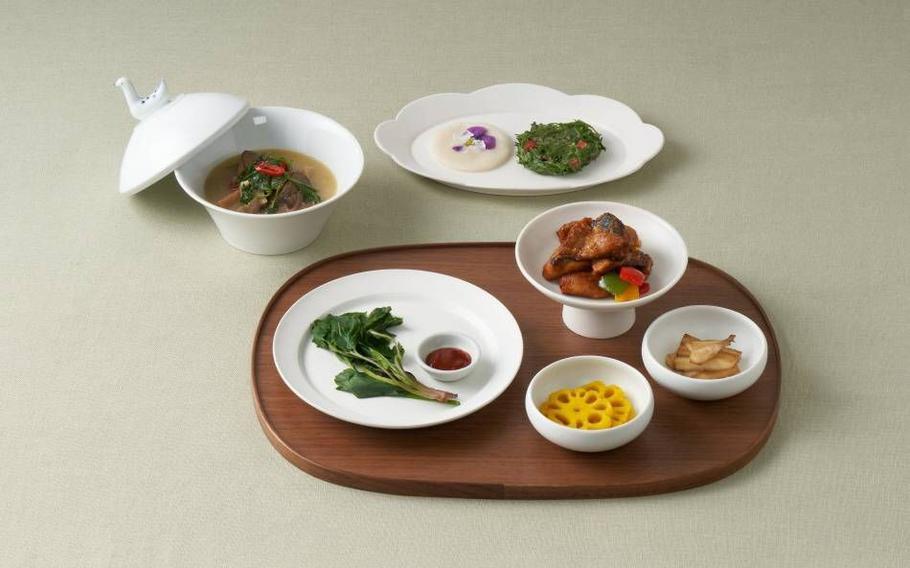
Where to Eat Temple Food in Seoul
You do not need to enter a monastery to taste sachal-eumsik. Seoul has a small but serious cluster of temple cuisine restaurants that translate monastic cooking into accessible courses for diners.
- Balwoo Gongyang: located on the 5th floor of the Templestay Information Center across from Jogyesa Temple in Jongno, this is the only restaurant directly operated by the Jogye Order, the country's largest Buddhist denomination. It earned a Michelin star and serves four signature courses named Seon (Meditation), Won (Vow), Maeum (Mind), and Hee (Joy), each built around clean, seasonal dishes such as crispy mushroom gangjeong.
- Sanchon, Insadong: tucked into a quiet alley off Insadong's main street, Sanchon was founded by Kim Yeon Shik, a former Buddhist monk, and serves a long set course of mountain herbs and seasonal vegetables inside a softly lit hanok dining room with traditional Korean dance performances in the evenings.
- Doore Yangchon: a long running temple cuisine restaurant favored by chefs and travelers who want a more home style spread of namul, jeon, and stews than the formal Balwoo Gongyang course, with menus that change with the seasons.
Temple Stay Food Experiences Around Korea
For travelers who want the full ritual, Korea's Templestay program lets you eat exactly what the monks eat, in the same disciplined balwoo style. A few temples are especially famous for their food.
Baekyangsa Temple in Jangseong runs a dedicated temple cuisine program with Ven. Jeong Kwan, where guests share dishes prepared from her own jangdok jars and listen to her teachings on food, climate, and self knowledge. Donghwasa Temple in Daegu offers a Making and Tasting Healthy Temple Food experiential program, where you actually cook namul and other temple dishes with resident monks before a forest walk. Beopjusa Temple at the foot of Songnisan Mountain in North Chungcheong Province pairs its mountain setting with seasonal vegetable based meals that highlight wild greens and fermented sauces. Magoksa Temple in Gongju, a UNESCO listed mountain monastery, includes simple Buddhist meals as part of its templestay alongside meditation and prostrations.
From Monasteries to a Global Food Trend
Korean temple food sat quietly inside mountain monasteries for most of its 1,700 year history. The turning point came around the 1988 Seoul Olympics, when sachal-eumsik was introduced to international visitors as a refined cuisine. The Cultural Corps of Korean Buddhism under the Jogye Order then began promoting it overseas, sending masters such as Ven. Seonjae to lecture at Le Cordon Bleu, the Culinary Institute of America, and global events in cities from Paris to San Francisco.
Today, temple food sits at the center of a wider K-vegan boom. Korea's plant based food market has grown sharply over the past decade, with younger Korean diners embracing meat free eating, fermented foods, and locally grown ingredients, the exact values that monastic kitchens have practiced for centuries. The Korea Heritage Service is reviewing temple food for designation as a National Intangible Cultural Heritage, and the Korea Temple Food Center in Anguk, Seoul, now hosts cooking classes, exhibitions, and tasting menus for both Korean and international visitors.

Why Korean Temple Food Resonates Now
The Netflix Chef's Table effect, the Michelin recognition for Balwoo Gongyang, the rise of vegan and plant based diets, and a global hunger for slower, more meaningful eating have all collided in temple food's favor. Sachal-eumsik does not need new marketing language. It already practices what current food writing tries to teach: seasonality, zero waste, fermentation, mindful eating, and a quiet respect for the body and for non-human life.
The best part is that the cuisine is not locked inside monasteries. A weekend templestay at Baekyangsa or Magoksa, a Michelin course at Balwoo Gongyang, a tasting at Sanchon, or even a single class at the Korea Temple Food Center can give you a direct taste of how Korean monks have been eating, peacefully and intentionally, for 1,700 years.
Explore Korean Snacks with Daebak
Love Korean food? Get authentic Korean snacks and ramen delivered straight to your door with the SnackFever Box by Daebak.


