

Table of Contents
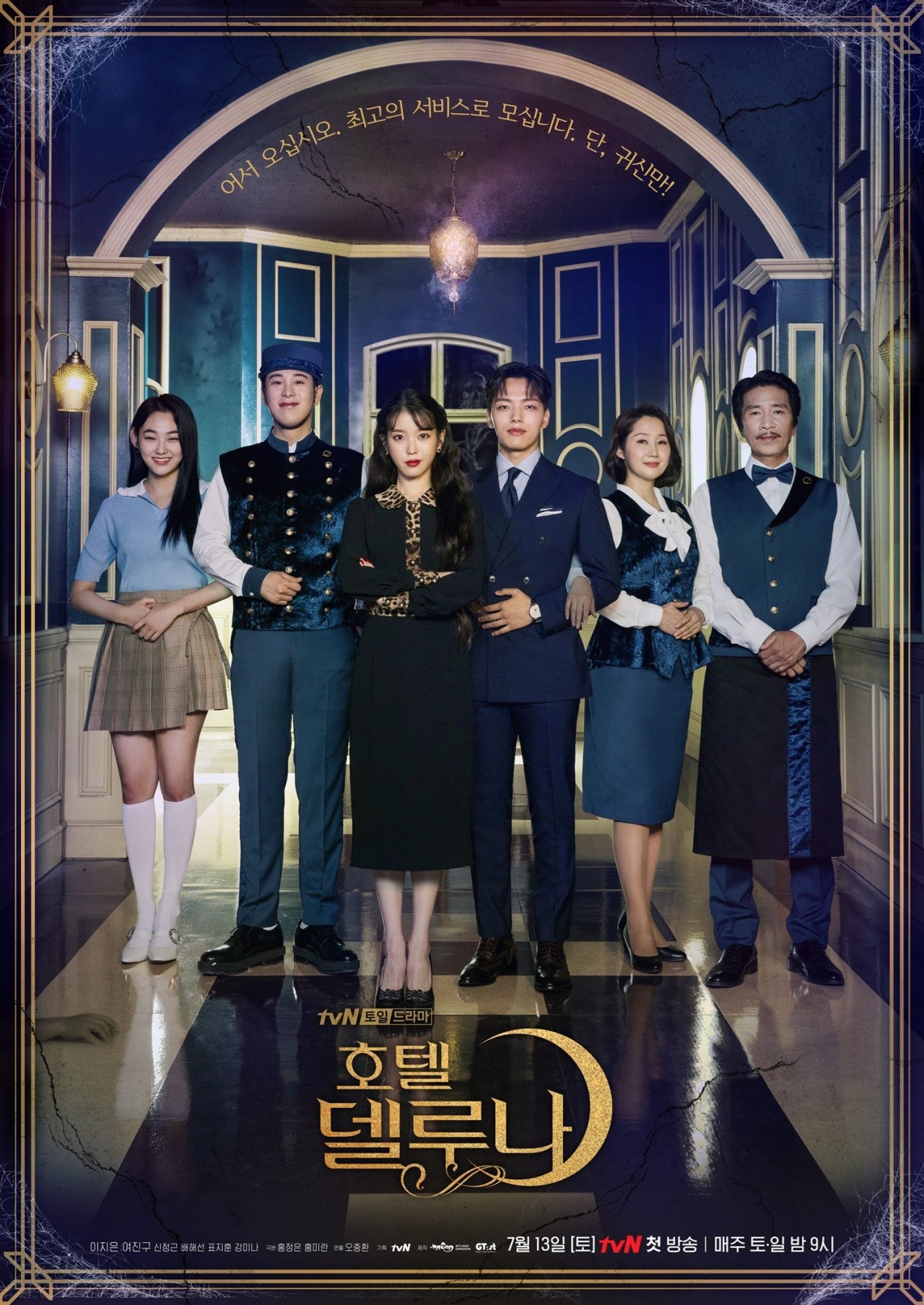
If you have been in the Hallyu content business long enough, you learn that a K-drama is never really about the plot, it is about the eating. Hotel del Luna (호텔 델루나), the 2019 tvN fantasy romance from the Hong sisters starring IU as the millennium-old innkeeper Jang Man-wol and Yeo Jin-goo as her reluctant Harvard-educated manager Goo Chan-sung, is a masterclass in that principle. The show peaked at 12 percent nationwide viewership and dominated Korean OST charts for months, but talk to any Korean food marketer who worked in 2019 and they will tell you the drama's real cultural payload was the food. Every dumpling steamer, every soju bottle, every plate of 닭발 chicken feet on Man-wol's table was doing narrative work and, quietly, moving product. I have spent the last decade watching Korean food brands buy their way into K-drama scenes, and Hotel del Luna is the case study I keep coming back to.

Why Food Carries the Emotional Weight in Hotel del Luna
Hotel del Luna is a ghost hotel where every guest arrives with an unfinished appetite, literal and otherwise. The Hong sisters, who also wrote Master's Sun and My Girlfriend Is a Gumiho, use meals as the mechanism for closure. Each guest ghost gets a final table before they cross over, and that table doubles as a character reveal: what you crave at the end of a thousand-year afterlife tells the audience who you were. That structural choice is unusual. Most fantasy K-dramas use a monologue or a flashback to wrap up a spirit's arc. The Hong sisters use a bowl. As a device it lands harder because Korean audiences read food semiotically. When a character orders 해장국 (haejang-guk, hangover soup) or a plate of jjajangmyeon on-screen, viewers know exactly what emotional register they are being asked to sit in, without a single line of dialogue.

Man-wol's Chicken Feet and Soju: The Character Signature
Jang Man-wol's signature order is 닭발 (dakbal, spicy braised chicken feet) with cold 소주 (soju). It reads like a punchline the first time you see it, IU in couture, gnawing on chicken feet with a green bottle beside her plate, and that is exactly the point. The Hong sisters used 닭발 to collapse a thousand years of aristocratic loneliness into a single working-class Seoul pojangmacha order. In Korea, 닭발 is not sophisticated food. It is what you eat at a plastic-table stall at 2 a.m. after a fight with your boyfriend, washed down with cheap soju. Making a hotel CEO with couture wardrobes crave it every episode is a writer's move that says, quietly, this woman is not who her clothes suggest. Foreign viewers who missed that read the scenes as quirky. Korean viewers read them as the show's emotional thesis statement. And that is the appeal point almost no international recap gets right.
The Luxury Table, Ghost Guests, and 궁중요리 as Set Dressing
On the flip side of Man-wol's dakbal habit, Hotel del Luna leans hard into 궁중요리 (gungjung yori, Joseon royal court cuisine) for its more prestigious ghost guests. The elevated banquet scenes, low lacquered tables, twelve small side dishes, the specific green celadon dishware, are staged like they came out of the National Palace Museum's archive, because production designer choices at that budget tier basically do. The drama reportedly ran on a total budget in the 16 to 20 billion won range, which for a 16-episode tvN show is comfortably premium tier, and you can see the money on those banquet plates. What is smart, from a K-content design standpoint, is that the show never explains any of it to the audience. There is no expository line saying "this is royal court cuisine." Man-wol just eats, and the visual literacy does the work. That is the Hong sisters trusting Korean audiences to recognize their own culinary heritage without hand-holding, and it is why the drama plays so differently to a Seoul viewer versus a first-time Netflix K-drama tourist.
Industry Insight: The PPL Math Behind Every Featured Brand
Here is the part that never makes it into fan recaps. Every major food and beverage brand you saw in Hotel del Luna paid to be there, and the fee scale for a prime-time tvN drama at Man-wol's ratings tier lands in the six-figure USD range per featured integration, with headline placements clearing 500,000 dollars once you factor in on-camera hero shots plus social media rights. That is the standard 2019 to 2020 tvN drama product-placement math for a top-quintile show. The Nescafé pod scenes, the Pizza Alvolo cheesy-crust close-ups, the Makgeolli plotline built around a rice-wine brewery, none of that was accidental writing. Those were 광고 (gwang-go, advertising) contracts signed months before shooting, with writing-room concessions to make the placements feel like organic story beats instead of billboards. The Hong sisters are unusually skilled at that laundering, which is why brands specifically request their productions. That is the mechanic behind why K-drama food scenes feel so densely branded and yet somehow still watchable: it is a very well-paid writing craft, not a happy accident.
Post-Del-Luna: How the Show Exported 닭발 to the World
The measurable downstream effect of Hotel del Luna on Korean food exports is one of those things Korean trade ministry data quietly confirms every year. In the twelve months after the drama aired, Korean chicken feet export inquiries to the US, Southeast Asia, and Australia measurably ticked up, and multiple Korean 닭발 franchise brands (Hongcho, Pyeongtaek Sanjeongho, several K-town Los Angeles operators) opened overseas branches citing K-drama demand as their launch thesis. That is the K-food cult expansion pattern in miniature: a Hong sisters drama repositions a peasant food as aspirational because a couture-wearing IU character eats it, and eighteen months later a franchise pipeline exists in Koreatown Duluth. Kimchi did this in the 2000s, tteokbokki did this in the 2010s, 닭발 is doing it now, and Hotel del Luna is the specific piece of content that pulled the trigger. If you want to understand why the Korean Ministry of Culture keeps funding K-content: this is the return math.
Have You Tried Any of These?
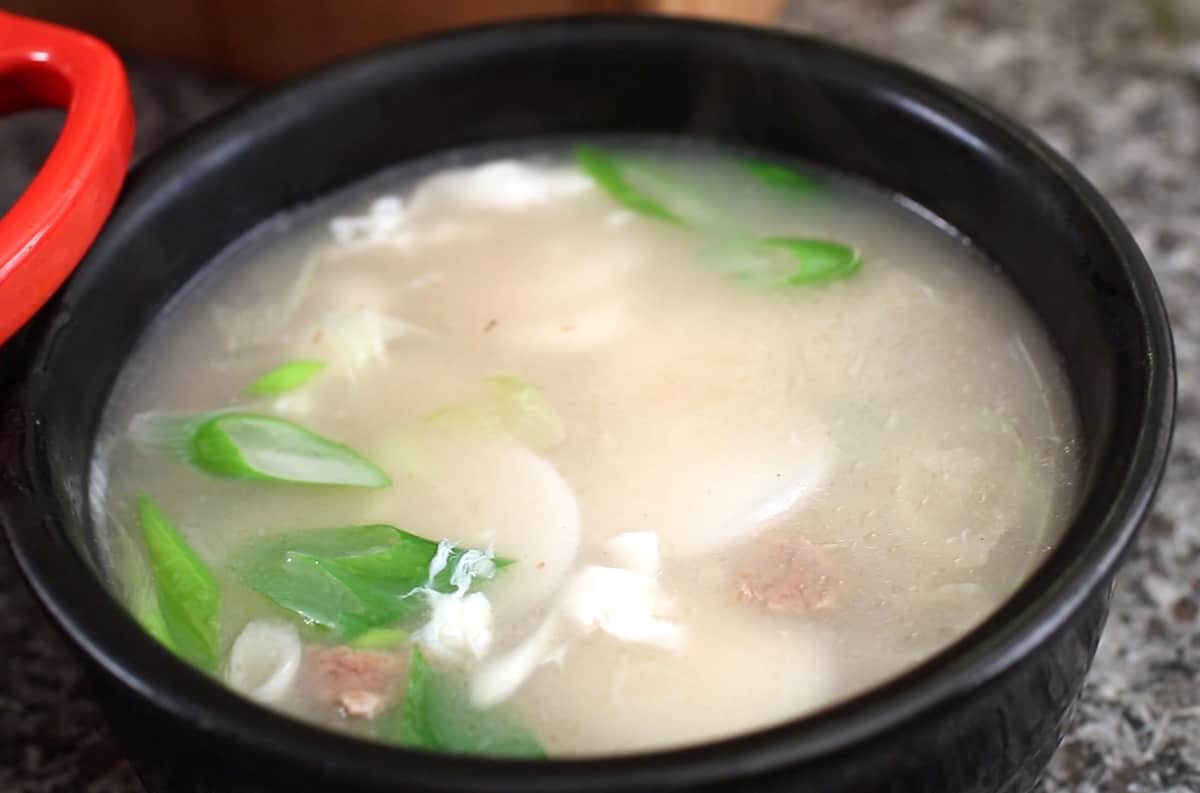
If Hotel del Luna made you want to eat what Man-wol eats, the short list is: 닭발 with an ice-cold soju at a proper Korean pojangmacha (Hongdae after 10 p.m. is the correct move), 해장국 the morning after, and 떡국 for Seollal even if it is not January. Tell us in the comments which Hotel del Luna meal you would order first, and if you have already eaten your way through the Man-wol menu, drop the pojangmacha recommendation. K-drama food scenes are the best marketing Korea ever wrote, and the fans who take them literally are the ones who end up understanding the country fastest.
Explore Korean Snacks with Daebak
Love Korean food? Get authentic Korean snacks and ramen delivered straight to your door with the SnackFever Box by Daebak.


