


Table of Contents
Korean dramas have become a global cultural force, drawing viewers in over 190 countries on Netflix alone. Behind every breakout hit, from Squid Game to Goblin to The Glory, sits a director or screenwriter whose voice has shaped how the world sees Korea. This guide introduces the auteurs whose work defines the modern K-drama era, the studios that back them, and the craft choices that make Korean television feel cinematic.

Hwang Dong-hyuk: The Visionary Behind Squid Game
Hwang Dong-hyuk is the writer, director, and creator of Netflix's Squid Game, the most-watched series in the platform's history with over 1.65 billion viewing hours in its first month. He wrote the script in 2009 while struggling financially, then waited a decade to find a partner willing to back the brutal premise. In 2022, he became the first South Korean to win the Emmy for Outstanding Directing for a Drama Series. Before Squid Game, his 2011 film Silenced sparked national legal reform in Korea, showing how his work has always blended commercial reach with social critique.
Bong Joon-ho: From Memories of Murder to Global Auteur
Though best known for film, Bong Joon-ho's influence runs deep through K-drama directing. Memories of Murder (2003), Mother (2009), and the Oscar-sweeping Parasite (2019) established the visual grammar of pitch-black comedy, slow pans, and meticulously framed class tension that countless K-drama directors now borrow. Parasite made him the first South Korean to win the Academy Award for Best Director and the first non-English film to win Best Picture. His most recent works, Mickey 17 and the upcoming animated feature Ally, continue to expand what Korean storytelling can look like on a global scale.
Park Chan-wook: Style as a Statement
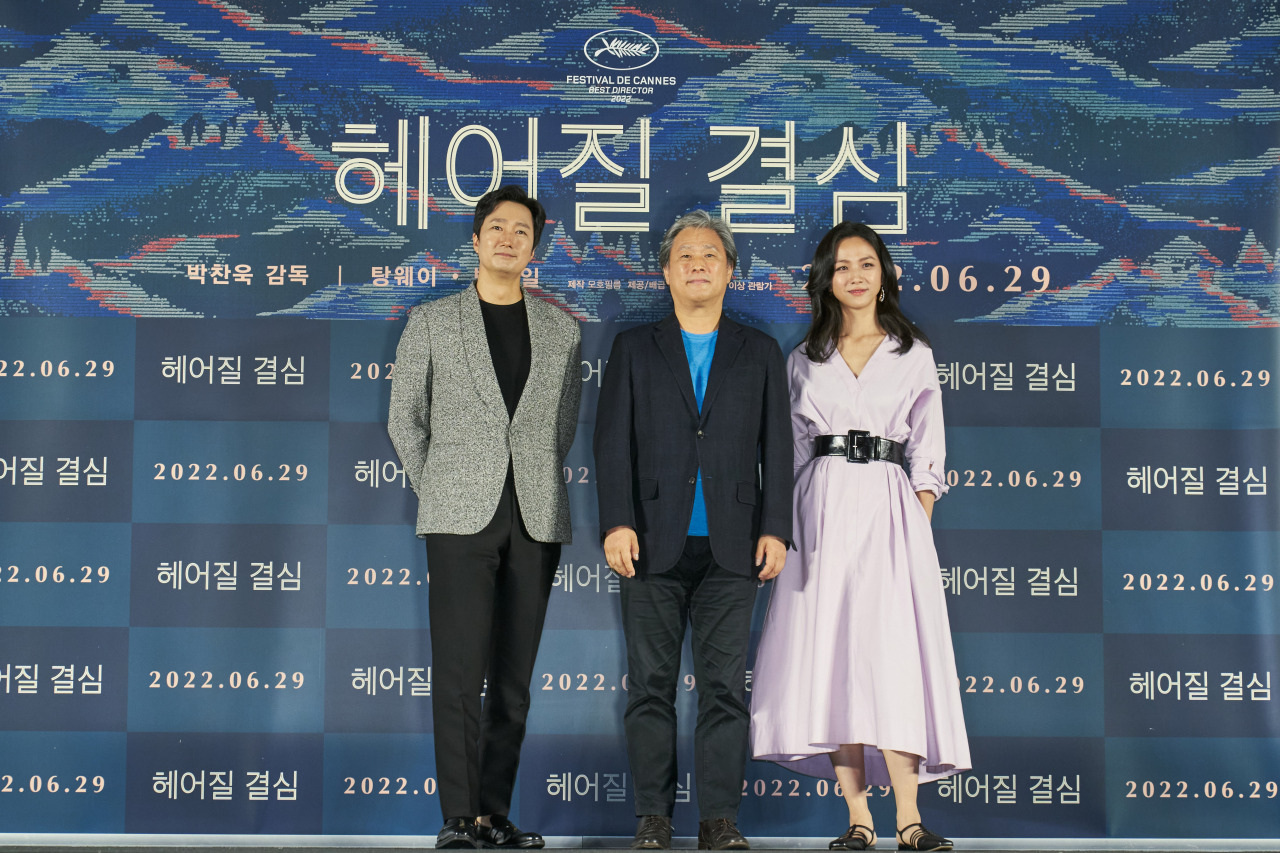
Park Chan-wook is the architect of the Vengeance Trilogy (Sympathy for Mr. Vengeance, Oldboy, Lady Vengeance), The Handmaiden, and Decision to Leave, which won him Best Director at the 2022 Cannes Film Festival. His patterned wallpapers, off-kilter framing, and tightly choreographed long takes have become reference points for prestige K-drama productions. Park has also moved into television, directing The Little Drummer Girl for the BBC and the upcoming Sympathizer for HBO, bringing his auteur sensibility directly into the long-form series world.
Lee Eung-bok: Studio Dragon's Flagship K-Drama Director
If one director defines the modern blockbuster K-drama, it is Lee Eung-bok. After joining Studio Dragon, he directed Descendants of the Sun (2016), Guardian: The Lonely and Great God, known globally as Goblin (2016 to 2017), Mr. Sunshine (2018), and Netflix's Sweet Home (2020). His signature is sweeping cinematic scale: slow snowfall, candle-lit interiors, period war scenes shot like feature films. Lee's reunions with screenwriter Kim Eun-sook have produced some of the most-watched romance dramas in the world.
Kim Eun-sook: The Queen of K-Drama Screenwriters
No screenwriter has done more to define modern K-drama than Kim Eun-sook. Her credits include Secret Garden (2010), The Heirs (2013), Descendants of the Sun (2016), Goblin (2016 to 2017), Mr. Sunshine (2018), and Netflix's revenge thriller The Glory (2022 to 2023), which trended in the top 10 in roughly 60 countries. Kim's signature is sharp dialogue, fated romance, and emotionally honest character studies wrapped in high-concept premises. Her partnership with Lee Eung-bok and Studio Dragon represents the most consistently successful writer-director combination in Korean television.

Park Hae-young, Lee Soo-yeon, and Yoo In-sik
Beyond the household names, a generation of writers and directors has shaped K-drama's prestige reputation. Screenwriter Park Hae-young is responsible for two of Korean television's most beloved works: the family epic Reply 1988 (2015) and the meditative My Mister (2018). Lee Soo-yeon wrote the critically acclaimed thriller Stranger, also known as Forest of Secrets (2017), praised for its tight legal procedural writing. Director Yoo In-sik has delivered hits across genres, including Romantic Doctor Teacher Kim, Dr. Romantic, and the global breakout Vincenzo (2021) starring Song Joong-ki.
Kim Won-suk: The Director of Quiet Masterpieces
Director Kim Won-suk has built a reputation for the most emotionally restrained, beautifully composed dramas in Korea. His credits include Misaeng (2014), the workplace drama that captured an entire generation of Korean office workers, the time-loop thriller Signal (2016), and My Mister (2018), often cited as one of the greatest Korean dramas ever made. Kim's directing is marked by long silences, naturalistic lighting, and an emphasis on small human gestures, a counterpoint to the heightened romance and action other directors favor.
What Makes K-Drama Directing Distinctive
Korean drama directing has developed a recognizable visual language. Cinematography leans into long lenses, shallow depth of field, and golden-hour color grading borrowed from Korean cinema. Pacing favors slow-burn emotional buildup over rapid plot delivery, giving characters time to breathe. OST integration is treated like score: songs are commissioned for specific scenes and become cultural moments in their own right, from Goblin's Beautiful to Crash Landing on You's Sweet Night. Episode-length flexibility, often 16 to 20 hours total, allows directors to develop arcs more like a long film than a Western series.
The Studio Dragon and SLL Creative Ecosystem
Two studios anchor the modern K-drama industry. Studio Dragon, a subsidiary of CJ ENM established in 2016, produces tvN and OCN content and supplied Netflix with Goblin, Mr. Sunshine, Vincenzo, and Sweet Home. SLL, formerly JTBC Studios, is Korea's other major scripted production house, behind My Mister, Itaewon Class, and the global hit The Glory. Both studios operate on a writer and director-driven model that gives auteurs unusual creative control, which is a key reason Korean television has produced so many distinctive voices in such a short span.
Explore More of Korea with Daebak
Want to bring a little piece of Korea into your life? The Daebak Box is packed with the best Korean snacks, ramen, and cultural goodies delivered monthly to your door.


