


Table of Contents
In less than three decades, South Korea has transformed from a country known mainly for its industrial exports into a global cultural superpower. The phenomenon driving this transformation has a name: Hallyu (한류), or the Korean Wave. Today it shapes how billions of people listen to music, watch television, eat, dress, and even imagine a country most have never visited.

What Hallyu Means and How the Term Was Born
The Korean word Hallyu literally translates to "Korean flow" or "Korean wave." It refers to the rising global popularity of South Korean culture, including dramas, pop music, film, food, beauty, fashion, and language. The word itself was coined in 1999 by journalists at the Beijing Daily, who were trying to describe the surprising appetite Chinese audiences had developed for Korean television dramas and music. Those reporters had no idea they were naming a movement that would soon stretch from Tokyo to Buenos Aires.
What began as a regional curiosity has become a strategic national asset. Hallyu is now studied in universities, supported by government ministries, and analyzed in quarterly reports tracking its economic and diplomatic impact.
Hallyu 1.0: K-Drama Sparks the First Wave (1999 to 2009)
The first phase of Hallyu was led by television. Korean broadcasters had spent the late 1990s producing emotionally rich melodramas, and these series found unexpected audiences abroad. The defining moment came in 2002 with the KBS drama Winter Sonata, a tender tale of first love starring Bae Yong-joon. When NHK aired it in Japan in 2003, the country fell in love. Middle-aged Japanese women adopted Bae as "Yonsama," some 3,000 of them famously rushed Narita International Airport to greet him in 2004, and Nami Island, where the show was filmed, welcomed more than one million visitors over the next decade.
Other dramas such as Autumn in My Heart, Dae Jang Geum, and Stairway to Heaven followed, embedding Korean storytelling across China, Taiwan, Vietnam, and the Philippines. By 2004, then-Japanese Prime Minister Junichiro Koizumi joked that Bae Yong-joon was more popular than he was.
Hallyu 2.0: K-pop Conquers Asia (2010 to 2015)
The second wave was musical. Girls' Generation, Wonder Girls, Big Bang, 2NE1, SHINee, and Super Junior pushed K-pop beyond Korea's borders into Japan, Southeast Asia, and parts of Latin America. Highly produced choreography, polished visuals, and tightly trained idol groups built a template that audiences had not seen elsewhere. The viral explosion of PSY's Gangnam Style in 2012, the first YouTube video to surpass one billion views, signaled to the world that K-pop was no longer a regional curiosity but a global format.

Hallyu 3.0: BTS, BLACKPINK, and the Global Breakthrough (2015 to 2020)
The third phase moved Hallyu from Asia to the world. BTS broke onto the Billboard 200, sold out stadiums from London to Sao Paulo, and addressed the United Nations General Assembly. BLACKPINK headlined Coachella, partnered with global luxury brands, and topped charts in the United States, Britain, and Australia. K-drama crossed over too: Bong Joon-ho's Parasite became the first non-English film to win Best Picture at the Academy Awards in 2020, and a year later Squid Game reached more than 111 million households on Netflix, becoming the platform's most watched series ever.
This was the phase in which the language of K-content was no longer translated for Western audiences. It was demanded by them.

Hallyu 4.0: K-Content as an Industry (2020 to Present)
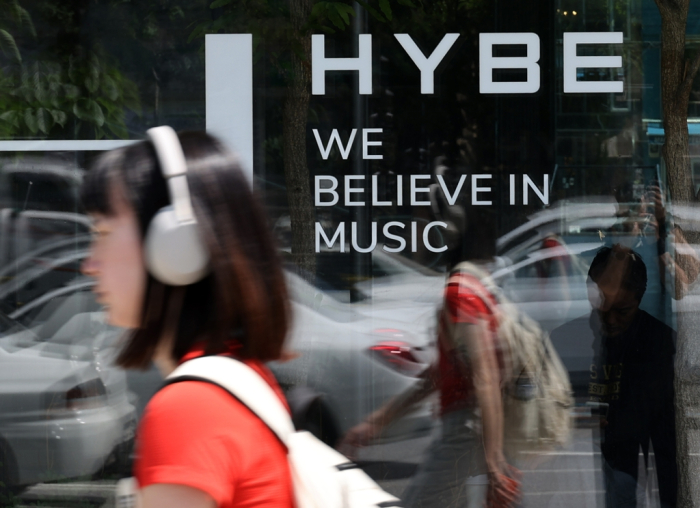
The current phase of Hallyu is defined by consolidation and infrastructure. Korean entertainment companies have become global businesses. HYBE, the agency behind BTS, became the first Korean entertainment firm to surpass 2 trillion won in annual revenue. SM Entertainment, JYP, and YG joined the publicly listed ranks, and their combined estimated 2025 revenue tops 4.8 trillion won, roughly 3.3 billion dollars. K-content is now an export category, not just a cultural trend.
Hallyu 4.0 also marks the diversification of interests. Audiences who came for K-pop are now reading Han Kang novels, learning Korean honorifics, eating tteokbokki, and booking flights to Jeju Island.
The Economic Footprint of Hallyu
The numbers behind the wave are remarkable. Cultural content exports from South Korea have grown into a more than 14 billion dollar annual industry, encompassing music, video, gaming, broadcasting, characters, and publishing. K-beauty cosmetics alone surpassed 1 billion dollars in shipments to Japan for the first time in 2024. K-food exports continue to set monthly records, propelled by viral Buldak ramyeon challenges and Squid Game cameos. Even Korea's intellectual property rights trade surplus has hit historic highs, driven by BTS, BLACKPINK, and global character businesses.
Hallyu is also a soft power asset. The Ministry of Culture, Sports and Tourism now treats it as a national brand strategy, on par with semiconductors and shipbuilding.
How the Korean Government Helped Build the Wave
Hallyu's rise was not purely organic. The Korean government has invested deliberately and consistently for more than two decades. Key institutions include the Korea Foundation, which promotes cultural exchange and Korean studies abroad; KOCIS, the Korean Culture and Information Service under the Ministry of Culture; KOFICE, the Korea Foundation for International Cultural Exchange, which funds and tracks global Hallyu activity; and KOCCA, the Korea Creative Content Agency, which finances K-pop, drama, gaming, webtoon, and animation production. Together they form a public framework that allows private creators to scale up.
Beyond K-pop and K-drama: K-beauty, K-food, K-fashion
Today, Hallyu is no longer a single product category. K-beauty pioneered the 10-step skincare routine and made glass skin a worldwide aesthetic. K-food has turned kimchi, gochujang, ramyeon, soju, and Korean fried chicken into staples of global supermarkets. K-fashion exports designer brands such as Andersson Bell, Ader Error, and Gentle Monster to international fashion weeks. Even Korean stationery, webtoons, and traditional crafts now ride on the same wave.

What Comes Next for Hallyu
The next chapter of Hallyu will likely be defined by intellectual property and technology. Korean studios are licensing their IP globally, from Squid Game's reality spin-offs to KPop Demon Hunters merchandising. Web3 platforms such as HYBE's Weverse are turning passive fans into engaged communities with photocards, voting, virtual concerts, and direct-to-fan commerce. As China gradually lifts its Hallyu ban after nine years, K-content is also poised to reclaim its largest historical market.
Hallyu started as a sentence in a Beijing newspaper in 1999. A quarter century later, it is the language through which the world reads, watches, listens, and tastes Korea.
Explore More of Korea with Daebak
Want to bring a little piece of Korea into your life? The Daebak Box is packed with the best Korean snacks, ramen, and cultural goodies delivered monthly to your door.


