


Table of Contents
If you have spent any time scrolling through Seoul cafe content on Instagram in the past few years, you have almost certainly stopped on the same image: a fat, golden scone or chewy ciabatta split open, with a glossy slab of dark red bean paste pressed against a wedge of cold cultured butter so thick it makes Americans gasp. That is ang butter (앙버터), and it is not just another bakery item. It is the dish that, more than any other, taught the global cafe-hopping crowd what Koreans mean when they say 단짠 (dan-jjan), the sweet-salty seesaw that has quietly become the most exportable flavor logic of the K-food wave.
What ang butter actually is, and why the name matters
Strip away the marketing and ang butter is just three ingredients: bread, sweetened red bean paste, and a cold cube of salted butter. But the framing is everything. "Ang" comes from the Sino-Japanese word for red bean paste, anko (餡) in Japanese, an in Korean, which is why purists still call the filling 팥앙금 (pat-anggeum) on the menu board. By smashing those two syllables into "butter," Korean bakers did something clever: they gave a centuries-old palate (red bean was already the soul of bungeoppang, hotteok, and patbingsu) a new, vaguely Western, social-media-ready name. That linguistic move alone explains a lot of why the trend traveled.
The flavor mechanic is what locks people in. Korean dan-jjan ("sweet-salty") is its own grammar of taste. There is no clean English equivalent, "salted caramel" gets close but misses the earthy, slightly nutty backbone red bean brings. Bite into a proper ang butter scone and you get the warm crumb first, then the cool butter melts on your tongue while the pat-anggeum's sweetness rolls in behind it. It is not a sandwich. It is a temperature-and-texture puzzle.
How a Japanese loanword became a Korean cafe trend
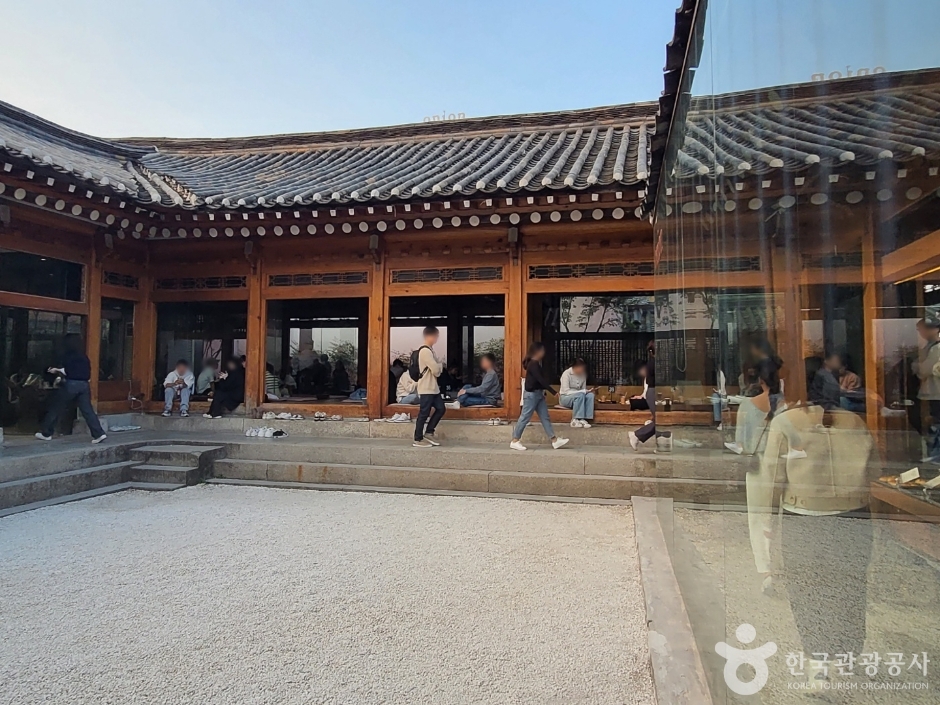
Industry insiders will tell you the ang butter wave broke around late 2017 to early 2018, almost in lockstep with the rise of two cafes in central Seoul: Cafe Onion's hanok branch in Anguk and the early scone-focused bakeries clustered along Mangwon-dong's "Mangridan-gil." Onion in particular gets credit for normalizing the look, a chewy ciabatta cracked open in cross-section, butter shining under the daylight pouring through a 1920s hanok roof. It was, frankly, content engineered for Instagram before "인스타 감성" (Insta aesthetic) was a marketing term anyone used out loud.
This is where MZ세대 (the millennial-Gen Z bracket Korean media obsess over) come in. The cafe-hopping generation in their twenties had quietly outgrown the croissant boom of the mid-2010s. They wanted something photogenic, slightly absurd, and locally rooted, a flex that read as both "I know my pat-anggeum" and "I read Monocle." Ang butter delivered on all three. By the time Paris Baguette rolled out an ang-butter ciabatta sandwich in March 2019, the trickle-down was complete: the small-batch hanok cafes had set the trend, and the franchises were chasing it.
The scone version: the bestseller you find in every cafe
If ang butter has a canonical form, it is the scone. The slightly drier, crumblier English-style scone holds up better than soft milk bread when you wedge a cold butter slab inside it, the heat from the bread is doing half the work, slowly melting the butter into the crumb. Cafes from Layered (a household name for hanok-tourists in Anguk and Yeonnam-dong) to small neighborhood bakeries in Yangjae and Yeonhui-dong all run scone-based ang butter as their hero item. The base is usually a plain or black sesame scone; the better shops bake to order and cut the butter to one centimeter on the dot, because anything thicker reads greedy and anything thinner reads cheap.
Most home bakers and Western food writers who have tried to reverse-engineer it, see Jennifer at Chopsticks and Flour, or the well-known FutureDish recipe, land on the same conclusion: the pat-anggeum is where you spend your time. Cheap canned red bean paste tastes muddy. Real anggeum, simmered down with adzuki beans, brown sugar, and a touch of salt, has a clean, almost chestnutty finish that lets the butter speak.

Beyond the scone: ciabatta, croissants, and ang-beotteok
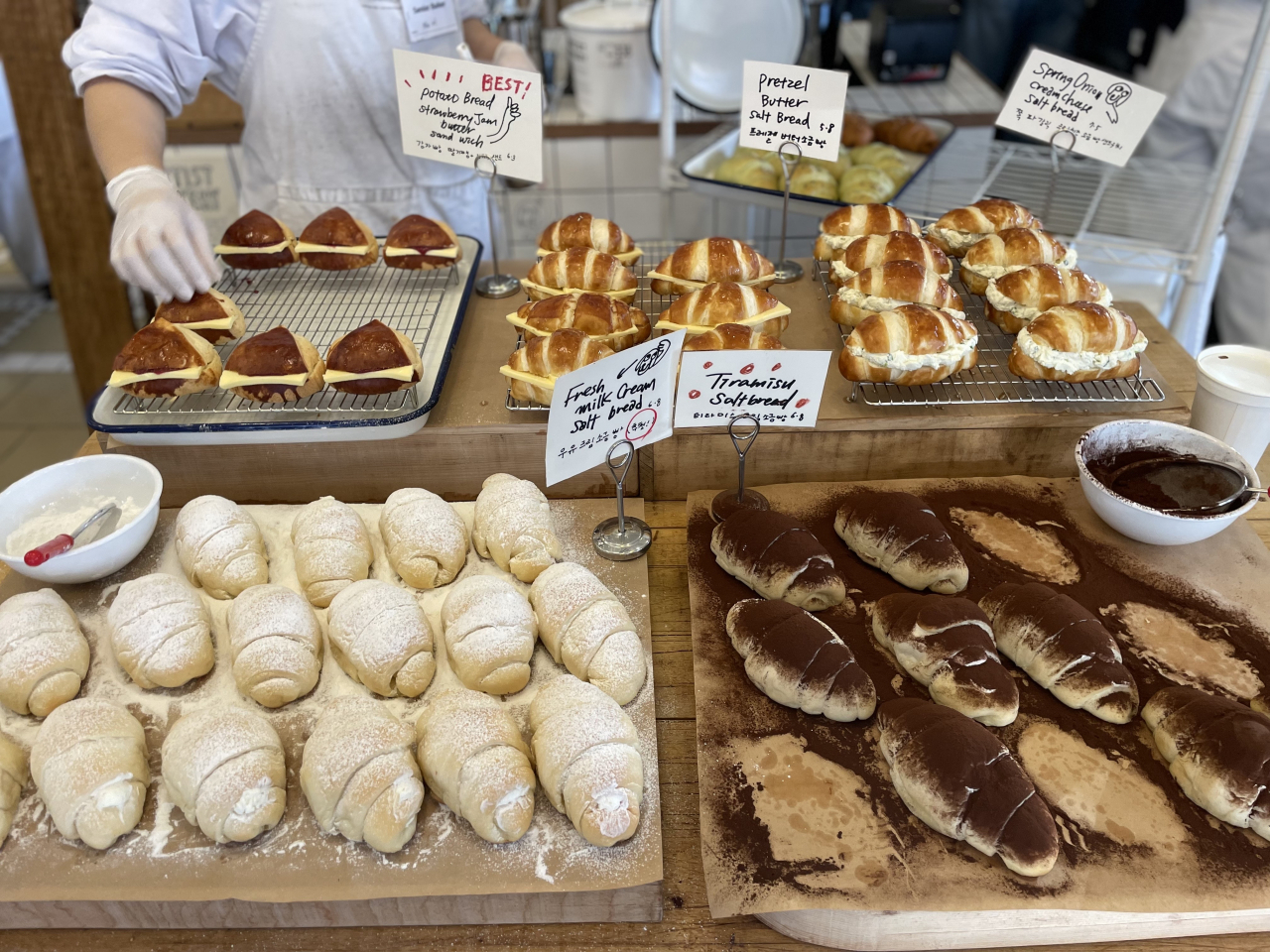
Once a trend hits in Korea it mutates fast, and ang butter is a textbook case. The ciabatta version (most associated with Onion Anguk) gives you a chewier, more bread-forward bite, the high-hydration crumb soaks up the butter as it melts and turns the whole thing into something closer to a savory pastry. Croissant variations followed when the croissant-meets-everything craze peaked in 2022. Then there is ang-beotteok (앙버떡), where the bread is swapped out for chewy injeolmi-style rice cake, basically a Korean answer to mochi, with pat-anggeum and butter tucked inside. The texture goes from buttery-flaky to bouncy-chewy, but the dan-jjan logic stays exactly the same.
What is interesting, and what most overseas write-ups miss, is the macaron version. Around 2019 a handful of dessert cafes started piping pat-anggeum and tucking thin butter slices between macaron shells. Industry-wise, this was the moment ang butter stopped being a "bread thing" and became a flavor identity that could be plugged into any pastry format. That distinction matters: it is why the trend has had real legs while the croissant-bagel hybrids of the same era have already faded.
The pat-anggeum question: why the filling makes or breaks it
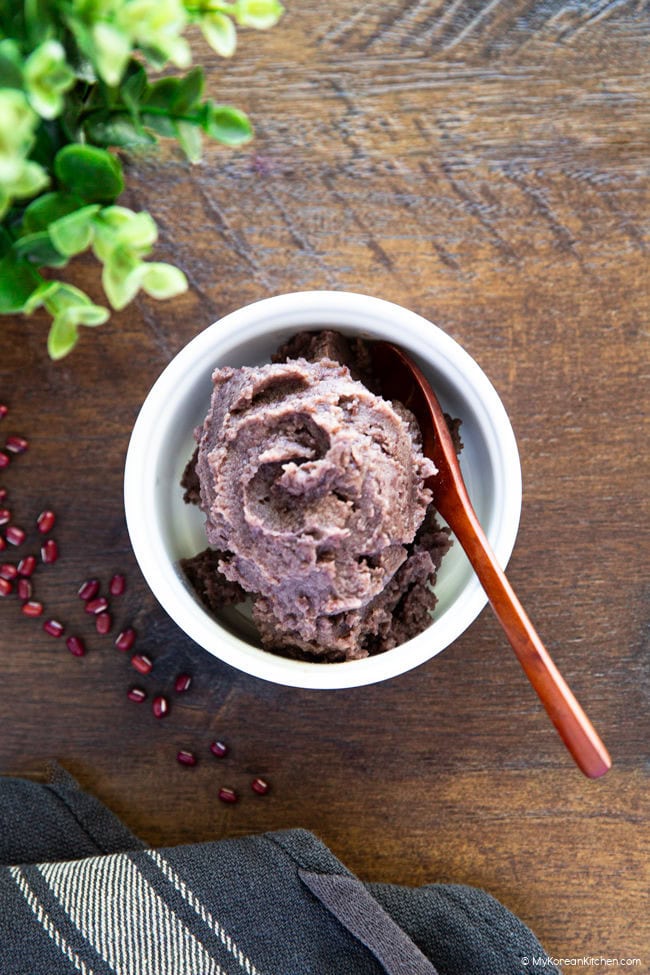
Ask any Korean cafe owner what separates a great ang butter from a forgettable one and the answer is almost always the same: it is the pat-anggeum, stupid. Korean sweet red bean paste sits closer to a smooth koshian than to chunky tsubuan, Sue at My Korean Kitchen has a much-quoted recipe that pushes for blending rather than sieving, which is exactly how most small bakeries in Seoul now make their in-house version. Add too much sugar and the dan-jjan balance tips into dessert territory; add too little and the butter takes over the bite. The sweet spot is when the paste tastes faintly nutty, just barely sweet, with a quiet hit of salt to meet the butter halfway.
This is also why bigger franchise versions rarely match the cafes that started the trend. A central commissary cannot tend a pot of adzuki beans for two hours the way an Anguk hanok cafe can. The bread can scale; the anggeum cannot.
Why ang butter is having a second life in 2026
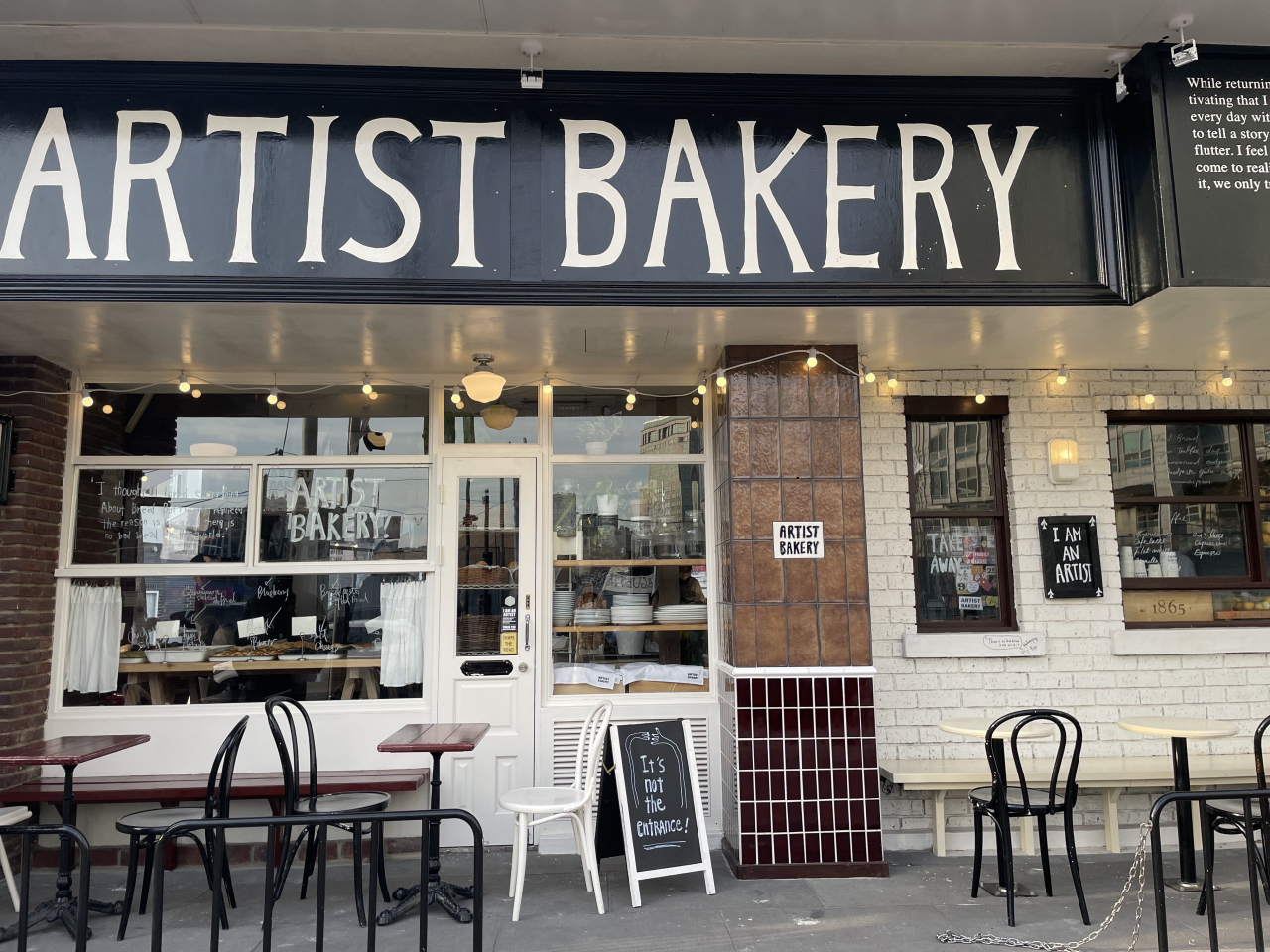
Most Korean food trends burn hot for eighteen months and then quietly disappear into the back of the display case. Ang butter did not. If anything, the broader sweet-salty bakery wave, sogeumbbang (salt butter bread), the chestnut-cream pastries at Onion, the ang-butter variations the team behind London Bagel Museum spun out at Artist Bakery in late 2023, has only consolidated its grip on the Seoul cafe scene. The Korea Herald's running coverage of trending bakeries reads almost like a dan-jjan progress report.
Part of that staying power is generational. The Gen Z cohort who first photographed ang butter for Instagram in 2018 are now the consumers driving the cafe industry, they bring their non-Korean partners, their newly arrived expat coworkers, and (lately) their international followers through the same bakeries. Ang butter has quietly become a kind of gateway item: easy to explain, easy to love, distinctly Korean. That is exactly the profile a successful K-food export needs.
Explore Korean Snacks with Daebak
Love Korean food? Get authentic Korean snacks and ramen delivered straight to your door with the SnackFever Box by Daebak.


