


Table of Contents
Few dishes capture the communal heart of Korean cooking like bossam (보쌈), slow-boiled pork belly sliced paper-thin and wrapped in salted napa cabbage leaves with spicy radish salad, salted shrimp, garlic, and ssamjang. Born from the country's annual kimjang kimchi-making tradition, bossam is at once a humble peasant meal and a celebratory feast. Whether enjoyed in a Seoul back-alley restaurant or made at home with friends, building each wrap by hand turns dinner into a hands-on, joyful ritual.
What Exactly Is Bossam?
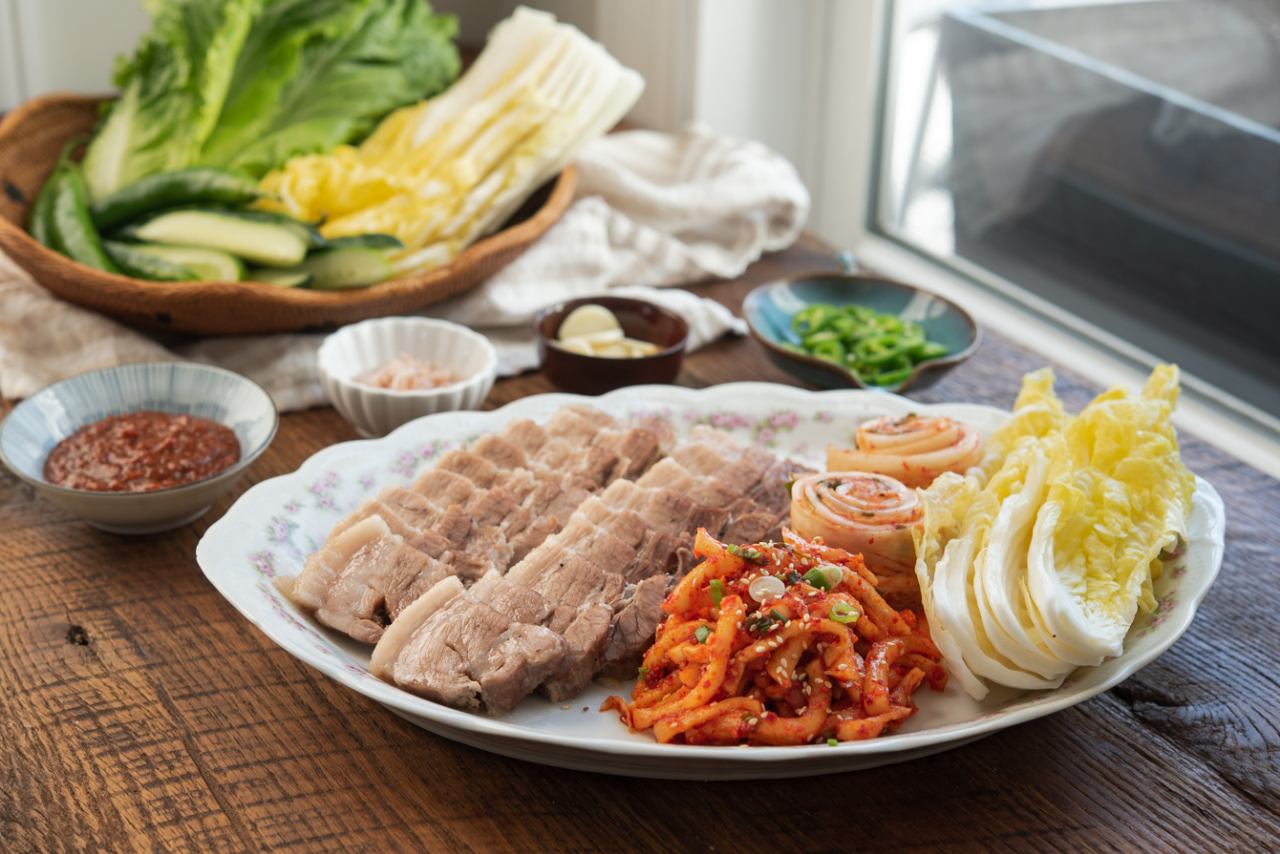
Bossam is a Korean dish of boiled pork (usually pork belly, sometimes pork shoulder) that has been simmered in a fragrant brine until the meat turns silky and tender, then sliced thin and served at the center of a wrap-it-yourself platter. The name literally means "wrapped" or "packaged," and that is exactly how it is eaten: each diner takes a salted napa cabbage leaf (or lettuce or perilla leaf), lays a slice of pork inside, adds a pinch of spicy radish salad and salted shrimp sauce, then folds the leaf into a single bite. According to Korean Bapsang, the boiled pork itself is called suyuk, while the word bossam refers specifically to the act of wrapping it.
The Traditional Bossam Spread
A proper bossam table is a study in contrast: rich, fatty pork meets crunchy, tangy, briny, spicy condiments. The Korea Herald describes the classic setup as boiled pork belly served with kimchi, lettuce, and garlic, but a full bossam spread usually includes:
- Musaengchae: spicy julienned radish salad seasoned with gochugaru, salted shrimp, and garlic.
- Saeujeot: fermented salted shrimp, used as a salty, umami-packed dipping sauce.
- Ssamjang: thick wrap sauce blending doenjang and gochujang with garlic and sesame oil.
- Raw garlic slices and fresh green chili for sharp, fiery accents.
- Salted napa cabbage, lettuce, and perilla leaves as the wrappers.
- Freshly made kimchi, the traditional partner that started it all.
Bossam vs Samgyeopsal vs Jokbal
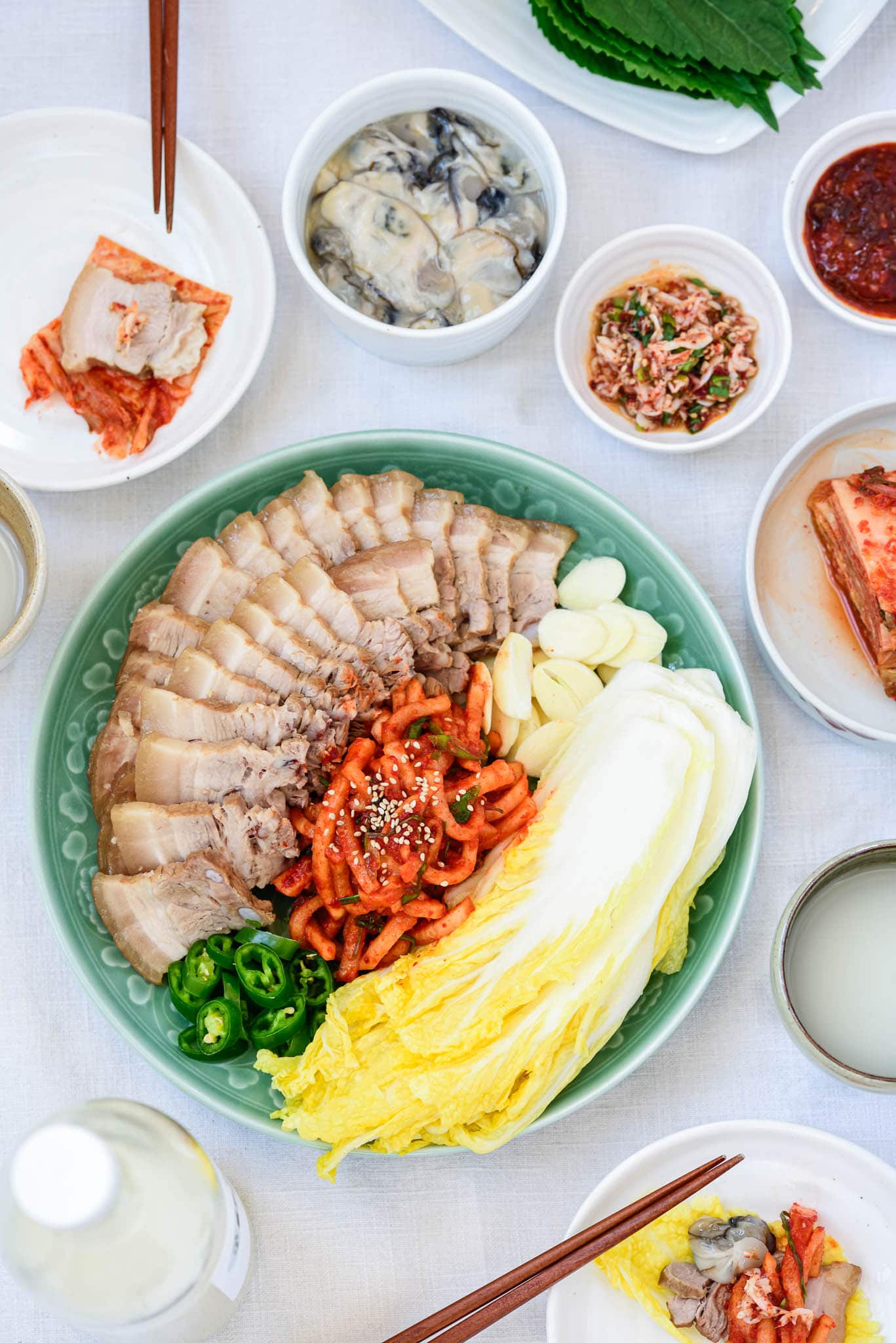
Three Korean pork dishes share the spotlight but differ in cooking method and personality. Samgyeopsal is raw pork belly grilled at the table over charcoal or gas, eaten hot off the grill in ssam wraps. Jokbal is pig's trotters slowly braised in a soy-sauce broth flavored with cinnamon, ginger, and sugar, served chilled and sliced. Bossam sits between them: the pork is boiled in a clean, aromatic broth without soy sauce, leaving a milder, lighter meat that lets the radish kimchi and saeujeot shine. Where samgyeopsal is smoky and immediate and jokbal is dark and gelatinous, bossam is delicate, tender, and almost soothing.
Bossam History and the Kimjang Tradition
Bossam's origins are inseparable from kimjang, the late-autumn kimchi-making event that has shaped Korean food culture since the Joseon era. Each November, families would salt hundreds of cabbages, mix the spicy stuffing of radish, garlic, gochugaru, and saeujeot, and pack jars to bury for winter. The work was long and the helpers were many, so a huge pot of pork belly was simmered alongside as a reward. As The Korea Herald notes, eating freshly made kimchi with bossam celebrates the new batch and enhances the joy of kimjang day. UNESCO inscribed Kimjang on its Intangible Cultural Heritage list in 2013, cementing this pork-and-kimchi pairing as more than a meal: it is a cultural ritual.

Regional Variants: Jeolla, Jeju, and Winter Oyster Bossam
Bossam shifts subtly depending on where you eat it. In the Jeolla provinces of southwest Korea, famous for generous banchan and bold seasonings, the radish kimchi served alongside is especially robust. Jeju Island, home to Korea's prized black pig, produces bossam with deeper, richer-tasting pork. The most beloved seasonal variant is eorigul bossam, served in winter when plump oysters are airlifted from Tongyeong on the south coast. The briny oysters are tucked into the wrap alongside the pork, adding a sea-salt freshness that balances the fat. Many bossam alley restaurants in Seoul switch their menu to feature oyster bossam from November through February.
Top Bossam Restaurants in Seoul
Seoul has a bossam scene worth a pilgrimage. The most famous cluster is the Jongno 3-ga Bossam Alley near exit 15 of Jongno 3-ga Station, where, as Visit Seoul describes, restaurants with 20 to 30 years of history serve oyster bossam with sour radish kimchi and complimentary side dishes like gamjatang and braised spicy chicken. Wonhalmeoni Bossam, a national chain, traces its roots to Seoul and is featured on the official Korea Tourism Organization guide. Other classics include Mapo Jokbal Bossam spots near Gongdeok Station and Jang Choongdong Wang Jokbal in Jung-gu, which serves bossam alongside its famous pig's feet. Each spot has its own house broth recipe, often a closely guarded family secret.
How to Eat Bossam the Right Way
There is a satisfying order to building the perfect bossam wrap. Start with a salted cabbage leaf flat in your palm, then layer in this sequence: a slice of warm pork belly first, a small dab of ssamjang on the meat, a pinch of musaengchae radish salad, a tiny spoonful of saeujeot, a thin slice of raw garlic, and a sliver of green chili for those who want heat. Fold the cabbage into a tight parcel and eat the whole bite in one go. Koreans consider it slightly impolite to take two bites from a single wrap, so build them sized to your mouth. Pair with a chilled bowl of makgeolli (Korean rice wine) or soju for a classic kimjang day combination.
How to Make Bossam at Home
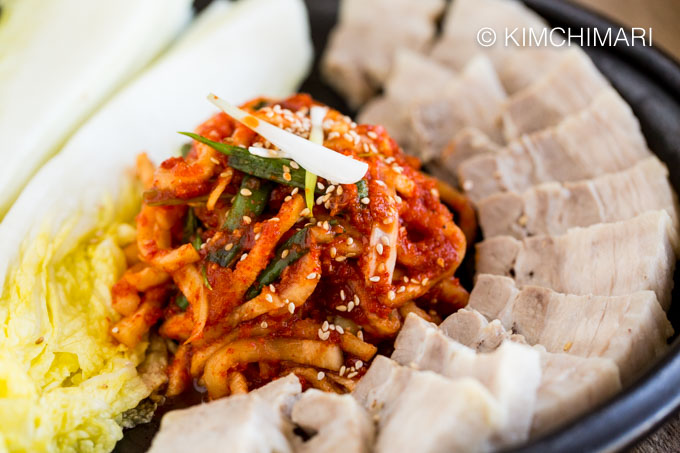
Homemade bossam is more forgiving than it looks. Start with a thick slab of pork belly, roughly 1 to 1.2 kilograms, and submerge it in a pot of simmering water flavored with doenjang (fermented soybean paste), garlic, ginger, onion, scallions, black pepper, and a splash of instant coffee or brewed coffee, a Korean trick that neutralizes the porky smell without flavoring the meat. Boil for 45 to 50 minutes, then let the pork rest in the cooking liquid for ten minutes before slicing. Meanwhile, salt napa cabbage leaves in brine and toss julienned radish with gochugaru, fish sauce, garlic, and a touch of sugar to make musaengchae. Kimchimari recommends keeping the pork warm and slicing it just before serving so the wraps stay juicy. Set everything out family-style and let everyone build their own.
Where to Find Bossam Outside Korea
Bossam has crossed oceans alongside the broader hallyu wave. In the United States, Korean restaurants in Los Angeles's Koreatown, New York's Flushing and Koreatown 32nd Street, Chicago's Albany Park, and the H Mart food court chains often feature bossam, sometimes alongside its glamorous American cousin, David Chang's Momofuku-style brown-sugar bossam. London's New Malden, Sydney's Strathfield, Toronto's Bloor-Yorkville, and Vancouver's North Road bossam restaurants all serve it close to the traditional way. For home cooks, the only specialty items you really need are saeujeot (sold in jars at most Korean grocers), doenjang, and Korean gochugaru. Pork belly, cabbage, and radish are easy to find at any well-stocked supermarket.
A Dish That Tastes Like Community
What makes bossam special is not really the pork. It is the act of wrapping, the shared cabbage leaves, the multiple hands reaching across the table for garlic and salted shrimp. Bossam grew out of a moment when families and neighbors gathered to do hard work together, and the dish still carries that warmth. Whether you make it for a winter dinner party, order it after a long week, or build a wrap from a takeaway box, you are taking part in a tradition that stretches back centuries. Each bite is a little package of Korean home cooking, wrapped exactly the way generations have wrapped it before.
Explore Korean Snacks with Daebak
Love Korean food? Get authentic Korean snacks and ramen delivered straight to your door with the SnackFever Box by Daebak.


