


Table of Contents
While spring is slowly creeping up with its warmth, the sun shining more often and inviting nature to wake up, people, too, feel more energized. This inspiring season is especially meaningful for artists, who share their wonderful works with the world. Are you in the mood for some inspiration? Then let us look at five Korean artists and their creations, from video art pioneers to Instagram illustrators redefining what Korean art looks like today.
Nam June Paik (백남준, 1932 to 2006)
Whoever is acquainted with the contemporary art scene or art history must have heard his name at least once. Nam June Paik is universally celebrated as the pioneer of video art, a Korean-born avant-garde artist who saw the cathode ray tube as a canvas long before screens were everywhere. He sculpted with televisions, fused robotics with calligraphy, and used satellite broadcasts as performance space.
If you are in Seoul, you can also admire one of his works called My Faust to Communication (1989 to 1991), part of the collection at the Leeum Museum of Art in Itaewon, a space that houses an extraordinary range of installations from artists around the world. Paik's largest piece, The More, The Better (1988), a towering wall of 1,003 monitors, is also back on view at MMCA Gwacheon after a three-year restoration, so a Nam June Paik pilgrimage through Korea is very much possible.
Ran Hwang (황란)
Ran Hwang is a sculptural artist inspired by the cyclical nature of life and the beauty of a transient moment. Her mixed-media work is built from materials such as buttons, pins, beads, and thread, hammered one by one into Plexiglas and wood panels to form falling blossoms, phoenixes, Buddhas, and vases. Because her iconic figures take weeks or months to complete, Hwang describes the action itself as a meditative ritual, a quiet reflection on what it means to be human in modern society.
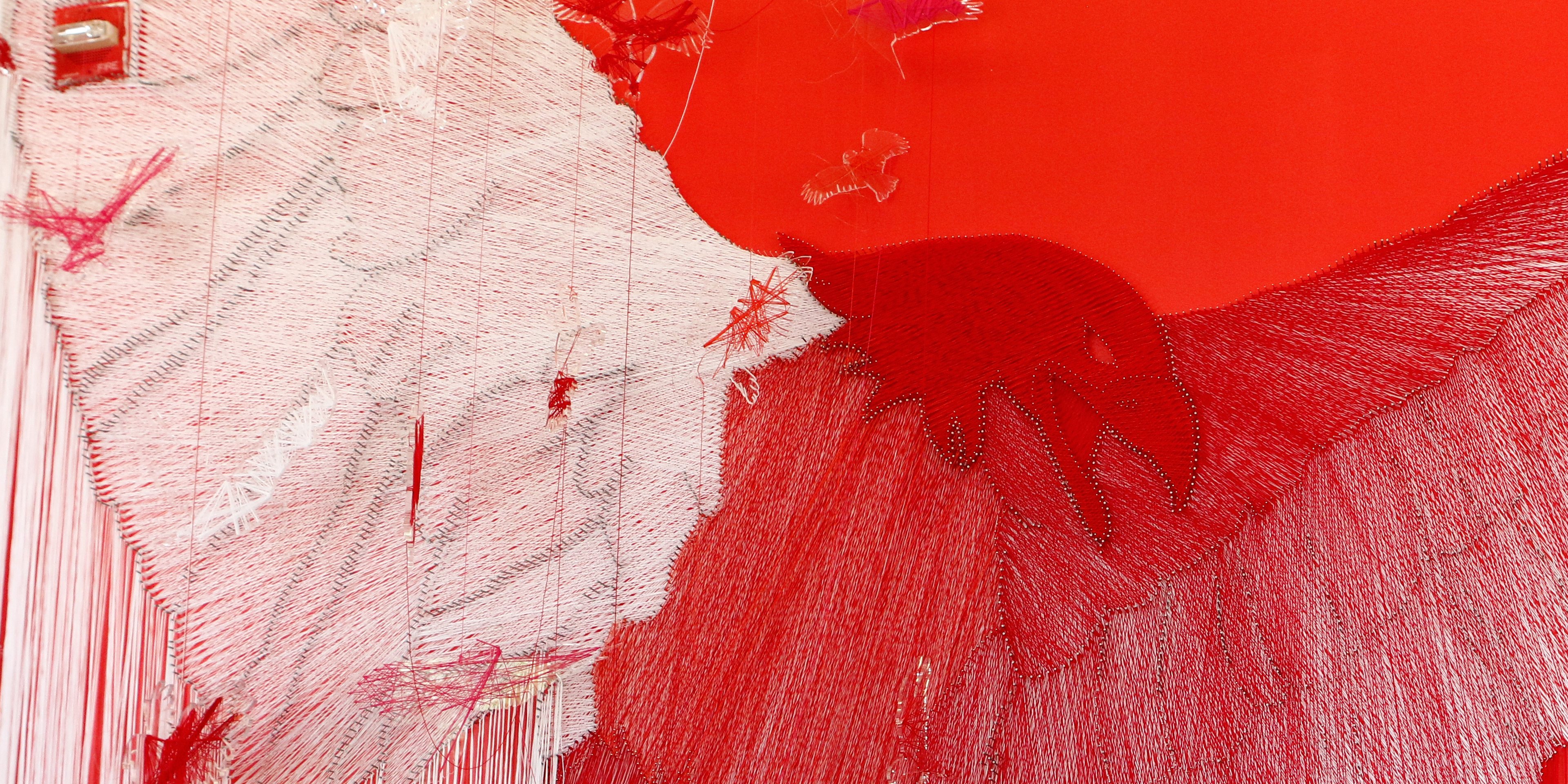
Splitting her time between Seoul and New York City, Hwang's work lives in major collections including the Brooklyn Museum, the National Museum of Modern and Contemporary Art in Seoul, and the Des Moines Art Center.
Jiwoon Pak (박지운)
Jiwoon Pak is a Seoul-based illustrator who shares delicate, eloquent, soft pastel paintings and digital works that have steadily found a growing audience around the world. She often creates beautiful illustrations for book covers, and her quietly emotive children, draped in flowers and leaves, have become her signature. Inspired by nature and memories of her own childhood, her pieces feel like fragments of a half-remembered dream.
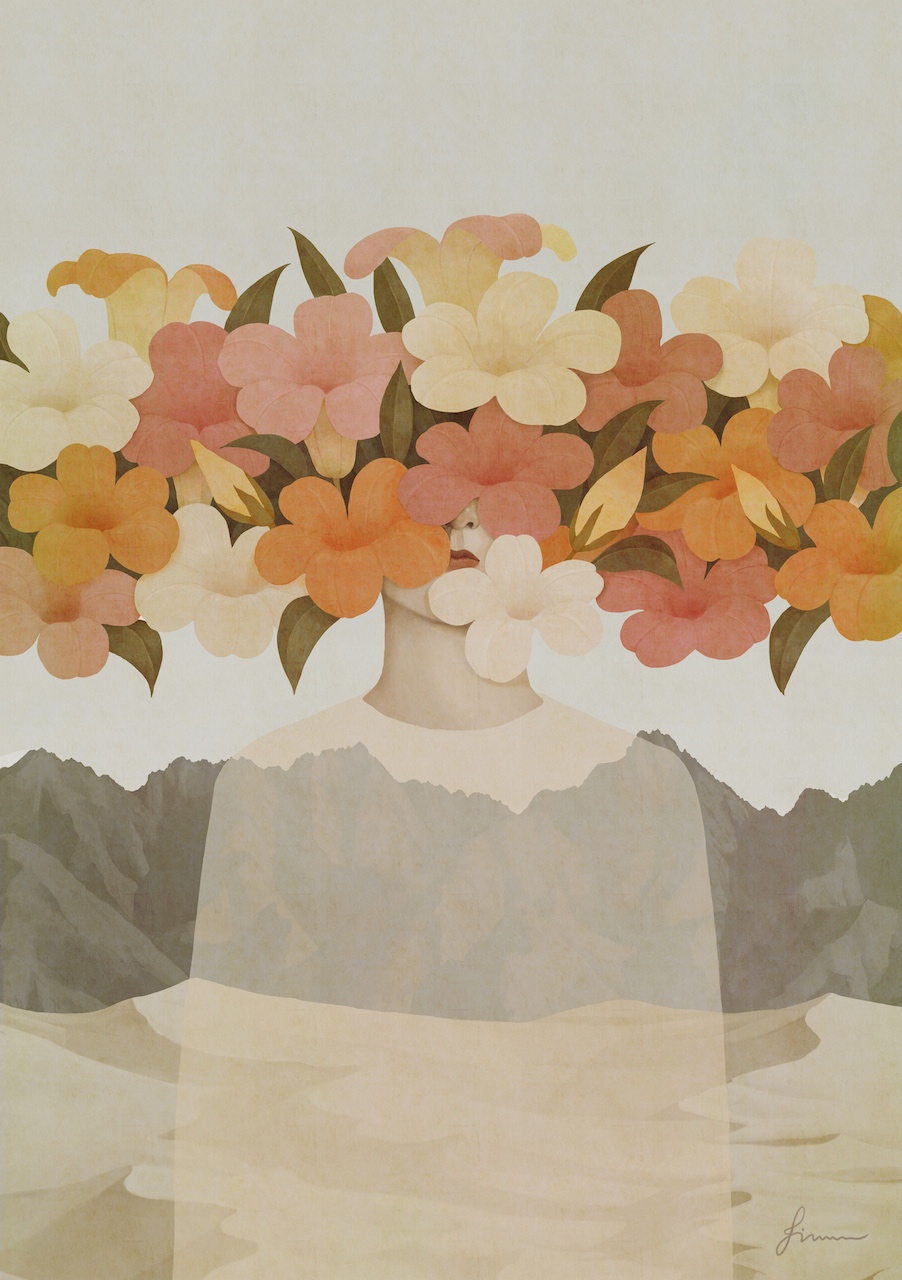
Check out her Instagram and official website to see more of her ongoing work, including commissioned illustrations and personal projects.
Mugunghwa Girl (무궁화소녀)
Mugunghwa (무궁화) is the national flower of South Korea, also commonly known as the Rose of Sharon. Mugunghwa also happens to be the alias of a young, gifted photographer whose conceptual portraits feel pulled from the pages of a fairy tale. Her dreamy, color-saturated images have caught the attention of major K-pop agencies, leading to collaborations with Blockberry Creative (LOONA), JYP Entertainment (GOT7), A Team Entertainment (VAV), Dreamcatcher Company, and even BTS, where she shot teaser visuals for Jimin and Jungkook in the LOVE YOURSELF series.

She majored in film and animation and taught herself photography, building a portfolio on social media that turned into a career as one of the most sought-after K-pop image-makers of her generation.
Henn Kim (헨 킴)
Henn Kim is an artist creating witty, surreal black and white illustrations and sharing them online to a community of more than half a million followers. Her designs often play with figures of people, nature, and everyday objects, layered like a visual poem about love, longing, and quiet anxiety. She has described her work as beautiful, dark, twisted fantasies, and that captures it perfectly.

Her commissions include covers for Sally Rooney's novels and editorial work for The New Yorker, Gucci, UNICEF, Nike, the BBC, and TED, but her Instagram feed is still where new work appears first.
What do you think about these artists and their work? Have they given you a little bit of inspiration? Wish you all some nice and warm spring days to come, full of curiosity, wandering, and quiet creative energy.
Discover Korean Craft with SULSUL
Bring home a piece of Korea's living craft tradition with the SULSUL Box by Daebak, featuring handcrafted norigae, a dragonfly brooch, and a DIY knotted bracelet kit that celebrate traditional Korean artistry.


