


Table of Contents
In Korea, lunch is more than a meal. It is a daily ritual that fuels students through long school days packed with classes, clubs, and evening study sessions. Korean school lunches, called geupsik, are built around rice, soup, kimchi, and a rotating cast of banchan that change with the seasons. Whether eaten in a busy cafeteria or carried in a beloved dosirak, these meals tell you a lot about Korean food culture and the rhythm of student life.
What a Korean School Lunch Tray Looks Like
School cafeteria meals in Korea follow a familiar template. Every tray comes with a serving of rice, a hot soup or stew, kimchi, and two or three additional side dishes. The placement is deliberate. Rice sits in the lower left, soup in the lower right, and the banchan fan out across the top compartments. A tray might pair multigrain rice with a steamed egg, spicy mushroom soup, fresh fruit like strawberries, and a portion of sweet and sour tangsuyuk. Best of all, in many Korean public schools, lunches are completely free for students, funded by local governments as part of a national push to support healthy childhood nutrition.
The Dosirak Tradition: Lunch From Home
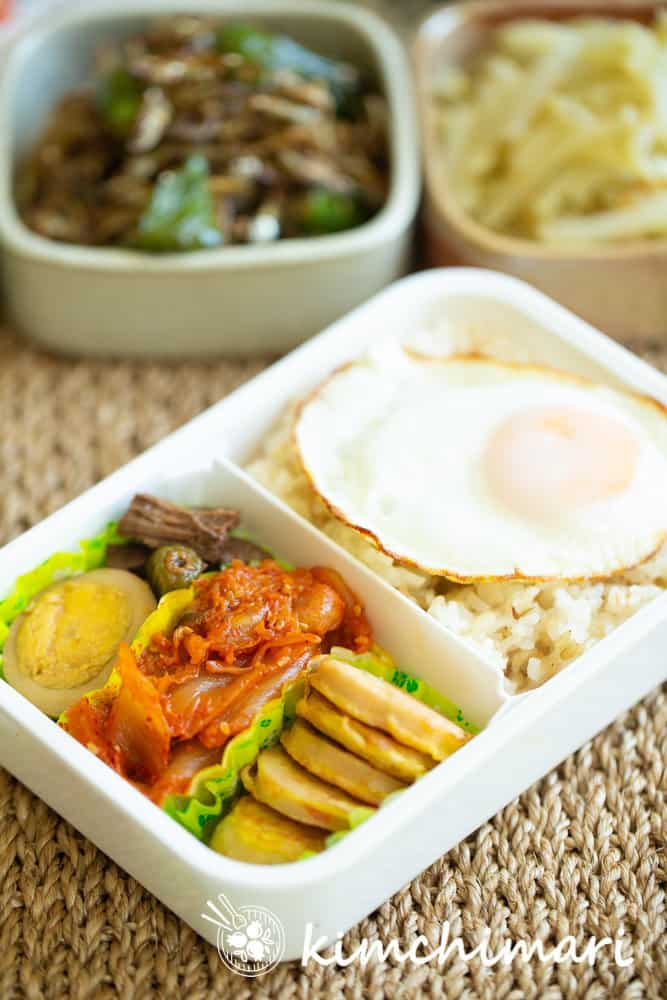
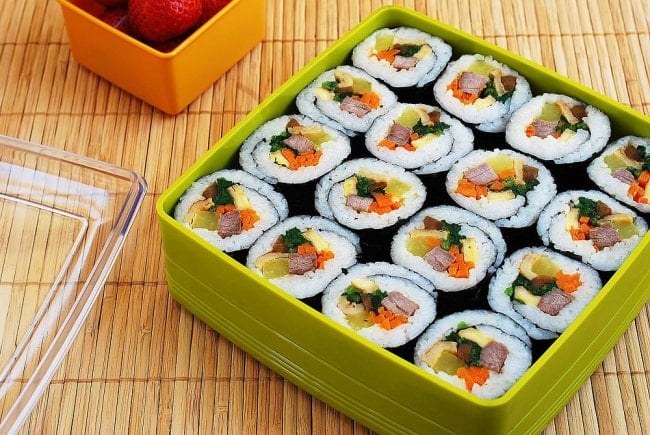
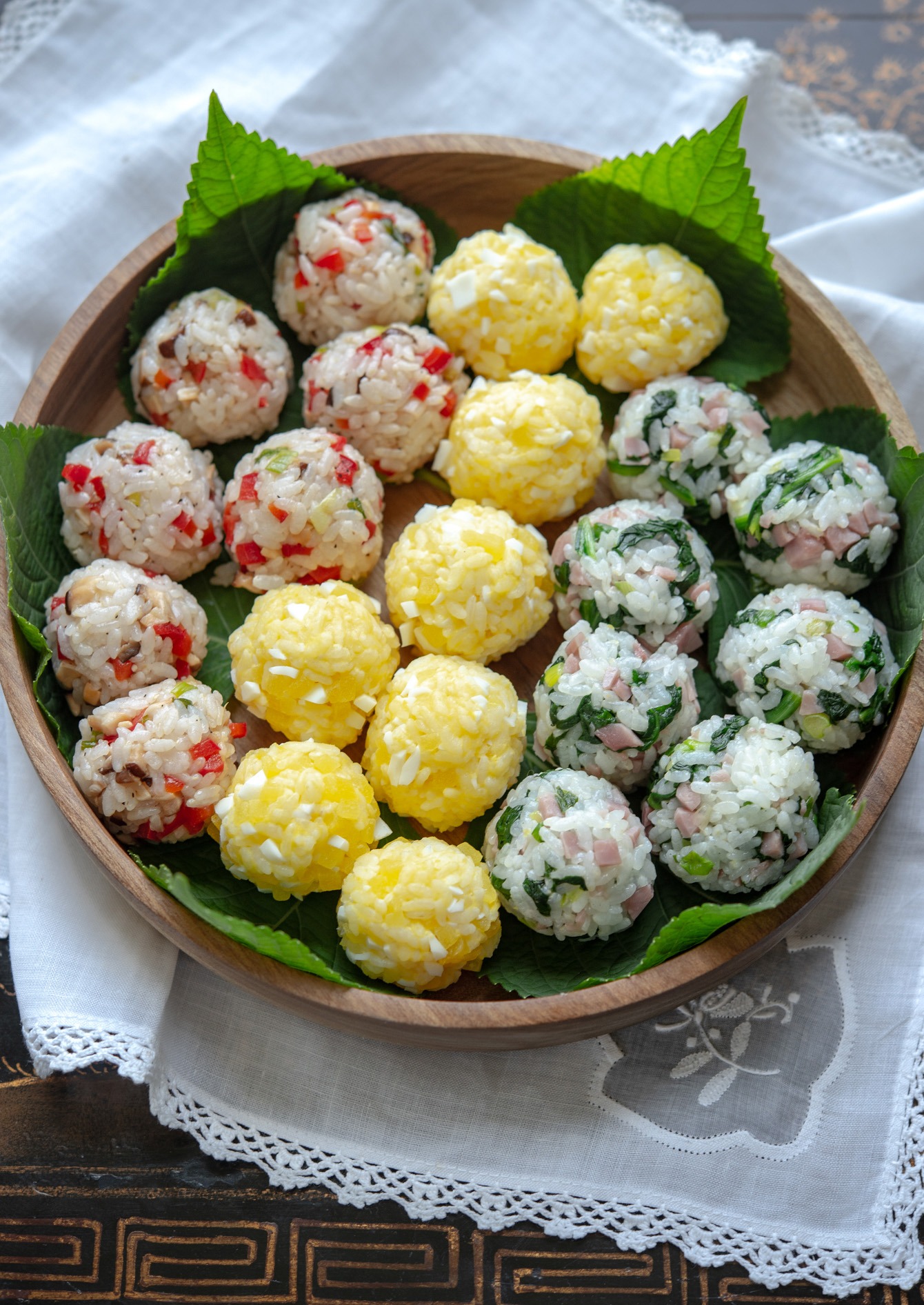
Before cafeteria meals became universal, almost every Korean student carried a dosirak, a homemade lunchbox tucked carefully into a school bag. The classic dosirak from earlier decades layered hot white rice over an aluminum or stainless steel container, then topped it with squares of pan fried Spam, a rolled egg omelet called gyeran mari, a pile of kimchi, and a sweet salty side like jangjorim braised beef. Many adults still remember shaking the entire box vigorously to mix everything together for that nostalgic heundeun dosirak bite. Today, K dramas like Crash Course in Romance have given the homemade lunchbox a glamorous comeback, and modern dosirak often feature kimbap, character bento, or jumeokbap rice balls.
Star Sides: The Banchan That Pack Every Lunchbox
Banchan are the small side dishes that give a Korean lunch its variety and flavor balance. The best banchan for school lunches are those that travel well, taste good at room temperature, and hold up for hours. Gyeran mari, a rolled omelet often studded with carrots and scallions, is a perennial favorite. Myeolchi bokkeum, tiny anchovies glazed in a sweet soy sauce, and jangjorim, soy braised beef and eggs, provide protein and umami. Mild vegetable banchan like sauteed spinach, seasoned bean sprouts, or sweet potato stems round out the box, while a small portion of cabbage or radish kimchi anchors every meal in classic Korean flavor.

Why Korean Students Need Such a Filling Lunch
The Korean school day is famously long. Students typically arrive by 8 in the morning and finish formal classes around 3 in the afternoon, but the day rarely ends there. After school clubs, sports practice, and extracurricular activities follow right away. For many middle and high school students, the next stop is a hagwon, a private academy where lessons in math, English, or test prep can run as late as 10 at night. With such a demanding schedule, lunch becomes the single most important fuel of the day. A balanced tray with rice, protein, vegetables, and a hot soup keeps energy steady through hours of studying and helps young learners stay focused well into the evening.
Teachers, Trays, and Less Waste
One of the friendliest details about Korean school lunch culture is that teachers eat alongside students, sitting at the same tables and choosing from the same menu. Their meals are also free, which helps create a community feeling around lunchtime. The trays, plates, chopsticks, and spoons are nearly all made of stainless steel rather than disposable plastic. Schools wash and reuse these utensils for every meal, which dramatically reduces waste and reflects Korea's broader push toward sustainable, low waste dining. Metal cutlery is also a longstanding cultural preference in Korea, dating back to royal palace traditions when silver was used to test food for safety.

Lunch as a Window Into Korean Culture
For visitors, students, and exchange teachers, eating a Korean school lunch is one of the best ways to understand everyday Korean life. The way the tray is arranged, the gentle balance of soup and rice and banchan, and the shared rhythm of mealtime all reflect deeper values about nourishment, harmony, and respect for food. If you find yourself in a Korean classroom or cafeteria, try every dish, ask about unfamiliar banchan, and enjoy the experience of eating the way Korean students do every day. You might just make a few friends along the way, since nothing breaks the ice quite like sharing a meal.
Explore Korean Snacks with Daebak
Love Korean food? Get authentic Korean snacks and ramen delivered straight to your door with the SnackFever Box by Daebak.


