


Table of Contents
Every Asian country claims its own dumpling, and if you grew up in Korea, that dumpling was 만두 (mandu). But mandu is not an island. It sits on a family tree that spans the Silk Road, colonial trade routes, and Cold War troop movements. Understanding where it fits explains why Korean dumplings are quietly running the global frozen aisle right now.
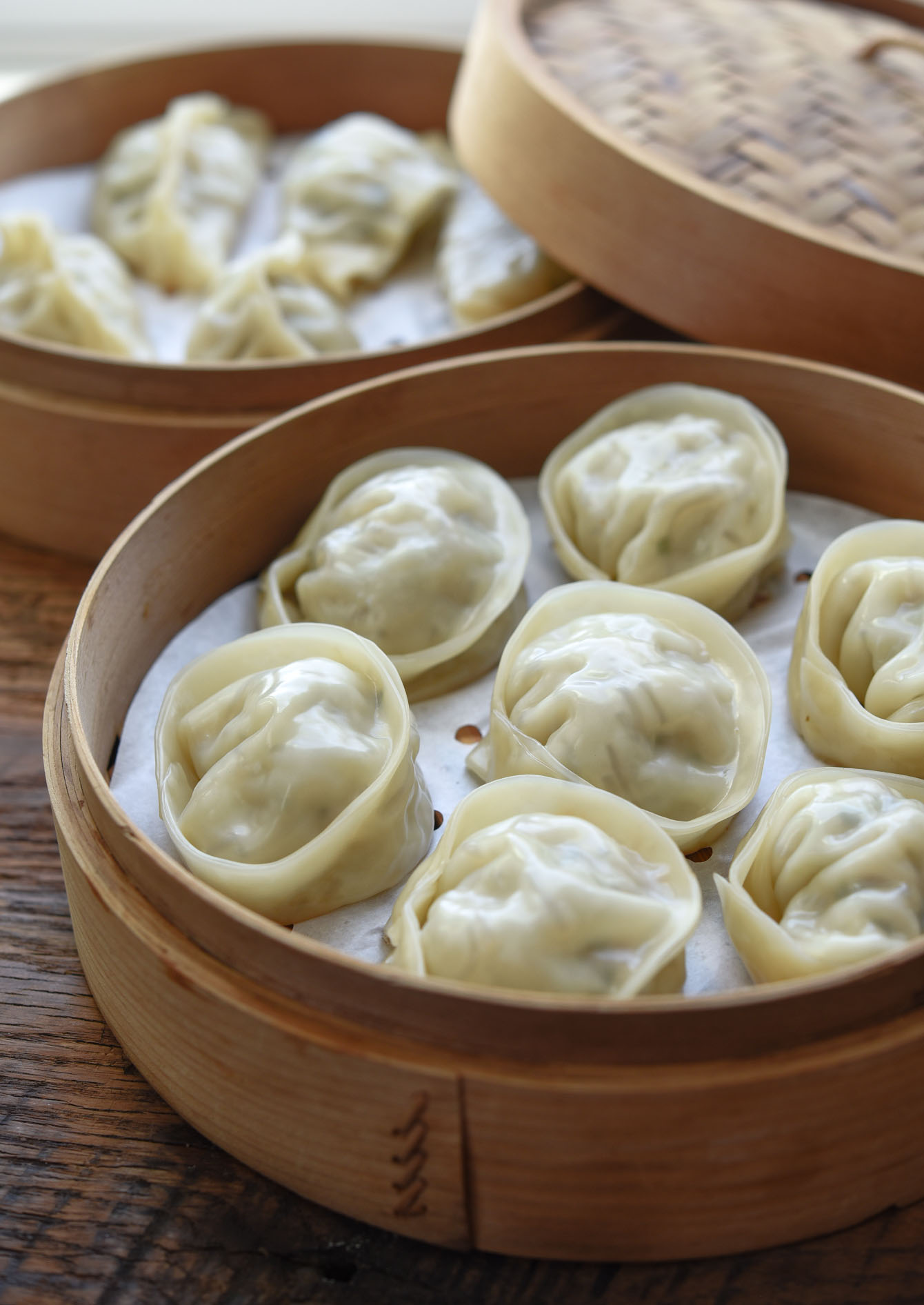
Jiaozi (饺子): The Mother of the Family
Every honest dumpling conversation in Asia has to start with Chinese jiaozi. The template is simple: a thin, delicate wheat-flour skin folded into a crescent, filled with ground pork and cabbage or garlic chives, then boiled, steamed, or pan-fried into potstickers (锅贴, guotie). Jiaozi has been on Chinese New Year tables for over 1,800 years because the shape mimics a Ming dynasty ingot, a lucky charm you literally eat.
What makes jiaozi jiaozi, and not a Korean 만두, is the wrapper. Chinese cooks obsess over a paper-thin skin that lets the filling's juices show through when you pick one up with chopsticks. Korean mandu wrappers are noticeably thicker and chewier. That distinction sounds trivial until you eat both back to back: jiaozi is a delivery vehicle for the filling, whereas mandu treats the wrapper and filling as equal partners.

Mandu (만두): How the Korean Version Diverged
Mandu is what happened when jiaozi walked the Silk Road for 300-plus years and picked up Korean pantry habits along the way. Historians trace it to the Goryeo period (918 to 1392), when Yuan Mongol traders brought manti-style stuffed dough into the peninsula. From there the fork was hard. Korean cooks made the wrapper thicker to hold heartier fillings, then started spiking those fillings with the ingredients that already ran Korean kitchens: aged kimchi, dangmyeon (sweet potato glass noodles), squeezed tofu, and a gochujang or gochugaru tinge in the meat mix.
Any Korean grandmother will tell you the giveaway is the wrapper's chew. She wants something with a real bite that can survive the boil in manduguk (dumpling soup) or the plunge into deep-fry oil without splitting. She also wants that faint fermented punch in the filling that says, unmistakably, this is Korean. Jiaozi dipped in black vinegar is elegant. Mandu splashed with a soy-vinegar-gochugaru sauce is a punchier flavor register than jiaozi ever tries to reach.
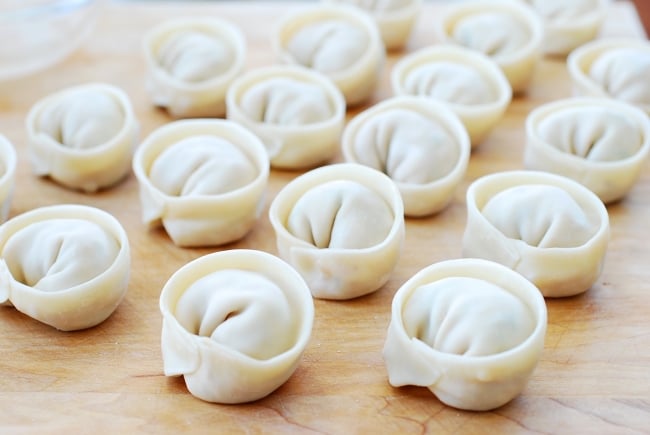
Gyoza: The Dumpling Korean Soldiers Brought Home to Japan
Here is the piece almost every food blog skips. Japanese gyoza is not, historically, a Japanese invention. It is a post-World War II arrival, carried back to Japan by Japanese soldiers (and Korean-Japanese conscripts) returning from Manchuria after 1945. What they encountered in the Chinese northeast was jiaozi. What they turned it into, once home, was gyoza: a thinner-skinned, aggressively garlicky version pan-fried on one side until it develops that crackly brown lace, then eaten with soy, rice vinegar, and rayu chili oil.
The palate shift is what matters here. Chinese jiaozi leans on ginger and green onion. Korean mandu leans on sesame oil, garlic, and fermented notes. Gyoza cranks the raw garlic all the way up because Japanese diners in the 1950s wanted assertive flavor to match a rising beer culture. That is why one bite of Osaka gyoza can shock a Korean grandmother: too much raw garlic, not enough vegetal balance. It is not a mistake. It is a national flavor choice engineered by a specific historical moment.
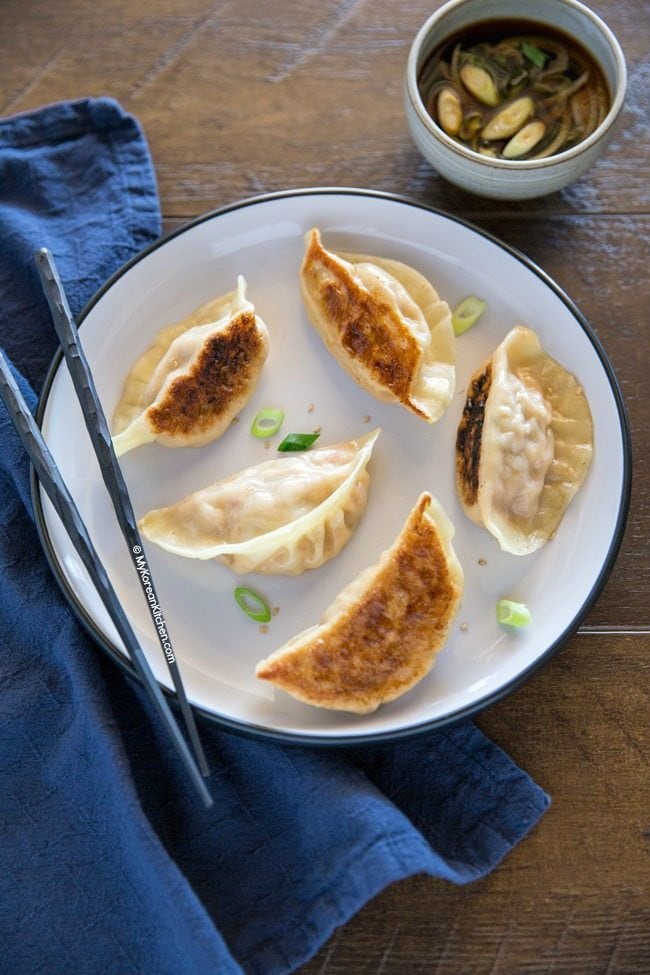
The Southeast Asian and Himalayan Branches
Head south and the family tree gets weirder in a good way. Vietnamese bánh cuốn is technically a dumpling if you accept a generous definition: a paper-thin rice batter steamed over a cloth, folded around minced pork and wood-ear mushrooms, and served with nuoc cham. It is a dumpling shaped by wet-rice agriculture instead of wheat-belt agriculture, which is why the wrapper feels closer to fresh rice noodle than to Chinese dough.
Then there is momo, the Tibetan cousin that migrated down into Nepal, Bhutan, and northern India. Momo took the jiaozi template and rerouted it through Himalayan spice cabinets: cumin, coriander, chili paste (sepen), sometimes yak or water buffalo meat. Try a Kathmandu buff momo next to a Seoul kimchi mandu and you are looking at the same DNA expressed by two entirely different climates. Nothing else in world cuisine forks that cleanly.
The Mandu Family Tree: 왕만두, 손만두, 김치만두, 물만두, 군만두
Now zoom back into Korea, because mandu is not one thing. Every Korean kid learns the five main branches early:
- 왕만두 (wangmandu): king-sized, fist-sized dumplings you buy from a steamer cart on a Seoul winter street. Usually stuffed with pork, kimchi, and enough juice in the filling that first bite is a small hazard.
- 손만두 (sonmandu): literally "hand mandu," meaning hand-folded at home. Grandmothers judge each other on pleat count, and a well-folded sonmandu is a real family flex.
- 김치만두 (kimchi mandu): the fermented-kimchi filling variant. Only works with kimchi that is at least two weeks old, because you need the tang to punch through the dough during cooking.
- 물만두 (mulmandu): "water mandu," the boiled version, thin-skinned enough to be almost slippery, always served with a soy-vinegar-gochugaru dip.
- 군만두 (gunmandu): the pan-fried version, the one that shows up as the free side dish at any decent 짜장면 (jajangmyeon) joint. Also the most exportable format.
The interesting sociology here is that gunmandu is what most Westerners meet first, because it is the delivery-friendly, freezer-friendly format. But if you ask a Korean home cook which mandu makes them most homesick, most will say manduguk on Seollal (Lunar New Year), where boiled mandu float in an anchovy-and-beef broth with rice cake ovals. That is the emotional core of Korean dumpling culture. Fried mandu is the export version.
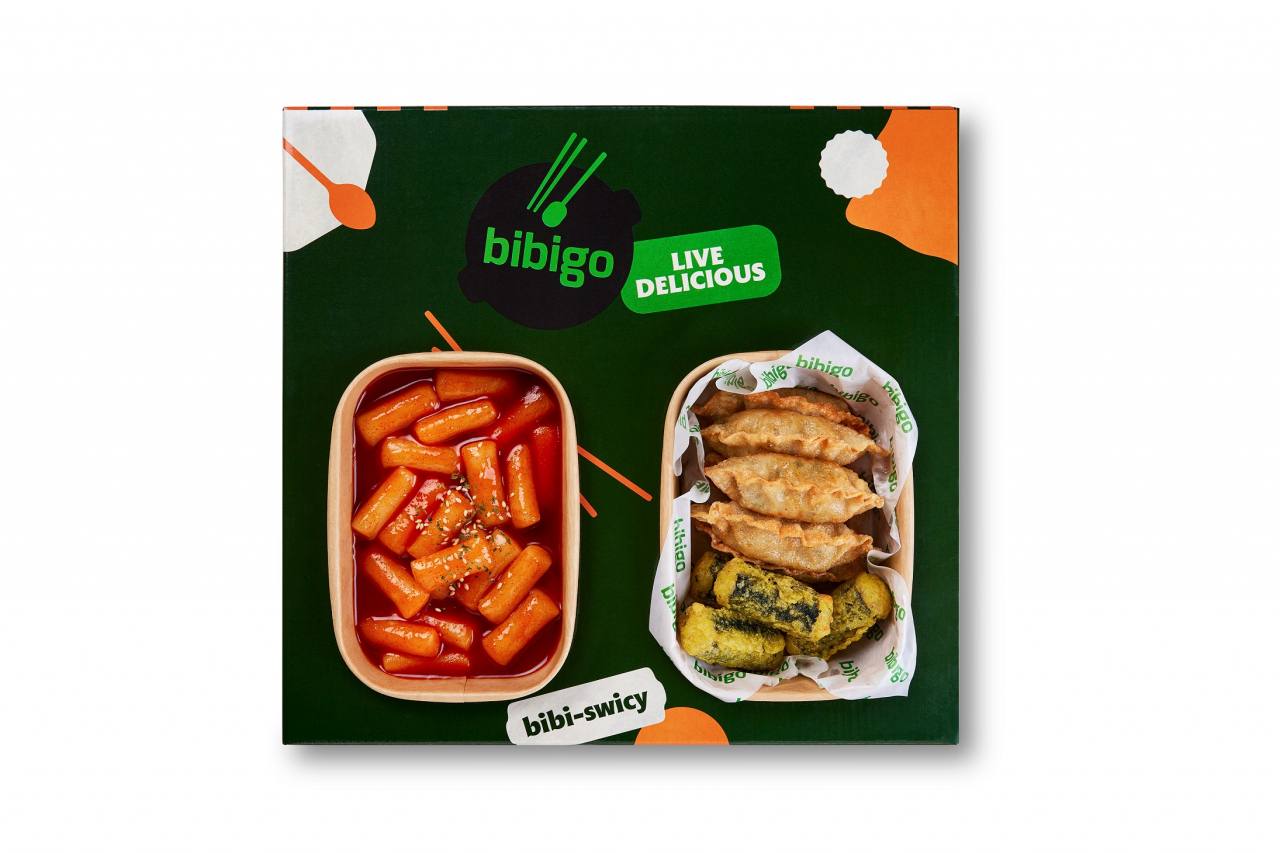
Why Mandu Now Runs the Global Frozen Dumpling Aisle
Here is the industry piece most food writing misses. Korean mandu is quietly leading the North American and European frozen dumpling market right now, and it is not by accident. CJ CheilJedang's Bibigo brand alone captured a 48 percent share of the German frozen dumpling category as of 2024, and in North America Bibigo Mandu outsells the second-largest dumpling brand by more than threefold. Add in Pulmuone and Ottogi export operations, and Korean-branded mandu accounts for roughly two billion dollars in annual overseas food sales tracked in CJ's Bibigo global product line.
Two forces created that opening. One is the post-Squid Game K-content wave, tangentially. After the 2021 Netflix surge, Western supermarkets started reserving Asian-food shelf space specifically for products with a K-story attached. Chinese jiaozi, for all its 1,800 years of history, reads as generic Asian to Western marketing. Korean mandu reads as specifically Korean, which is exactly what the retail buyer wants right now. That is a distribution advantage most Chinese frozen-food brands still have not figured out how to counter.
The second is packaging engineering. CJ spent a decade perfecting a mandu skin that survives the freeze-thaw cycle without cracking, then survives home microwaving without turning gummy. That is genuinely hard product work, and it is why a Bibigo Kimchi Wangmandu straight from a U.S. Costco freezer tastes closer to a Seoul street-cart version than any Chinese-branded frozen jiaozi does to its restaurant original. That is the K-food industry's quiet superpower: taking a shared Asian food tradition, tightening its Korean identity, then engineering it into a shelf-stable global commodity without losing the story.
So the next time you tear open a Bibigo pack at home, you are eating the tail end of a 700-year Silk Road migration, filtered through a Korean grandmother's flour hand and a CJ CheilJedang R&D lab. Every one of those five Asian dumplings on the family tree has its own case for greatness. Mandu just happens to have the best packaging strategy.
Explore Korean Snacks with Daebak
Love Korean food? Get authentic Korean snacks and ramen delivered straight to your door with the SnackFever Box by Daebak.


