


Table of Contents
Korean restaurants are engineered for groups, not for the solo diner. If you sit down alone at a proper 삼겹살 house or a 백반 (baekban) restaurant, the server will physically hesitate at the front door. Some places will politely refuse you, and it is not personal. The whole business model, from the shared banchan refill economics to the two-burner tabletop grill, assumes a party of at least two. Understanding why that structure exists is the first move in reading a Korean menu correctly.

Why Korean restaurants are built for groups, not solos
The economic math is real. A 한정식 (han-jeongsik) prix fixe course at even a mid-tier spot puts 10 to 20 side dishes on the table alongside rice and soup. That kitchen production only pays out when it feeds three or four mouths at once. Korean Bapsang's Hyosun explains it directly: in that kind of restaurant, you do not go alone, because they cannot make money serving all those dishes to one person, and the price is per head. Solo dining, or 혼밥 (honbap), has risen sharply in Seoul over the last few years, but the spots that pivoted for it are new-concept cafes, convenience-store meal counters, and ramen shops with counter seats. The traditional restaurant grammar is still fundamentally plural.
The seating pattern reinforces this. In many older spots and popular BBQ joints, groups get slotted onto shared tables with strangers. You end up thigh-to-thigh with a couple who came in five minutes before you. Do not put your bag on their side. Do not spread your banchan onto their empty plate real estate. Koreans quietly manage the boundary using the ceramic 반찬 dishes as an invisible fence line, and locals do this without thinking.

Banchan is not a free appetizer. It is the meal grammar
The most common Western misread is treating 반찬 (banchan) as complimentary starters. They are not. Banchan is structural. Every Korean meal is engineered around 3-5-7-9-12 dish balances defined by taste, temperature, texture, and cooking method, which the Korea Tourism Organization has actually formalized into an official etiquette guide. When you sit down and four small dishes appear before you have ordered, that is the meal setting, not an amuse-bouche.
The refill rule is where I have seen the most Western friction. Almost every Korean restaurant refills banchan for free, but only if a dish is nearly empty. Leave one slice of 무 (mu, radish kimchi) on the plate and the server will not clear it or refill. The polite move is to finish the dish and ask "반찬 좀 더 주세요" (banchan jom deo juseyo, please give me more banchan). Do not treat the free refill as unlimited buffet. Locals will refill maybe one or two dishes they actually love, they do not stack the table. The moment a group starts refilling every plate greedily, the whole grammar collapses and the kitchen starts filtering how much they serve.
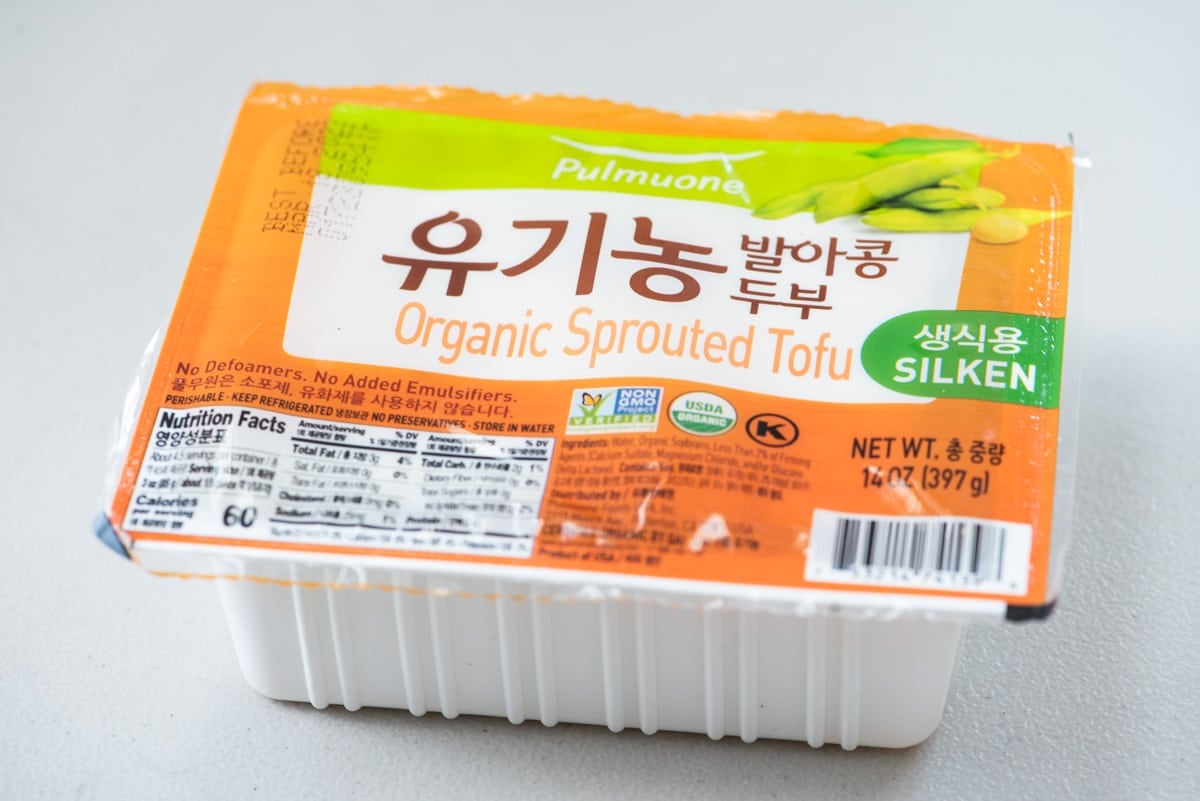
The chopstick etiquette on banchan matters too. If a shared side dish comes with a set of serving chopsticks (공용 젓가락), you use those to transfer food to your rice bowl, and you put them back in the same position, do not stick them back into the shared dish. If there are no serving chopsticks, you can use your own personal chopsticks. Never leave chopsticks standing upright in your rice. Vertical chopsticks in a rice bowl are 제사 (jesa, ancestor rites) symbolism, and Korean elders react to it the way Americans react to a guest walking indoors with shoes on.
회식 (Hoesik) hierarchy bleeds into every table
회식 (hoesik) is technically the post-work group dinner that Korean office culture built into the standard employment contract, but its rules quietly govern any group meal. The core mechanics: senior orders first, senior picks up chopsticks first, junior pours for senior, and the junior always uses two hands. When a senior colleague or elder pours you a drink, the correct response is to hold your glass with two hands (both hands on the glass, or one hand on the glass with the other palm against your chest or elbow). Koreans read these micro-gestures immediately. Foreign guests who master just the two-hand pour get a disproportionate amount of respect back.
The Korea Herald reporter No Kyung-min laid it out precisely: at 회식, younger members of the group pour the alcohol, starting with the glasses of the older members, filling the glasses of the oldest or highest-ranking individuals first before serving others. This etiquette is not decorative. It is the mechanism through which Korean workplaces resolve rank without saying it out loud. A phrase you will hear a lot at the table is "잔 채워드릴게요" (jan chaewo-deurilgeyo, let me fill your glass for you), delivered by the youngest person at the table on a rolling loop. If you get poured for and you do not drink alcohol, take at least a symbolic sip on the first pour, then leave the glass full for the rest of the night. That is understood as polite abstention.
The 원큐 rotation: why Koreans almost never Dutch pay
Here is a mechanic that catches out almost every foreign visitor. Group meals in Korea are typically paid by one person on the bill, and the rotation resets across the next round. The Korean expression for this is 원큐 (won-kyu, a Konglish borrow from "one queue" or "one cue"), and it means somebody clears the whole tab in one clean sweep. Then everyone moves to the second venue (called 이차, i-cha, the "second round"), and a different person pays there. Third round (삼차, sam-cha) another person. Over a few hoesik cycles, the bill flow rotates through the group and roughly evens out.
Dutch pay does exist in Korea, and younger Seoulites in their twenties do use it, but only in casual peer-to-peer settings like a cafe or a fast-casual chain. In a proper restaurant with a group of five people, splitting the bill line by line reads as slightly cold, and Confucian-adjacent groups find it awkward. If you are a foreign guest and a Korean host insists on paying the whole tab, do not fight it hard the first time. That was them investing in the relationship. You pay the second round (drinks, coffee, dessert). Nobody keeps a spreadsheet, but everybody remembers.
Rice, spoons, and the small things Koreans notice
Rice etiquette catches Westerners more than any other thing. Two rules to lock in. First, use the spoon for rice, not chopsticks. Koreans use a 숟가락 (sutgarak, spoon) for rice and soup, and chopsticks for banchan, meat, and noodles. The two utensils have separate jobs, and using chopsticks to scoop rice reads as either childish or slightly rude depending on the age of the person watching. Second, do not raise the rice bowl to your face. In Japan lifting the rice bowl to your mouth is polite, but in Korea the bowl stays on the table and you spoon rice up from below. Leaving a spoonful of rice at the bottom is more acceptable than lifting the bowl.
You will also see Koreans slurping noodles and stew audibly. Not a manners violation. Slurping cools the noodles, and 국물 (gukmul, broth) is meant to be sipped straight from the bowl or spooned quickly. What Koreans do care about is 존댓말 (jondaenmal, formal speech) with the server, especially anyone older. A simple "여기요" (yogiyo, over here) or "저기요" (jeogiyo, excuse me) with a slight nod is the standard call. Snapping fingers or waving impatiently reads badly and will slow your service down noticeably.

The appeal Koreans do not always articulate
Here is what nobody in the K-content marketing pipeline says out loud but every Hallyu fan feels. Korean group dining is less about the food and more about the choreography of caring for each other in real time. The junior pours your glass. The senior orders enough for everyone. The banchan gets shared, refilled, adjusted. Someone reaches across the table to flip your meat on the grill before it burns. Someone pours you water without being asked. That is 정 (jeong), the deep low-heat affection Korean sociologists have been trying to translate into English for forty years without success. K-dramas like Reply 1988 and Extraordinary Attorney Woo built entire emotional arcs around meal scenes for a reason. It is Korea's cultural signature that plays on screen, and the dining floor is where it lives in the wild.
When you eat out in Korea and follow these codes, even imperfectly, Korean strangers notice. The server relaxes. The table next to you nods. A senior at your own table might quietly pour your glass and switch roles. That is the tell that you are inside the etiquette, not outside it. Once you feel that shift, Korean dining stops being a rulebook and starts being the closest thing to real cultural fluency you can get in one meal.
Explore Korean Snacks with Daebak
Love Korean food? Get authentic Korean snacks and ramen delivered straight to your door with the SnackFever Box by Daebak.


