


Table of Contents
Every K-pop trainee I have met in the last decade eventually mentions the same room. It is a mirrored studio in Seongsu-dong (성수동), Seoul, with a specific kind of hardwood that squeaks in a particular way, and it belongs to 1MILLION Dance Studio (원밀리언 댄스 스튜디오). Founded in 2014 by ex-Big Bang backup dancer Yoon Junho and choreographer Lia Kim, 1MILLION did something almost no other K-pop industry player did at the time: it built its brand on YouTube first, not on idol contracts. That gamble is why the studio's YouTube channel now sits at over 27 million subscribers, the largest dance studio audience in the world, and why HYBE, SM, and JYP quietly rent 1MILLION instructors as guest teachers for their trainee dorms. Here is the industry read on why K-dance became a category, how the 안무 (choreography) pipeline actually works, and what to know about the choreographers whose names travel with the moves.

The 2014 Seongsu Basement That Rewrote How K-Dance Gets Distributed
1MILLION Dance Studio opened in 2014 in a Seongsu-dong basement. The founding bet was contrarian for its moment. Yoon Junho, a former Big Bang backup dancer who had spent years watching K-pop labels treat choreographers as invisible service vendors, argued that if dancers filmed their own choreography on YouTube and put their own names on the screen, the labels could no longer control the credit chain. Lia Kim, the co-founder who had already choreographed for Sunmi and would soon do TWICE's TT, ran the creative side. What most global fans miss is that this was not a passion project. It was a business decision aimed at a specific market failure. In the pre-2014 K-pop industry, choreographers earned a flat lesson fee, got no royalty when their moves went viral on Bugs or Melon-adjacent dance covers, and often did not appear in the MV credits at all. Lia Kim has talked openly on Korean TV about not receiving lesson fees, and about waiting in hallways because the agencies did not give dancers waiting rooms. The 1MILLION studio was the workaround: put the choreographer's name in the video title, own the distribution, and let the audience decide who the star is.

Lia Kim, May J. Lee, Yoojung Lee: The Names That Actually Move K-pop Choreography
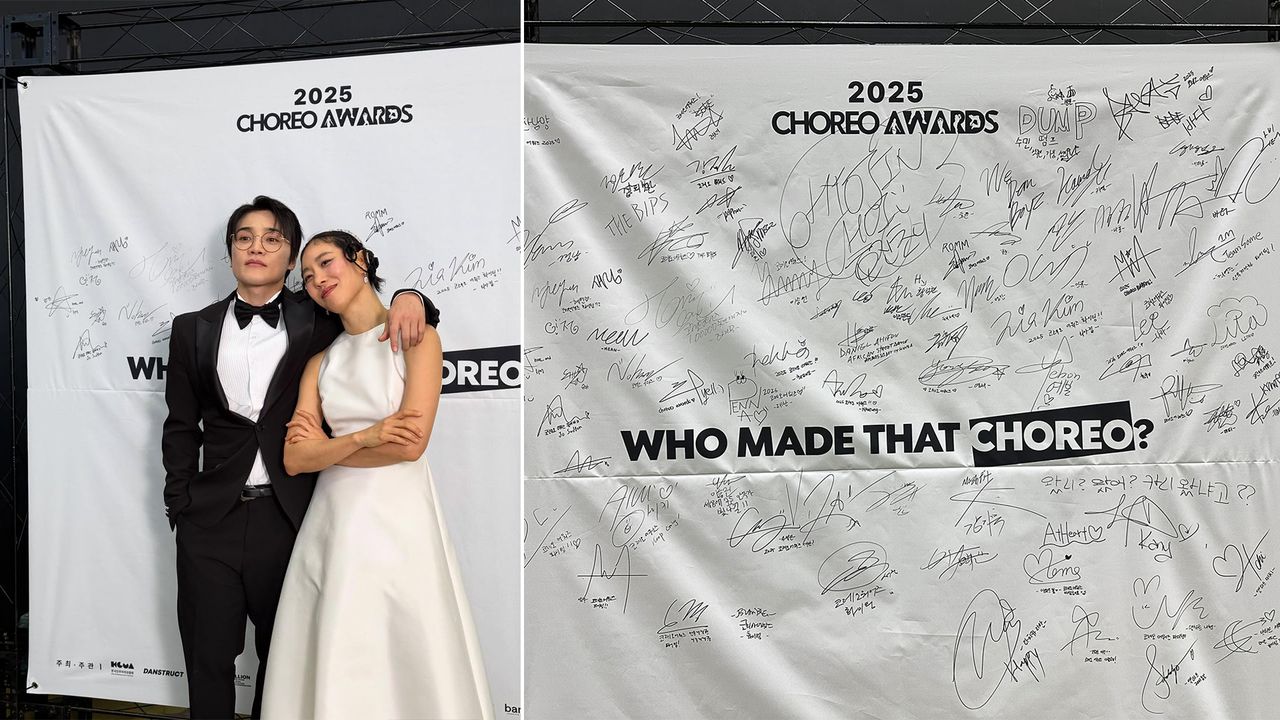
The choreographer roster is what makes 1MILLION functionally the choreo pipeline for K-pop, not just a dance school. Lia Kim's fingerprints are on Sunmi's Gashina, 24 Hours, TWICE's TT, I.O.I's Very Very Very, MAMAMOO's HIP, and most recently BLACKPINK's JUMP. May J. Lee, who has been publishing choreography since around 2013, is the one whose videos most Western fans stumble into first. Her Fifth Harmony Worth It routine sits at over 210 million YouTube views, and inside the industry she is considered a technical benchmark for pop-jazz clean lines. Yoojung Lee (Lee Yoojung) is the crew's go-to for boy-group choreography and served as a Master alongside Lia Kim on the SBS survival show B:MY BOYZ, which tells you how the Korean broadcasting industry ranks her. Add Junho Lee, Tina Boo, Minny Park, Koosung Jung, Mina Myoung, and Choi Young Joon (the veteran Produce 101 trainer and 1MILLION director who Lia Kim recently married in a widely covered wedding), and you have essentially a shortlist of the humans deciding what point-choreo (포인트 안무) looks like this year across the K-pop industry.
The Industry Mechanic: Why HYBE, SM, and JYP Rent 1MILLION Instructors
Here is the part that most fan coverage skips. Every major Korean label (HYBE, SM, JYP, YG, Cube, Starship) runs an in-house trainee dance program, but for specific comeback prep and for pushing a trainee past the 아이돌 (idol) baseline into what the industry calls 실력파 dancer status, they bring in outside masters. 1MILLION instructors are the most-cited external hires in that pipeline. The reason is very practical. In-house dance instructors at agencies tend to teach a house style optimized for camera-safe formations. 1MILLION choreographers spend their week filming for a global YouTube audience where the camera cuts hard and the movement has to read in a single loop, so they bring a different vocabulary. Trainees who cycle through Lia Kim or May J. Lee classes come back with cleaner isolations and better facial control, both of which matter more than technical difficulty when a music show director is picking your close-up shots. This is also why 1MILLION opened an entirely separate corporate lane, working with brands like Nike, Adidas, and Burberry on movement direction. Once you sit in the room where idols train, brand deals follow.

The YouTube Money Problem That Most Fans Do Not Realize
Here is a piece of context that has quietly shaped how 1MILLION operates. On a late-2023 Korean TV interview, Lia Kim revealed that the 1MILLION Dance Studio YouTube channel, then at 26.2 million subscribers, brings in essentially zero direct ad revenue for the studio. YouTube's Content ID system automatically routes ad money on any dance-cover video back to the music rights holder, which means TWICE dancing choreographers do not get paid when 4 million people watch a TT routine set to the original song. Lia Kim, who now chairs the Korea Choreography Copyright Association (한국안무저작권협회), has been pushing to change this at the policy level, arguing that music took roughly 46 years to get properly credited monetarily and choreography deserves the same recognition. The 2025 Choreo Awards, organized by 1MILLION alongside the copyright association, are essentially the ceremonial arm of that argument. The revenue model 1MILLION actually runs on is class fees at the Seongsu studio, corporate movement direction contracts, workshops in 22 countries, and label-adjacent choreography commissions. The YouTube channel is the marketing engine, not the P and L.

1MILLION LA and Why K-Dance Went Trainable in the West
1MILLION opened 1MILLION LA in the late 2010s, and later 1MILLION NY, which was the moment K-dance transitioned from something you watched to something Western fans could physically train in on their own coast. Before this, learning 1MILLION-style choreography meant either flying to Seongsu for a $25 open class or trying to mirror a YouTube tutorial in your bedroom. The LA studio meant a K-pop-obsessed teen in California could take a Yoojung Lee workshop when the crew flew through. Combined with the 22-country workshop schedule that the studio's instructors run, this created a training pipeline that basically did not exist in Western pop before. It is worth naming what makes the appeal specifically Korean. Western commercial choreography, in the Beyonce-Britney-Chris-Brown lineage, tends to prioritize solo star projection and freestyle sections. K-pop choreography, and specifically 1MILLION-style, prioritizes tight group synchronization, point-choreo hooks that fans can learn from a 15-second TikTok clip, and camera-facing spacing. When Vanessa Dai, an Australian dancer from AG Squad, told The Korea Herald that Western dance is "based off of the artist" while in Korea "you can dance for an artist, but you also create more of a name for yourself," she was describing exactly the shift 1MILLION forced. The choreographer is now a co-star.
What Global Fans Actually Get About K-Dance That Fanblog Coverage Misses
If you have watched 1MILLION for any length of time, you have probably noticed that a certain kind of routine sticks. The Lia Kim Shape of You from 2017, the Koosung Jung Bad Guy, the May J. Lee Worth It. What these have in common is a specific principle Korean choreographers talk about as 절제된 힘, restrained power. The move is technically demanding but the dancer's face does not perform effort. That aesthetic, closer to hip-hop rooted precision than to Broadway musical-theater expressiveness, is why K-dance reads as cool rather than cheesy to Western audiences who grew up on MTV-era choreography. Add the 쫄깃 (chewy, tight-elastic) quality of good group synchronization, which requires the entire crew to hit the same eighth-note micro-timing, and you have a movement language that photographs beautifully on YouTube and translates directly to short-form video. This is why 1MILLION content still dominates dance TikTok six years after the platform launched. The routines were engineered for the shot before the shot was even a format. If you want to see the mechanic yourself, pick one Yoojung Lee boy-group routine, one May J. Lee lyrical routine, and one Junho Lee hip-hop routine, watch them back to back, and notice how the camera cuts are already choreographed inside the movement. That is the piece the Western commercial dance world is still catching up to.
Explore More of Korea with Daebak
Want to bring a little piece of Korea into your life? The Daebak Box is packed with the best Korean snacks, ramen, and cultural goodies delivered monthly to your door.


