


Table of Contents
Every year around the last week of August, something predictable happens on Melon. The chart's algorithm quietly starts nudging R&B tracks higher in the "이런 노래 어때요" recommendations, the "가을 감성" (gaeul gamseong, autumn mood) editorial playlists get their annual refresh, and a handful of Korean 알앤비 (allaenbi, R&B) artists see a 20 to 40 percent lift in daily streams that has almost nothing to do with a new release. I have spent about a decade working around Hallyu music marketing, and this seasonal pattern is one of the most consistent things I have watched. Fall belongs to K-R&B in Korea the way summer belongs to K-pop dance singles, and the streaming platforms design their playlists to reinforce it. The Melon "가을 감성" flagship playlist, one of the platform's most-followed editorial slots, sits above 2 million subscribers. Landing in that playlist can pull a mid-tier R&B track from three-digit to five-digit daily plays inside 48 hours. So when I put together a fall R&B playlist, I do not treat it as a mood board. I treat it as a scene report on the artists who have shaped the modern Korean R&B sound and continue to define what "가을 감성" actually sounds like: Crush, DEAN, Zion.T, DPR Live, and Heize.
Why Fall Is Actually the K-R&B High Season
The seasonal skew is not a vibes thing. Korean streaming platforms have run "가을 감성" as a genre category for years, and the playlist mechanics behind it are aggressive. Melon, Genie, and Bugs all boost mid-tempo, minor-key vocal music during September through November, and the editorial teams openly favor R&B, indie ballads (인디 발라드, indi balladeu), and acoustic tracks in that window. Post-2015 this pattern intensified. Crush's "Sofa" landed in October 2014 and became the reference point for what a Korean fall song is supposed to feel like, and the labels noticed. If you look at release calendars, you will see AOMG, Amoeba Culture, and P Nation all cluster their R&B mid-tempo drops between mid-September and early November. That is not coincidence, that is a calendared bet on 감성 (gamseong, emotional resonance) taking over the charts.
Here is the industry mechanic guidebooks miss. K-pop mainstream releases dominate album sales and physical fandom economics, but they do not always dominate streaming during Q4. R&B artists have deeper individual streaming loyalty per fan than a lot of mainstream groups, even if their peak sales are smaller. A Crush or DEAN listener will loop the same track for weeks, driving compound streaming numbers, while an idol group album sale is often front-loaded into release week. The result is that during fall, R&B artists punch far above their fandom-size weight class in the Melon Top 100. This is why the "underrated in fandom, over-indexed in streams" gap is a real revenue arbitrage for indie labels working the R&B genre.
Crush: The OG 크러쉬 Who Wrote the Playbook
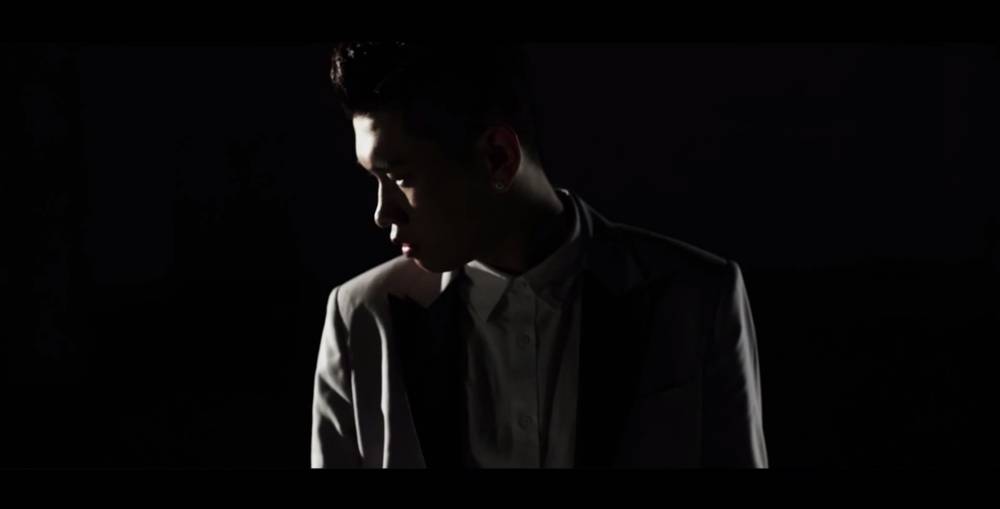
Crush (크러쉬, Shin Hyo-seob) is where any honest K-R&B fall playlist has to start. His 2014 debut era gave us "Sometimes" and "Sofa," and that "Sofa" MV, a low-lit room, a lonely couch, minor-key falsetto, essentially locked in what a fall Korean R&B song is supposed to look and sound like for the next decade. The appeal point is not the vocal acrobatics. Crush's voice is soft, breathy, and deliberately restrained, closer to Frank Ocean than to a big-band belter. What Korean listeners respond to is that restraint reading as sincerity in a music culture where over-singing is often the default. A restrained, honest 감성 vocal in the fall reads as emotionally credible in a way a big-diva belt does not. That is the specific 매력 (maeryeok, appeal) that keeps his catalog on every 가을 감성 playlist.
What makes Crush more than a mood act is the collaboration graph. He has been a magnet for the biggest crossovers of the last decade, from Zico's "Bermuda Triangle" with DEAN to the Grammy nominee scale of a Devin Morrison feature to writing on 2016's "Oasis" with Zion.T. Recent-era, his "Rush Hour" with j-hope was a genuinely calculated bet: HYBE needed j-hope's solo era to signal K-R&B credibility, and only a small handful of Korean artists carry that stamp. Crush is the shortlist. When labels pay him to co-lead a track, they are buying that 알앤비 authenticity currency. His most recent full album "wonderego" and the follow-up EPs have kept him inside the "cold weather" release window his own catalog helped invent.
DEAN: The Half Moon Blueprint for Global Crossover
DEAN (딘, Kwon Hyuk) is the artist people cite when they want to argue Korean R&B could break Western markets on its own terms, without going through the standard K-pop machine. His 2016 debut EP "130 Mood: TRBL," anchored by "D (Half Moon)" featuring Dynamic Duo's Gaeko, is one of the cleanest examples of the "sad boy in soft focus" fall aesthetic that dominates Korean playlists in October. But the reason he matters at an industry level is the SXSW moment. In March 2016, DEAN became the first Asian artist invited to perform on the Spotify House stage at SXSW, sharing bills with Kendrick Lamar and Odesza. That was not just a look, it was a functional signal to Western A&R that a Korean R&B artist could program the Spotify algorithm on his own musical merits.
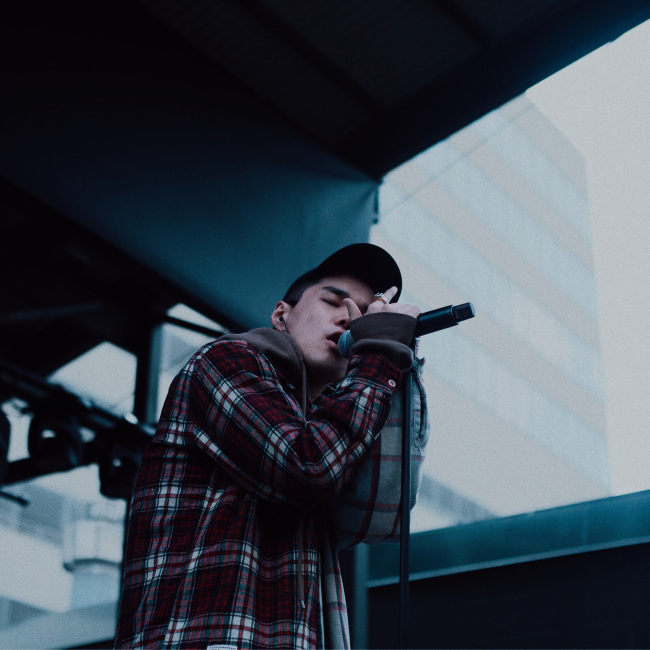
"Instagram," dropped December 2017, is the other DEAN track that keeps recurring on fall playlists, and it deserves the placement. The song is technically not about a season, it is about scrolling and self-comparison, but the sonic palette is autumn: hushed synths, mid-tempo boom-bap drums, that specific melancholic 감성 that reads as October at 11pm. It crossed 100 million streams globally, the first Korean R&B solo track to hit that number without a K-pop group boost. In insider terms, "Instagram" is what proved to Universal Music Korea that a domestic R&B artist could survive a two-year absence from the Korean charts and still hold Western listener share. DEAN has been famously reclusive since 2019, and the fact that "Half Moon" and "Instagram" still sit on Korean fall playlists in 2026 without new promotion tells you how deep the catalog loyalty runs.
Zion.T: Songwriter Economics and the Yanghwa BRDG Standard
Zion.T (자이언티, Kim Hae-sol) is the songwriter's songwriter of Korean R&B, and if you want to understand why his catalog dominates fall playlists, you have to understand the songwriter economy behind it. He wrote roughly 60 songs before "Yanghwa BRDG" hit in 2014, and by his own account only about 11 turned into meaningful hits. "Yanghwa BRDG" was written in 30 minutes on a plane back to Korea, addressed to his family, and it won Best R&B and Soul Song of the Year at the 12th Korean Music Awards. The song sits at the intersection of two things Korean audiences deeply respond to: literal geographic specificity (the actual Yanghwa Bridge in Seoul) and emotional directness about family duty. That combination is unusual in K-pop, which tends to keep lyrics in a more universal register, and the specificity is exactly what triggers the fall 감성 response.

His 2017 move to YG's sub-label The Black Label was a genuinely important structural moment for K-R&B. Before Black Label, the boutique R&B labels (Amoeba Culture, HIGHGRND, Just Music) were the natural homes for artists like Zion.T. Him signing with a YG-adjacent label signaled that the majors had figured out how to house a soloist R&B artist without forcing him into a K-pop template, and that unlocked more label money for artists in his tier. "Snow" with Lee Moon-sae swept the year-end charts that December, and it is still on the "가을 감성" playlist every year without fail. Zion.T's whole appeal is that his songwriting sounds conversational, not polished. In an industry where the standard is glossy studio perfection, that unpolished quality is the specific 매력 that keeps him in fall rotation.
DPR Live: The Coachella-Ready K-R&B Wave
DPR Live (Hong Da-bin) is the shift point where Korean R&B stops being a domestic playlist genre and becomes a global festival act. Dream Perfect Regime, the independent multi-genre label he co-founded with DPR Ian in 2015, has done something almost no other Korean R&B artist has managed: built a bigger overseas fandom than domestic one, without going through a major K-pop label pipeline. His debut EP "Coming To You Live" in March 2017 featured Jay Park, Crush, and Loco, which was the K-R&B version of a rookie flexing the entire genre on his liner notes. His 2020 full-length "Is Anybody Out There?" is the record fall playlists lean on hardest from his catalog, and 2021's "Iite Cool" pushed him into festival rotation.
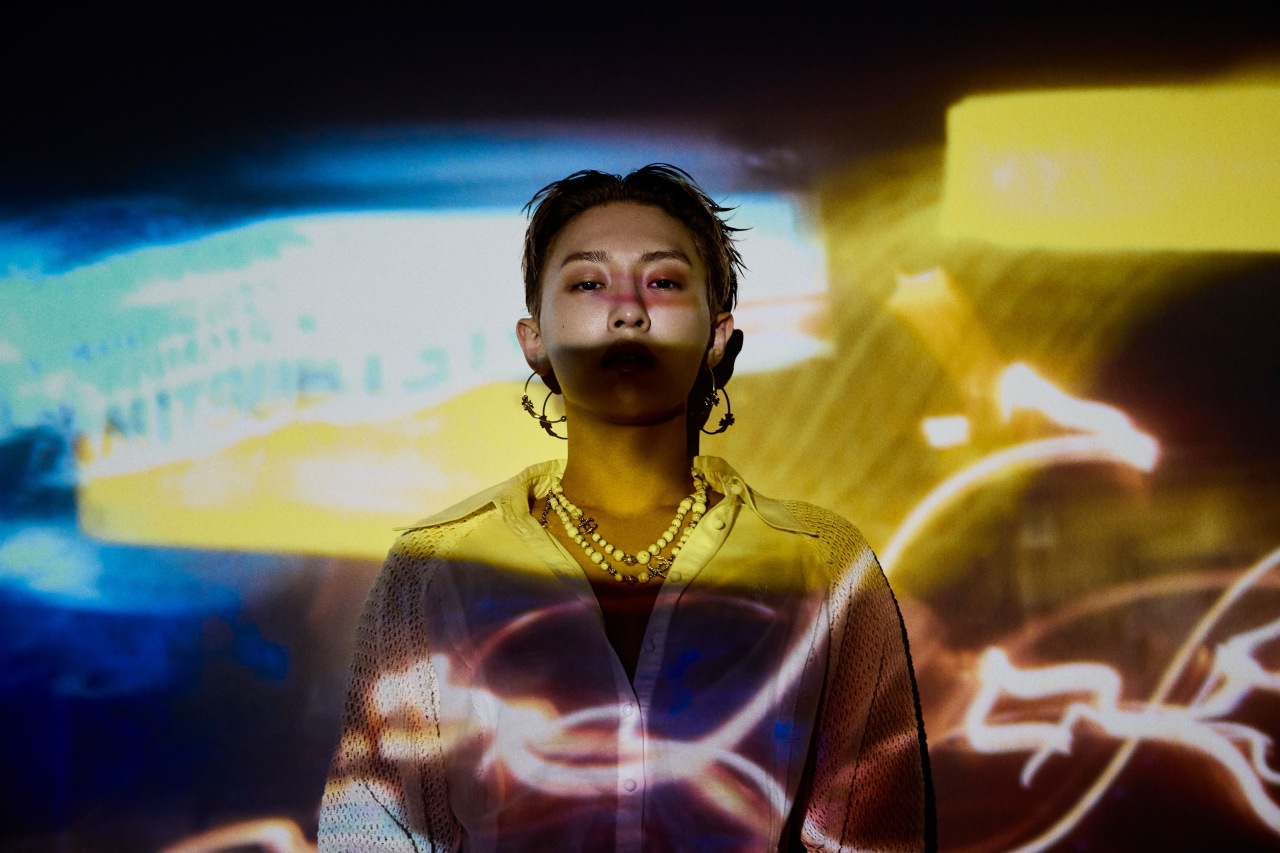
The industry mechanic to notice here is that DPR ran the K-hip-hop underground playbook, releasing tracks free online for a year while Rem handled the business layer and Ian handled the visual direction, then flipped that groundwork into a festival-first monetization strategy. His Coachella 2022 slot was not a K-pop diversity booking, it was a legitimate indie-label festival play. When Head in the Clouds 2023 booked DPR Live and DPR Ian to headline the New York edition alongside ITZY and XG, it confirmed a structural shift: the West is now willing to book Korean R&B and hip-hop artists on their own indie festival circuits, not just as K-pop showcase acts. That reframes what a fall K-R&B playlist even means. It is not just Melon anymore, it is Spotify's global "chill" and "R&B soul" flagship playlists too.
Heize: The P Nation Ballad Machine and Fall's Quiet Champion
Heize (헤이즈, Jang Da-hye) is the artist who most explicitly built her catalog around the fall season, and the streaming numbers show it. Her 2019 mini album "Late Autumn" is literally named for the season, and the title tracks "Falling Leaves Are Beautiful" and "Late Autumn" (featuring Crush) run every October across every major Korean streaming platform. What she cracked is the modernized 발라드 (balladeu, ballad) template: her music sits in the R&B category on Melon, but structurally her songs read as ballads with jazz chord movement and rap-flavored phrasing, a hybrid that Korean radio and playlist editors slot easily into 감성 rotation. The reason "Star" and "You, Clouds, Rain" felt bigger than her fandom size warranted is that Heize's catalog is engineered for playlist longevity, not release-week peaks.

Her 2019 signing to PSY's P Nation was the other structural move worth tracking. P Nation had just launched, and Heize was one of the first anchor artists, alongside Jessi and Crush himself briefly. That signing shifted her from an indie-adjacent artist (she originally rose out of Unpretty Rapstar in 2015) into a properly resourced solo career with catalog-level marketing budgets behind her. The "Undo" album in 2022 and "Last Winter" the same year kept her seasonal rotation working, and the recent "FALLIN'" mini album from late 2024 was engineered to slot straight into the annual fall playlist reset. Heize is also one of the few Korean R&B artists whose collab record is basically all-star: BTS's Suga produced "We Don't Talk Together," which was a genuine crossover event for HYBE and P Nation both, and her work with 10cm and Colde defines the current 인디-R&B crossover sound. If you build a fall playlist without her, you are ignoring the artist Korean editors most reliably deploy in September.
How to Actually Sequence This Playlist
If you are building the playlist for real, the order matters more than the roster. Start with Crush's "Sofa" or "Butterfly" to set the mid-tempo baseline. Slide into DEAN's "Instagram" for the emotional tension. Drop Zion.T's "Yanghwa BRDG" or "Snow" in the middle third to lift the tempo just slightly. Use DPR Live's "Hula Hoops" or "Text Me" as your reset track when the mood risks getting too heavy, since his catalog has the most hip-hop-adjacent energy of the five and it prevents playlist fatigue. Land the closer with Heize's "Falling Leaves Are Beautiful" or "Late Autumn," because her track ordering (title track plus Crush feature) is basically an engineered fall playlist ending in a single record. The whole sequence lasts under an hour, which is roughly the daily active playlist window for Korean commuters, and that is the specific listening context most of these songs were built for.
The larger point is that K-R&B is not a subculture inside K-pop. It is a parallel scene with its own economics, its own release calendar, and its own algorithmic seasonality. Every fall it delivers the same result: a handful of artists who quietly outstream the idol groups on Melon for two months, driven by 가을 감성 playlist placement and catalog loyalty that idol fandoms cannot replicate. Whether you are new to the genre or you have been on it since Crush's 2014 debut, September through November is when the sound sits closest to the season it was designed for.
Explore More of Korea with Daebak
Want to bring a little piece of Korea into your life? The Daebak Box is packed with the best Korean snacks, ramen, and cultural goodies delivered monthly to your door.


