


Table of Contents
Walk into any Korean 편의점 (pyeon-eui-jeom, convenience store) and the fruit-flavored snack aisle is doing quiet work that the salt-and-crunch aisle gets no credit for. Fruit-flavored candy and puff snacks are the entry SKU for Korean kids, the nostalgia SKU for Korean adults, and increasingly the export SKU that Costco Australia and H Mart Weehawken are stocking three-pack deep. After a decade watching Lotte, Orion, Nongshim, and Haitai fight for the same 200 won of pocket money at elementary school gates, the pattern is clear. Fruit flavor is where Korean confectionery R&D goes the hardest, because fruit is where the palate is most forgiving of the fact that the fruit itself is nowhere in the bag.

뽀빠이 (Ppoppai): Samyang's 1972 Corn Puff and the Star Candy Inside
Samyang's 뽀빠이, launched in 1972 and named after the American sailor cartoon that was inescapable on 1970s Korean TV, is technically a savory corn puff. But nobody bought it for the puff. Every 뽀빠이 bag ships with a small foil packet of 별사탕 (byeol-satang, star candy), tiny pastel sugar pellets in strawberry pink, banana yellow, melon green, and grape purple. That packet is the actual product. Elementary schoolers in the 1980s and 1990s would tear open the foil first, pour the star candies into their palm, and negotiate trades on the playground by color. My generation of Korean kids treated pink 별사탕 like a currency.
The industry reason 뽀빠이 has outlived every 1970s snack fad is that Samyang cracked the packaging psychology of the freebie SKU thirty years before Kellogg's put a toy in every cereal box. The corn puff is a filler. The candy packet is the emotional payload. Even today Samyang refuses to redesign the 뽀빠이 wrapper for exactly the same reason Coca-Cola refuses to change the contour bottle. Nostalgia recognition is the marketing budget you never have to pay.
아이셔 (Ai Sher): Orion's 1976 Sour Fruit Standard
아이셔 hit shelves in 1976 as Orion's answer to Japan's Sour Kids category, and the naming is doing more work than most Korean brand names ever do. 아이 in Korean means both "child" and functions as an interjection (like "ouch"), and 셔 is the shortened root of 시어 (shi-eo, sour). So the name literally reads as the sound a kid makes when they bite into something painfully tart. That is the entire product promise on the front of the bag, and it is unusually honest branding for the era. Fruit lineups have rotated over the years, but the flagship trio (grape, lemon, strawberry) has held since the 1980s.
What makes 아이셔 specifically Korean, and why Japanese sour candy imports have never fully displaced it, is the sour timing. Japanese sour candies front-load the pucker at first bite and then coast into sweetness. 아이셔 does the opposite. The first three seconds are almost mild fruit, and then the citric acid layer kicks in as the shell dissolves, and the sour spike lands right when you have already committed to chewing. That is a texture-timing engineering choice, and it is why Korean 30-somethings still keep a pack in their office drawer for the 3 p.m. dip. The nostalgia is not the flavor, it is the specific waveform of the sour hit.

왕꿈틀이 (WangKkumteulli): Nongshim's 1994 Worm Gummy Bet
왕꿈틀이 launched in 1994 as Nongshim's entry into the fruit gummy category that Haribo had globalized a decade earlier, and Nongshim went bigger and longer instead of trying to out-cute the Germans. The name translates to "big wriggler" (왕 = king or big, 꿈틀 = wriggling/squirming motion), and the product is a plump, five-inch, dual-colored gummy worm with a chewier bite than any Western gummy on the same shelf. The fruit combos are deliberate: strawberry-lemon, grape-orange, cola-peach. Each worm is engineered so the two flavors hit different parts of the tongue as you chew from head to tail.
The insight Nongshim's R&D team was chasing here is that Korean palates rank textural payoff (씹는 맛, ssim-neun mat, the taste of chewing) as high or higher than pure flavor payoff. Nongshim's Anseong research center holds more than 20 patents on gelatin firmness tuning specifically for the Korean domestic market, which is why 왕꿈틀이 has a snap and rebound that Trolli and Haribo never bother with. It is also why 왕꿈틀이 exports have done disproportionately well in markets where Asian-descent Gen Z shoppers are the loudest cohort. When Weee posted its top 100 Korean grocery items for 2024, 왕꿈틀이 was in the top 15 gummy SKUs, well above Sour Patch Kids by unit velocity in Korean-American zip codes.
매의눈 젤리 (Eagle Eye Jelly): The Sour Fruit Jelly That Ate 편의점 Shelves
매의눈 (mae-eui-nun, eagle's eye) jelly is a newer entry, launched by CJ CheilJedang around 2020 and named after the visual of the round jelly disc with a bright fruit-colored core inside a translucent sour outer shell. The center dot looks like a pupil, hence the branding. The product went viral on Korean YouTube because unboxing videos of the jellies bursting into two textural layers when bitten hit the right ASMR trigger for the algorithm. Within eighteen months, CU and GS25 (Korea's dominant convenience store chains) had allocated 매의눈 젤리 a fixed premium shelf position at eye level, which is the retail real estate equivalent of a Michelin star for a snack SKU.
The reason this matters commercially is that 편의점 in Korea is not just retail, it is the launch platform for any new snack SKU. Getting placed at GS25's eye level in Gangnam Station's underground exit means CJ CheilJedang paid for it and expects it to sell 40 units per week per store. Missing that number gets you demoted to the bottom shelf within a quarter. 매의눈 젤리 not only hit the number, it triggered a wave of "eye" and "eyeball" themed fruit jelly copycats from Lotte, Haitai, and Crown within the following season. That is the Korean confectionery cycle running at full speed.
Fruit Gum: Lotte's Juicy & Fresh Empire and the Orange Standoff
Fruit gum in Korea is essentially a Lotte category. 쥬시후레시 (Juicy & Fresh) launched in 1972 and 후레쉬민트 (Fresh Mint) in 1974, and together they defined what "Korean gum" tastes like for two generations. The Juicy & Fresh formula is a specific orange-pineapple-apple hybrid that no Western gum brand has ever cloned, mostly because the flavor compound is made in-house at Lotte's confectionery R&D center in Yangsan. Wrigley tried to break into the Korean market in the early 2000s with its full portfolio (Juicy Fruit, Doublemint, Big Red) and got flattened by Lotte's shelf allocation and the muscle memory of Korean chewers.
The Korean fruit gum lesson is one every packaged goods founder should know. If a flavor is culturally imprinted before puberty, no amount of marketing spend from an incoming brand will displace it. Wrigley's Juicy Fruit tastes wrong to a Korean 40-something because it is not Juicy & Fresh, and that ends the pitch. This is also why Lotte Wellfood is now the primary licensor for Pepero (also 1983) in the US, because Lotte figured out early that Korean sensory memory travels with the diaspora better than the marketing budget follows.
Melona and the Mango Bingsu Bar Category
Binggrae's Melona, launched in 1992, is the reason "Korean fruit ice bar" is now its own category on Costco freezer aisles from California to Sydney. Melona is a fruit-flavored ice pop with a creamy, almost chewy texture that comes from a small percentage of natural milk and locust bean gum in the base. The flagship is melon (hence the name), but the export lineup has diversified into mango, coconut, strawberry, and taro to hit different regional palates. Binggrae has been tuning flavor ratios market by market since 1995, when it first exported to Hawaii, and the current export mix generates more revenue for Melona overseas than at home.
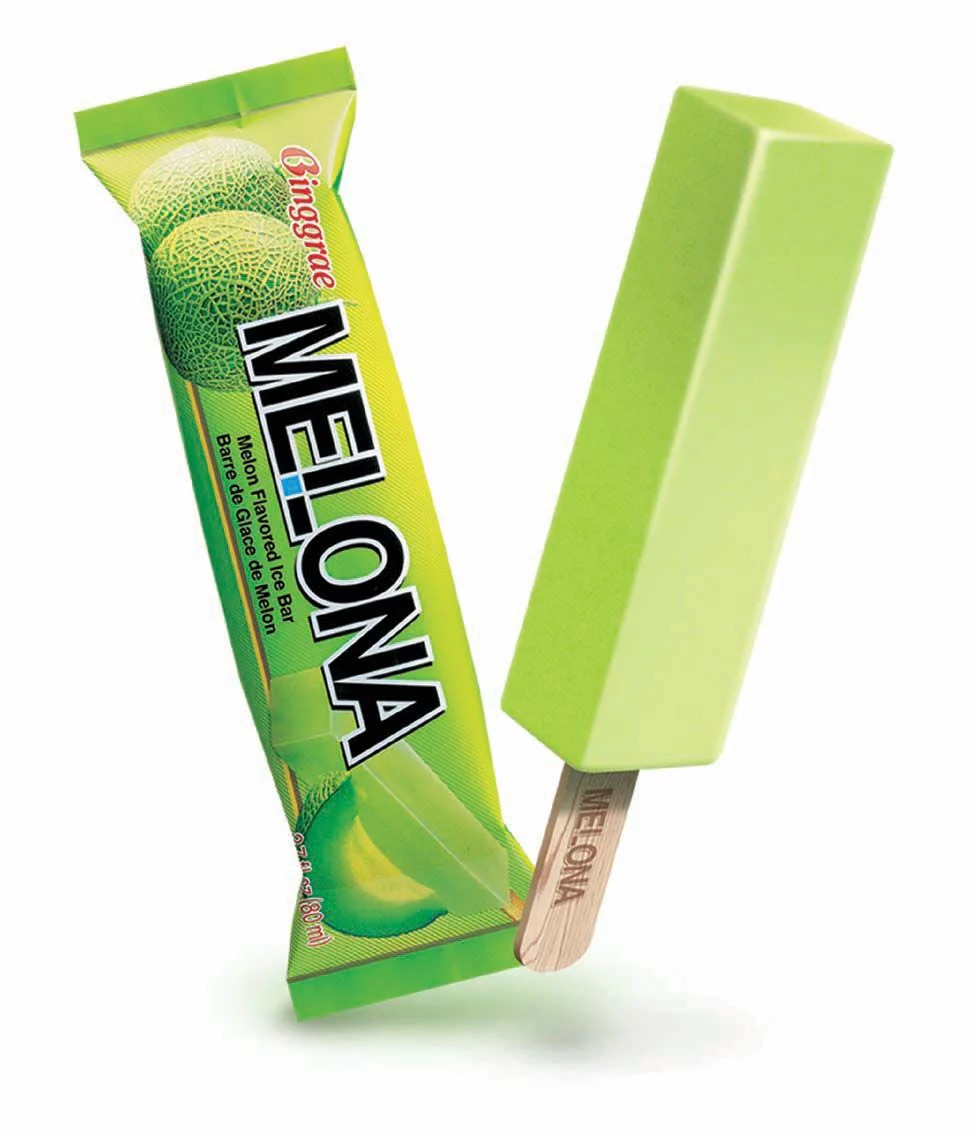
What Binggrae figured out about the mango bingsu bar category specifically, which is now a growth SKU in H Mart freezers, is that Southeast Asian and Middle Eastern buyers respond much more strongly to mango than to melon. So Binggrae kept the melon Melona as the domestic anchor and pushed mango Melona as the flagship for the Philippines, Vietnam, and Malaysia. That is not just SKU rationalization, it is the kind of market-tuned product architecture that used to require a decade of on-the-ground insight and now runs on export sales dashboards updated weekly at Binggrae HQ in Yongin.
Mango Patbingsu: The Fruit Dessert 원조 That Fuels the Bar Category
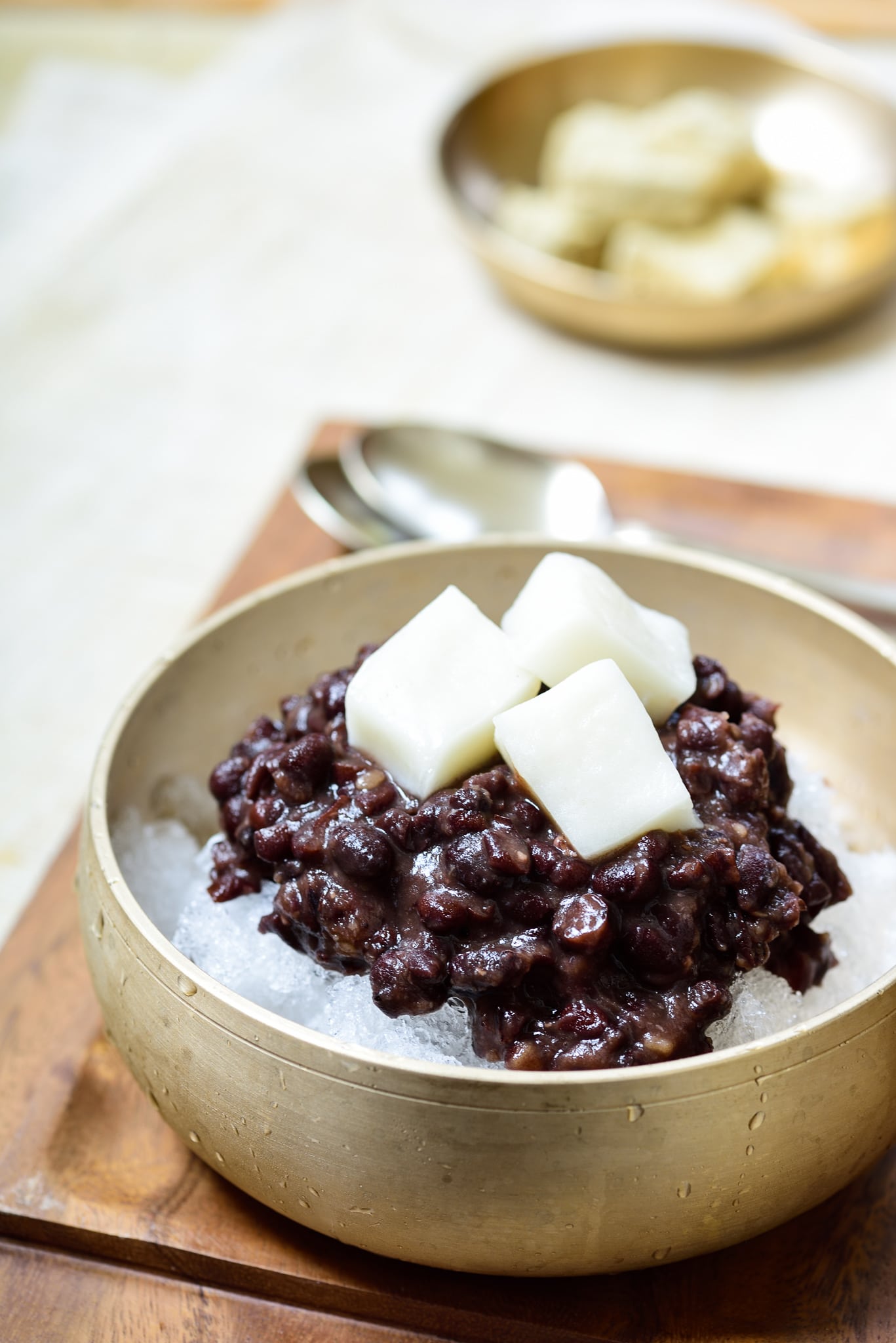
Before Melona was a bar, mango bingsu was a dessert. 빙수 (bingsu) is the Korean shaved ice tradition that dates back at least to the Joseon dynasty (there are 1795 court records of ice being shaved with pat, red beans, for royal summer meals), and the modern mango bingsu came out of Sulbing's 2013 menu innovation that stacked fresh mango cubes on a mountain of milk-shaved ice with condensed milk and injeolmi rice cake. The dessert became a Seoul cafe standard within eighteen months, and Binggrae essentially bar-shaped that flavor combination into a portable Melona SKU three years later.

The reason this dessert-to-snack pipeline matters for anyone tracking Korean snack strategy is that Korean confectionery companies watch the cafe and dessert scene the way tech companies watch app store rankings. When Sulbing hit 500 stores across Korea by 2015 with mango bingsu as its signature, Lotte, Haitai, and Binggrae all had mango bingsu bar prototypes in test kitchens within twelve months. The category was born from a cafe dessert, and it has stayed on shelves ever since because Koreans confirmed the mango-milk-ice flavor architecture works portable.
Why US Retailers Are Loading Up on Korean Fruit Gummies
The last twelve months have quietly rewritten the Korean fruit snack export map. On Amazon Prime Day 2024, Korean fruit gummies were the number two category in Asian snacks by unit sales (only ramen beat them), and Weee, the Chinese-American grocery delivery app, reported that its Korean fruit gummy SKUs grew 217 percent year over year. H Mart added a dedicated Korean fruit candy end-cap in its Manhattan and Los Angeles flagship stores in Q3 2024. Costco Australia and Costco Japan both added Melona to their permanent freezer sets.
The driver behind this is the K-content halo effect running through Netflix K-dramas and K-pop content. When a member of TWICE or LE SSERAFIM eats 왕꿈틀이 on a Vlive or Weverse stream, that snack sees a real sales bump in the following month at every US H Mart within 48 hours of the video going up. This is not a speculation, it is a data point that Nongshim's export team openly discusses in earnings calls. The fruit snack category is uniquely well positioned to ride the K-wave because fruit flavors are the least culturally intimidating entry point for a non-Korean shopper. Nobody hesitates on strawberry. That is why fruit-flavored Korean snacks are the category that will keep growing, long after the buldak spice-limit challenge fatigues.
Explore Korean Snacks with Daebak
Want to taste Korea's fruit-flavored snack lineup without a plane ticket? The SnackFever Box by Daebak ships an authentic curated selection of Korean snacks, gummies, and drinks straight to your door every month, including seasonal fruit-flavored SKUs that our Seoul curators handpick from CU, GS25, and Emart shelves.


