

Table of Contents
Anyone who tries to read Korea by looking at Seoul alone misses the whole story. Nine provinces (도, pronounced "do"), six metropolitan cities (광역시), the Seoul Special City, and the newer Sejong Special Self-Governing City together carve up the peninsula. Each 도 keeps its own dialect (사투리), its own industry mix, and its own pace. After a decade of watching Hallyu spread out of Seoul, the regional flavors are where the real Korea lives.
The 9-6-1-1 Grid, and Why It Matters
Korean administrative geography is oddly clean once you see it. Nine provinces, six 광역시 (metropolitan cities: Busan, Daegu, Incheon, Gwangju, Daejeon, Ulsan), Seoul Special City, and Sejong. The 광역시 were pulled out of their parent provinces decades ago because their populations passed the million-person line and needed their own budgets. That is why Busan is not technically part of Gyeongsangnam-do anymore, even though everyone still thinks of it as Gyeongnam culturally.
The reason this matters for anyone consuming K-content: dramas keep telegraphing region through sound. When you hear a character rasp "와" or "우예됐노", you are hearing 경상도 사투리. When someone stretches sentences with a soft, drawn-out ending, that is 전라도. Producers cast regional voices on purpose because the country reads accents the way Americans read a Boston versus a Georgia twang.
Gyeonggi: The Tech Engine Wrapped Around Seoul
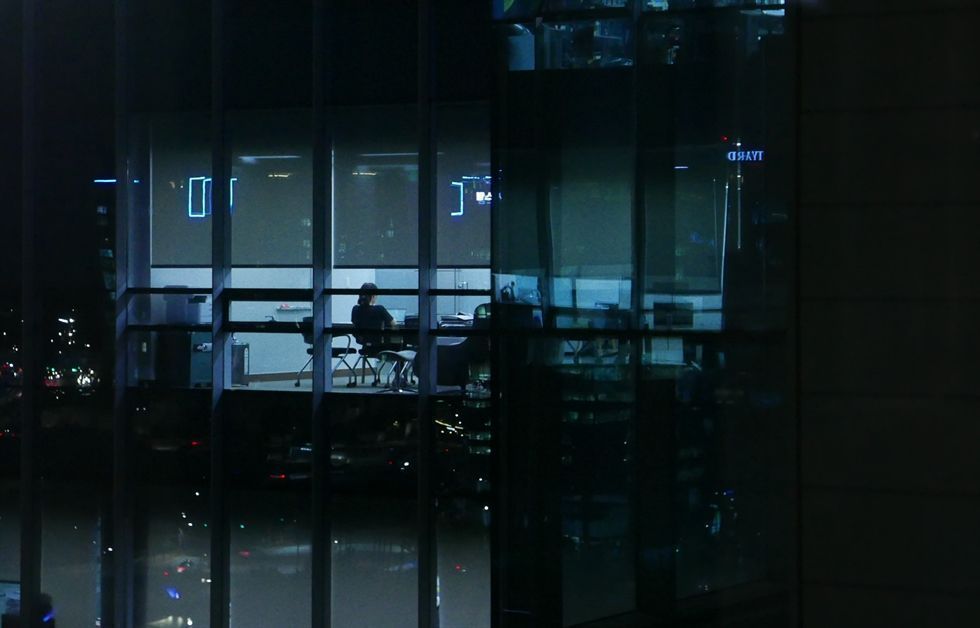
Gyeonggi-do wraps the capital on almost every side and holds close to 13 million residents, making it the country's most populous province. It is where Seoul commuters actually live. Suwon, Seongnam, Yongin, Bucheon: satellite cities that swelled during the 신도시 (new town) buildouts of the late 1980s and again in the 2000s.
The most consequential piece of Gyeonggi for the modern Hallyu economy is Pangyo Techno Valley, inside Seongnam. Naver, Kakao, Nexon, NCsoft, and Krafton all sit there. It is not glamorous, and the Korea Times has documented that its nightlife is basically deadlines and orthopedic clinics, but roughly 70,000 people ship the games, portals, and platforms that carry K-content to global audiences. Every time someone streams a webtoon on LINE or messages a friend on KakaoTalk, that traffic runs through code written in Gyeonggi. Everland, the country's largest theme park, is here too, and yes, K-pop groups keep filming variety segments on its rides.

Gangwon: From Ski Slopes to Coffee Beaches
Gangwon-do is the mountains and the East Sea, and until 2018 it was mostly a domestic weekend destination. The Pyeongchang Winter Olympics rewired that. Alpensia, Yongpyong, and the coastal ice rinks left behind a hospitality infrastructure that the province is still monetizing, and the KTX line to Gangneung cut the trip from Seoul to under two hours.
The interesting industry insight is coffee. Gangneung became "커피의 도시" (the coffee city) almost by accident. In the 1980s, coastal cafes were essentially vending machines set on the sand where couples on a bus tour bought their one romantic drink of the day. Radio DJs romanticized it, first-generation baristas moved in, and by the 2000s Anmok Beach had a full 커피거리 (coffee street). The annual Gangneung Coffee Festival now pulls more than 400,000 visitors. That is a textbook case of 도시재생 (urban regeneration) working: a small city built a monoculture identity from a shared memory and now competes with Seoul cafes on quality.
Chungcheong: The Quiet R&D Middle
Chungcheong splits into 충청북도 (North Chungcheong, landlocked and mountainous) and 충청남도 (South Chungcheong, coastal and flat). The stereotype Koreans throw around is that 충청도 사람들 speak slowly and think before they answer. Comedians love it. Politicians hate it, because Chungcheong is the country's swing region and never signals early.
The real story here is Daejeon and Sejong. Daejeon is home to KAIST and the Daedeok Innopolis science cluster, roughly 30 government research institutes and 2,000 companies working on semiconductors, biotech, and defense. Sejong, split off from South Chungcheong in 2012, holds most of the executive branch of the government. When Korean policy briefings say "the ministries," they usually mean Sejong buildings. If Gyeonggi ships the code, Chungcheong writes the patents behind it.
Jeolla: The Food and Democracy Heartland
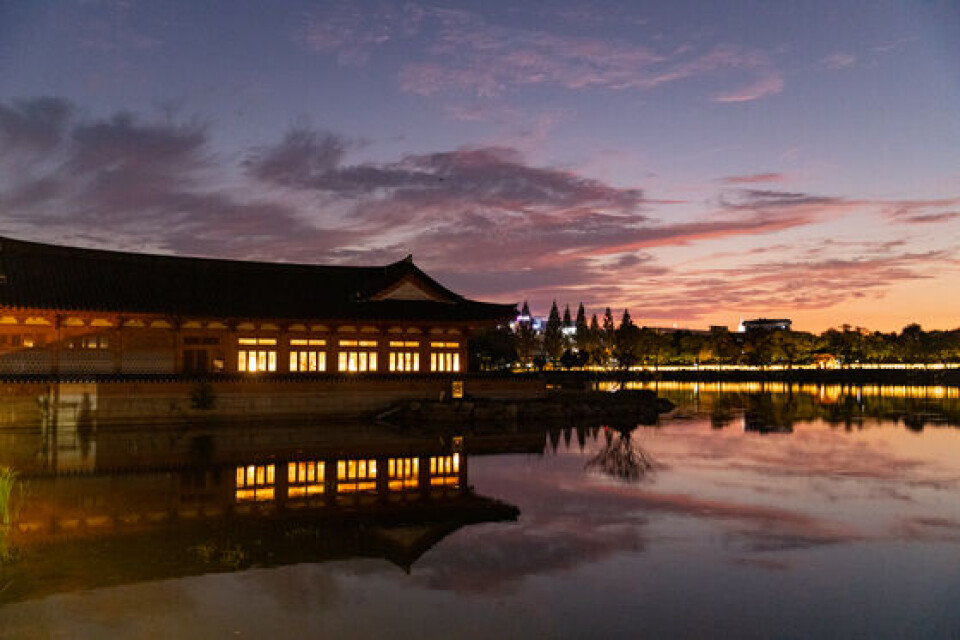
If you have ever been served a Korean meal that came with 20 side dishes for no extra charge, someone in the kitchen was probably from 전라도. Jeolla splits into 전라북도 (Jeonbuk) and 전라남도 (Jeonnam), and the whole peninsula concedes that it grows the best rice, sells the best 굴 (oysters), and cooks the most generous 반찬 (banchan) spreads. Jeonju is the accepted birthplace of 비빔밥, and UNESCO named it a Creative City of Gastronomy in 2012. The Jeonju Hanok Village, more than 800 traditional homes clustered around Deokjin Park and the city's old center, is where domestic tourists learn what a proper 콩나물 broth tastes like.
Gwangju, the largest city, carries a heavier weight. The May 1980 pro-democracy uprising against the Chun Doo-hwan military government started here, and the memory shapes local politics to this day. When Han Kang won the Nobel in 2024 for a body of work that includes "Human Acts," her fictional processing of the Gwangju massacre, the international attention that snapped back on this province was not incidental. Jeolla food is generous because the land is generous; Jeolla politics carries a specific memory because the country's democracy carries it too.

Gyeongsang: Economic Muscle, Sharp Dialect, Film Royalty
Gyeongsang covers roughly the entire southeastern quarter of the peninsula: 경상북도 (Gyeongbuk) and 경상남도 (Gyeongnam), plus the metropolitan cities of Busan, Daegu, and Ulsan. Gyeongbuk holds Gyeongju, capital of the Silla kingdom for nearly 1,000 years, where you still walk between royal tomb mounds on your way to lunch. Andong is the Confucian heartland and where the international 하회탈 (Hahoe mask) festival happens each fall. Gyeongnam runs Ulsan, which is essentially a Hyundai company town, plus the shipyards in Geoje and the country's second port at Busan.
The 경상도 사투리 is short, punchy, and often mistaken for aggression by non-Korean ears. It is the accent of ambition. Politically, the region has been the conservative party's stronghold since democratization. Culturally, Busan hosts the Busan International Film Festival (BIFF) each October, the biggest film event in Asia and the launch pad for careers Soompi covers relentlessly, from Bong Joon-ho's early features to the K-drama actresses now hosting the opening ceremony. When Korean cinema finally cracked the Oscars with "Parasite," the industry pipeline that fed it traced back through BIFF juries and Busan-based productions.
Jeju: 해녀, Tangerines, and the Country's Escape Valve
Jeju is technically the Jeju Special Self-Governing Province, and it is the only province that is a single island. The climate goes sub-tropical, the volcanic terrain of Hallasan gives you black-sand beaches and lava tubes, and the whole island runs on tangerine farming, seafood, and tourism. It is what mainland Koreans book when they cannot get on a flight to Bali. Chinese and Southeast Asian visitor volumes rebounded fast after the 2020s and gave Jeju a permanent international layer it did not have twenty years ago.
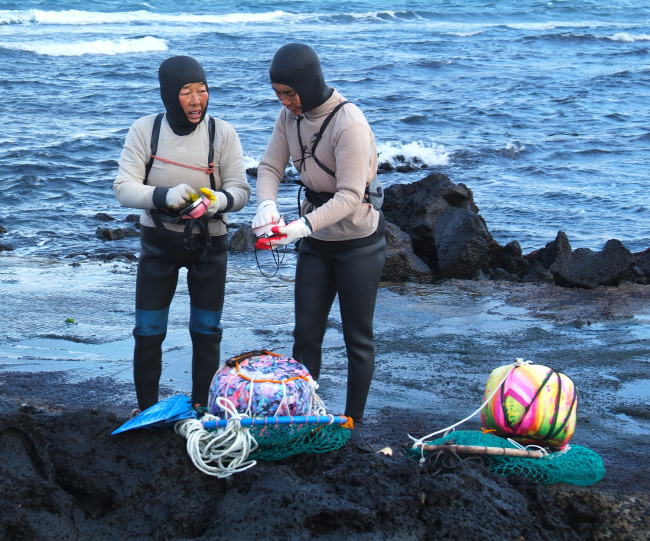
The signature cultural export is the 해녀, the women divers who free-dive for abalone, sea urchin, and 소라 with no oxygen tanks and no ceremony, and who UNESCO added to its Intangible Cultural Heritage list in 2016. Their numbers are shrinking, from more than 23,000 in the 1960s to just over 2,000 today, and most are past 60. The Jeju government now runs a haenyeo school precisely because the trade is a living archive of matriarchal labor culture that Korea nearly lost.
What All This Adds Up To
Nine provinces, six metros, two special cities. The reason it is worth learning the map is that Korean stories, songs, food scenes, and industry moves all carry regional coordinates. A Busan-accented rap line lands differently than a Seoul one. A Jeolla banchan spread signals hospitality in a way Gyeonggi restaurants rarely bother matching. Even the post-2010 wave of 도시재생 projects, from Gangneung's coffee identity to Tongyeong's art village to the Jeonju Hanok revival, is a story of provinces refusing to be flyover country as Seoul's gravity kept pulling talent north. If you are planning a trip, do yourself the favor of leaving Seoul for at least three days.
Explore More of Korea with Daebak
Want to bring a little piece of Korea into your life? The Daebak Box is packed with the best Korean snacks, ramen, and cultural goodies delivered monthly to your door.


