


Table of Contents
Walk into any Korean home and open the refrigerator door. There is a 90 percent chance you will spot three plastic tubs, all roughly the same size, all more essential to the household than the rice cooker itself. Red for gochujang (고추장), brown for doenjang (된장), and a dark bottle of ganjang (간장) standing sentinel on the door. These are the 장류, the sauce family that carries Korean flavor. Nothing else in the pantry works this hard.
I have spent over a decade working with Korean food brands and Hallyu marketing agencies, and if I had to name the single ingredient category that moved from ethnic aisle curiosity to Trader Joe's flagship in the last ten years, it is jang. Not kimchi, not ramyeon. Jang. Bibigo's push into US grocery from 2020 onward, the Netflix K-drama food scene halo, Momofuku Ssäm Sauce (essentially gochujang with training wheels), and Chef Corey Lee's Michelin work all rolled into a single wave. Gochujang exports out of Korea grew roughly 20x on the US side alone between 2015 and the post-pandemic surge. That is not a coincidence. That is a category getting picked up by mainstream Western palates for the first time in centuries.
Here is the insider breakdown of the five sauces every Korean cook reaches for, why each one exists, and where the appeal actually lives.

Gochujang (고추장): The Sauce That Made Korean Food Mainstream
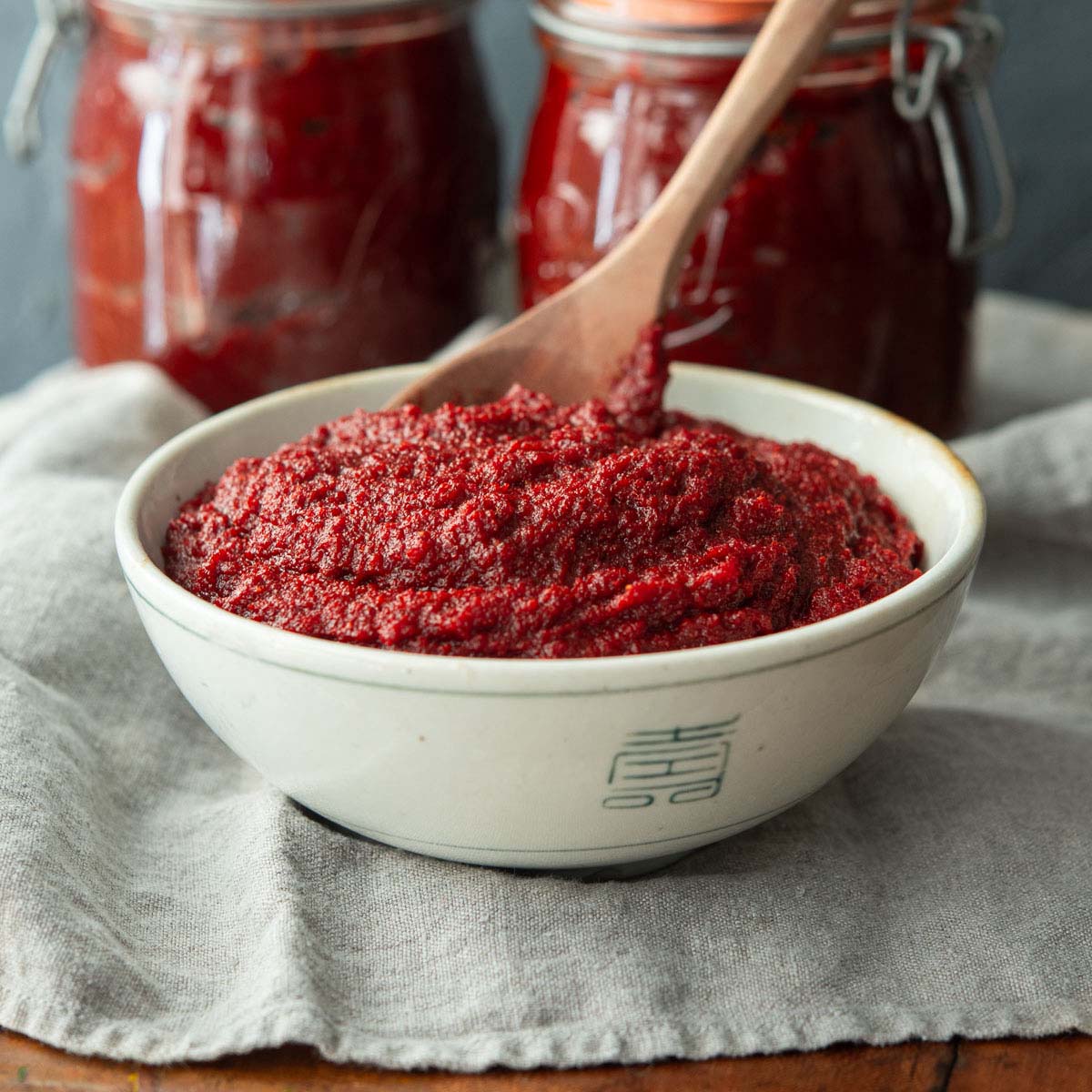
Gochujang is the one that broke through. Made from gochugaru (Korean chili powder, milled fine), glutinous rice, meju powder (fermented soybean), malt syrup, and salt, then aged 6 months in an onggi crock. The traditional recipe reads like slow food theater. But what makes gochujang specifically Korean, and not just "Asian hot sauce", is the fermentation curve. Sriracha hits you with acid and heat. Sambal is chili plus salt, straightforward. Gochujang carries five things at once: heat, sweetness from the rice, umami from the meju, salt, and that deep funky bass note that only comes from months of microbial work. Chefs call it savory. Korean home cooks just call it 감칠맛 (gamchilmat), the flavor that makes you want another bite.
Why did gochujang break through when doenjang and ganjang have not (yet)? Timing. Bibigo (the CJ CheilJedang brand) put gochujang tubes on Whole Foods shelves in 2019, priced as a condiment squeeze bottle instead of a scary Korean aisle jar. Chapman University in Orange sponsored culinary programs that put it in front of young American cooks. Netflix hits like "Extraordinary Attorney Woo" and "Squid Game" seeded Korean home cooking scenes in millions of Western living rooms. And the flavor itself scales, one spoon into a burger sauce, three into a marinade, a whole cup into tteokbokki. It flexes. Sriracha never scaled up that way.
Doenjang (된장): The Soul Food Nobody Talks About
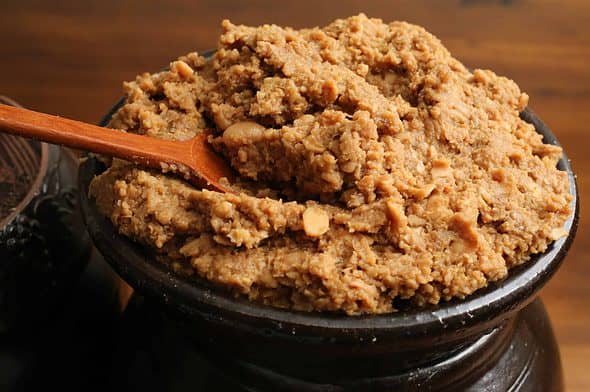
If gochujang is the extroverted younger sibling, doenjang is the elder who never left home. Made from the same meju blocks that go into gochujang, except doenjang is what you get when you separate the solid soybean mash from the liquid soy sauce during the brining stage. That mash gets packed back into an onggi and aged another 5 to 6 months. Salty, earthy, hearty, and honestly stinky if you are meeting it for the first time. Japanese miso is doenjang's cousin, but the two ferment differently (miso uses koji mold, doenjang uses wild Bacillus subtilis bacteria), and the flavor is nowhere close. Doenjang is grittier, funkier, more agricultural.
The magic use case is doenjang jjigae, a stew of doenjang plus tofu, zucchini, mushrooms, and often anchovy stock. Every Korean home makes it slightly differently, and the version your mother made is scientifically the best one. Ask a Korean about doenjang and they will get quiet for a moment, because it is the taste of 집밥 (jipbap), home-cooked meals. That emotional weight is exactly why doenjang has not broken through globally the way gochujang has. It does not TikTok well. You cannot squeeze it on a burger. It needs a bowl, a spoon, and 20 minutes. But Chungjung One and Sempio, the two dominant retail brands in Korea, are quietly pushing artisanal 100-day fermented lines into premium export channels. Watch that space.
Ganjang (간장): Not All Soy Sauce Is Created Equal
This is where most Western cooks trip up. Korean ganjang splits into two very different categories, and using the wrong one will absolutely mess up your dish. The distinction Korean home cooks internalize before they can drive:
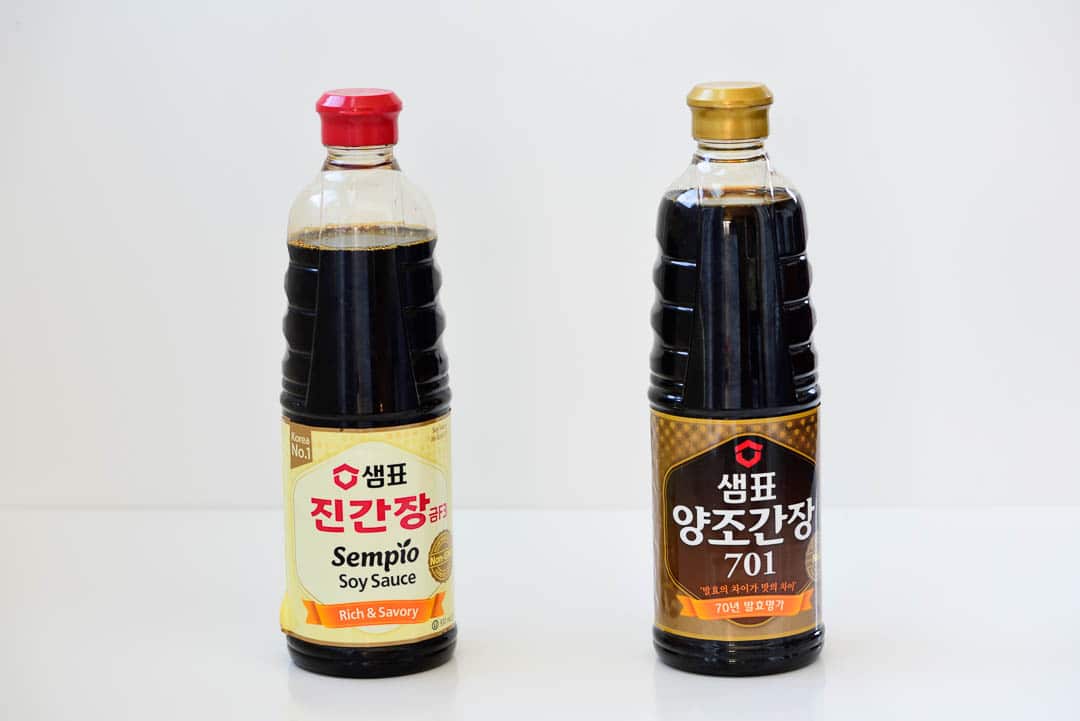
Jin-ganjang (진간장): Dark, sweetish, all-purpose. This is what you use for bulgogi marinades, galbi, japchae, braises. Sempio Jin Gold F3 is the top-selling SKU in Korea for a reason. Kikkoman, despite being a Japanese soy sauce, works in a pinch for jin-ganjang use cases, though the flavor profile leans differently.
Guk-ganjang (국간장), also called Joseon ganjang: Lighter in color, wildly salty, deeply savory. This is the byproduct of making doenjang. Guk means soup, and this is what seasons Korean soups and namul (seasoned vegetable) dishes. Kikkoman here is wrong. A Korean grandmother would notice within one spoonful. If you love Korean spinach namul or seaweed soup and cannot figure out why yours tastes flat, guk-ganjang is the missing piece.
Sempio (샘표) is Korea's oldest continuous soy sauce brand, founded in 1946, and dominates the naturally brewed segment. Chungjung One is close behind. Both make premium 5-year-aged lines that are quietly beloved by Korean Michelin chefs but priced accessibly, roughly 15 USD for a bottle that will change how you cook.
Ssamjang (쌈장): The Sauce with One Job
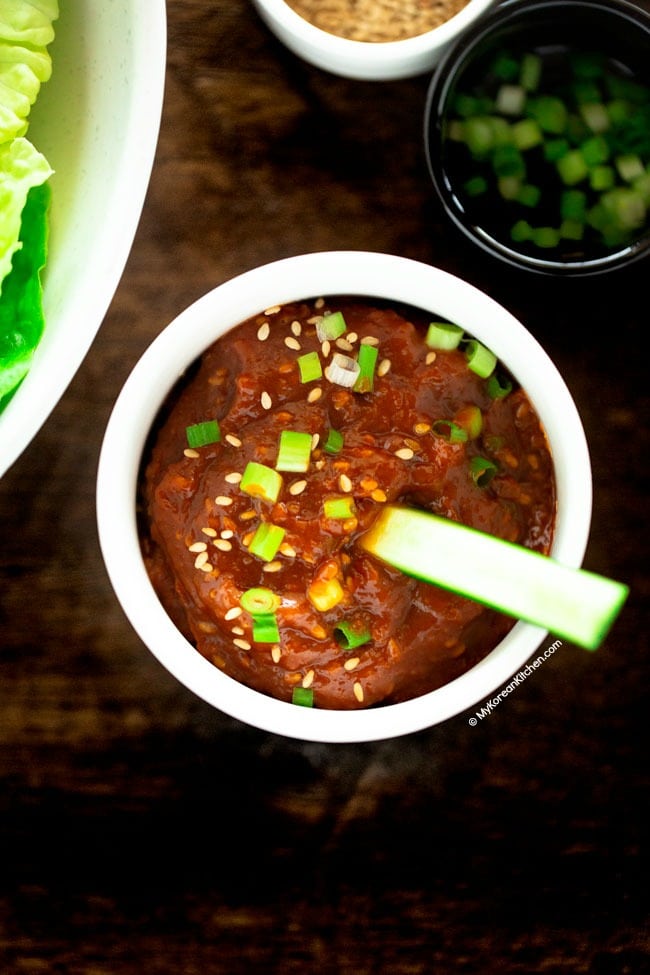
Ssamjang is a blend, not a base. Take gochujang and doenjang, whisk them roughly 1 to 2 in favor of doenjang, then add minced garlic, sesame oil, honey or sugar, chopped green onion, and toasted sesame seeds. That is ssamjang. It exists for exactly one purpose: sitting on the Korean BBQ table so you can smear a small dab onto a lettuce leaf before wrapping grilled samgyeopsal or galbi inside. The Korean word 쌈 (ssam) means wrap, and 장 means paste. Wrap paste. Extremely on-the-nose naming.
Here is the thing Korean BBQ novices miss: ssamjang is not a dipping sauce for meat. Dipping the meat directly kills the effect. You build the wrap: lettuce, a spoon of rice, one piece of grilled pork belly, a tiny dab of ssamjang (like a pea-sized amount, not a spoonful), a sliver of raw garlic if you are brave, then fold and eat in one bite. The ssamjang is a flavor bridge, not the main event. Overdoing it turns everything into salty mush. Undersalting it makes the wrap taste like a salad. The margin is razor thin, which is why every Korean adult has strong opinions about the correct ssamjang ratio.
Chojang (초장): The Seafood Whisperer
The fifth member of the family is chojang, sometimes written cho-gochujang (초고추장). Cho (초) means vinegar. So chojang is gochujang plus rice vinegar plus sugar, sometimes with minced garlic and toasted sesame seeds. That is it. Extremely simple. But it is the only sauce Koreans reach for when eating hoe (회, Korean sashimi), boiled octopus (문어), raw oysters (굴), or steamed shrimp. Nothing else works. The vinegar cuts through the marine oils, the sugar softens the chili edge, and the gochujang carries the umami. It is a purpose-built condiment for one type of eating.
You will see chojang in Korean fish markets like Noryangjin in Seoul, ladled from big communal bowls next to the raw fish counter. Every hoe restaurant makes its own version, and the ratio is a house signature. Some lean sweeter, some lean sharper on the vinegar. Costco Korea sells a decent bottled version under the Chungjung One label, but it is one of those sauces that takes 30 seconds to make fresh and tastes noticeably brighter when you do.
The Industry Read: Where Jang Goes Next
The domestic Korean jang category is worth roughly 2 to 3 trillion won a year, dominated by CJ CheilJedang (Haechandeul), Daesang (Chungjung One), and Sempio. Export growth is now outpacing domestic, with gochujang leading and doenjang starting to follow via premium artisanal channels. UNESCO added Korea's jang-making tradition to the Intangible Cultural Heritage list in December 2024, which is more than symbolic. It gives Korean food marketers a global cultural hook to lean on, the same way Japan used sushi's UNESCO nod in the 2010s.
Chefs like Mingles' Kang Min-goo (three Michelin stars in Seoul) are doing "Jang Trio" tasting menus that treat doenjang, ganjang, and gochujang as fine dining ingredients on par with truffle oil or aged balsamic. Shake Shack Turkey launched a full gochujang menu in early 2026. Momofuku's line of gochujang and ssamjang products at Whole Foods is doing quiet nine-figure revenue. This is what a category tipping point looks like.
The takeaway for anyone starting a Korean pantry from scratch: buy jin-ganjang, doenjang, and gochujang first. Everything else you can improvise. Those three tubs and one bottle unlock 80 percent of Korean home cooking. Add guk-ganjang when you want to graduate to real Korean soups. Ssamjang and chojang, mix at home in under a minute when you need them. The jang trinity is not just a cuisine, it is an operating system.
Want to taste-test Korean sauces the easy way, alongside a curated set of Korean snacks that use them? Check out the SnackFever Box for a monthly delivery of authentic Korean snacks straight from Seoul.


