


Table of Contents
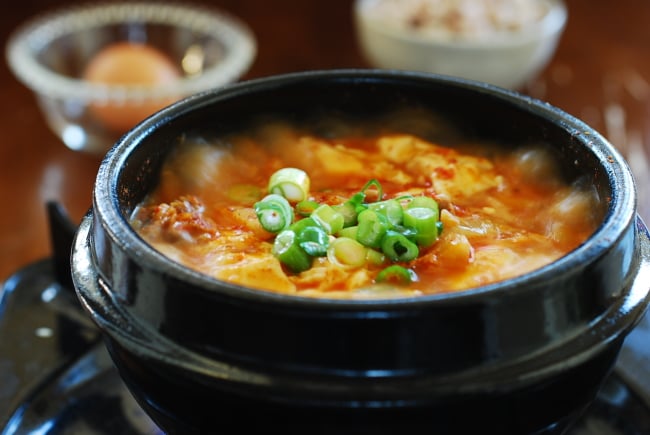
If there's one dish that Koreans reach for when they need warmth and comfort, it's sundubu jjigae (순두부찌개). This spicy soft tofu stew, bubbling hot in a stone pot, is a staple of Korean home cooking and a menu favorite at tofu houses across Korea and beyond. Rich, hearty, and deeply flavorful, sundubu jjigae is one of those dishes that feels like a warm hug in a bowl.
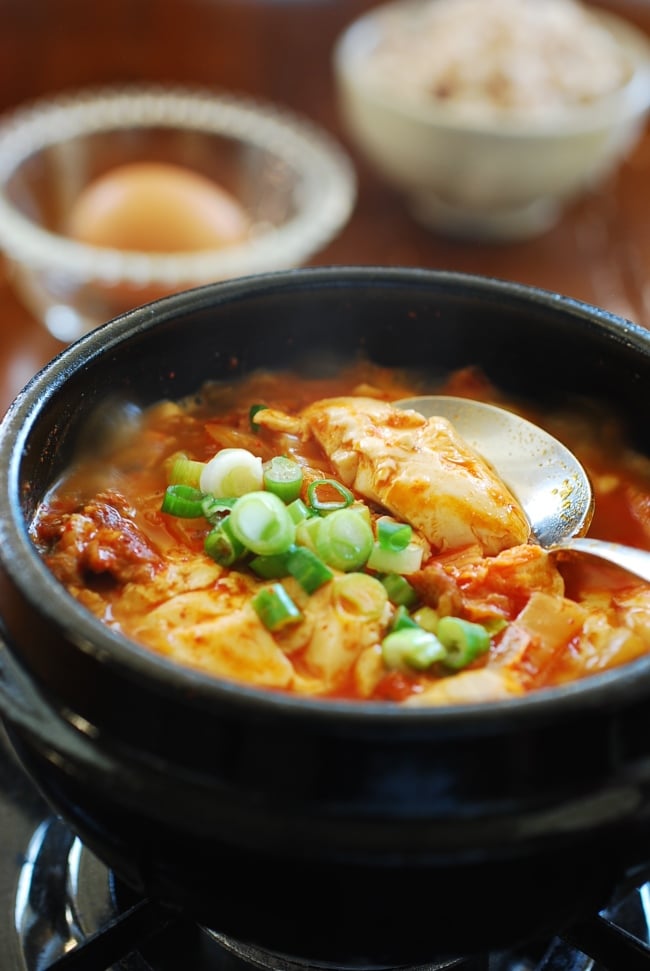
What Is Sundubu Jjigae?
Sundubu jjigae translates literally to "soft tofu stew." The word sundubu (or soondubu) refers to a type of tofu that has not been pressed, giving it an exceptionally high water content and a silky, custard-like texture. Unlike firm tofu, sundubu breaks apart gently in the stew, melting into the broth and absorbing its bold, spicy flavors. The result is a stew with layers of taste in every spoonful: spicy gochugaru (Korean red chili flakes), savory anchovy broth, umami-rich kimchi, and the clean, delicate flavor of fresh tofu.
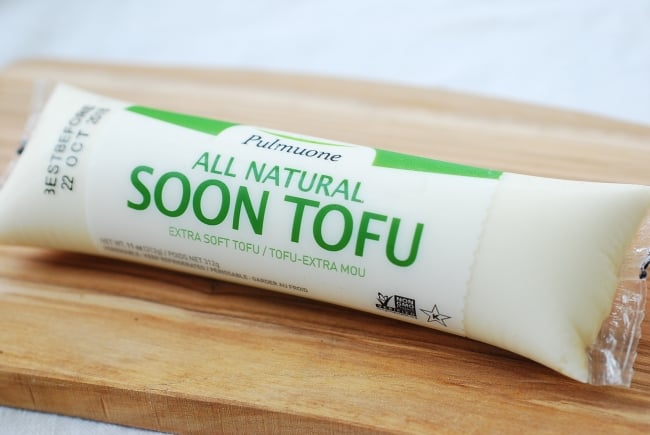
A Brief History of the Dish
Tofu has been a cornerstone of Korean cuisine for over a thousand years, first introduced through Buddhist culture and trade with China. Soft tofu stews have long been a part of the everyday Korean table, prized for being affordable, nutritious, and deeply satisfying. The modern tofu house culture gained particular momentum from the late 20th century, with restaurants specializing entirely in sundubu jjigae and its many variations. Today, the dish is found everywhere from humble home kitchens to busy restaurant chains, and it has earned devoted fans around the world.
Key Ingredients
The backbone of sundubu jjigae is a well-seasoned broth, often made with dried anchovies and kelp for depth. To this, cooks add soft tofu, gochugaru for heat, garlic, and sesame oil. Most versions include kimchi, which adds a tangy, fermented layer that perfectly complements the spice. Protein options are wide open: pork belly and thinly sliced beef are classics, while seafood versions loaded with clams, shrimp, and mussels are equally popular. One beloved finishing touch is a raw egg cracked directly into the stew at the table, cooking gently in the bubbling broth and adding a silky richness to every bite.
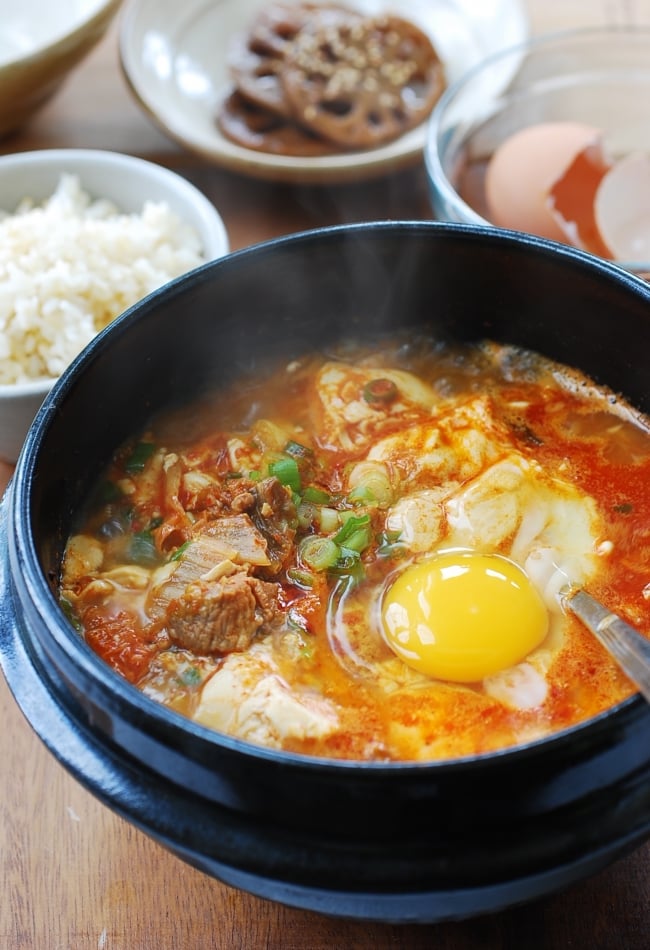
Popular Variations
One of the joys of sundubu jjigae is how adaptable it is. The kimchi version (kimchi sundubu jjigae) is perhaps the most common, its sourness and heat creating a beautifully balanced stew. Haemul sundubu jjigae, the seafood variation, is loaded with clams, shrimp, and squid for a briny, ocean-flavored bowl. For those who prefer a milder taste, deulkkae sundubu jjigae uses perilla seeds to create a nutty, creamy broth without the spice. Mushroom versions make a wonderful vegan alternative, and beef sundubu jjigae offers a rich, meaty option for the heartiest appetites.
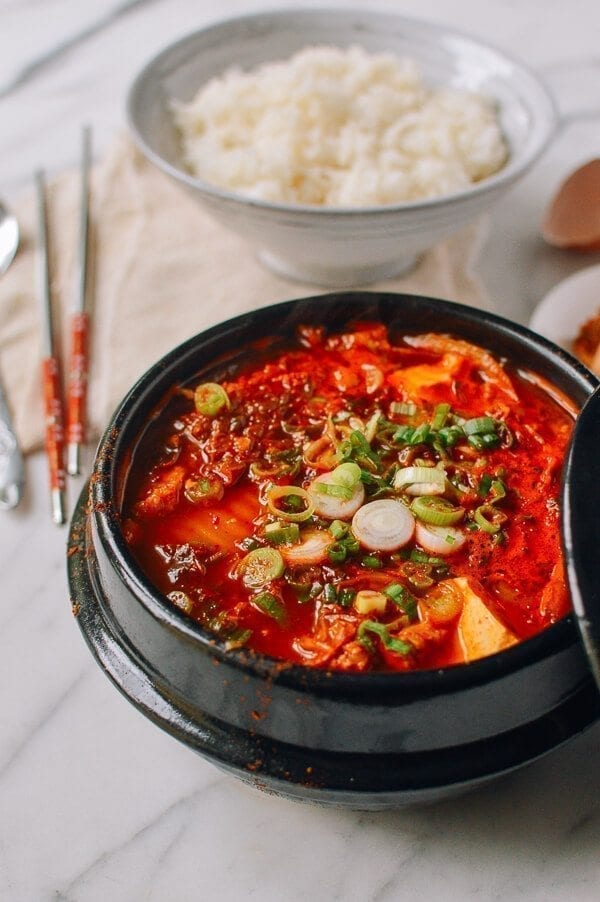
Sundubu Jjigae and Korean Dining Culture
Sundubu jjigae is always served in a dolsot, a Korean earthenware pot that retains heat and keeps the stew sizzling from kitchen to table. It arrives bubbling hot, typically accompanied by a bowl of steamed rice and a spread of banchan (small side dishes). In Korean tofu restaurants, diners choose their spice level and protein, making each visit a personalized experience. The ritual of cracking an egg into the boiling stew at the table is part of the experience, as is the satisfying sizzle that announces the dish has arrived.
How to Make Sundubu Jjigae at Home
Making sundubu jjigae at home is easier than it looks. Start by building an anchovy broth: simmer dried anchovies, dried kelp, and a few mushrooms in water for about 20 minutes, then strain. In a small pot, saute garlic and kimchi with gochugaru and sesame oil, add the broth, and bring to a boil. Gently add the soft tofu in large chunks, season with salted shrimp or salt, and let it simmer until the flavors meld together. Finish with chopped green onions and crack in a raw egg for extra richness. Serve immediately alongside a bowl of rice for a deeply comforting Korean meal.
Explore Korean Snacks with Daebak
Love Korean food? Get authentic Korean snacks and ramen delivered straight to your door with the SnackFever Box by Daebak.


