


Table of Contents
K-pop is one of the most significant cultural exports in modern history. What began as a domestic South Korean music industry in the 1990s has become a worldwide phenomenon with hundreds of millions of fans across every continent, generating billions of dollars annually and reshaping the global entertainment landscape. But K-pop is not simply a genre of music. It is an integrated entertainment system, a fan culture, a visual art form, and a soft power phenomenon that has transformed how the world perceives South Korea.
If you are new to K-pop, this guide will give you the context you need to understand what it is, how it works, and why it has captured so many people so completely.
What Exactly Is K-pop?
K-pop (short for Korean pop) refers to popular music originating from South Korea, but the term encompasses far more than a musical style. K-pop music itself draws on a wide range of genres: pop, hip-hop, R&B, electronic dance music, rock, and traditional Korean music influences all appear across different groups and eras. The sonic definition of K-pop is less important than its production system, visual presentation, and fan engagement model.
What distinguishes K-pop most clearly from other pop music industries is the "idol" system: a training and management structure where entertainment companies recruit young people (often teenagers), train them intensively for months or years in singing, dancing, languages, and performance, and then debut them in carefully constructed groups. These groups are designed with specific member roles, visual concepts, and brand identities that are managed as holistic entertainment products rather than simply as musicians.

The History of K-pop
Modern K-pop traces its origins to 1992, when the group Seo Taiji and Boys debuted on a Korean television talent show and performed a groundbreaking fusion of hip-hop, new jack swing, and Korean pop. Their performance received low scores from the judges but immediately connected with Korean youth audiences, who had never seen Korean music performed this way. Seo Taiji and Boys went on to become the best-selling Korean music act of the early 1990s and fundamentally changed what Korean popular music could be.
Their success demonstrated that Korean audiences were hungry for youth-oriented, choreography-heavy, Western-influenced pop music with Korean cultural elements. Entertainment companies took note. SM Entertainment, founded by Lee Soo-man in 1995, pioneered the systematic idol training model. H.O.T., SM's first major group, debuted in 1996 and became the prototype for the modern K-pop idol group: young members, synchronized dancing, distinctive fashion, and an intensely engaged fanbase.
The first generation of K-pop (roughly 1996-2003) established the idol system. The second generation (roughly 2003-2012) brought groups like TVXQ, Super Junior, Girls' Generation, 2NE1, SHINee, and Big Bang, and began the international expansion of K-pop, particularly into Japan and Southeast Asia. The third generation (roughly 2012-2019) saw groups like EXO, BTS, BLACKPINK, TWICE, Red Velvet, and GOT7 drive K-pop to truly global audiences, culminating in BTS's historic chart dominance in Western markets.
The Big Entertainment Companies
The K-pop industry is organized around a small number of major entertainment companies that function as fully integrated talent management, recording, and marketing operations. The "Big Four" (historically the "Big Three" before the rise of HYBE) shape the direction of the entire industry.
SM Entertainment (founded 1995) created the idol system and manages acts including TVXQ, Girls' Generation, EXO, NCT, aespa, and SHINee. JYP Entertainment (founded 1997 by singer-songwriter Park Jin-young) manages TWICE, ITZY, Stray Kids, and DAY6. YG Entertainment (founded 1996) manages BLACKPINK, BIGBANG, and WINNER, known for a hip-hop heavy approach. HYBE (formerly Big Hit Entertainment, restructured in 2021) manages BTS, TXT, ENHYPEN, and (Wo)Men of the Year, and acquired Pledis Entertainment (SEVENTEEN, NU'EST) and other labels.
Below the Big Four, dozens of mid-size and independent entertainment companies manage their own idol groups, contributing to an industry that at any given time has hundreds of active K-pop acts across different markets and audience segments.
The Idol System: Training and Debuting
The K-pop idol system is one of the most distinctive and discussed elements of the industry. Prospective idols are recruited through open auditions, talent scouting at schools and public events, or specialized audition programs. Successful applicants become trainees, living in company dormitories and undergoing intensive daily training in vocal performance, dance, languages (English, Japanese, and sometimes Mandarin are common requirements), acting, and stage presence.
Training periods vary widely: some trainees debut within a year, others spend five or more years training before debuting or being released from their contracts without debuting at all. The intensity of the training system and the conditions under which trainees live and work have been subjects of significant discussion and criticism, particularly around questions of physical and mental health, contract terms, and the power dynamics between young trainees and large entertainment companies.
When a company decides to debut a new group, the selection process for who makes the final lineup can itself be a media event. "Survival" reality shows that follow trainees competing for limited debut spots have become a major content format, producing groups like Wanna One (from Produce 101), IZ*ONE, and X1, while generating enormous fanbases even before the groups officially debut.
Music Videos and Visual Culture
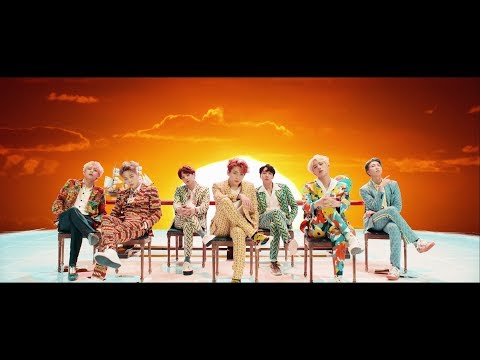
K-pop music videos are among the most watched video content on YouTube globally. The production values are consistently exceptional: complex choreography filmed with multiple camera angles, elaborate set design, cinematic lighting, and meticulous visual storytelling are standard elements. Groups release multiple camera-angle versions of choreography videos ("dance practice" videos) in addition to official music videos, allowing fans to study every movement.
The visual concept of each K-pop era is as important as the music. Groups adopt specific aesthetics for each album cycle: a "dark" concept might involve dramatic lighting, intense choreography, and thematic visual storytelling around loss or ambition; a "cute" concept might use pastel colors, playful choreography, and lighthearted storytelling. These concepts are meticulously planned and executed across all visual content, from the music video to album packaging, promotional photos, and fan events.
Fan Culture and Fandoms
K-pop fan culture is one of the most organized and engaged in the world. Each major K-pop group has an official fandom with a specific name (ARMY for BTS, BLINK for BLACKPINK, ONCE for TWICE, Carat for SEVENTEEN) and color-coded official light sticks used at concerts. Fandoms organize streaming parties to boost music chart performance, purchase albums in bulk to contribute to sales counts, and coordinate voting campaigns for music show wins.
Album purchasing culture is a significant driver of K-pop industry economics. Albums are released in multiple versions with different photocards (small collectible photo cards featuring different members), encouraging fans to purchase several copies. Fan signs (small fan meetings where randomly selected album purchasers get to meet the group) incentivize even more purchases. The combination of collectible physical products and experiential rewards creates a purchasing culture unlike anything in Western pop music.

BTS: The Group That Changed Everything
No discussion of K-pop is complete without BTS. Debuting under Big Hit Entertainment in 2013, BTS (Bangtan Sonyeondan, or "Bulletproof Boy Scouts") built their early career through social media engagement at a time when larger companies dismissed the platform. Their honest, self-written lyrics about youth, mental health, identity, and social pressure resonated with a global generation navigating similar anxieties.
By 2018, BTS had become the first K-pop group to top the US Billboard 200 chart. By 2020, they had become the first Korean act to top the Billboard Hot 100 with "Dynamite." Their 2021 record-breaking UN General Assembly speech, Grammy nominations, and record-breaking stadium tours placed them among the most commercially successful and culturally influential music acts in the world, not just in K-pop history.
BTS's global success permanently opened Western markets for K-pop. Radio stations that had previously refused to consider non-English language music began programming K-pop. Streaming platforms created dedicated K-pop playlists and editorial coverage. The conversation around Korean cultural exports shifted from niche to mainstream.
The Hallyu Wave: K-pop as Cultural Diplomacy
Hallyu (Korean Wave) refers to the broader phenomenon of Korean cultural exports gaining global influence, and K-pop is its most visible element. The South Korean government has recognized Hallyu as a strategic asset, investing in cultural export initiatives and tracking the economic multiplier effect that K-pop fandom creates across tourism, food exports, beauty products, and language learning.
Studies have consistently shown that K-pop fandom correlates strongly with interest in Korean food, Korean language study, and travel to Korea. For Daebak and Korean food brands generally, K-pop fandom represents one of the most important pipelines for new customers discovering Korean culture broadly.
Where to Start with K-pop
If you are new to K-pop, the best starting point depends on your musical preferences. BTS offers a wide range across introspective hip-hop, polished pop, and danceable EDM. BLACKPINK delivers high-concept visual pop with strong hip-hop elements. TWICE is a reliable entry point for bright, energetic girl-group pop. SEVENTEEN produces a distinctive self-produced style with thirteen members across performance, hip-hop, and vocal units. aespa and NewJeans represent the current generation's aesthetic sensibility.
Beyond choosing a group, the K-pop experience extends to variety show content (groups appear on game shows, reality programs, and behind-the-scenes content that shows different sides of their personalities), live concerts (both in Korea and on international tours), and the enormous ecosystem of fan-created content that contextualizes and celebrates every aspect of group life.
K-pop and Korean Food Culture
K-pop fandom is one of the most powerful drivers of interest in Korean food globally. Fans who become deeply engaged with K-pop culture naturally become curious about all aspects of Korean life, including the food their favorite idols eat. Mukbang (eating broadcast) content featuring idols, Korean snack unboxing videos by international fans, and the cultural context that K-pop provides for Korean food references all contribute to a pipeline between K-pop fandom and Korean food discovery.
At Daebak, we see this connection every day. Many of our customers discovered Korean snacks and food through their K-pop fandom first. The SnackFever Box is a great way to explore Korean snack culture if you are coming to Korean food through K-pop, K-drama, or any other part of the Korean cultural wave.
Final Thoughts
K-pop is a genuinely extraordinary cultural phenomenon. It is music, performance art, community, commerce, and soft power all at once, executed at a level of professional polish and fan engagement that has no real equivalent anywhere else in the world. Whether you approach it through the music first, through the dance, through the fan community, or through curiosity about Korean culture broadly, K-pop rewards engagement in ways that keep fans connected for years and decades. Welcome to the world of K-pop.


