


8 Beautiful Photos of Bibimbap That Will Make You Drool
Hyunwoo ChoIf you have never tried bibimbap, you are missing out. Bibimbap (비빔밥) is one of the most popular Korean dishes inside and outside of Korea. "Bibim" means mixed and "bap" means rice (or food), so the name literally translates to "mixed rice." A bibimbap generally includes zucchini, carrots, spinach, soybean sprouts, dried seaweed, eggs, onions, meat, gochujang (Korean red pepper paste), sesame oil, and of course, the rice. When it is served in a hot stone pot, called dolsot (돌솥), sometimes the egg and the meat are added raw and left to cook from the heat of the bowl.

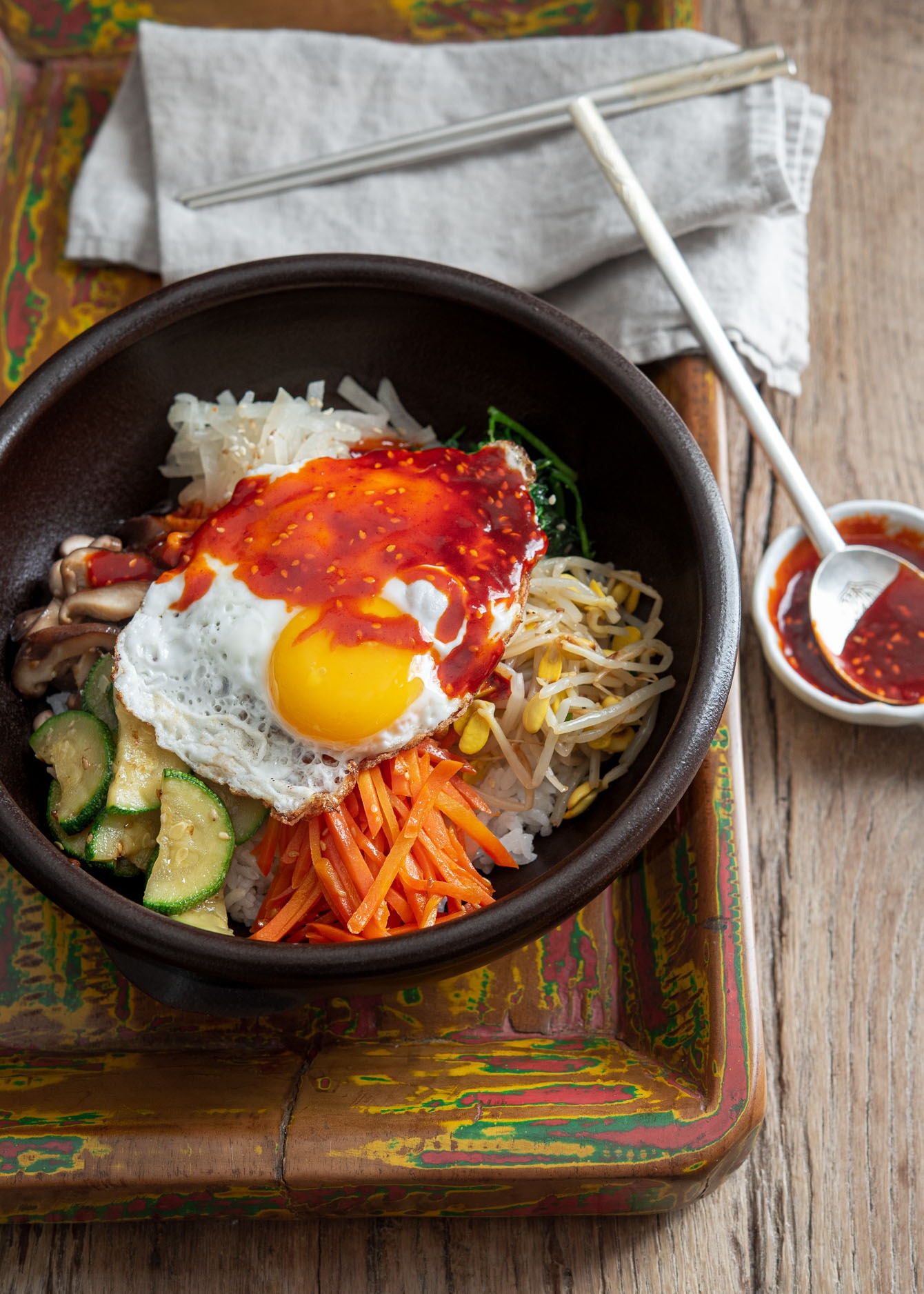
1. The Classic Dolsot Bibimbap
The first photo on every bibimbap lover's wish list is dolsot bibimbap (돌솥비빔밥), served in a screaming-hot stone or earthenware bowl. The bowl is so hot that the bottom layer of rice toasts into golden, crackling nurungji (누룽지) while the egg yolk gently cooks against the rim. The bowl arrives at the table still sizzling, which is half the magic.
2. A Home-Cooked Bowl with Sunny-Side-Up Egg
Not every bibimbap photo needs a stone pot to be drool-worthy. Some of the prettiest bowls are the ones a home cook puts together with whatever is in the fridge: seasoned spinach, soybean sprouts, sauteed zucchini, mushrooms, a quick gochujang sauce, and a glossy sunny-side-up egg right in the center. This is the version most Korean families actually eat on a weeknight.
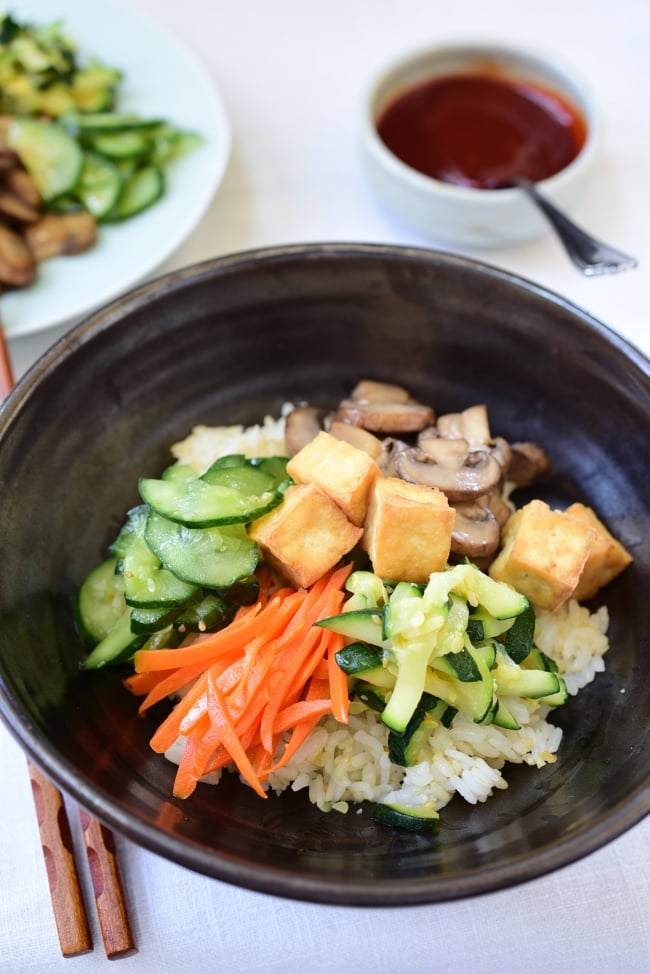
3. Vegan Tofu Bibimbap
Bibimbap is incredibly easy to make vegetarian or vegan, and the photo can be just as gorgeous. Swap the meat for golden pan-fried tofu cubes, pile on sauteed kale or spinach, mushrooms, carrot matchsticks, and zucchini, and finish with a glossy gochujang sauce. You will not miss the beef, and the colors actually pop more without it.
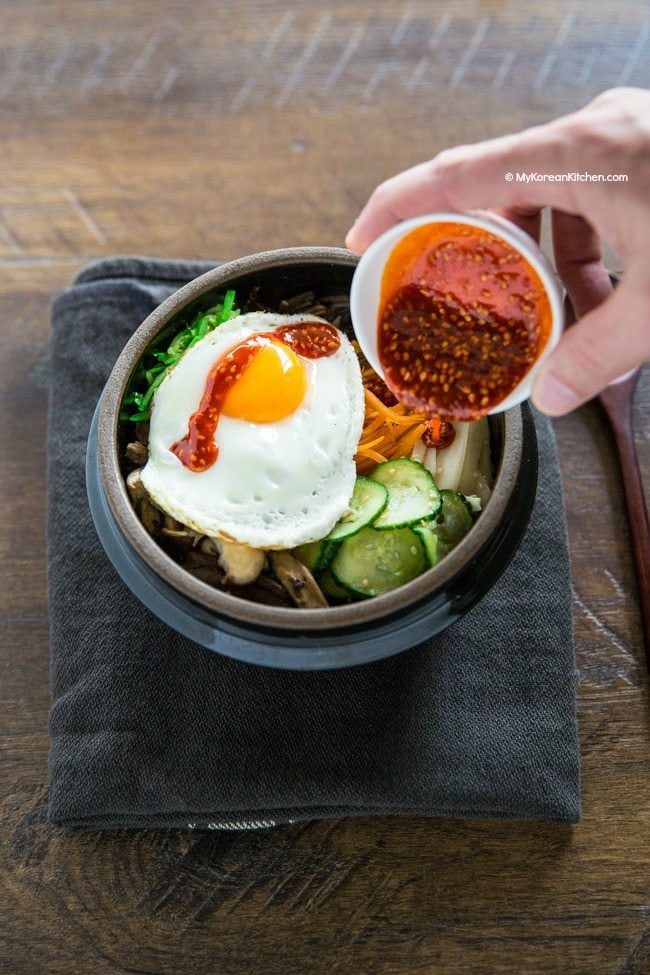
4. Jeonju-Style Bibimbap
When Koreans talk about the most famous bibimbap, they almost always mean Jeonju bibimbap (전주비빔밥). The version from this small city in Jeollabuk-do is known for its precise, elaborate arrangement of toppings: gosari (fernbrake), doraji (bellflower root), spinach, soybean sprouts, carrots, zucchini, shiitake mushrooms, a delicate fried egg or raw egg yolk, and a small mound of gochujang. The toppings are arranged like a color wheel, then mixed at the table.
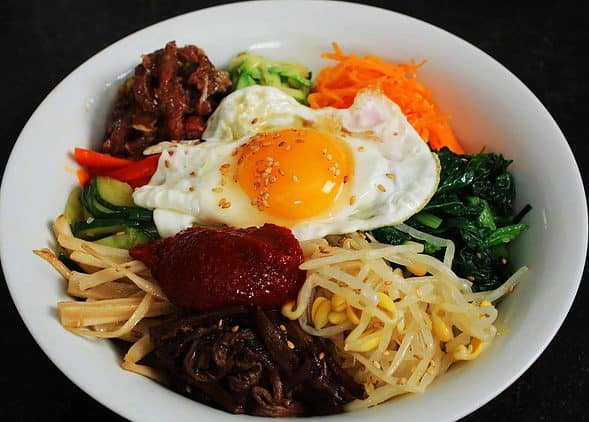
5. Yukhoe Bibimbap (Raw Beef Bibimbap)
For the photo that always wins on social media, look for yukhoe bibimbap (육회비빔밥), made with seasoned raw beef tartare and a glossy raw egg yolk on top. The yolk and the gochujang mingle as you mix, and the beef stays cool and silky against warm rice. Jeonju is the most famous home of this version, and it is the kind of bowl that makes everyone at the table pause to take a photo before mixing.
6. Healthy Vegetarian Bibimbap
Bibimbap is a great way to use up leftover veggies, which is why so many vegetarian food bloggers love photographing it. Think Korean pulled mushrooms, chrysanthemum leaves, shredded carrots, bean sprouts, spicy cucumbers, broccoli, and zucchini all in one bowl. Mine usually ends up looking like a flower, which feels appropriate for a dish whose name literally celebrates the joy of mixing things together.
7. Bibimbap in a Big Family-Style Bowl
Some of the best bibimbap photos come from family meals, where everything is piled into one enormous yangpun (양푼, a large mixing bowl) and shared. You scoop a generous portion onto your own plate, or skip the plate entirely and dig in together. This is the bibimbap of dorm rooms, late-night gatherings, and grandmothers who insist there is always room for one more spoon at the table.
8. Taegukgi Bibimbap, the Korean Flag in a Bowl
Finally, there is the special-occasion taegukgi (태극기) bibimbap, where the namul, beef, and gochujang are arranged to look like the Korean flag. It usually shows up around Korean Independence Day or other patriotic holidays, and it is the kind of dish that turns lunch into a love letter to Korea. Even the simplest bowl can become a small work of art if you arrange the toppings with care.
Explore Korean Snacks with Daebak
Love Korean food? Get authentic Korean snacks and ramen delivered straight to your door with the SnackFever Box by Daebak.


