


Table of Contents
Pour makgeolli into a bowl and you are holding something ancient. Korea's oldest alcoholic beverage, this milky, slightly fizzy rice wine has been brewed for over two thousand years. Farmers drank it after the harvest. Scholars sipped it while composing poetry in the rain. Street vendors ladled it out of clay pots to workers on cold winter mornings. Today, a new generation of craft brewers is reimagining it for the 21st century, and the world is finally paying attention.
What Is Makgeolli?
Makgeolli (pronounced mak-GOH-lee) is a traditional Korean fermented rice wine, typically ranging from 6 to 8% alcohol by volume. Its name comes from the Korean words for "roughly" and "strained," which describes its production process exactly: rice, water, and nuruk (a traditional fermentation starter made from wheat or rice) are combined, fermented for several days, and then strained. The result is a cloudy, off-white beverage with a naturally carbonated quality from ongoing fermentation.
Unlike sake, which is filtered to clarity, makgeolli retains the rice solids that give it its signature milky appearance and slightly thick texture. It has a complex flavor profile: mildly sweet, lightly sour, faintly bitter, and gently fizzy all at once. It is refreshing in the way that kombucha or kefir is refreshing, with a probiotic quality that comes from live fermentation cultures still active in the bottle.
The History of Makgeolli
Records of rice wine production in Korea date back to at least the Three Kingdoms Period (57 BCE to 668 CE). Early forms of fermented rice beverages appear in texts from the Goguryeo kingdom. By the Goryeo Dynasty (918-1392), makgeolli was being produced at monasteries and in households throughout the peninsula, with brewing techniques refined and passed down through generations.
During the Joseon Dynasty (1392-1897), makgeolli was deeply embedded in both daily life and ceremonial practice. It was offered at ancestral rites (jesa), shared during harvest festivals (chuseok), and consumed by farmers and laborers as a source of calories and refreshment. Home brewing was universal: nearly every household had its own recipe, adapted to local rice varieties and seasonal conditions.
The Japanese colonial period (1910-1945) dealt a severe blow to traditional Korean brewing. Colonial authorities implemented licensing laws requiring commercial brewers to use industrialized methods, effectively outlawing home brewing and forcing the standardization of flavors. After liberation, the new Korean government maintained many of these restrictions, and it was not until 1995 that home brewing was formally legalized again in Korea.
The decades of restriction created a market dominated by mass-produced makgeolli made with imported wheat flour, artificial sweeteners, and preservatives. This version became the cheap working-class drink of the 20th century, served in noisy pojangmacha tents. It worked, but it was a shadow of what traditional nuruk-fermented makgeolli could be.
The Craft Makgeolli Revival
Since the early 2010s, South Korea has witnessed a remarkable craft makgeolli renaissance. Young brewers trained in traditional techniques began producing small-batch makgeolli using heirloom rice varieties, locally cultivated nuruk, and minimal intervention methods. The results were revelatory: complex, nuanced beverages that could stand alongside natural wine and craft beer in any comparison.
Seoul neighborhoods like Mapo-gu and Hongdae became centers of makgeolli culture, with dedicated bars (makgeolli bars, sometimes called "makgeolli jip") serving a rotating lineup of craft producers from around the country. Makgeolli festivals began drawing international visitors. Craft producers began exporting to Japan, the United States, and Europe. Korean food writers began documenting regional styles the way wine critics document appellations.
How Makgeolli Is Made
Traditional makgeolli production begins with nuruk, the fermentation starter that distinguishes Korean brewing from Japanese or Chinese rice wine traditions. Nuruk is made by pressing a mixture of grains (typically wheat, rice, or barley) into dense cakes and allowing wild yeasts and molds to colonize them over several weeks. Each nuruk cultivates its own unique microbial community, and this is where the complex flavors of traditional makgeolli originate.
The brewer combines cooked rice (often steamed sweet rice or a blend of varieties), water, and nuruk in a fermentation vessel. The mixture ferments at controlled temperatures for anywhere from five days to several weeks, depending on the desired flavor profile. As fermentation progresses, the rice breaks down and the liquid becomes increasingly complex.
The mash is then strained to remove larger solids, leaving the cloudy makgeolli. Traditional makgeolli is sold with active cultures still present, meaning it continues to ferment slowly in the bottle. This is why traditional makgeolli has a short shelf life (usually 10-30 days under refrigeration) and why the cap should be loosened before opening to release built-up carbonation.
Dongdongju: Makgeolli's Cousin
Closely related to makgeolli is dongdongju, sometimes called "floating rice wine" for the grains of rice that bob (dong dong) at the surface. Dongdongju is slightly less strained than makgeolli, resulting in a richer, more textured beverage with a stronger fermented grain quality. It is often slightly higher in alcohol and has a more pronounced sour note.
In traditional Korean culture, dongdongju was considered a more premium version of makgeolli, served at festivals and celebrations. Today, both terms are sometimes used interchangeably outside Korea, though in Korea the distinction matters to enthusiasts. If you see rice grains floating in your cup, you are drinking dongdongju.
How to Drink Makgeolli
Makgeolli is traditionally served in a metal or ceramic bowl rather than a glass. The wide surface area allows the CO2 to dissipate and the temperature to equalize quickly. Before serving, the bottle or jug should be gently swirled or shaken (not vigorously) to redistribute the settled solids. The first pour from an unshaken bottle will be watery and disappointing; the full flavor comes when the solids are evenly mixed.
Makgeolli is best served cold, around 5-10 degrees Celsius, though some enthusiasts prefer it slightly warmer in winter. It should be consumed relatively quickly after opening, as exposure to air accelerates fermentation and changes the flavor. At makgeolli bars, it is often ordered in a large communal jug with several small bowls shared among the group.
The Best Food Pairings for Makgeolli
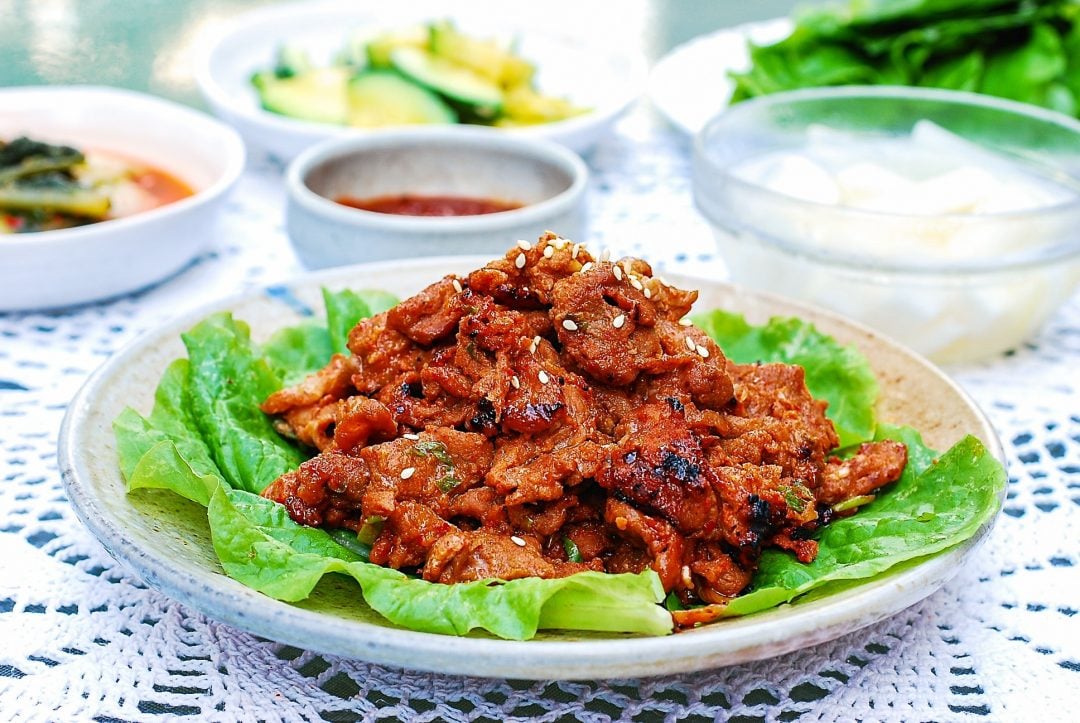
Makgeolli and pajeon (Korean savory pancakes) are one of the great food and drink pairings in the world. There is even a cultural phenomenon in Korea of ordering makgeolli when it rains, because the sound of raindrops is said to resemble the sizzle of pajeon hitting the griddle. The earthy, slightly sour quality of makgeolli complements the crispy, savory pancake beautifully, and the combination has been celebrated in Korean poetry and literature for centuries.
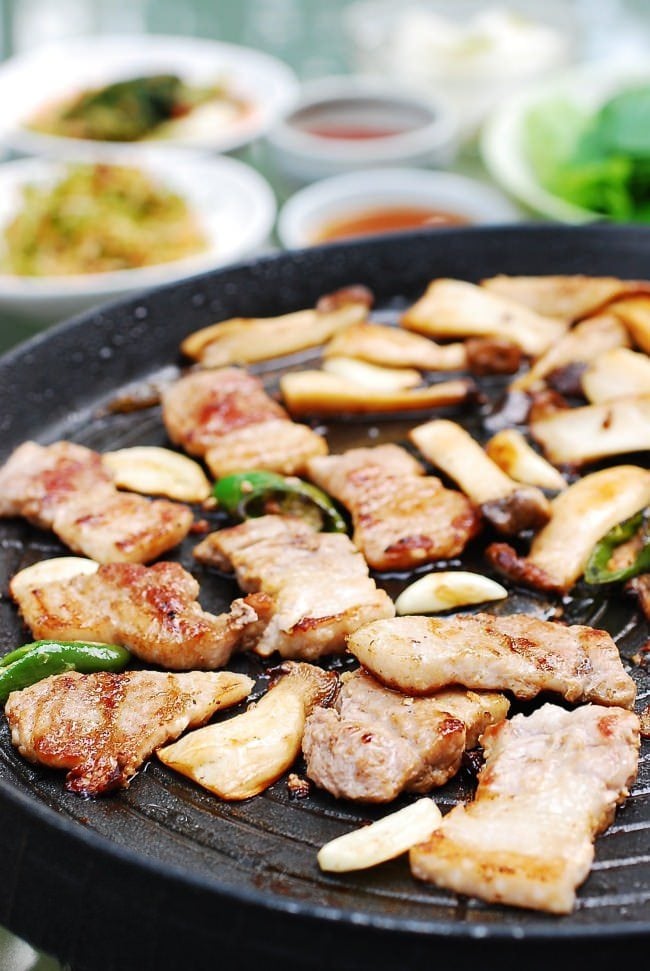
Bindaetteok (mung bean pancakes) is another classic partner, as is kimchi jeon (kimchi pancake). The richness of deep-fried or pan-fried foods generally pairs well with makgeolli, as its gentle acidity provides contrast. Korean BBQ is another excellent match: the light carbonation and slight sourness of makgeolli cuts through grilled pork fat in a way that heavier beverages cannot.
For cheese and charcuterie lovers (including those enjoying makgeolli outside Korea), its probiotic tang and mild sweetness pair surprisingly well with aged cheeses and cured meats, similar to how one might pair a farmhouse cider or a dry kombucha.
Health and Nutrition
Makgeolli contains live lactic acid bacteria from its fermentation process, similar to those found in yogurt and kefir. Traditional makgeolli enthusiasts have long claimed digestive benefits from regular consumption, and recent research from Korean universities has explored its antioxidant and probiotic properties. A 2017 study published in the Journal of Microbiology and Biotechnology identified numerous beneficial bacterial strains in traditional nuruk-fermented makgeolli.
It is worth noting that pasteurized, commercially produced makgeolli with added preservatives does not retain these probiotic benefits. If you are interested in the health angle, seek out traditionally fermented, unpasteurized makgeolli from craft producers. It will also taste considerably better.
Where to Find Makgeolli Outside Korea
Korean makgeolli has become increasingly available internationally. Korean grocery stores in major cities typically carry at least one or two commercial brands (Kooksoondang and Jakyung are the most widely distributed). Craft makgeolli from producers like Hurangi and Okdam Makgeolli has begun appearing in specialty liquor stores and Korean restaurants in New York, Los Angeles, London, and Sydney.
For the full experience, look for traditional Korean restaurants that specialize in makgeolli or include it prominently on their drink menu. Some Korean BBQ restaurants also stock a good selection. Failing that, online retailers now ship a variety of Korean beverages including craft makgeolli to many countries.
Bring Korean Flavors Home
Even without a local Korean grocer, you can explore the world of Korean snack flavors at home. The SnackFever Box delivers a curated selection of authentic Korean snacks monthly, many of which pair beautifully with a chilled bowl of makgeolli when you can find it. From rice cracker snacks to sweet and savory chips, the flavors complement the traditional rice wine tradition perfectly.
Final Thoughts
Makgeolli is not just a drink. It is a connection to two thousand years of Korean agricultural life, a living fermented culture in the most literal sense, and an increasingly exciting category for anyone interested in natural and traditional fermentation. As the craft makgeolli movement continues to grow in Korea and beyond, now is an excellent time to discover what this ancient beverage has to offer. Start with a good traditional version, swirl the bottle gently, pour into a wide bowl, and taste something that has been delighting Koreans since long before the modern world began.


