


Table of Contents
Ask any long-time My Day which corner of the DAY6 universe pulled them in, and there is a decent chance the answer is not a title track. It is a cover. Specifically, one of the acoustic radio-booth cuts, or one of the Every DAY6 (매일매일) monthly drops from 2017, where the four members took an English-language pop hit and quietly bent it into a JYP band tune. This second roundup of DAY6's international covers is less about a "diverse taste in music" story and more about a very specific piece of Hallyu strategy that JYP has been running for close to a decade.

Why DAY6's covers are not throwaway content
Working in the K-content space long enough teaches you one thing: nothing an idol posts is casual. When DAY6 uploads a cover of Ed Sheeran or John Legend, that clip is doing at least three jobs at once. It is fandom bait (My Day watch counts inflate the channel), it is passive language-learning content (Korean fans practicing English with a familiar melody), and it is instrumental proof of musicianship in a market that still whispers, "are they really a band, or is JYP faking it?" Every time Young K picks up the bass on camera or Wonpil rebuilds a chord progression on keys, that skepticism gets a little quieter.
The 매일매일 pipeline explained
2017's Every DAY6 project (매일매일) is worth revisiting because it changed how JYP thought about band content. Every month for a year, DAY6 released a new original single plus a monthly showcase. To keep the between-releases gap warm, they folded in cover performances (커버곡) on radio, on their own channel, and on shows like Lee Hongki's Kiss the Radio. Look at the pattern: comeback, cover, comeback, cover. It is a pipeline. Covers are not fanservice, they are the release calendar's connective tissue. This is why fans still associate DAY6 with covers years later. The audience was trained to expect them.

Band covers work harder than idol dance covers
Here is the appeal point most casual observers miss. Idol dance covers of Western songs (think TikTok remix challenges) show one skill: choreography adaptation. Band covers of Western songs show four, sometimes five, skills stacked into a single take. Chord voicing, live harmony, tempo re-feel, arrangement rewrite, and English pronunciation calibrated well enough that non-Korean listeners in the YouTube comments do not flinch. When DAY6 covers Justin Bieber's Love Yourself with just acoustic guitar and layered vocals, they are not doing a karaoke run. They are running an audition tape for global music supervisors, radio pluggers, and future festival bookers. JYP knows this. That is why the band-cover content keeps coming.
The JYP band lineage: DAY6, Xdinary Heroes, and the post-idol bet
DAY6 is not a one-off experiment for JYP. It is the first pillar in a longer strategy. In 2021 JYP debuted Xdinary Heroes, a six-piece band that leans heavier into pop-punk and alt-rock references than DAY6 does. Compare that to how SM and HYBE approach live band positioning (usually via idol-with-a-guitar visuals rather than full band commitment), and you see JYP quietly building a K-밴드 sublabel identity that no other Big Four company matches. DAY6's covers of songs like John Legend's All of Me or The Beatles' Yesterday were, in retrospect, the market test that told JYP the appetite for "K-band interpreting Western hits" is bigger than the domestic idol chart alone.

The covers Part 2 fans keep circling back to
The Every DAY6 international covers that keep showing up in "songs that made me stan" tweets tend to be the Western radio hits repackaged for a K-audience. Bruno Mars's Just The Way You Are, done with Sungjin's warm chest voice sitting on top of the band's rolled arpeggio. Sam Smith's I'm Not The Only One, where Young K's falsetto is doing quiet work most listeners only notice on a third listen. Daniel Powter's Bad Day, treated with a heavier drum figure that makes the original feel almost embarrassingly light. And then the Luis Fonsi Despacito acoustic run, played during the 2018 Youth tour in South America, which is DAY6 winking at their multilingual audience without ever making it a bit. Each cover is a specific vocal or instrumental showcase, not a generic genre survey.
What "safe experimental space" actually means for a K-band
Here is the industry mechanic behind the covers cadence. A full album release costs real money: PPL negotiation, MV budget, choreography, styling, PR cycle. A cover posted to YouTube or performed on radio costs almost nothing in comparison. That gap is where DAY6 experiments. They try out an English delivery. They test an arrangement idea. They see how their vocals sit against a different genre without betting a title track on it. If a Coldplay-style anthem cover lands well with international fans, that data feeds into the next album's direction. This is why JYP and other agencies treat cover content as a low-stakes A/B test disguised as fanservice. Nobody says this out loud, but it is baked into the release schedule.

Why My Days keep asking for a Part 3
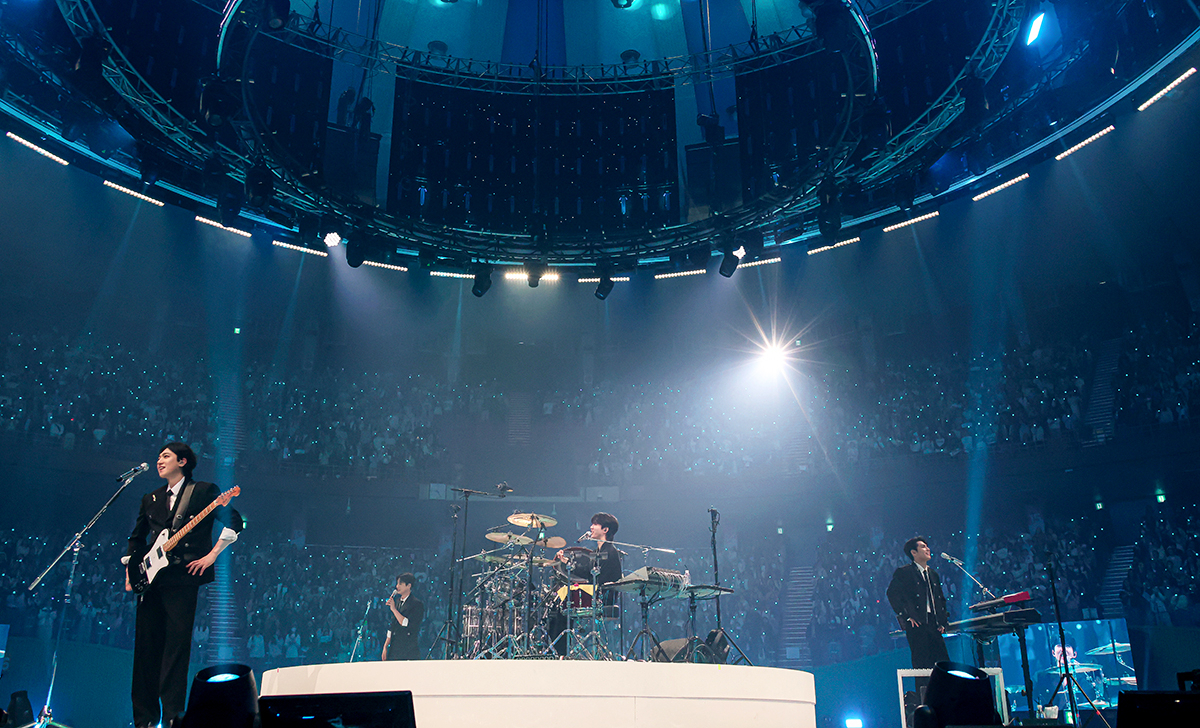
Post-military discharge and the 2024 Fourever comeback, DAY6 is back to filling arenas (Jamsil, and then Gocheok Sky Dome as the first Korean band to headline it). The covers cadence is a little different now. Less monthly, more strategic. But the appetite from My Days for the raw, radio-booth acoustic cuts has not moved. Every fancafe post asking "cover a Coldplay track next" or "please do a Taylor Swift bridge" is really asking for the same thing: that particular DAY6 fingerprint where a Western hit gets stripped down to voice, guitar, cajon, and comes back with a different emotional weight. That is not something a dance-cover channel can replicate, and that is what makes the DAY6 covers catalogue quietly one of the more valuable pieces of Hallyu-band IP nobody talks about enough.
Explore More of Korea with Daebak
Want to bring a little piece of Korea into your life? The Daebak Box is packed with the best Korean snacks, ramen, and cultural goodies delivered monthly to your door.


