


Table of Contents
Sugar, not spice, and most certainly everything nice. Ppopgi (뽑기) is the answer to satisfying your sweet tooth. This snack, also known as dalgona (달고나), has been around since the 1970s. Its sweet flavor and cute shapes make it easy to say that it is here to stay.
What Is Ppopgi (and How Is It Different From Dalgona)?
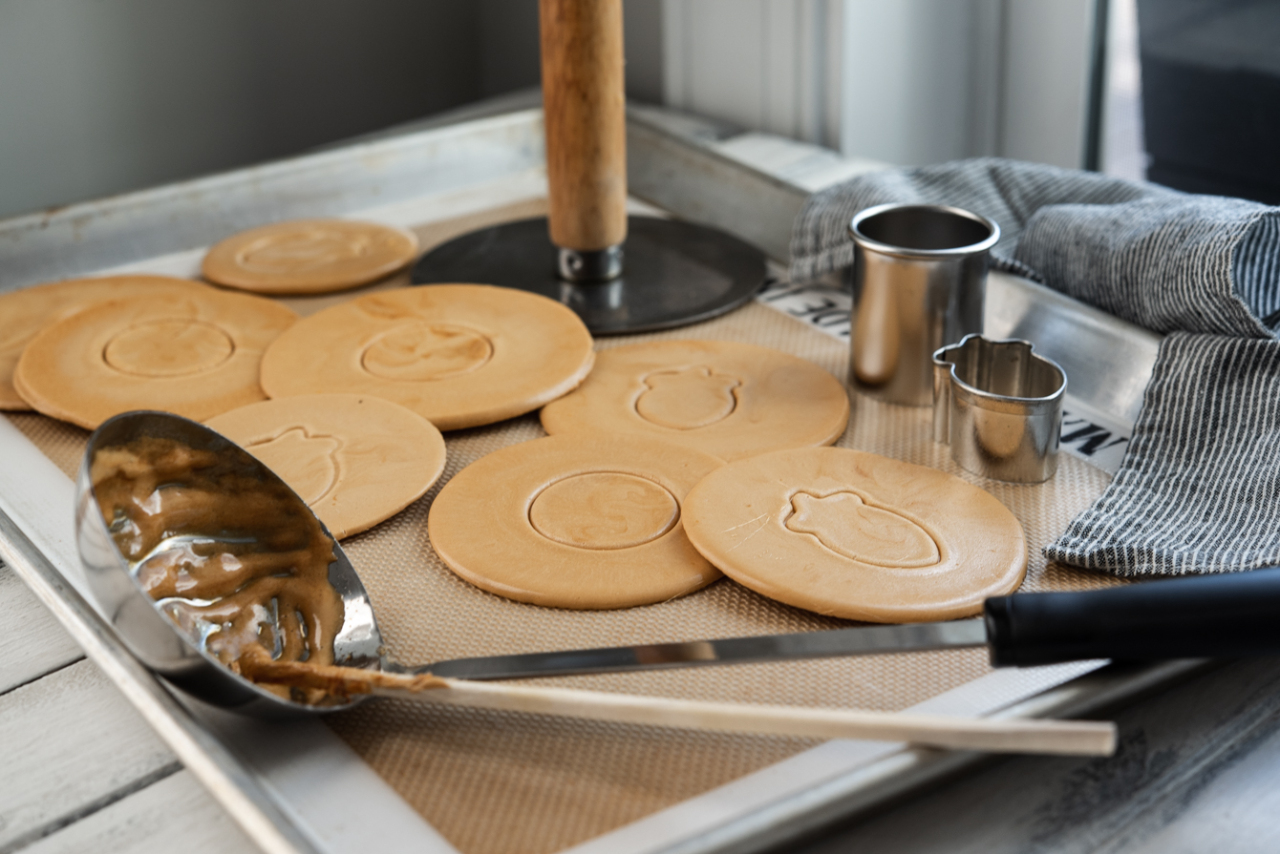
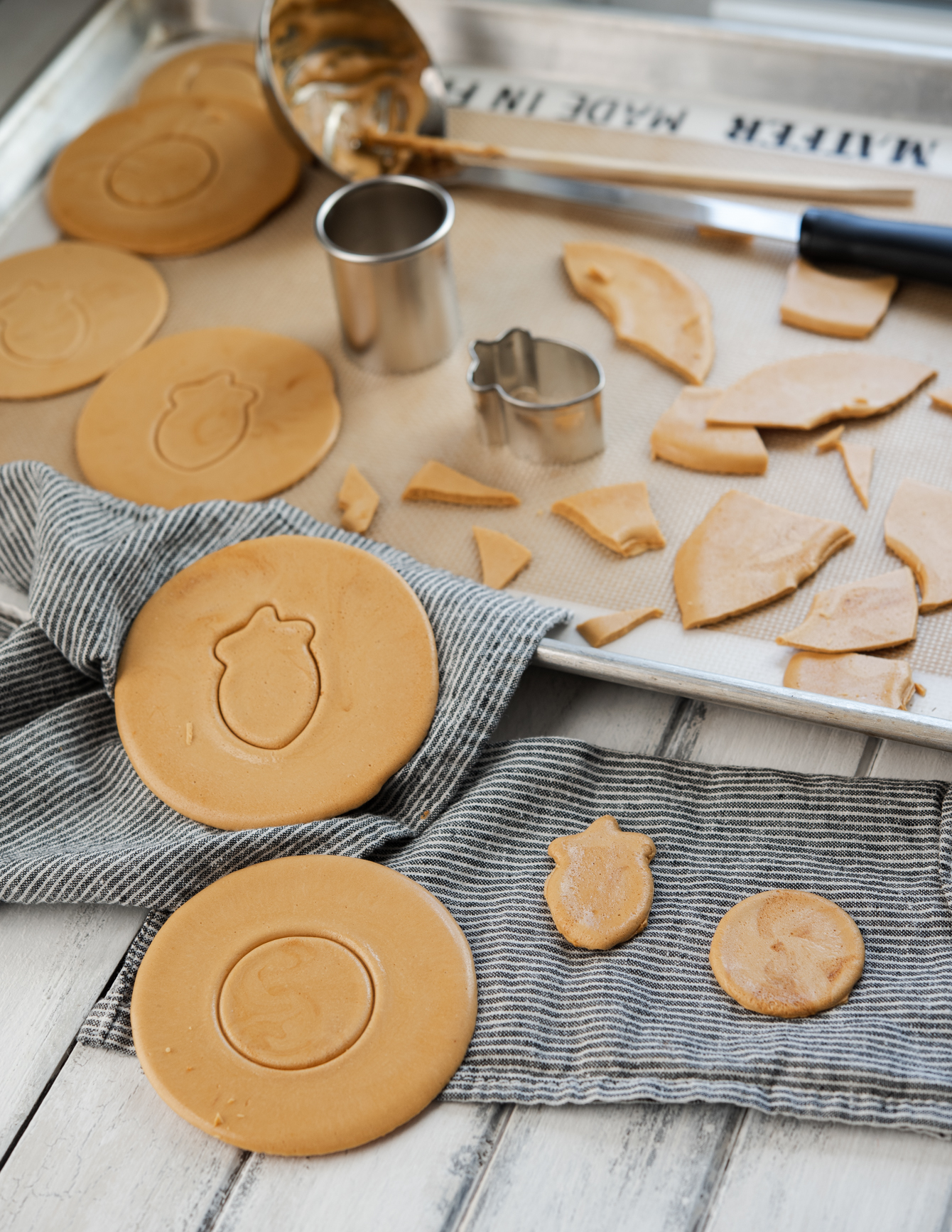
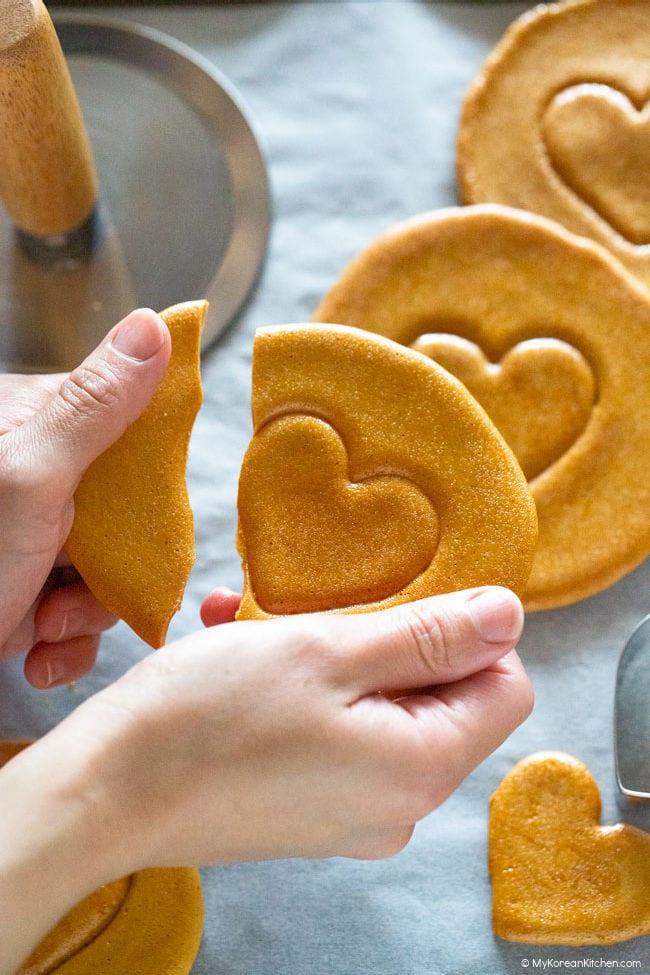
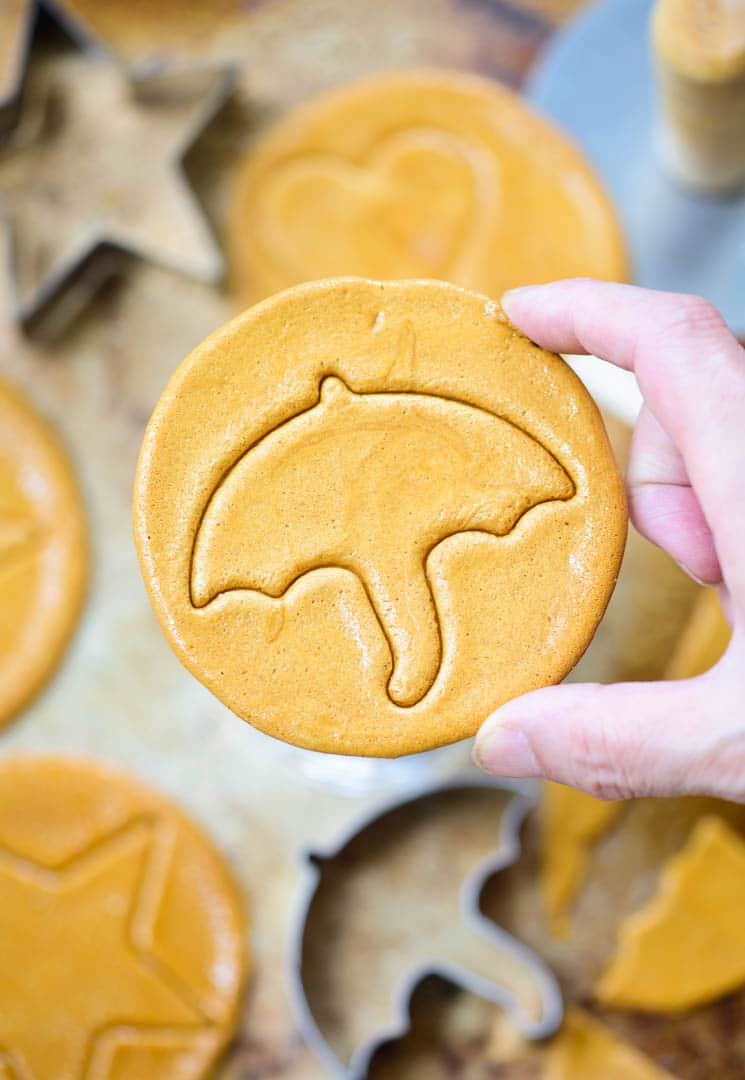
Ppopgi and dalgona look almost identical: a thin, brittle disc of caramelized sugar with a honeycomb-toffee texture. Traditionally, ppopgi was made with plain sugar while dalgona used glucose solids, but over the years the two names have blurred together. The word ppopgi literally means "picking out," a nod to the game that comes attached to every piece. After the candy cools, a shape such as a star, umbrella, heart or flower is pressed into the top, and the goal is to carve that shape out cleanly without cracking the rest of the candy. Easy to describe, brutally hard to pull off.
A Sweet Slice of 1970s Korea
In Korea there are still plenty of places to get some ppopgi. It evokes a sense of nostalgia for the older generation and it is entertaining for the younger one. If you manage to eat around the shape and it stays intact, you win another ppopgi free. The candy is usually melted over a charcoal briquette, but it can also be cooked over an open flame on a portable stove. Back in the 1970s and early 1980s, ppopgi vendors set up tiny stalls outside elementary schools across the country. Kids would crouch down, hand over a few coins, and watch the vendor pour their sugar into a battered metal ladle. For a generation that did not grow up with home ovens or fancy desserts, this caramelized sugar disc was the snack of childhood.
Make Ppopgi at Home (No Charcoal Required)
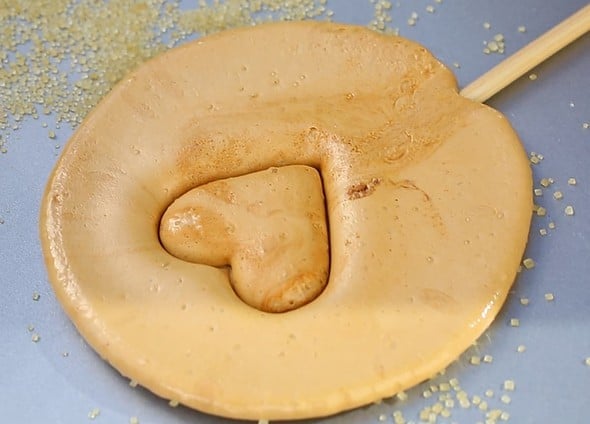
If you do not have a flight to Korea booked, you can also make ppopgi at home. There is no need for charcoal, just a stove and a metal ladle. Grab some sugar and a pinch of baking soda. Melt the sugar in the ladle over low to medium-low heat, stirring with a wooden chopstick until it turns a deep amber. Pull the ladle off the heat, sprinkle in the baking soda, and stir fast as the mixture puffs up into a creamy, golden foam. Pour it onto a silicone mat or parchment paper, flatten with a small pan or hotteok press, then quickly press a cookie cutter on top to leave the imprint. Maangchi has a famous tutorial on her channel showing exactly this process, complete with the ladle-licking sugar water trick from her childhood.
From Schoolyard Snack to Squid Game Superstar
Even the boys from Seventeen took a crack at it on variety TV, and global attention exploded in 2021 when Netflix's Squid Game put ppopgi at the center of its second deadly game. Suddenly the humble candy that Korean kids had been losing to for fifty years was trending worldwide under the hashtag #dalgonachallenge, with social media users carving out umbrellas with needles, toothpicks and even saliva. Simple to make and great to eat, the snack has evolved over time too. Instead of just hearts and flowers, modern vendors now press intricate designs like castles, characters and elaborate flora into the candy. Cafes in Seoul have started serving crushed ppopgi over soft-serve ice cream and lattes, giving the retro treat a brand new life.
One Last Sweet Note
So, if you ever want to get a little retro, try this snack. It is not bulgogi, it is not mulgogi, it is ppopgi. Delicious, nostalgic, and a perfect quick recipe for the upcoming holiday season. Whether you carve out the shape, crush it over ice cream, or eat it straight off the spatula while it is still warm, ppopgi is one of those rare Korean treats that ties grandparents, K-drama actors and global Netflix viewers together in the same caramelized moment. Enjoy.
Explore Korean Snacks with Daebak
Love Korean food? Get authentic Korean snacks and ramen delivered straight to your door with the SnackFever Box by Daebak.


