


Table of Contents
Last week's roundup covered the home-cooking side of a Korean winter: the stews and rice dishes you build in your own kitchen when the wind starts biting. This one is different. This is the street. From roughly late October through March, Korean sidewalks quietly rearrange themselves around a handful of steam-belching carts that only exist for these five cold months, then vanish into shaved-ice stands or fruit stalls the moment April warms up. I've spent over a decade working with Korean food brands and content producers, and if you want to understand why 붕어빵 (bungeoppang) suddenly blew up on TikTok around 2021, or why Reply 1988 and Itaewon Class made international viewers weirdly emotional about a paper cup of fish cake broth, you have to start with the cart economy itself.
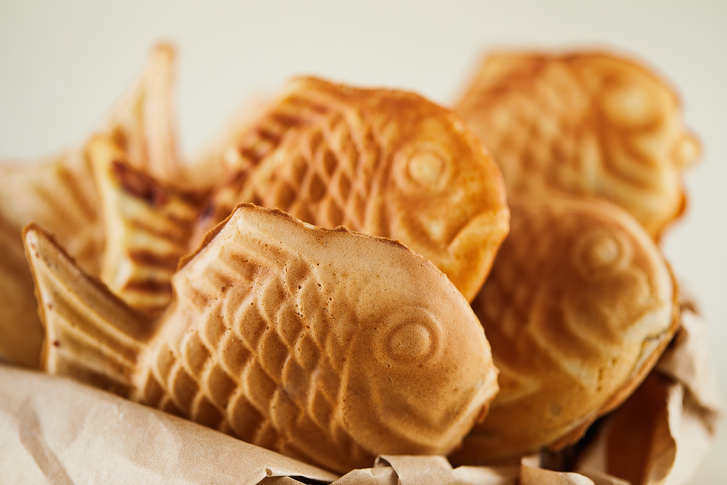
Bungeoppang (붕어빵): The Winter Cart Economy in Fish Form
Bungeoppang literally means "carp bread," and yes, there is no fish in it. A fish-shaped iron mold, a thin flour-and-water batter, a spoonful of sweetened red bean, close the mold, flip, wait 90 seconds, done. The whole operation runs from a single propane burner on a rolling cart. That simplicity is exactly why it matters as a business.
Here is the piece that doesn't make it into most food blogs. A well-located bungeoppang cart in Seoul (think a Line 2 subway exit, a bus terminal, the corner outside a university gate) can clear roughly 200 to 500 USD in cash per day at winter peak, selling three fish for 2,000 to 3,000 won. There's no rent, no PPL, no franchise fee. The whole month can gross close to 2 million won for a single retiree or student running one shift. This is why you see the same aunties and uncles working the same corner every November: it's a legitimate seasonal side income, and the "bus stop parasite" location strategy (park next to foot traffic somebody else generates) is passed down like a family recipe.
The reason bungeoppang went viral globally after 2020 wasn't the taste. It was the visual. That crisp golden fish shape reads instantly on a phone screen, and a whole generation of Korean YouTubers turned "bungeoppang map" videos into a subgenre. Karrot Market (당근마켓) even relaunched an official bungeoppang location map in late 2024 because searches for it were dominating their winter query volume. When Naver, Kakao, and Karrot all fight over the same seasonal keyword, that's the tell: this is not niche nostalgia, it's active demand.
Hotteok (호떡): The 90-Second Sugar Bomb
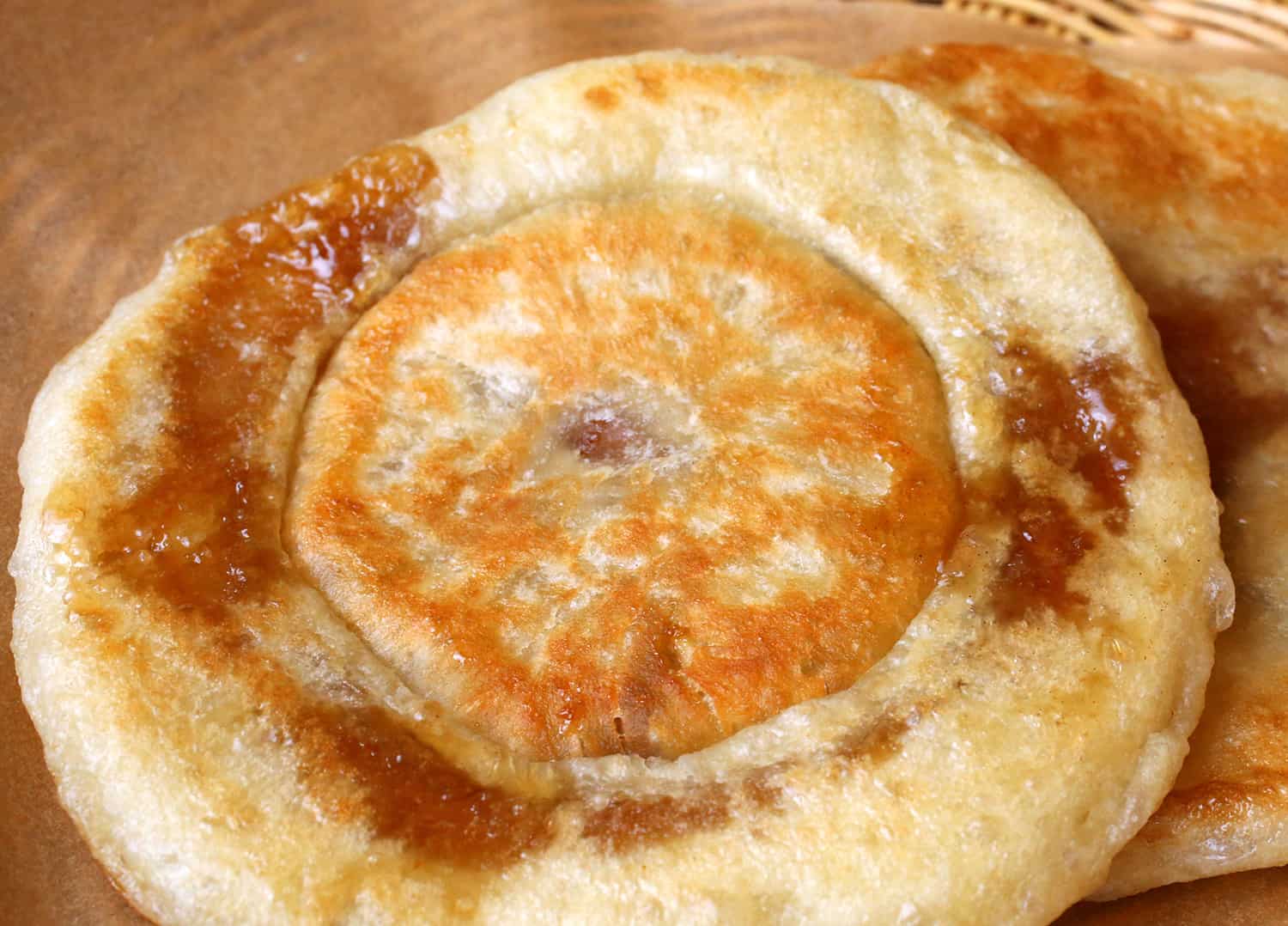
Hotteok is the one that hurts your mouth if you're not careful, and Koreans consider that part of the experience. A ball of yeasted dough is flattened onto an oiled griddle, pressed thin with a metal disc (호떡 누르개, a tool that exists for exactly one purpose), and cooked until the sugar-cinnamon-walnut filling inside melts into a molten syrup pocket. First bite hits the crispy exterior. Second bite: hot lava. Third bite: the reason you queued for 20 minutes at Namdaemun in December.
The dish carries a quietly interesting history. The "호" in hotteok is an old Korean word for merchants from Central Asia and China, and food historians at the Korea Heritage Service trace it to Qing Dynasty traders who settled around Incheon in the late 1800s and sold their version of a filled pancake to make ends meet. The 씨앗 (seed-filled) hotteok you see everywhere in Busan? That's a post-Korean War invention: refugees packed extra seeds into the filling because they were cheap and calorie-dense. Both variations are still on cart menus today, which is why the dish reads as "traditional" while actually being a 100-year running immigrant-and-refugee story.
The appeal point for foreigners tends to be textural. Western sweet baked goods are usually uniform: soft muffin, dense cookie, flaky croissant. Hotteok gives you crackly outside, chewy dough (쫄깃), and liquid syrup all in one bite. That contrast is what people mean when they say Korean food "hits different." It isn't spice, it's structure.
Eomuk (어묵) or Odeng (오뎅): The Broth Everyone Drinks From the Cup

Eomuk is a flat sheet of ground whitefish (usually pollock or cod), pressed, folded onto a wooden skewer in a zigzag, and dropped into a bubbling vat of anchovy-and-kelp broth (멸치 다시마 육수). You pay 1,000 won, you grab a skewer, and (this is the actual point) the vendor hands you a small paper cup and a ladle. Free broth. Unlimited refills. On a night when your face is numb, that cup of hot salty broth is the whole reason the transaction exists.
The name split (eomuk vs odeng) is a real cultural pressure point. 오뎅 comes from Japanese "oden" and traces back to the Japanese-run fish cake factories set up in Busan under colonial rule. After liberation, and especially in the 1990s language purification wave, the government pushed 어묵 as the "proper Korean" term, but everyone's grandmother still says 오뎅 and no one is correcting her. If you ever wonder why Korean food menus in Seoul cafes will list "어묵탕" while the ajumma at the tent bar shouts "오뎅 하나 더!", that's why. Two words, same dish, decades of postcolonial politics baked in.
Busan is still the industrial center of eomuk production. Samjin Amook, the 70-year-old fish cake brand from Yeongdo, essentially built a modern retail category around this humble stick, opening premium eomuk bars where you get the same dish at 4x the street price with a beer. That upmarket move is genuinely smart branding: they took a food associated with the poorest street stalls and repositioned it as a Busan regional specialty worth traveling for.
Gukhwappang (국화빵): Bungeoppang's Quieter Older Sibling
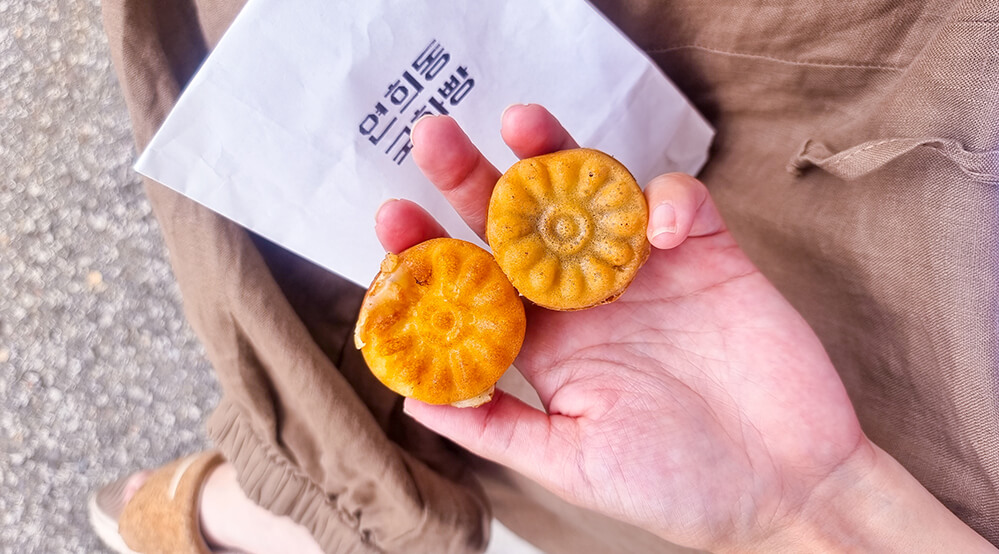
Gukhwappang (literally "chrysanthemum bread") is essentially the same idea as bungeoppang: pancake batter, red bean filling, iron mold. The mold shape is the difference: a five-petal chrysanthemum flower stamped into a coin-sized bite. They're small, they arrive by the paper bag full (usually 5 for 2,000 won), and they're closer to the actual pre-war Korean pastry tradition than bungeoppang.
Here's a detail even a lot of Koreans don't know: gukhwappang predates bungeoppang. It was already being sold at Joseon-era markets before Japanese taiyaki iconography influenced the carp shape. Which is why you tend to find gukhwappang carts at older markets (Gwangjang, Namdaemun, Tongin) rather than at trendy Seoul neighborhoods like Seongsu or Yeonnam. The customer base skews older, the price hasn't inflated as aggressively, and the vendors often make them in the same 40-year-old cast iron molds their parents used.
The reason it hasn't gone viral internationally the way bungeoppang has is honestly a marketing problem. The shape doesn't photograph as cleanly, the name is harder for non-Koreans to pronounce, and it never made it into a signature K-drama scene. But taste-wise, most Koreans who grew up in the 70s or 80s will tell you gukhwappang has a slightly denser, more caramelized crust because the mold cavities are smaller and each cake gets more direct contact with the iron. It's a subtler bite. If bungeoppang is the pop single, gukhwappang is the B-side that the head fans actually prefer.
Gyeranppang (계란빵): One Whole Egg, Zero Fanfare

Gyeranppang is exactly what the name says: egg (계란) bread (빵). A cornbread-adjacent batter is poured into an oval mold, a whole egg cracked on top, and the whole thing is baked for a few minutes until the bread rises around the egg like a nest. Salt, pepper, sometimes a slice of ham. That's it. It costs about 1,500 to 2,000 won and it fits in one hand like a small warm brick.
The origin story is unusually well-documented for a Korean street food. In 1984, a shop near Inha University in Incheon called 원조통계란빵 (Original Whole Egg Bread) started selling it as a variation on 풀빵 (a red bean bun) because some of their student customers didn't want red bean. The owner improvised with eggs. Forty years later that same shop is still there, still packed at breakfast, and every single gyeranppang cart in Korea can trace a lineage back to it. That kind of clean origin story is genuinely rare.
The appeal is functional as much as emotional. A single gyeranppang delivers about 250 calories, real protein from the egg, and enough carb weight to be an actual breakfast, not a snack. That's why you see it clustered around subway station exits and university gates, not tourist plazas. Around Sillim Station Exit 8 (near Seoul National University) and Sinseol-dong Exit 10, the morning rush lines can hit 30 people. These are commuters, not TikTokers. In a country where 24-hour convenience stores sell perfectly fine triangle kimbap, the fact that people will still stand outside in minus-5 degree weather for a hot egg bread tells you something about what Koreans actually consider comfort.
Explore Korean Snacks with Daebak
Love Korean food? Get authentic Korean snacks and ramen delivered straight to your door with the SnackFever Box by Daebak.


