


Table of Contents
Korean culture is one of the world's most cohesive and distinctive, shaped by thousands of years of history, Confucian philosophy, Buddhist influence, and a resilience forged through external pressures and dramatic national transformations. Understanding Korean culture opens a window not just into one country's way of life but into a philosophical approach to family, respect, community, and shared identity that differs meaningfully from Western frameworks. This guide covers the essential elements of Korean culture that every curious newcomer should know.
The Confucian Foundation
Much of what distinguishes Korean social behavior from Western norms traces back to Confucian philosophy, which was adopted as the state ideology of the Joseon Dynasty (1392-1897) and embedded deeply into Korean social structures over five centuries. Confucianism emphasizes hierarchical relationships, filial piety (respect and care for parents and elders), social harmony, educational achievement, and the cultivation of moral virtue through proper conduct.
In practice, this means that Korean social life is organized around age and relationship hierarchies to a degree unusual in most Western contexts. The Korean language itself encodes social hierarchy: different verb endings, pronouns, and vocabulary are used depending on whether you are speaking to someone older, younger, or of the same generation. Speaking to an elder in informal language without permission is considered disrespectful. Using formal language with someone significantly younger than you can feel oddly cold or distancing.
The concept of "nunchi" (the ability to read a social situation and respond appropriately, often without explicit communication) is central to Korean social intelligence. Koreans place high value on understanding what is needed or expected in a social situation without having to be told directly. Guests who eat heartily and express appreciation for food bring joy to their hosts in ways that straightforward verbal thanks sometimes cannot match.
Seollal: Korean New Year
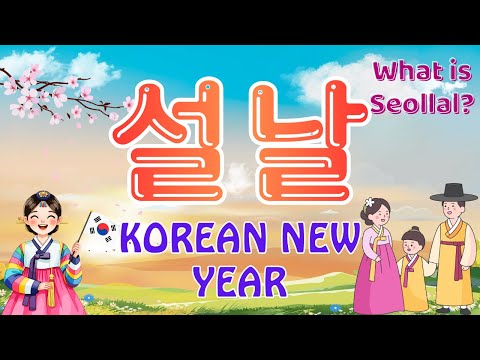
Seollal (Korean Lunar New Year) is one of the two most important traditional holidays of the Korean year, typically falling in late January or early February. It is a time when Korean families travel across the country to gather at the home of the eldest family member, perform ancestral rites (charye), wear hanbok (traditional clothing), and share traditional foods.
The ancestral rite (charye) performed on Seollal morning involves arranging specific foods for deceased family members, bowing in formal reverence, and sharing the food among the living family afterward. The specific foods served vary by region and family tradition, but tteokguk (sliced rice cake soup in beef broth) is universally eaten on Seollal morning, with the belief that eating it adds a year to one's age and brings good fortune.
Children bow formally to elders (sebae) and receive money in decorative envelopes (sebaetdon) in return. Traditional games like yutnori (a board game played with wooden sticks), kite flying, and jegichagi (a shuttlecock game played with the feet) mark the holiday period. Seollal is the single most significant migration event in Korea each year, with tens of millions of people traveling to their family hometowns.
Chuseok: The Autumn Harvest Festival
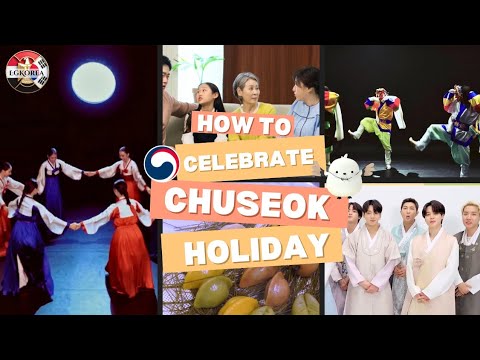
Chuseok (the fifteenth day of the eighth lunar month, typically in September or October) is the other great Korean holiday, often described as "Korean Thanksgiving" though its character is quite different from the American holiday. Like Seollal, it involves family reunification, ancestral rites, and traditional foods, but with an autumnal, harvest-celebration energy.
Songpyeon (half-moon shaped rice cakes steamed on pine needles and filled with sweetened sesame, chestnut, or red bean) are the signature food of Chuseok. Families traditionally make songpyeon together the day before the holiday, with the communal rice cake making being as important as the eating. Freshly harvested autumn ingredients appear in the holiday feast: chestnuts, persimmons, Korean pears, and new-crop rice all feature prominently.
Ganggangsullae, a traditional circular folk dance performed by women under the full moon of Chuseok, is one of Korea's most beautiful cultural practices. Formally recognized as a UNESCO Intangible Cultural Heritage in 2009, it originated as a celebratory practice in coastal communities and continues as a living tradition at cultural events and village celebrations across the country.
Hanbok: Traditional Korean Clothing
Hanbok is the traditional clothing of Korea, characterized by vibrant colors, flowing lines, and elegant simplicity. The basic components are the jeogori (a short upper jacket) and baji (trousers) for men, and jeogori and chima (skirt) for women. The specific colors, fabrics, and designs of hanbok historically indicated the wearer's social status, marital status, and the occasion being marked.
White was the most common color for ordinary hanbok in the Joseon Dynasty, reflecting both Buddhist influence and Korean identity (Koreans were sometimes called the "white-clad people" by neighboring cultures). Bright colors in silk were reserved for special occasions and celebrations. Today, hanbok is primarily worn during Seollal, Chuseok, weddings, and formal ceremonies, though a contemporary hanbok movement has emerged with designers creating modern interpretations suitable for everyday wear.
Hanbok rental shops near major cultural sites (Gyeongbokgung Palace, Bukchon Hanok Village, Jeonju Hanok Village) allow visitors to experience wearing traditional clothing while exploring historical areas. The practice has become enormously popular among tourists and younger Koreans who embrace hanbok as both cultural identity and fashionable photography opportunity.
Kibun: Mood, Face, and Social Harmony
"Kibun" is a concept that roughly translates to mood, feeling, or atmosphere, but carries specific cultural weight in Korean social life. Maintaining good kibun at a social gathering is a shared responsibility: you eat heartily to show appreciation (maintaining the host's kibun), you avoid direct confrontation that might embarrass someone in front of others (protecting their kibun), and you read the room for when enthusiasm is needed and when quiet support is more appropriate.
Related to kibun is the concept of "nunchi" (discussed above) and "chemyeon" (face, or social reputation). Chemyeon functions similarly to the concept of face in Chinese culture: public embarrassment, particularly in front of social peers or juniors, carries more weight than private criticism. Understanding these concepts helps explain why Korean social disagreements are often handled indirectly, and why apparent harmony in a group setting may coexist with strong private opinions.
The Role of Age and Seniority
Age matters in Korean social interaction to a degree that surprises many international visitors. Koreans typically ask age early in a new acquaintance, not out of nosiness but because knowing whether someone is older or younger determines the appropriate speech register and relational dynamic. A year or two of age difference that would be insignificant in many Western contexts can establish who pours the drinks, who speaks first, and whose opinion is given precedence in group decisions.
This dynamic is most visible in workplace culture: Korean office hierarchies tend to be steeper than in many Western companies, with juniors serving seniors in various small ways (pouring coffee, ensuring elders are seated first, performing the less desirable tasks) as expressions of appropriate deference. The flip side is that seniors are expected to take care of their juniors: paying for meals, advocating for their interests, and providing guidance and mentorship as obligations of their position.
Jeong: The Untranslatable Bond
"Jeong" is one of those Korean words that resists clean translation but describes something real and important. It refers to a deep emotional bond that develops between people (or between people and places or objects) through shared experience and time. Jeong is not quite love, not quite affection, not quite loyalty, but encompasses elements of all three. When Koreans describe being unable to leave a place or end a relationship despite logical reasons to do so, jeong is often cited as the explanation.
Jeong develops slowly and cannot be rushed: it is a product of eating together, working through difficulty together, sharing ordinary moments over time. Its presence is often felt most clearly when it might be lost, and its absence (han, a related concept describing a deep accumulated sorrow or grievance) marks the emotional landscape of Korean cultural expression from traditional music to contemporary cinema.
Modern Korean Culture
Contemporary Korean culture is a dynamic negotiation between deep traditional values and rapid modernization. South Korea transformed from a war-devastated economy to a major global economic power in less than fifty years (the "Miracle on the Han River"), and this compressed development created a society where a grandmother who remembers pre-electricity rural life and her granddaughter who uses cutting-edge technology as a K-pop influencer may share the same apartment.
The tension between Confucian social expectations (marriage, children, stable employment, deference to elders) and the aspirations of a highly educated younger generation navigating a competitive labor market has produced some of the most interesting and widely discussed social trends in contemporary Korea: the "sampo generation" (those giving up on dating, marriage, and children due to economic pressure), the remarkable political engagement of younger voters, and the global influence of Korean creative industries as both economic driver and cultural expression.
Experience Korean Culture Through Food
Food is one of the most accessible windows into Korean culture for those who cannot visit in person. The seasonal rhythms of Korean eating (specific dishes for specific holidays, summer cooling foods, winter warming soups) reflect the traditional calendar. The communal nature of Korean dining expresses the culture's emphasis on shared experience. And the extraordinary variety of Korean snacks, sweets, and prepared foods available internationally provides a daily connection to Korean food culture for enthusiasts worldwide.
The Daebak Box brings Korean culture directly to your door each month, with curated K-pop merchandise, traditional snacks, beauty products, and more — a tangible way to experience Korean culture from wherever you are.
Final Thoughts
Korean culture rewards those who approach it with patience and genuine curiosity. Its surface features (the food, the music, the dramas) are accessible and immediately appealing. But the deeper rewards come from understanding the values and concepts that give those surface expressions their meaning: the jeong that makes a shared meal feel like more than sustenance, the kibun that makes a well-run gathering feel effortlessly warm, and the nunchi that lets Koreans communicate volumes without saying a word.


