


Table of Contents
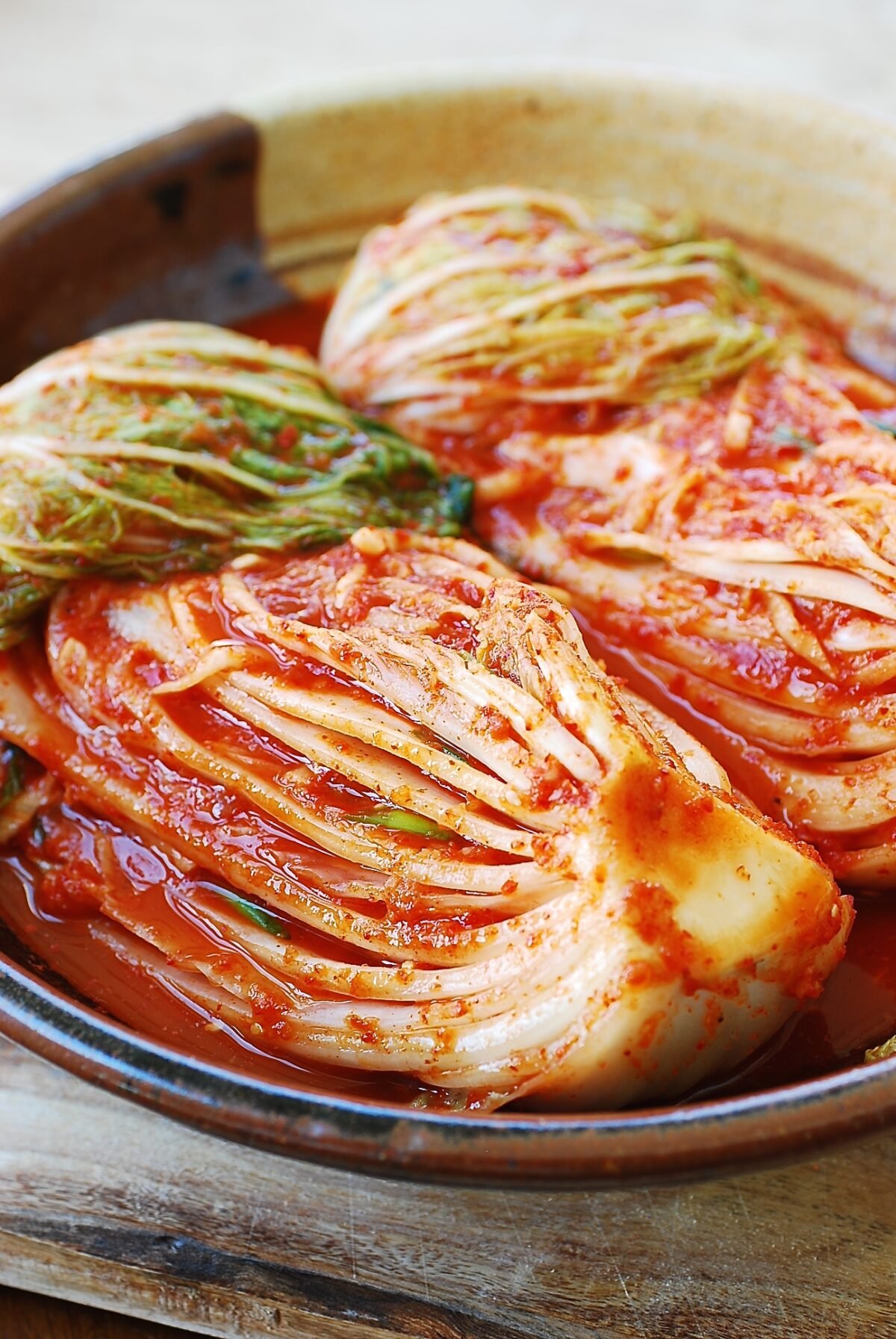
Kimchi fries did not come from Korea. That single fact catches most first-time eaters off guard. The dish, a plate of hot fries piled with caramelized kimchi, melted cheese, and a gochujang-forward mayo, was invented in Los Angeles in 2008 by Korean-American chef Roy Choi and his Kogi food truck. Ten years working with K-food brands and watching the category go global, I still call kimchi fries the single most important gateway snack in Korean-American cuisine.
Where Kimchi Fries Actually Came From
The origin story runs through Kogi Korean BBQ, the Los Angeles taco truck that launched in November 2008. Roy Choi, a Culinary Institute of America valedictorian and former Beverly Hilton chef de cuisine, teamed up with Filipino-American Mark Manguera to sell short-rib tacos out of a truck. Newsweek later called Kogi "America's first viral eatery." What people forget is that kimchi fries were not the headline item. They were the side. But the side became the addiction, and by 2009 the New York Times was writing that the food at Kogi "does not fit into any known culinary category."
The magic was Choi's kitchen instinct: what if Belgian fry crispness meets the acidic bite of aged kimchi, then everything gets welded together by melted cheddar? It sounds like a stoner idea. It is also a technically clean flavor structure, which is why it survived past the food-truck fad.
Why the Recipe Works (Ferment Plus Fat)
Here is the ingredient logic most food blogs skip. Kimchi is a lacto-fermented product, so it delivers acidity, salt, and umami in one hit. Fries deliver starch and oil, a texture Korean cuisine mostly does not have. Cheese binds fermented sourness to fried fat, and gochujang mayo (usually just Kewpie plus a spoon of gochujang) hits the sweet-heat register that makes Korean sauces so TikTok-able. The Korean word 감칠맛 (gamchilmat), our version of umami, is doing quiet heavy lifting here.
What sets aged kimchi apart from fresh kimchi is important. You want kimchi that is at least three weeks old, so the acid is developed and the cabbage has gone slightly translucent. Caramelize it in a hot pan with a splash of the kimchi juice, then pile it on the fries. If your kimchi is too fresh, the whole dish tastes flat.
The LA Copycats and How the Idea Spread
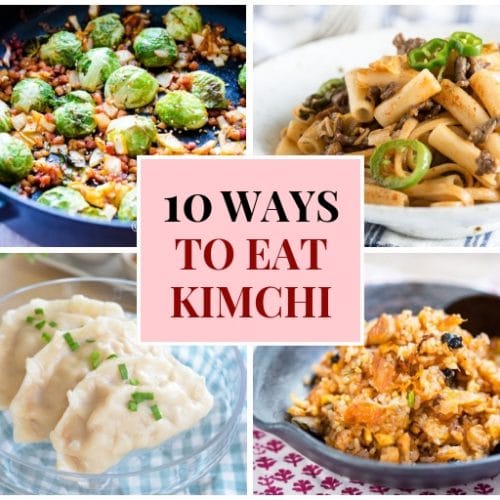
Once Kogi hit, everyone copied. Beer Belly in Koreatown put kimchi fries with duck-fat-fried potatoes on the menu. Baohaus in New York, run by Eddie Huang, ran a version topped with pork sung. David Chang's Momofuku empire kept flirting with the same idea (Chang has always been open about how much Kogi influenced modern American-Asian menus). By 2014 kimchi fries had escaped the Korean-American circuit and were showing up on brunch menus in Austin, Portland, and Nashville. Non-Korean chefs adopted the dish faster than they adopted actually complicated Korean recipes, because fries are a language everyone already speaks.
The industry math on Kogi tells you why the format spread. Kogi built a Twitter following of 36,000 by mid-2009 (unheard of for food service at that time), then grew to five trucks, opened Chego, A-Frame, Kogi Taqueria, and a Whole Foods location. When your side dish helps power that engine, other operators pay attention.
Bulgogi Kimchi Fries: The Version That Went Mainstream
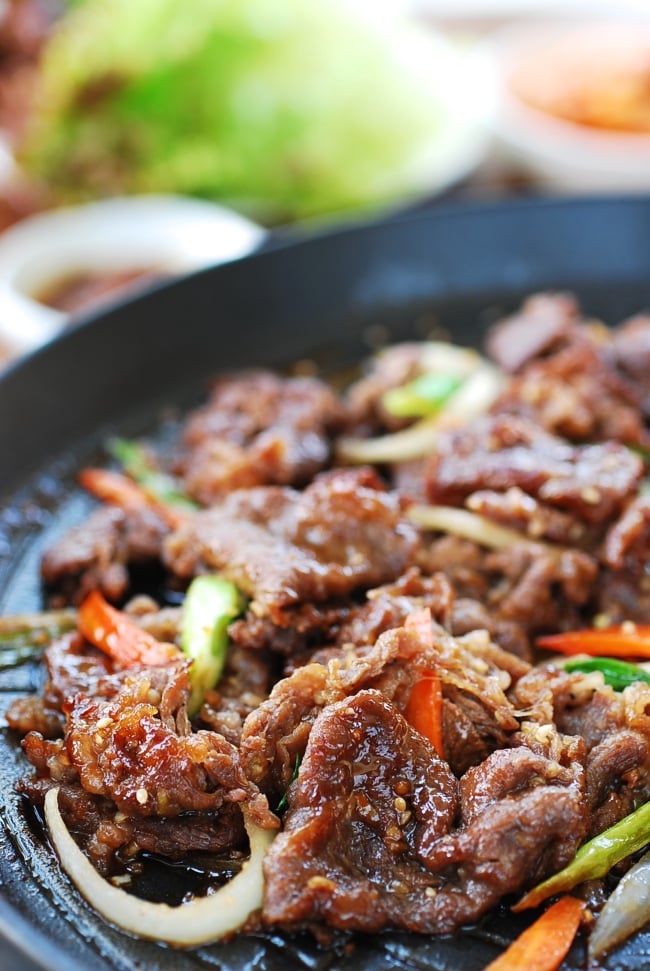
Layer marinated bulgogi (불고기) on top and you get the version that non-Korean diners default to. The soy-sweet beef bridges the gap for palates that find plain caramelized kimchi too funky. If you ever see kimchi fries at a college-town restaurant in the Midwest, it is almost always the bulgogi variant. The Korean-American operators who cook this dish know exactly why: bulgogi is the safest entry point in the Korean flavor library, so pairing it with an already-familiar snack format lowers the psychological cost of ordering.
Kimchi Fries at Home in 15 Minutes
You do not need Roy Choi's kitchen. The home version is fast. Frozen crinkle-cut fries (or waffle fries, if you want more surface area for toppings) go in the oven. While they bake, sauté a cup of aged, roughly chopped kimchi in a hot pan with a teaspoon of neutral oil and a teaspoon of the kimchi juice, cooking until the edges start to char slightly. In a bowl, mix two tablespoons of Kewpie mayo with a teaspoon of gochujang, half a teaspoon of rice vinegar, and a drizzle of sesame oil.
Once the fries are crisp, pile them on a plate, top with shredded cheddar (or a Monterey Jack blend), then broil for 90 seconds to melt the cheese. Spoon the kimchi over, drizzle the gochujang mayo, and finish with sliced scallions and toasted sesame seeds. Total time from oven to plate: under 15 minutes. This is the recipe that has gone viral on Korean-American TikTok every summer since 2021.
What Kimchi Fries Signal for K-Food's Next Decade
Kimchi is having a global moment on its own. Walkerhill Hotel just shipped a metric ton of Supex Kimchi to Long Beach, California in July 2026, and Costco's US frozen aisle now stocks kimchi dumplings. But dishes like kimchi fries are the trojan horse. They do not ask American eaters to accept Korean food on Korean terms. They meet people at fries, then teach them the flavor grammar of gochujang and lacto-fermentation on the way through. That is why K-food operators inside CJ Foods' US expansion and HYBE-adjacent lifestyle projects keep coming back to fusion snack formats: they convert new eaters faster than tteokbokki or samgyeopsal ever could.
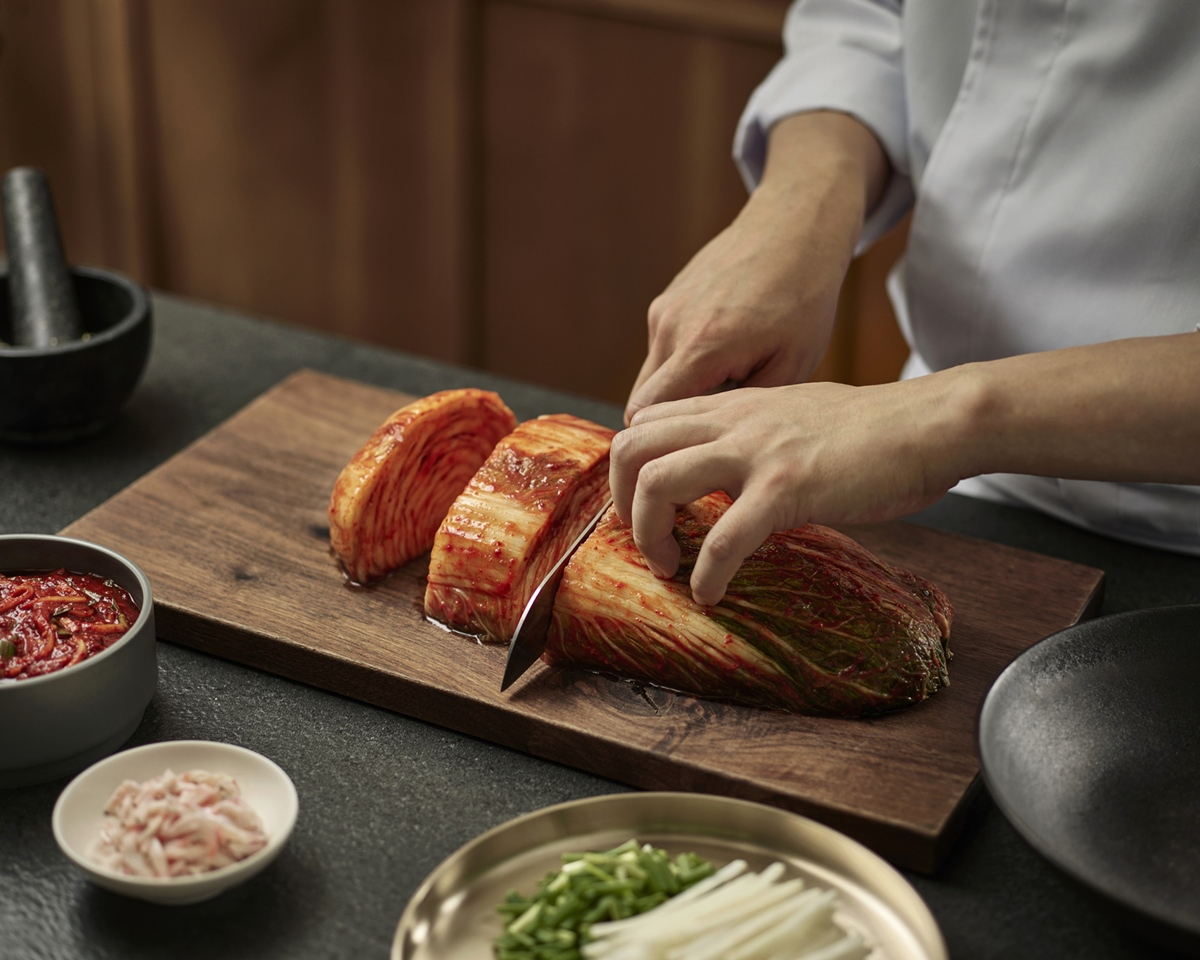
One clarifier before you go down the rabbit hole. Kimchi fries are not to be confused with 김치전 (kimchi jeon), the kimchi pancake, which is a totally separate Korean home dish made with flour batter. Both are worth cooking. Only one was invented in an LA parking lot.

Explore Korean Snacks with Daebak
Love Korean food? Get authentic Korean snacks and ramen delivered straight to your door with the SnackFever Box by Daebak.


