


Table of Contents
Here is my hottest take after a decade watching Korea's F&B category from the inside: if a fried chicken shop is not double-frying, walk out. Do not order. Do not "give it a chance." Single-fry chicken is the tell of an operator who never worked the counter at a real 치킨집 (chicken shop) in Seoul. It is the difference between the shattering, cracker-thin crust that made 치킨 (chikin) Korea's most-exported comfort food, and the soft, oily, take-home-in-a-clamshell chicken that gives the whole category a bad name overseas. That gap is not opinion. It is thermodynamics, and Korean shops figured it out decades before the rest of the world caught on.
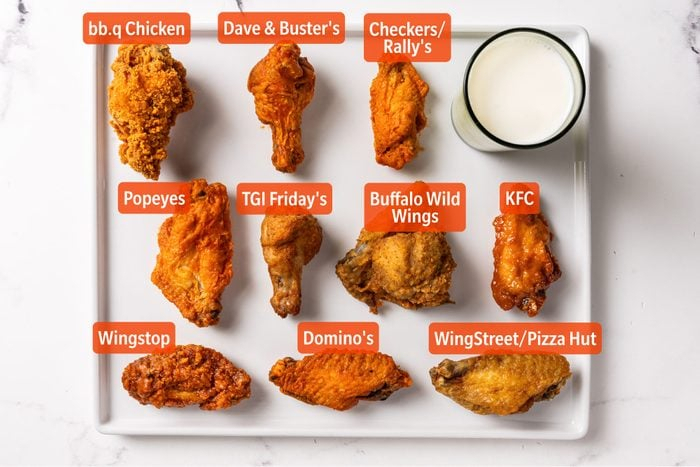
The double-fry method is not optional. It is the whole point.
The formula every real chicken master in Korea learned in their apprenticeship: first fry at about 170°C for eight minutes to render the fat under the skin and cook the meat through. Pull the pieces out. Rest for five minutes so residual moisture escapes as steam instead of getting trapped in the crust. Second fry at 200°C for three minutes to blast the surface, dehydrate what is left, and set that shattery, glass-thin crust the industry calls 바삭바삭 (basak basak, the onomatopoeia for crunch). Maangchi's classic dakgangjeong recipe explicitly calls for two rounds at 350 to 380°F for exactly this reason, and Korean Bapsang's Gyochon-style recipe walks through the same low-high sequence.
Why this beats the American single-fry approach: Popeyes and KFC pressure-fry a whole thigh in one pass. It works for their format (thicker skin, juicier meat, one texture note). But that method traps steam in the crust as it cools, which is why an American drumstick softens the moment it hits the box. A Korean 치킨집 sends chicken out crackle-crisp because the second fry is the dehydration step, and the coating is starch (potato or cornstarch), not the flour-egg batter that goes limp. If you have ever wondered why Bonchon chicken is still crunchy an hour after delivery, this is the entire reason. It is engineered chemistry, not tradition worship.
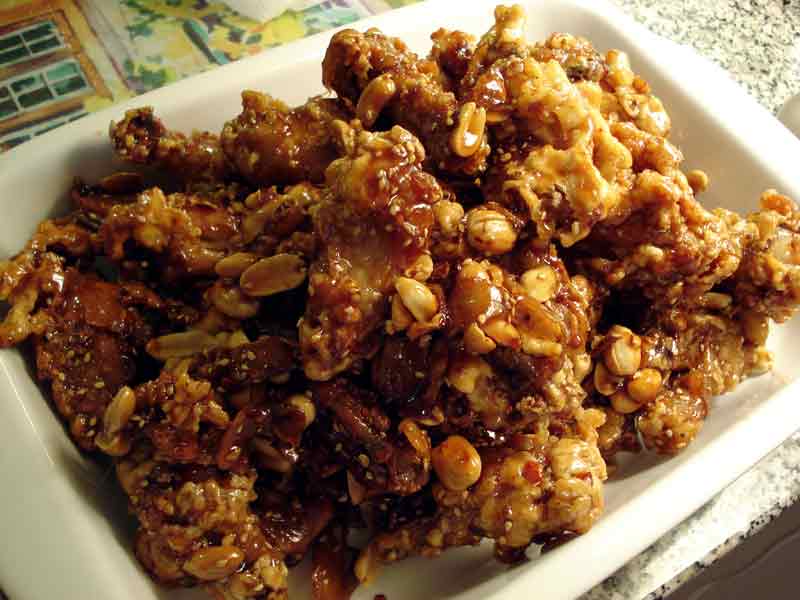
The sauce lineup, ranked by what Koreans actually order
Outside Korea people assume 양념 (yangnyeom, the red gochujang glaze) is the default. Inside Korea, the actual sales split at most franchises tilts closer to 60 percent 후라이드 (huraideu, plain crispy) and 40 percent everything else, which is why the "반반" (banban, half-and-half) order exists as its own SKU. Here is what is actually on the menu at a decent Korean chicken shop, in the order Koreans order them:
- 후라이드 (huraideu): The purist's order. Naked, crisp, salt-and-pepper only. If a shop cannot make this taste good, nothing else on the menu will save them. This is how you test a new chicken place.
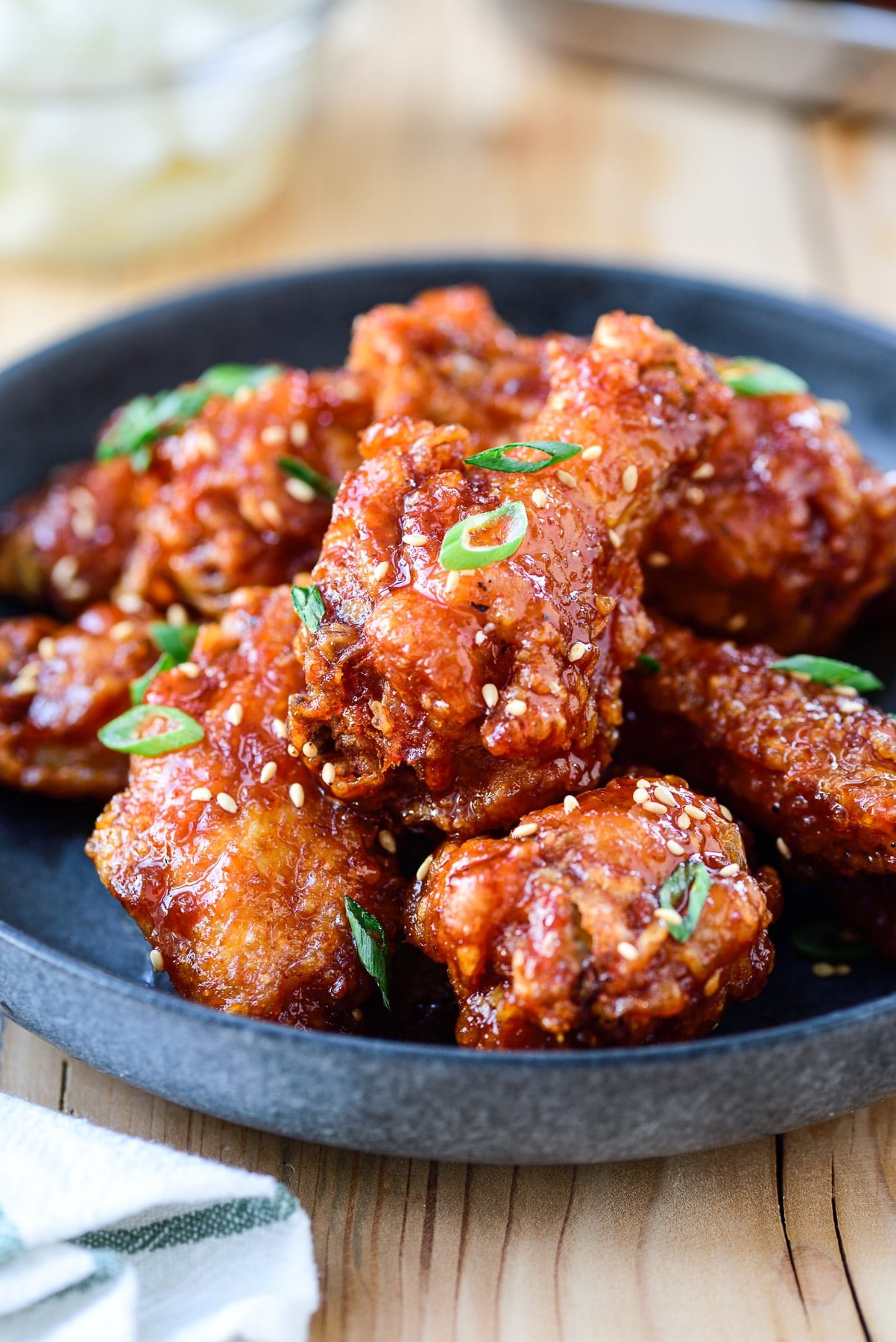
- 양념 (yangnyeom): The sweet-spicy gochujang glaze, usually with a hit of ketchup, honey or corn syrup, and garlic. Kyochon's version leans thinner and sharper. Nene's is sweeter. My Korean Kitchen's home version is a solid stand-in.
- 간장 (ganjang): Soy garlic. Kyochon built its entire brand on this. Sticky, savory-sweet, garlic-forward, and the sauce that converted the most Americans. This is also what Bonchon rides in the US market.
- 파닭 (padak): Fried chicken buried under a pile of julienned green onions and drizzled with a tangy soy-vinegar sauce. Aesthetic looks like a haystack. Extremely underrated. This is what my Seoul industry friends actually order after drinks.
- 뿌링클 (ppuringkeul): BHC's cheese-powder-dusted phenomenon, launched 2014, still their bestseller. Novel enough that BHC leapfrogged BBQ into the No. 1 revenue slot for years.
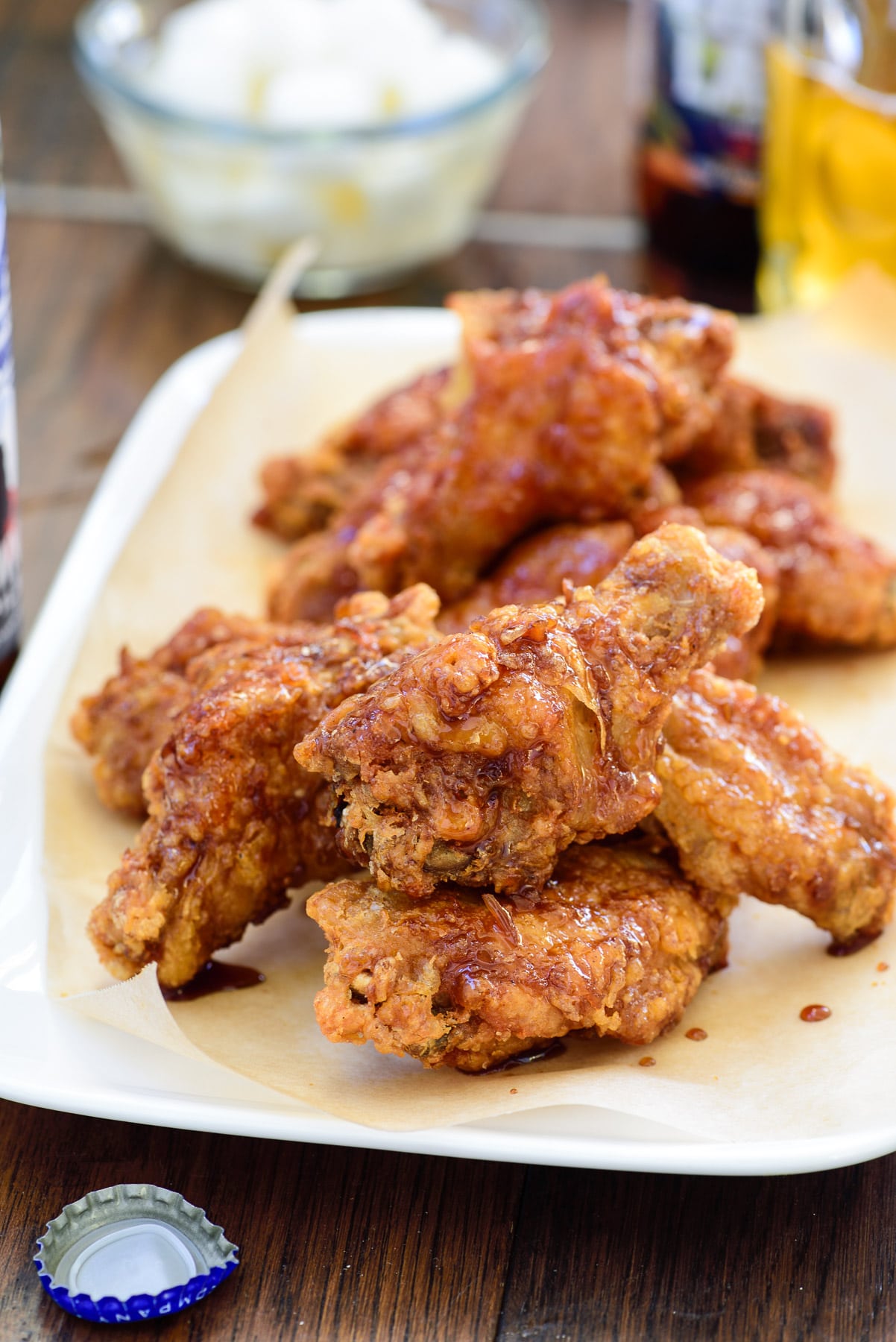
The Big 5 brand tier list, ranked from an industry insider
The Korean fried chicken market is a roughly ₩10 trillion domestic beast, and delivery through 배민 (Baemin, the dominant delivery app) drives more than half of it. Here is my Big 5 read, ordered by what I would actually take to a friend who says "show me the best":
1. Kyochon (교촌치킨). The premium anchor. Soy-garlic honey is their signature, and they hand-brush sauce onto each piece to protect crunch (a detail Korean Bapsang explicitly copies in her recipe). Kyochon acquired MoonBear Brewing in 2021 to launch Kyochon Chimac, its own beer brand, because they understand 치맥 (chimaek) is the actual product, not the chicken alone. Also the first Korean chain to enter the US, back in 2007.
2. BBQ Chicken (Genesis BBQ, 비비큐). The K-pop era ambassador tier. BTS was global ambassador for years. In 2024, Taste of Home magazine ranked BBQ the No. 1 fast-food chicken in the US, beating KFC. Genesis BBQ now runs about 700 outlets across 57 countries and is pushing for all 50 US states. This is the chain betting hardest on global.
3. BHC (비에이치씨). The mid-tier innovator. Launched 뿌링클 in 2014, which reshaped the whole flavored-chicken segment. Currently one of Korea's top three franchises by revenue alongside BBQ and Kyochon. If you want to taste what Korean R&D looks like when it goes viral, this is the brand.
4. Nene Chicken (네네치킨). The reliable mid-market pick. Snow cheese, chilling wings, and a rotating flavored lineup that keeps casual buyers coming back. Not premium, not budget. The Toyota Camry of Korean chicken chains.
5. Goobne (굽네치킨). The outlier. Oven-baked, not fried. Positioned for the "I want chicken but I told my trainer I would eat clean" market. Their volcano and Go Chihuahua flavors have a cult following, though purists will tell you it is not really 치킨 without the oil.
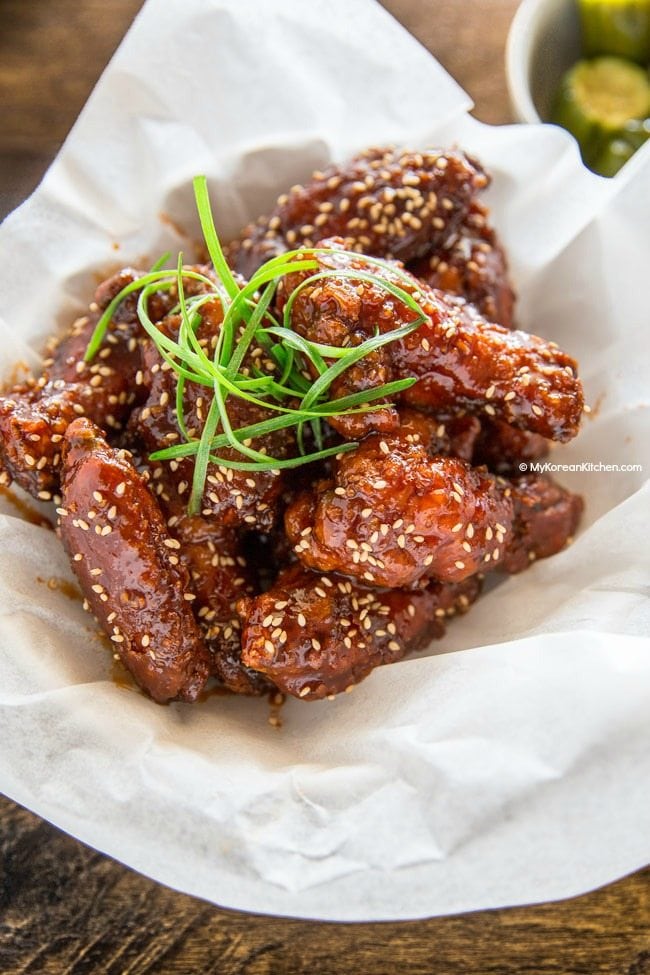
Why 치맥 (chimaek) is not a fad. It is the actual product.
치맥 = 치킨 (chicken) + 맥주 (maekju, beer). Koreans do not treat this as a food-and-drink pairing the way an American treats wings and IPA. In Korea, chimaek is a category unto itself, with its own delivery windows (weekend nights, playoff games, army-buddy reunions), its own price psychology (a ₩20K bird and two ₩3K tallboys is the ceiling before your friends give you a look), and its own retail architecture. Kyochon literally bought a brewery to complete the loop. That is how central the beer half is.
The appeal point outsiders miss: fried chicken alone is heavy and monotone. Cold lager cuts the oil, resets your palate, and lets you eat twice as much. Korean lagers (Cass, Terra, Kloud) are engineered light on hops and heavy on carbonation specifically because that profile pairs best with fried, salty, spicy food. This is the same reason Japanese lagers work with karaage. It is not accident.
The whole-chicken cut is a technical advantage most Americans miss
Here is a chef-level point most non-Koreans have never noticed. In Korea, a whole chicken is broken down into small mixed pieces (drumette, wingette, thigh chunks, breast strips, sometimes with the ribs still attached) so that a single order of 한 마리 (han mari, one bird) delivers roughly 12 to 16 pieces. That means the surface-area-to-meat ratio is dramatically higher than an American whole-piece order of four thighs. More surface area equals more crust equals more of what you are actually there for. This is why a Korean bucket feels crispier than a Popeyes bucket even at the same weight. Beyond Kimchee, My Korean Kitchen, and Korean Bapsang all cut wings into drumette-plus-wingette for exactly this reason at home.
Bonchon vs Kyochon vs the coming wave
In the US, most people's first Korean fried chicken was Bonchon. Founded in 2006 by Jinduk Seh, a Korean-American entrepreneur, Bonchon built the American market's understanding of what "Korean fried chicken" tasted like: thin crust, wet-brushed soy garlic or spicy sauce, drumettes and wingettes only. It is the Starbucks of the category (not the best, but the format-setter). BB.Q Chicken (Genesis BBQ) is now overtaking on store count, past 500 US locations in 2024 with a plan for 1,000. Kyochon runs a smaller, more premium footprint. Kkanbu is the new dark horse (162 stores in Korea, only 2 overseas, but got a massive brand boost in October 2025 when Nvidia's Jensen Huang, Samsung's Lee Jae-yong, and Hyundai's Chung Euisun had their chimaek meeting there during APEC week).
My call: over the next three years, the US market will fragment past Bonchon. BBQ has the store count, Kyochon has the premium play, BHC's 뿌링클 is the wildcard nobody in America has fully tasted yet, and Kkanbu now has the story. If you are eating your way through the category, do not stop at your first Bonchon. The interesting fights are still ahead.
One last take, then I will stop yelling: if a place calls itself Korean fried chicken and serves you a limp, single-fried, take-home-in-styrofoam piece, that is not Korean chicken. That is fried chicken made by someone who read about Korea on Wikipedia. Walk out. Find the shop that hand-brushes sauce onto each piece and delivers it inside 30 minutes so the crust is still cracker-crisp when you open the box. That is 치킨. Everything else is a costume.
Want the snack half of chimaek shipped to your door every month? The SnackFever Box curates Korean chips, cookies, ramyeon, and chicken-flavor snacks from Seoul convenience stores, hand-picked so you get the shelf-fresh stuff Koreans actually eat, not the export-only stock.


