


Table of Contents
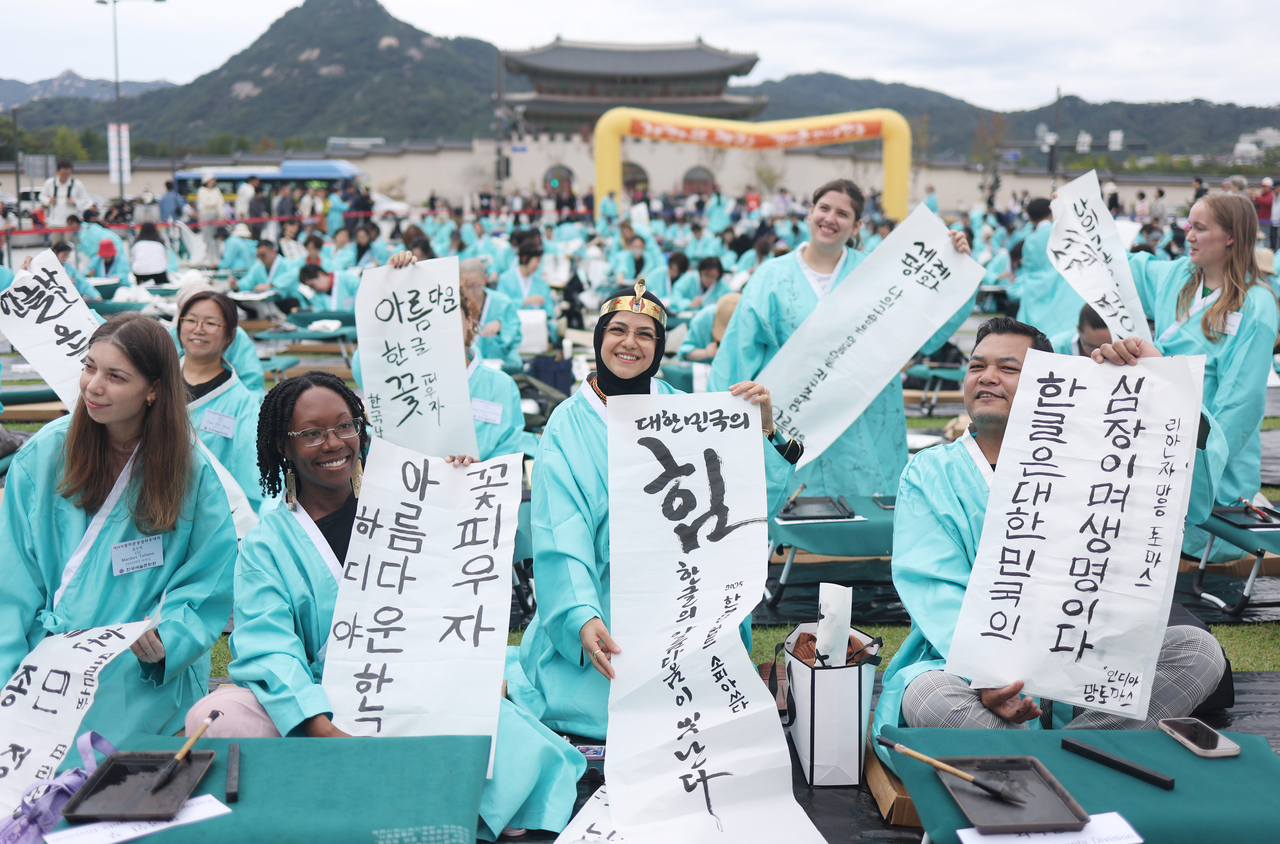
Every October 9, South Korea shuts down for a holiday most non-Koreans have never heard of. 한글날 (Hangul Day) is a national holiday, and after a decade of watching K-content go from niche to mainstream, I'd argue it's the single most distinctly Korean holiday there is. Chuseok and Seollal exist across the region in different forms. Only Hangul Day celebrates a writing system, and one that a king personally invented six centuries ago because he was fed up watching his people go through life illiterate.
That's the part most surface-level explainers miss. Hangul isn't just an alphabet. It's a piece of policy engineering that still shapes how modern Korea talks to the world.
The King Who Refused to Let His People Stay Illiterate
세종대왕 (King Sejong the Great) sat on the throne from 1418 to 1450, a stretch Korean historians still treat as the golden age of the Joseon Dynasty. He was a workaholic polymath who obsessed over astronomy, agriculture, music theory, and legal reform. But the piece of his legacy Koreans quote at their kids is the 훈민정음 (Hunminjeongeum), literally "the correct sounds to instruct the people," which he and a handpicked team of scholars finished in 1443 and formally promulgated in 1446.
The motivation was blunt. Spoken Korean had no matching script. Elites wrote in Classical Chinese (한자, hanja), a system that took years of tutoring to master and effectively locked commoners, women, and rural farmers out of the written record. Sejong's preface to Hunminjeongeum states outright that many of his subjects "cannot express their meaning" because the script does not match the tongue. So he built one that did. It's genuinely rare in world history for a monarch to invent a writing system on the record with the stated goal of literacy for the poor. Most alphabets evolved anonymously over centuries. Hangul has a birth certificate.

Why Linguists Keep Calling It the World's Most Scientific Alphabet
This is where the appeal point lives for anyone who actually studies the system. Hangul's 자음 (consonants) are shaped to imitate the vocal organs that produce the sound. The ㄱ (g/k) is a sideways diagram of the tongue touching the soft palate. ㄴ (n) traces the tongue against the roof of the mouth. ㅁ (m) is a closed square, mirroring closed lips. Learn five base consonants and the rest are systematic derivations by adding strokes.
The 모음 (vowels) run on a philosophical schema borrowed from neo-Confucian cosmology: a dot for 天 (heaven), a horizontal line for 地 (earth), a vertical line for 人 (human). Every vowel is a combination of those three primitives. That's not window dressing. It means the shapes aren't arbitrary. Once a learner sees the logic, the ceiling on how fast they can read jumps quickly. I've watched non-Korean K-pop fans go from zero to sounding out song lyrics in a weekend, and that speed is not an accident. It's engineered.
From Colonial Suppression to UNESCO Memory of the World
Hangul was not a smooth story. For centuries, the yangban ruling class treated it as vulgar. It was called 언문 (eonmun, "vernacular script") and dismissed as women's writing. Japan's 1910 to 1945 colonial occupation actively banned it in schools during the late 1930s and 1940s, which is why the modern Hangul Day dates back to 1926: it started as a resistance holiday, celebrated by the Korean Language Society when the Korean language itself was under threat.
The comeback is one of the more dramatic turnarounds in cultural policy anywhere. In 1997, UNESCO added the original Hunminjeongeum Haerye manuscript to its Memory of the World Register, formally recognizing Hangul as a documentary heritage of humanity. The Kansong Art and Culture Foundation, which owns the manuscript, has partnered with publishers to release reprint editions timed to Hangul Day. Buying the reprint on Oct. 9 has quietly become a Korean literary-nerd ritual, and yes, the newest editions ship with English translation.

The Hallyu Effect: How K-pop Made Hangul a Global Skill
Ten years ago the King Sejong Institute (세종학당), Korea's overseas Korean-language teaching arm, ran a modest network of centers. Today it operates in 84 countries with more than 180 institutes, and the queue of new applications is longer than the ministry can fund. That is Hallyu money at work. Duolingo's global report showed Korean growing roughly 75 percent year over year and cracking the platform's global top 10 in 2023, with Duolingo explicitly citing K-pop, K-dramas, and Squid Game as drivers.
What the surface stats miss is the profile of the learner. It's overwhelmingly Gen Z, and they're not learning survival phrases for tourism. They're learning to read fan Twitter, decode lyric booklets, and catch untranslated moments in variety shows. That user has changed what Korean-language content producers make. HYBE, SM, JYP, and YG all include Hangul-forward merchandise in concert drops now because they know a real chunk of the audience wants to wear the script, not just hear the language.

There's also the 초성체 (chosungche) layer. Native speakers text in consonant-only shorthand: ㅋㅋ for laughter, ㅠㅠ for crying, ㅇㅇ for a casual yes. Global fandoms absorbed those tokens fast, and the shape of Hangul made that adoption possible. Try doing the same trick with the Latin alphabet and you get gibberish. Try it with Hangul and you get a mood.
Where to Actually Feel Hangul in Seoul
If you're on the ground in Seoul, the pilgrimage site is Gwanghwamun Square. The 6.2-meter bronze King Sejong statue faces down the main avenue, book in hand, and Seoul City Hall runs a public cleaning ritual on the statue every April that draws a small crowd. Beneath the statue, the underground King Sejong Story exhibit walks visitors through his inventions in Korean and English at no cost.
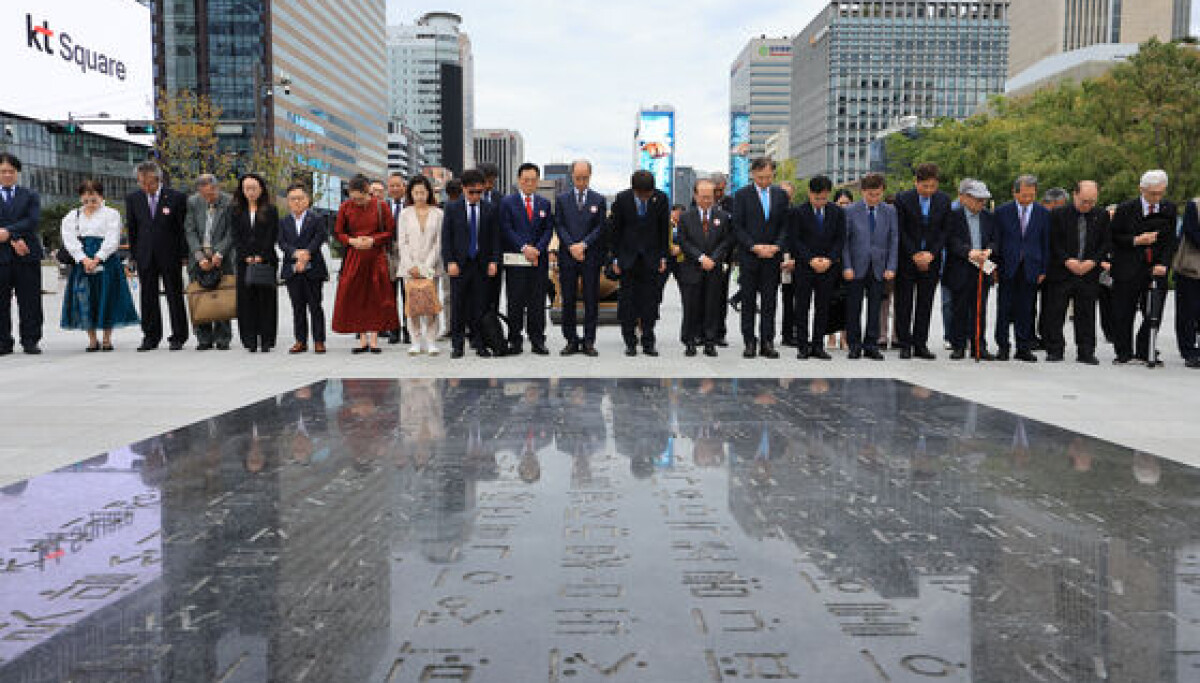
On Oct. 9 the Culture Ministry stages a flower-laying ceremony at the statue, followed by the Hangeul Hanmadang festival, which typically includes designer Lee Sang-bong's Hangul-inspired runway. Foreign visitors are actively invited to try 붓 (brush) calligraphy on the square. The National Hangeul Museum near Ichon Station is the deeper dive, and Sejong City, an hour south of Seoul and literally named after the king, runs a month-long Hangeul festival every October with fireworks, a Hangul dictation contest for foreign learners from Sejong Institutes worldwide, and an air show by the Air Force's Black Eagles.
Bring Hangul Into Your Home
You don't need to fly to Seoul to mark the day. The easiest on-ramp is putting something Korean-designed into your daily rotation, which is exactly what the Daebak Box is built for. Every month it ships a curated set of Korean snacks, K-beauty, lifestyle picks, and cultural extras straight from Korea to your door, and the packaging itself becomes casual Hangul practice. Read the labels. Learn the brands. That's how a language stops being a hobby and starts being a habit.


