


Table of Contents
I have been in the K-content industry for over a decade, and if you ask any label strategist in Seoul what the real turning point was, the answer is not what most Western coverage guesses. It was not one song. It was a twelve-year compounding process where each 크로스오버 (crossover) hit unlocked a specific infrastructure piece: YouTube algorithm literacy first, then English-radio playlist relationships, then TikTok sound seeding, and finally direct label-to-label US distribution deals. The songs everyone remembers are the visible tip. The 히트곡 (hitgok, hit song) list below is the shortest possible walkthrough of how 케이팝 stopped being a subculture import and became a permanent part of the Western pop machine.
2012: PSY, Gangnam Style, and the day YouTube had to rewrite the counter
Gangnam Style hit YouTube on July 15, 2012 and by that December the video had blown past 2,147,483,647 views, the maximum a 32-bit integer can hold. Google engineers had to upgrade the counter to 64-bit. That fact is the perfect metaphor for why PSY mattered: the infrastructure was not built for a Korean-language song that heavy. The Billboard Hot 100 peak was #2 (blocked from #1 by Maroon 5's One More Night), and every US industry veteran will tell you that ceiling was a language ceiling, not a demand ceiling. What broke through anyway was meme culture: the horse dance, the parodies, the Ellen and Today Show appearances. That was the first time Korean pop went from niche-fan import to universally legible cultural object. Every 크로스오버 strategy since 2012 has been trying to replicate the accidental virality of that single moment, usually by engineering it more deliberately. PSY's own follow-up Gentleman got 38 million day-one views (still a record then), yet never approached the meme half-life. The takeaway most Korean label execs internalized: virality plus a physical hook plus universal humor beats a chart position. That lesson is still shaping A&R rooms in Seoul today.

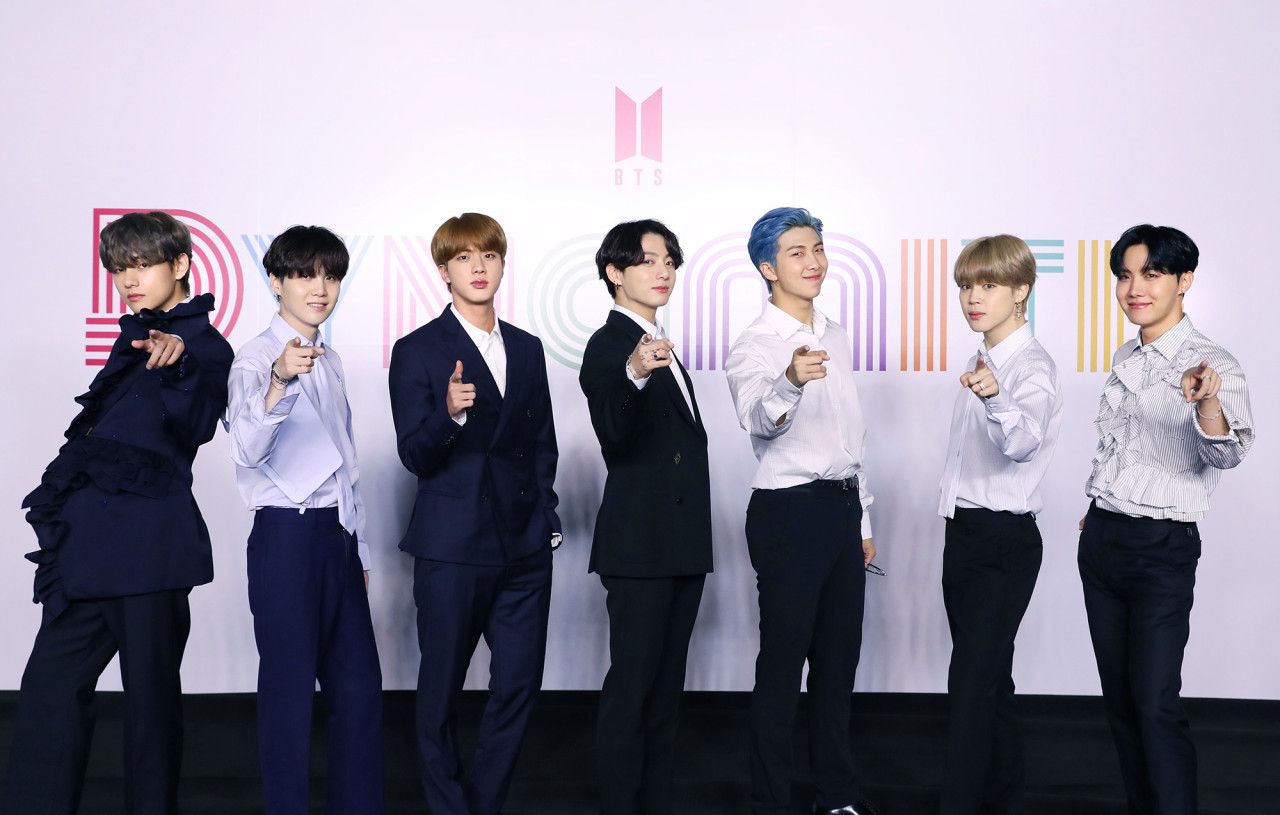
2020: BTS, Dynamite, and why an all-English single was the strategic pivot
For eight years after Gangnam Style, no K-pop act reached #1 on the Billboard Hot 100. HYBE (Big Hit at the time) figured out the missing piece in August 2020: Dynamite, BTS's first fully English-language single, debuted at #1 with 33.9 million streams in its first week. The reason it worked was not just the language, though language mattered enormously for terrestrial US radio and streaming playlist gatekeepers who had quietly refused to A-list Korean-lyric songs. It was the timing. Dynamite dropped in the middle of the pandemic, when the whole world was streaming disco-pop and desperate for something joyful, and the video was a full retro-disco visual pastiche that any Bruno Mars or Silk Sonic listener recognized instantly. BTS had spent three years building a US ARMY base big enough to guarantee first-week numbers, but Dynamite is what converted the general population from 'I have heard of BTS' to 'I actually like this song.' The industry insight: BTS did not chase the crossover by moderating their Korean output. They fenced English-language experiments as separate side releases so the fanbase infrastructure would not fragment. That was the calculated bet, and it paid.
2021: Butter and the summer BTS proved Dynamite was not a fluke
Butter dropped May 21, 2021 and spent 10 non-consecutive weeks at #1 on the Billboard Hot 100. That is not one-hit-wonder territory. That is a summer of a summer. The song is engineered with a level of cynicism I say with respect: the hook 'smooth like butter' is not lyrically deep, but it is optimized for radio repeat, TikTok sound clips, and karaoke sing-along in three seconds flat. HYBE's US strategy team had spent the year between Dynamite and Butter building label distribution muscle through Bang Si-hyuk's April 2021 acquisition of Scooter Braun's Ithaca Holdings for approximately $1.05 billion, which pulled the entire Justin Bieber and Ariana Grande management and radio-promo infrastructure directly under the HYBE umbrella. That is why Butter hit US radio the day it dropped, not two weeks later. It also earned BTS a Grammy nomination (Best Pop Duo/Group Performance), which was significant even though they lost. The nomination itself signaled that the Recording Academy could no longer treat Korean-language artists as a novelty category, and it opened the door every K-pop act has walked through since.
2018: BLACKPINK, DDU-DU DDU-DU, and the YouTube-first crossover
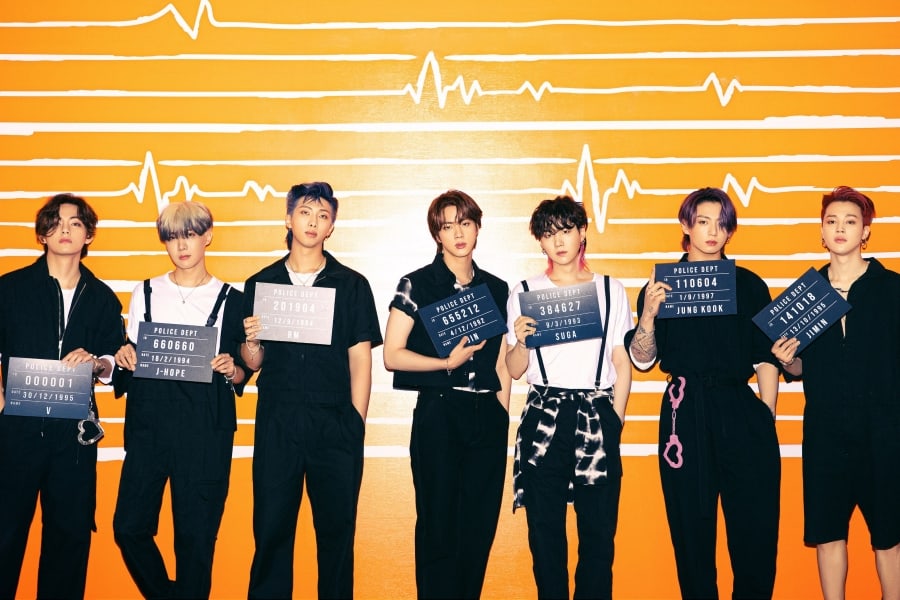
Before BTS put the Billboard chart record in the books, BLACKPINK was proving out a different but equally important crossover template: YouTube dominance without needing US radio at all. DDU-DU DDU-DU dropped June 15, 2018 and racked up 36.2 million views in its first 24 hours, breaking the record for any K-pop music video and any music video by a group ever at that point. The song itself never touched Billboard #1 (peaked at #55 on the Hot 100), but that missed the point. YG Entertainment's whole play with BLACKPINK from the start was to convert visual-first video content into a global 팬덤 (fandom) that operated as a self-sustaining economy: merch, tours, luxury brand ambassador deals (Rosé for Saint Laurent, Jennie for Chanel, Jisoo for Dior, Lisa for Celine), and eventually solo careers. The reason DDU-DU DDU-DU mattered is that it proved a K-pop girl group could hit numbers previously reserved for Taylor Swift or Ed Sheeran videos, purely off YouTube. When the video crossed 1 billion views in November 2019, it was the first K-pop group MV ever to do it. Every subsequent K-pop girl group launch strategy (NewJeans, aespa, IVE) is downstream of this exact playbook.

2023: Jung Kook, Seven, and the streaming-first solo era
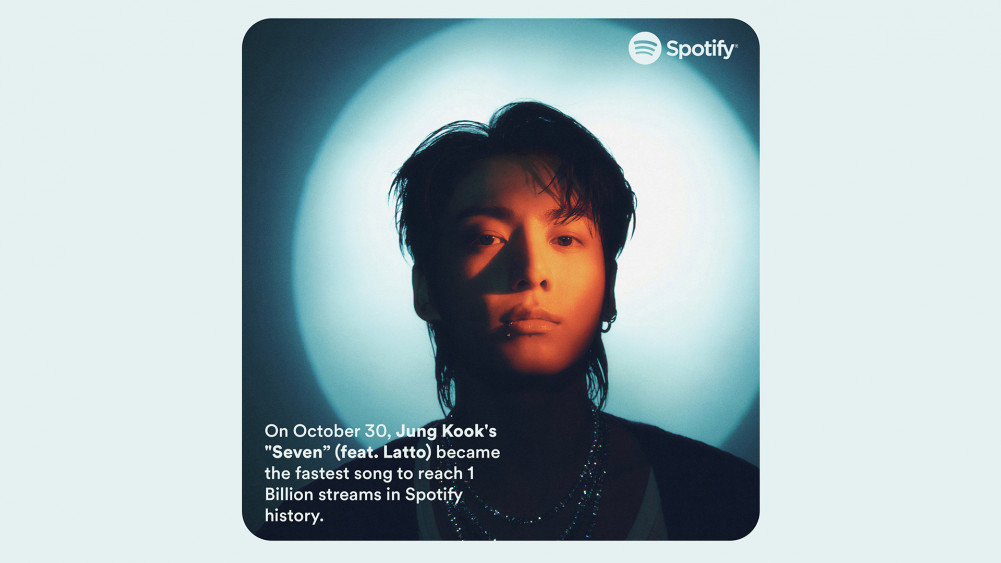
By the time BTS entered their group hiatus in mid-2022, each member's solo trajectory was being watched as a live experiment in whether the fanbase could carry a solo K-pop artist to Western Top 40 without the group structure. Jung Kook's Seven (featuring Atlanta rapper Latto) answered the question decisively when it dropped July 14, 2023: it debuted at #1 on the Billboard Hot 100, became the fastest song in Spotify history to hit 1 billion streams (108 days), and stayed on the Hot 100 for months. What makes Seven a textbook crossover product: English lyrics, an American featured artist (which unlocked US radio playlisting immediately), a house-tinged pop production co-written by Andrew Watt and Jon Bellion (both established US hitmakers), and a summer release window. Compare that to the more experimental Korean-language solo tracks other members released around the same time, and the difference in Western streaming numbers is stark. The formula works. HYBE knows it works. The question every label is now asking is how many times you can execute it before Western audiences want something less engineered.
2024: Rosé x Bruno Mars, APT, and the collab template that finally clicked
Then came APT on October 18, 2024. Rosé's first single as a solo artist after her BLACKPINK contract restructure, produced with Bruno Mars, built around the Korean drinking game chant 아파트 (apateu, apartment). It debuted at #8 on the Billboard Hot 100 (later peaking at #3), spent months in the Top 10, and became the #1 sound on global TikTok for weeks. What is different about APT versus every prior K-pop and Western collab attempt (of which there have been many, most forgettable) is that the Korean element was not a token verse squeezed in for the K-pop market. The Korean drinking chant is the hook, the earworm, the thing that made the song go viral. Bruno Mars, who is one of the most bankable US pop songwriters alive, deliberately let the Korean element sit at the center of the production. That is what a real crossover looks like: not a Korean artist singing in English to reach a Western audience, but a Western superstar helping a Korean artist frame something genuinely Korean in a format Western audiences can access. Watch which acts follow this template versus the older release-an-all-English-single-and-hope template over the next twelve months. That will tell you which labels have actually learned the lesson.

The industry mechanic beneath the visible chart wins
If you want the strategy summary an insider would give you over coffee in Hannam-dong, the modern K-pop crossover formula has four ingredients, and skipping any one of them is why so many attempts flop. First, an English or hybrid hook that translates on first listen (not full-English songs necessarily, but something the Western ear can latch onto in three seconds). Second, a Western producer or featured artist collab that unlocks US radio and playlist relationships (label people would rather work with a name they know). Third, a Western release timing calendar that dovetails with a US summer or Q4 pop slot rather than the Korean release calendar. Fourth, a US distribution deal at the label level (Republic for HYBE, Interscope for YG, Columbia for SM lately) so the physical and digital pipeline runs through American infrastructure the day of release. When you see a K-pop crossover work, all four boxes are checked. When it stalls, one is missing.
The reason HYBE bought Ithaca Holdings in 2021 was ingredient four in that list, not four separate things. Justin Bieber and Ariana Grande's management infrastructure came bundled with US radio promo teams, brand deal networks, tour routing muscle, and playlist relationships that would have taken a Korean label a decade to build from scratch. Post-Ithaca, every Butter-tier launch has been able to plug into that pipeline instantly. That is the mechanic under the visible 빌보드 chart wins. The Billboard number is the result. The infrastructure move is the strategy.
Want to get closer to the Korean pop culture that ships all these hits, straight from Seoul? The Daebak Box curates monthly Korean pop culture merch, snacks, K-drama tie-ins, and 팬덤 collectibles hand-picked by a team in Seoul, so you get shelf-fresh Korean products the same way local fans do. Start with one box and you have a real sample of the culture that turned five language-barrier-breaking singles into a permanent Western pop category.


