


Table of Contents
Ask anyone who spent time in a K-drama food-styling room and they will tell you the same thing: tofu is the single most misread ingredient in the Korean pantry. Western supermarkets file it under "silken vs. firm" and stop there, but a Korean grocery-store cold case runs four separate SKUs, each engineered for a specific dish that cannot be swapped without breaking the recipe. After a decade of watching Korean food shows greenlight tofu segments and Korean CPG brands renegotiate US shelf space, the four you actually need to know are 부침두부 (firm frying block), 순두부 (silken curd), 연두부 (soft slab), and 유부 (fried pouch). Each one carries its own dish, its own sauce logic, and its own reason global cooks keep coming back.
Why Korean Tofu Is Not a Monolith
Here is the thing outsiders miss: in Korean the base word 두부 (dubu) is neutral, and every variety gets its texture prefix baked into the name. That naming discipline is not accident. Korean home cooking is built on 국물 (broth) and 양념장 (seasoning-sauce) mechanics, and each texture of tofu behaves differently under those two variables. Firm blocks hold up to a hot pan and take an assertive glaze. Silken curds break apart the moment stock hits them, which is exactly the point in a jjigae. Soft slabs stay whole enough to slice but soft enough to yield to a cold spoon. Fried pouches act as edible cups. Get the wrong texture and the dish either falls apart or refuses to absorb the sauce, and Korean shoppers know this at a glance from the package labels 부침용, 찌개용, 생식용.
부침두부 (Buchimdubu): The Firm Frying Block
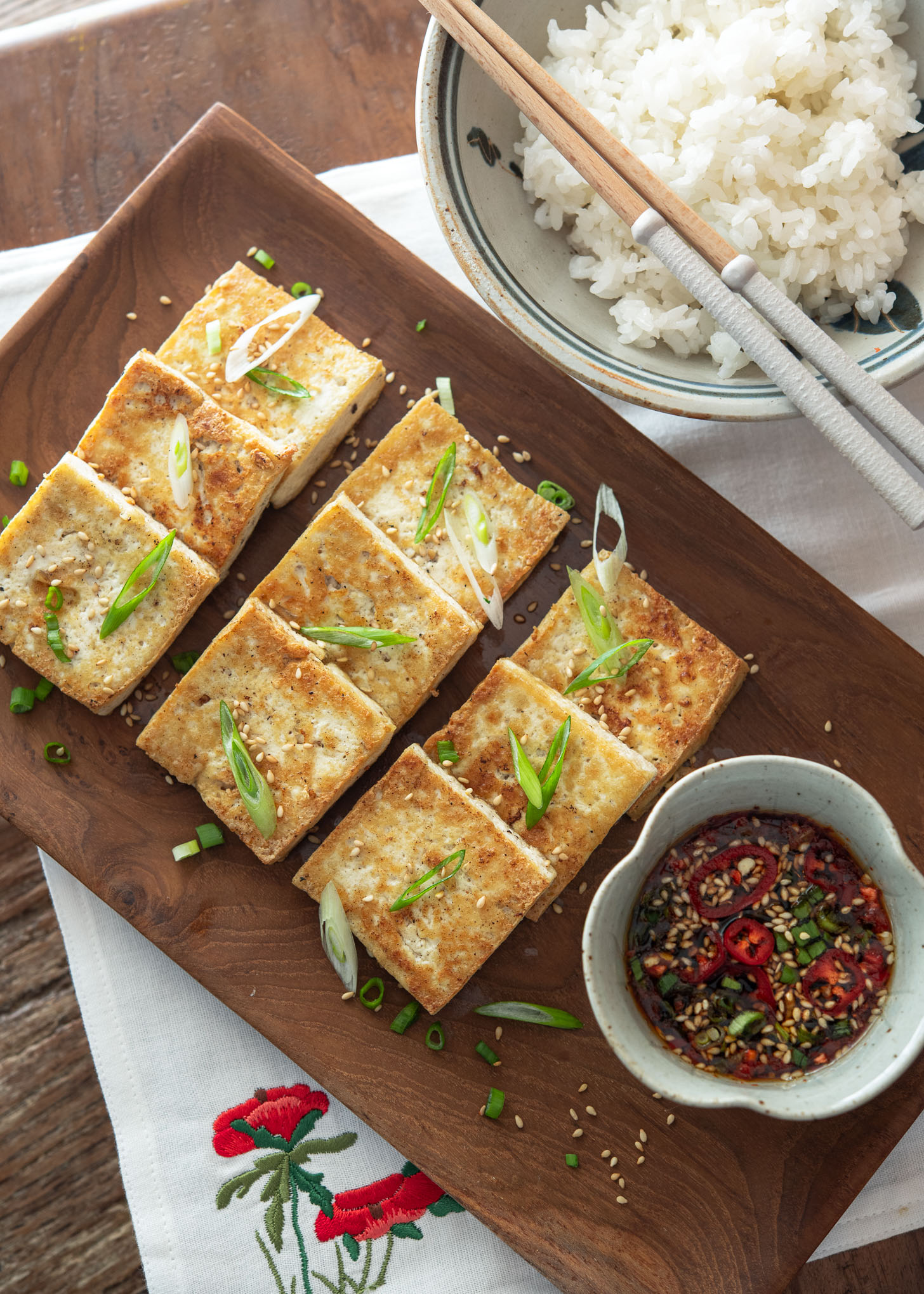
부침두부 is the workhorse. The word 부침 literally means "pan-frying," so this block is pressed harder at the factory to survive the sear. In a Korean kitchen it becomes 두부부침양념장 (dubu-buchim-yangnyeomjang): slabs seared golden, then finished with a soy-garlic-gochugaru sauce spooned on at the end so the crust stays crisp. The appeal is textural whiplash. That first crunch of a caramelized edge, then the pillowy interior, then the salty-sweet-spicy yangnyeomjang all in one bite. It is also the tofu Koreans reach for when they want 두부조림 (braised in soy sauce) or 두부김치 (pan-fried tofu paired with stir-fried kimchi and pork). Once you understand 부침두부 as "the tofu that behaves like a protein steak," half of Korean home cooking opens up.
순두부 (Sundubu): Silken Curd, Anchor of a Bubbling Stew
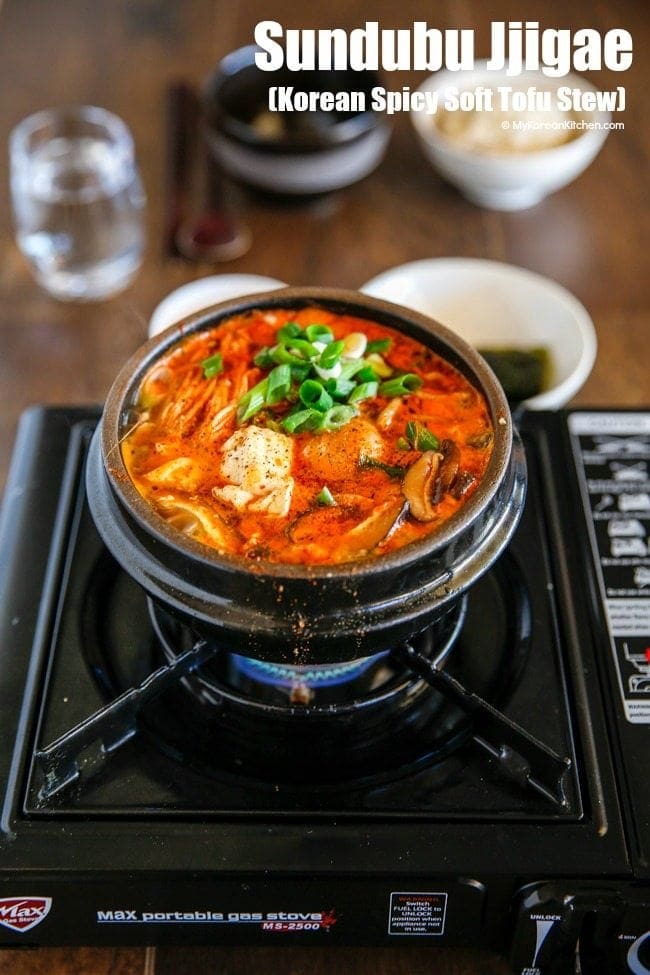
Now the wildcard. 순두부 is unpressed, uncurdled tofu still holding the whey it was born in, usually sold in a long cylindrical bag rather than a block. This is the tofu that makes 순두부찌개 (sundubu-jjigae) work. You slice the bag over a hot 뚝배기 (earthenware pot) already ripping with gochugaru, garlic, and either kimchi or seafood, and the curd collapses into the broth in soft, cloud-like folds. What Western diners react to when they first meet it is not the spice, it is the mouthfeel: the tofu is so soft it registers like a savory custard, and it pushes the red broth into something silkier than a chili and more comforting than a soup. Pair it with pork belly for the Seoul home-cooking version, or with clams and shrimp for the coastal 해물 순두부찌개 (haemul sundubu-jjigae), and you get why 순두부찌개 sits in the top three most-ordered Korean stews globally.
연두부 (Yeondubu): The Soft, Cold, Sauce-Kissed One
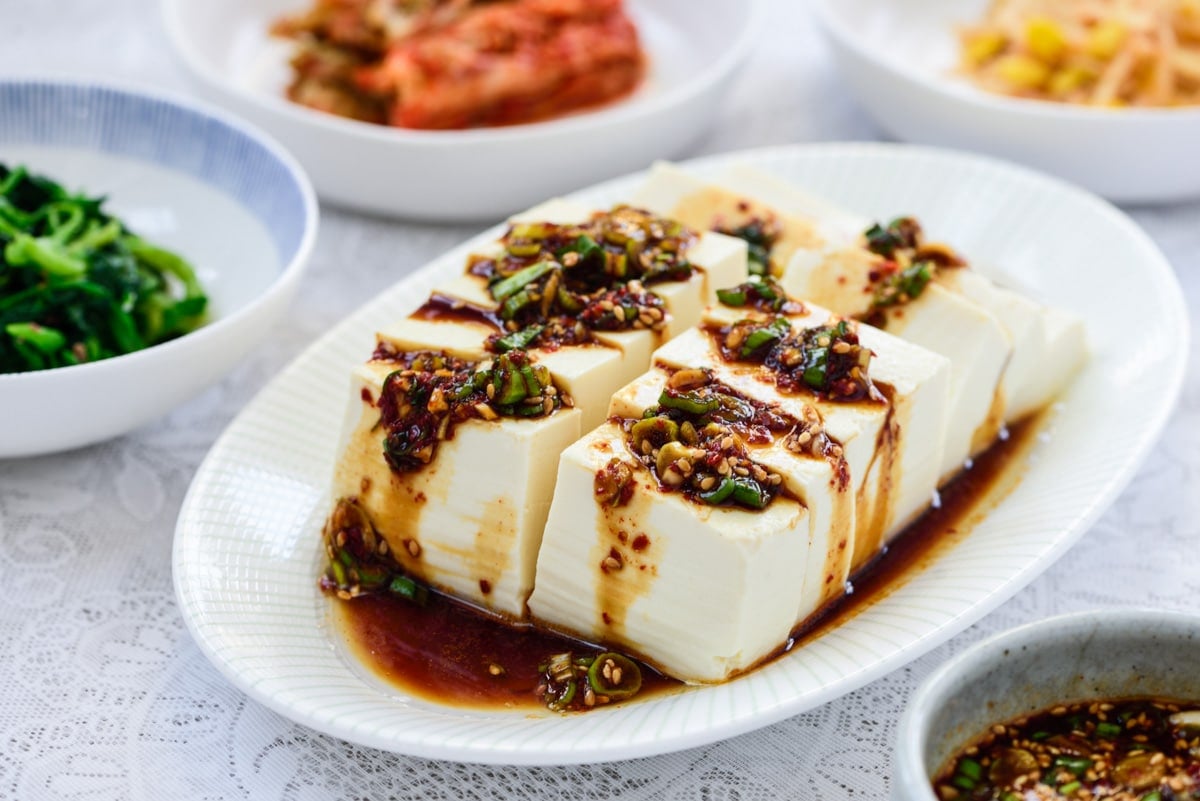
연두부 is where Korean tofu gets its most modern makeover. It is soft enough that a chopstick will cut through it, firm enough to hold a slice on a plate. Older Korean home cooks eat it 데워서 (warmed) with a spoonful of soy sauce and sesame oil. Younger Korean cooks and cafe menus in Seongsu-dong now use it for cold protein bowls: sliced 연두부 draped on spring greens, drizzled with a yangnyeomjang built on soy sauce, rice vinegar, gochugaru, and 매실청 (Korean plum syrup). The appeal is what Koreans call 담백함, a clean, restrained savoriness that lets the sauce do the talking without any tofu funk. It is also the format that translated best onto Instagram, because a pale 연두부 slab with red gochugaru specks reads as visually clean the way a poke bowl does, which is a small but load-bearing reason it keeps showing up in K-food content aimed at overseas audiences.
유부 (Yubu): The Fried Pouch That Refuses to Sit Still
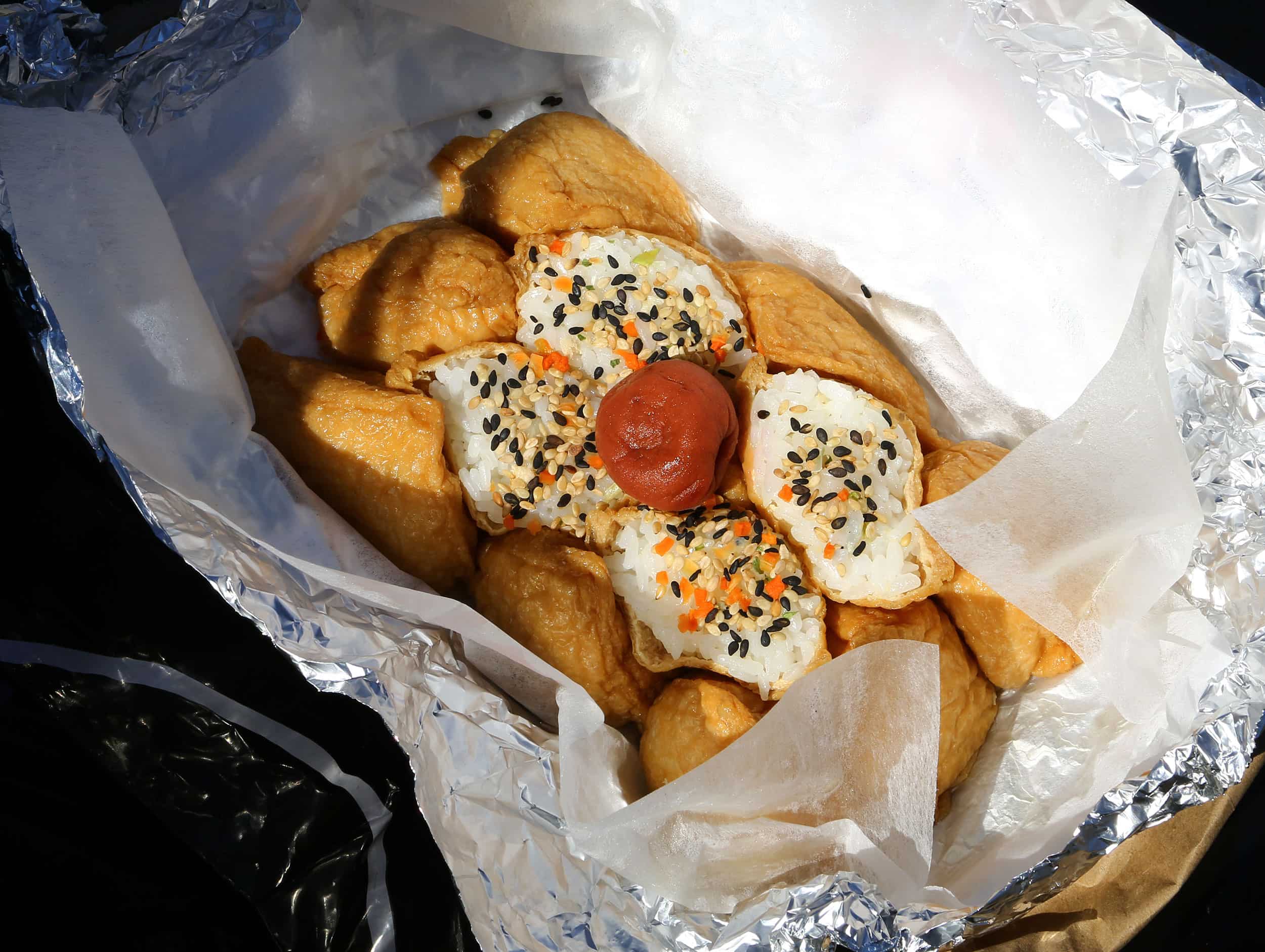
유부 is the one that confuses new Korean cooks the most because it looks nothing like the others. It is thin tofu deep-fried into a golden sheet, then sliced open into a little pouch. The most famous life it lives is 유부초밥 (yubuchobap), the seasoned tofu pocket stuffed with vinegared rice that fills every Korean lunchbox at cherry-blossom picnics. It is technically a Japanese import (inarizushi lineage), but Korean grocery brands rebuilt the ready-made kit so completely, adding red-orange dried veggie flakes, sesame, and a slightly sweeter vinegar, that Korean 유부초밥 now reads as its own dish. The appeal is portable comfort. The vinegared rice cuts the sweetness of the fried pouch, and because there is nothing hot to reheat, this is the tofu dish most likely to sneak into a school 도시락 (dosirak) or a K-drama picnic scene. Sliced thinly, 유부 also lands in 유부주머니 (stuffed pouches in noodle soup) and in 우동 (udon) as the yellow tofu strip on top.
Regional Tofu: Gangneung's Water, Sunchang's Gochujang
Koreans take tofu regionality about as seriously as the French take cheese. 강릉 두부 (Gangneung tofu, from the East Coast city) is the country's shorthand for soft, unctuous tofu because Gangneung's mineral-heavy mountain water produces a curd Koreans describe as 고소하다, meaning it has that toasty-nutty finish good sesame or ginseng carries. The 초당두부마을 (Chodang Tofu Village) in Gangneung has been coaxing sundubu out of Donghae seawater for centuries, which is why Korean food-tour itineraries almost always route through it. Then there is 순창 (Sunchang), which does not manufacture tofu at scale but produces the country's benchmark 고추장 (gochujang). Locals pair pan-fried 순창-style tofu with a spoonful of that region's paste to demonstrate how a single-source gochujang changes what a simple dubu dish tastes like. The takeaway for a global reader: Korean tofu comes with terroir the way olive oil does, and the good Korean home cook knows the difference.
The Post-Vegan Wave: How Korean Tofu Became a Protein-Forward Global Story
Ten years ago Korean tofu was pitched to overseas markets as a "side dish ingredient." Today it is a category leader. Pulmuone, the Korean food giant, holds roughly 70 percent of the US tofu market as of early 2026 and just posted a record 224.2 billion won ($155 million) in US tofu revenue, with high-protein tofu tripling since 2021 and production lines expanding at its Ayer, Massachusetts and Fullerton, California plants. Sempio and other Korean brands are riding the same wave, positioning Korean-style tofu (silken, soft, extra firm) into US and European retail alongside Beyond Meat and Impossible Foods on the plant-based aisle. The macro read is simple. The Hallyu wave got global consumers curious about gochujang, and gochujang plus tofu is the single most repeatable "Korean vegan" formula in the world right now. Whether it is a TikTok gochujang tofu bowl or a Netflix K-drama scene where a mom slides a plate of 부침두부 in front of a hungover son, the four varieties above are quietly doing the work.
Explore Korean Snacks with Daebak
Love Korean food? Get authentic Korean snacks and ramen delivered straight to your door with the SnackFever Box by Daebak.


