


Table of Contents
If you have spent any time on Western food-challenge YouTube, you already know the Korean roster that gets used as horror-show clickbait: still-wriggling live octopus, ammonia-smelling fermented skate, silkworm pupae eaten by the paper cup, and the marine spoon worm the internet just calls "penis fish." After more than a decade working on the Hallyu content and marketing side of Korean food, I can tell you the gap between how that Western content is framed and how Koreans actually eat these dishes is genuinely one of the widest in K-food. None of these are novelty tourism food. They are 향토 음식 (hyangto eumsik), regional heritage cuisines with real culinary logic. Let me walk you through the four Koreans usually mean when a foreigner asks for the "craziest" thing on the menu.
What "Extreme Korean Food" Actually Means (Hint: It Is Not What You Think)
Here is the industry frame nobody outside Korea uses. The Korean food ecosystem categorises these four dishes as 향토 음식 or 별미 (byeolmi, a regional or seasonal specialty), never as "extreme food." That English category is a Western media invention that got heat when Andrew Zimmern and Anthony Bourdain built entire cable formats around visibly unfamiliar textures. The Korea Tourism Organization, meanwhile, tracks these dishes as tourism assets. Their 2018 survey of 944 international followers found sannakji was the single Korean dish foreigners most wanted to try, ahead of ganjang gejang and even sundae. That is not a fear-food ranking. That is demand data.
The Korean side of the equation is even more revealing. Sannakji sits under the 회 (hoe, raw seafood) umbrella that includes yukhoe, ganjang gejang, and any market-fresh sashimi. Hongeo is regional pride cuisine from South Jeolla Province, on the same shelf as Jeonju bibimbap and Gwangju tteokgalbi. Beondegi is a 1970s industrialisation snack, the same nostalgia layer as bungeoppang and hotteok. Gaebul is a Busan seafood market specialty that gets ordered as "male stamina food" the same way Koreans order chueotang or samgyetang. Frame them like that and the "crazy" label falls apart.
Sannakji (산낙지): The Michelin Flag That Is Really Just Fresh Octopus
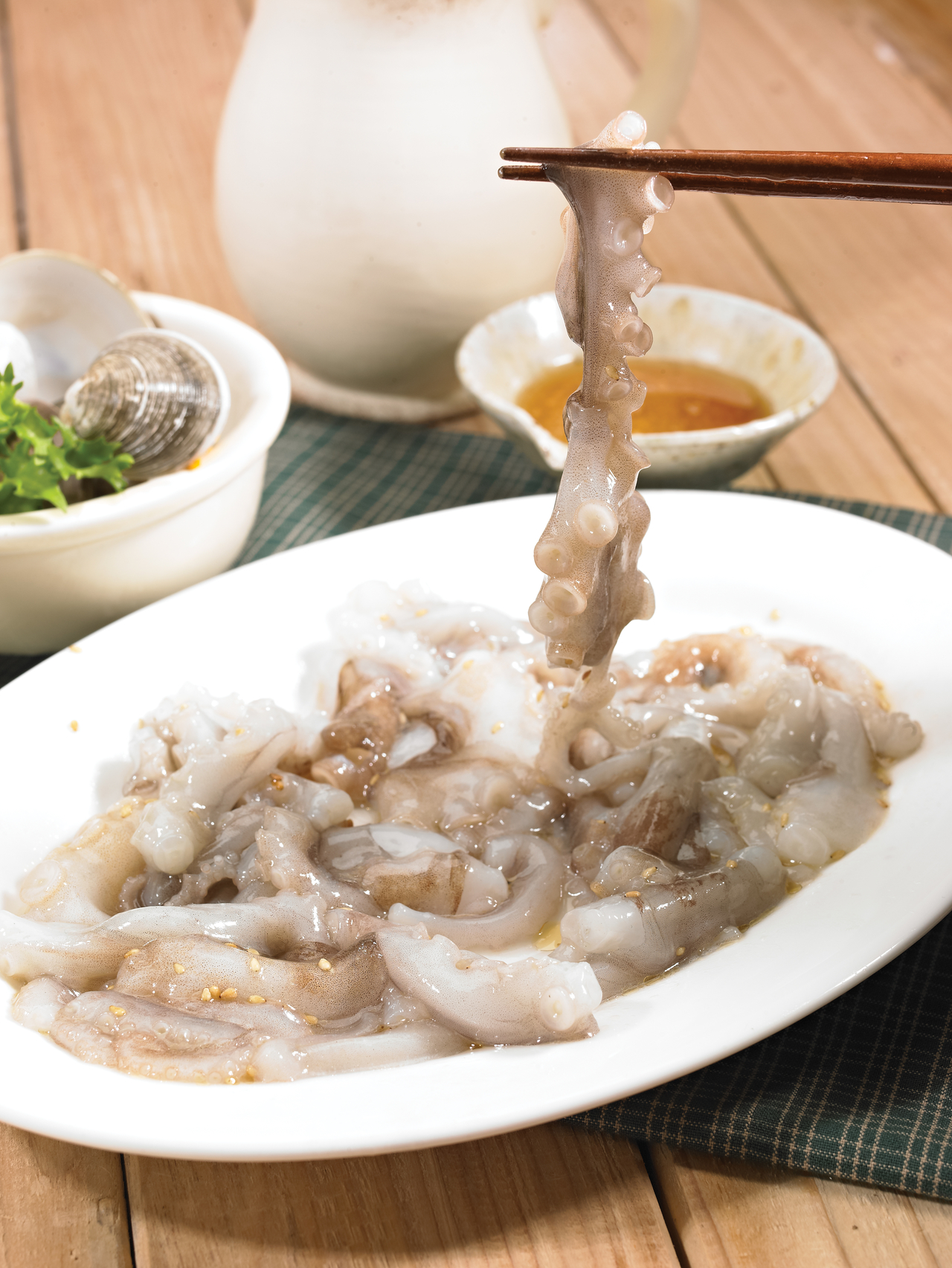
Sannakji translates literally to "live nakji" (baby long-arm octopus). What actually arrives at your table is fresh octopus chopped seconds before serving. The Korea Herald covers this dish in its 100 Food Challenge series precisely because it looks alarming and tastes mild. The tentacles keep moving from residual nerve activity, not because the animal is alive on the plate. Any Noryangjin sashimi master will tell you the same thing: the octopus is killed by piercing the brain before the knife touches the tentacles.

The reason Koreans keep eating sannakji is not adrenaline. It is texture. The Korean term is 쫄깃 (jjolgit), that specific bounce-and-resist mouthfeel that Korean cuisine treats as a whole flavour axis. Chapssaltteok has jjolgit. Fresh nakji has jjolgit. Al dente cold noodles have jjolgit. Western food writing does not have a clean equivalent word, which is why sannakji reviews always fixate on the sticky suckers when the actual appeal is the springiness. The sesame oil is not for flavour cover-up either, it is culinary insurance. The oil coats the suckers so they release from the mouth cleanly. If you have ever seen a Korean grandmother sit her grandchild down and demonstrate the dip-first-then-chew rhythm, you have watched risk management dressed as tradition.
The one legitimate concern is choking, which Korean media covers seriously (a Gwangju case in 2023 made national news). But the incidence is low relative to consumption volume, and every experienced restaurant chops the tentacles into pieces small enough that suffocation is essentially operator error, not a design flaw. If a Michelin inspector flags sannakji it is not because it is dangerous. It is because it is 별미, a regional Korean expression of hoe culture that most Western fine-dining vocabulary cannot metabolise.
Hongeo (홍어): Jeolla-do's Ammonia-Fermented Skate Is Actually Fermentation Science
Hongeo is the one that legitimately smells offensive to the untrained nose. Foreigners describe it as a public toilet. Koreans from South Jeolla Province describe it as their grandfather's ancestral-rite table. Both descriptions are accurate, and the reason they are compatible is the same reason kimchi and doenjang exist: Korean cuisine is aggressively fermentation-forward, and hongeo is the extreme case study.
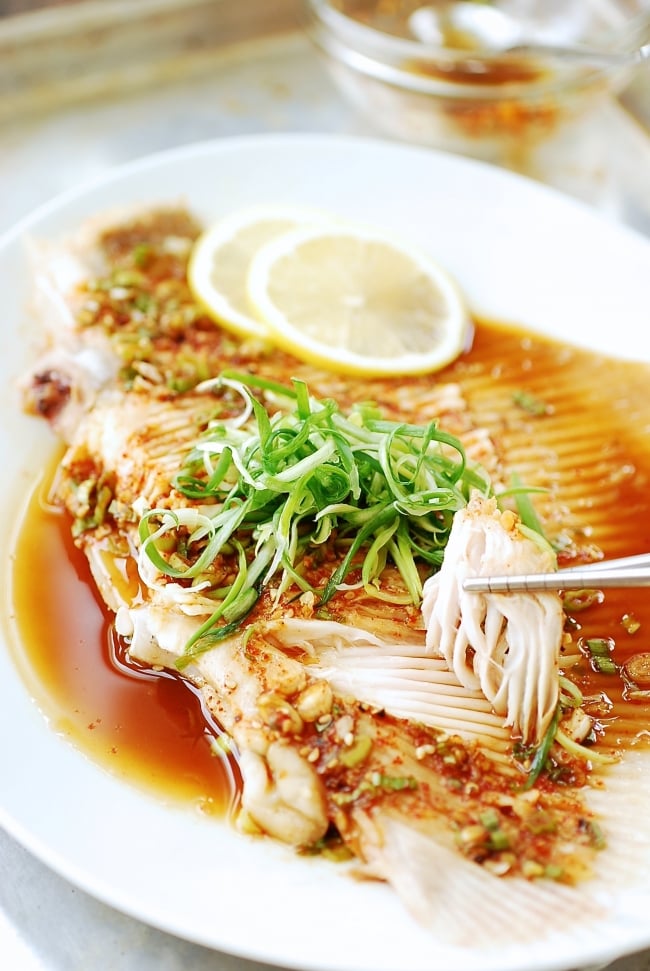
Here is the actual science, because the industry does not usually explain it clearly. Skates are cartilaginous fish that do not have a urinary tract in the mammalian sense. They excrete uric acid through their skin. When you seal a whole skate in a hay pile or a temperature-controlled cold room (typically 2.5 degrees Celsius for 15 days, then 1 degree Celsius for another 15 days at commercial hongeo operations), that uric acid converts to ammonia in the flesh. The ammonia is the fermentation product, not a signal of spoilage. This is why hongeo veterans always tell first-timers to breathe in through the mouth and out through the nose. You are literally routing around your olfactory system to let the taste do its job.
The traditional pairing is 홍어삼합 (hongeo-samhap), the "three-way": one bite of fermented skate, one bite of steamed pork belly (bossam), one bite of aged kimchi, all together. The samhap logic is the same as pairing wine with cheese. The pork fat coats and mellows, the kimchi acidity rebalances, and the skate itself provides the ammonia sharpness the whole stack needs. Mokpo and Heuksan Island are the Champagne region of hongeo. A Heuksan-sourced domestic skate can hit 80,000 won ($60) per plate, and Jeolla-do families will pay it for a Chuseok ancestral-rite table because grandmother said so.
Beondegi (번데기): The 편의점 Snack That Started as Silk Industry Waste
Beondegi is a masterclass in how Korean cuisine turns industrial by-product into national comfort food. The dish is boiled or steamed silkworm pupae, and the reason it exists at all is that Korea's silk industry, which dates back four millennia but industrialised aggressively during the 1960s and 1970s under Park Chung-hee's economic development plans, produced enormous volumes of leftover pupae once the silk fibre was harvested from the cocoon. Rather than compost them, sericulture villages ate them. Then during the postwar protein shortage, boiled beondegi became a cheap, affordable animal-protein source for kids at 국민학교 (elementary school) snack carts. That is why Koreans in their fifties still hit the beondegi cart at Han River picnic spots and Nami Island parking lots the way Americans hit soft-serve trucks: pure nostalgia hardwired to childhood.
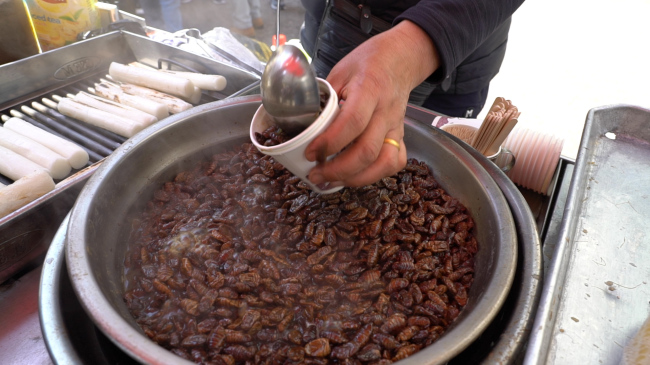
The tell for how normalised beondegi is in Korean daily life: you can buy a Beksul or Dadam Foods canned beondegi at any GS25, CU, or 7-Eleven convenience store in Korea for around 2,500 won. It sits on the shelf next to Spam and canned tuna, marinated in soy broth and ready to microwave. The canned version is the version most Koreans under thirty actually eat, and it pairs specifically with cold Cass or Hite beer on a summer night. The taste profile is savoury and slightly sweet with a nutty, corn-like finish. Nutritionally it is about 55 to 60 percent protein by dry weight, which is why the UN Food and Agriculture Organization flagged silkworm pupae as a viable global protein source in its 2013 edible-insect report. Korea got there fifty years earlier and did not think it was newsworthy.
The appeal point for Korean consumers is not the exoticism. It is 정 (jeong), that untranslatable Korean word for deep affection wrapped in shared history. Beondegi is jeong food. You do not eat it because it is delicious in an objective sense. You eat it because your grandfather ate it, and the smell hitting you in a park in late spring collapses the distance between generations. That is a category no Western food writer looking for shock value can reach.
Gaebul (개불): Busan's Seafood Market Sashimi, Chogochujang Ritual Included
Gaebul is the marine spoon worm (Urechis unicinctus), and yes, its shape is why the internet gave it a nickname that gets flagged by content moderators. Koreans who eat it do not care about the shape. They care that it is sashimi-fresh and cheap, harvested from mudflats along the South and West seas and sold live out of tanks at Jagalchi Market in Busan and Noryangjin in Seoul. Peak season is October through February, and Busan seafood restaurants will kill and slice the gaebul in front of you on request. You take the bag upstairs, hand it to the cook, get it back on a plate in seven minutes.
Gaebul does not really have a flavour of its own. It is a texture and salinity delivery vehicle. The chewiness registers somewhere between raw abalone and razor clam, with a whisper of ocean sweetness that most Koreans describe as similar to what surf clam sashimi delivers in Japan. The reason it works is the sauce ritual around it, which is where the actual Korean home-cooking authority lives.
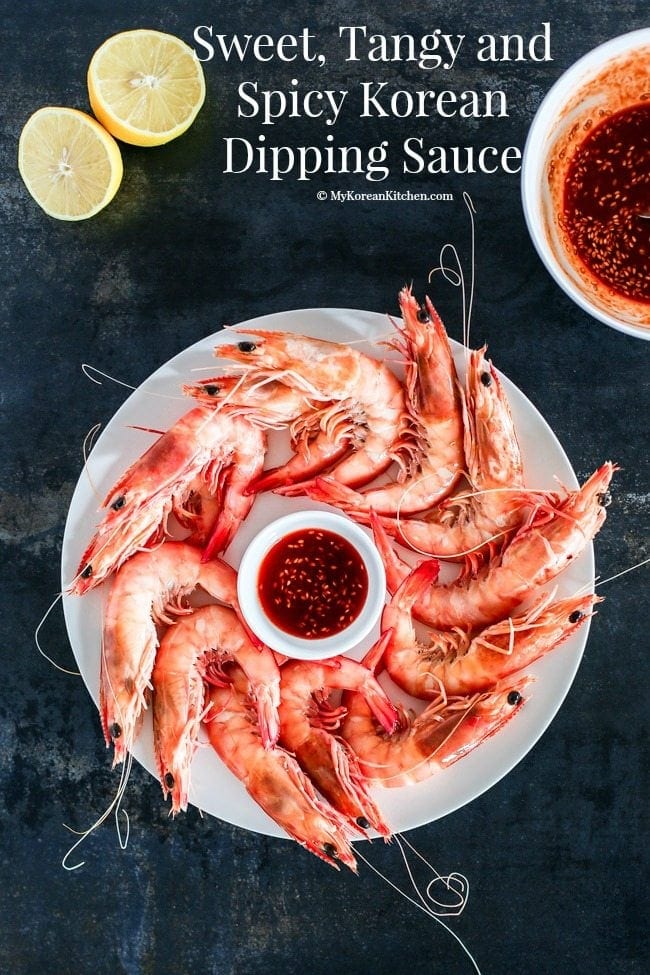
Every raw or barely-cooked Korean seafood dish gets one of two dipping sauces: 참기름 소금 (chamgireum sogeum, sesame oil with salt) or 초고추장 (chogochujang, vinegared gochujang mixed with sugar and a hint of garlic). Sannakji uses sesame oil primarily, gaebul defaults to chogochujang, hongeo goes with soju as its "sauce," and beondegi is unsauced but paired with cold beer. Korean home cook Sue at My Korean Kitchen has been publishing the canonical chogochujang recipe for over a decade, and if you look at what she serves it with in her seafood posts (prawns, boiled octopus, blanched broccoli), you are looking at the exact vernacular that Busan's Jagalchi second-floor restaurants use. The sauce is the connective tissue of the entire adventurous-Korean-seafood category.
Why Western YouTube Gets This Wrong (and Why Koreans Are Amused)
The gap between the Western "try this crazy Korean food" content genre and how Koreans actually eat these dishes is a decade-old running joke in Korean fan culture. Watch any K-drama food scene long enough and you will catch a character casually chewing beondegi from a vending-machine can while discussing a business problem, or splitting a hongeo-samhap platter at a Jeolla-do family dinner. Nobody makes a face. Nobody screams. It is just Tuesday. Meanwhile the same dishes on Buzzfeed's "trying Korean street food" YouTube show elicit the exact overreaction the algorithm rewards, which then feeds back into a Western perception that Korean cuisine is a horror-show category.
The industry read: this misalignment is actually a marketing opportunity Korean food brands have started to lean into. CJ Bibigo, Bokksu Market, and Weee! Korean Grocery are all pushing curated snack subscriptions that quietly include beondegi cans alongside honey butter chips, betting that Korean-content-native Gen Z consumers will approach the food with the right frame instead of the shock-YouTube frame. When you are curious about the Korean palate rather than testing your gag reflex against it, sannakji becomes fresh octopus, hongeo becomes a Jeolla-do heritage dish, beondegi becomes 정 in a can, and gaebul becomes salty-sweet sashimi with a good sauce. That is what these dishes actually are. Everything else is a Western media edit.
Explore Korean Snacks with Daebak
Love Korean food? Get authentic Korean snacks and ramen delivered straight to your door with the SnackFever Box by Daebak.


