


Table of Contents
Korean broadcasters have a workhorse formula that rarely gets its own genre panel at industry conferences, though it should: 주방물, the kitchen show. For over fifteen years now, restaurant-set K-dramas have quietly been one of the most exportable products Korean TV produces. The reason is embarrassingly simple. Food translates faster than dialogue does, and a shot of a chef finishing a plate needs no subtitle to move the viewer.

The Kitchen Genre Blueprint Most Fans Skip
Trace the lineage and you get a surprisingly tight family tree. Pasta (2010) proved the workplace romance could survive being set entirely inside a restaurant. Feast of the Gods (2012) took the formula upmarket into royal cuisine. Let's Eat (2013) discovered that watching one person eat could carry a whole show. Wok of Love (2018) added gangsters and jjajangmyeon. Mystic Pop-up Bar (2020) closed the loop by using food as a supernatural device. Every one of these hangs on the same load-bearing beam: a kitchen is a small, contained space with high stakes, real physical business (fire, knives, service rush), and constant reasons for characters to touch, argue, and cook toward one deadline. That is a screenwriter's dream, and Korean writers figured out the math earlier than most Western studios did.
Pasta (2010): The Show That Set the Template
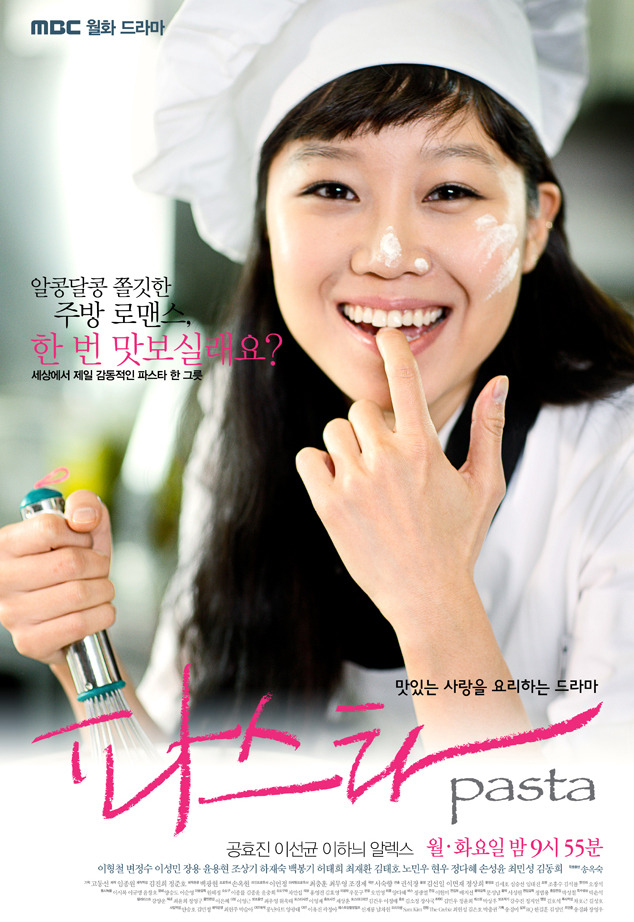
Airing on MBC in early 2010, Pasta was the show that made restaurant K-dramas a category. Twenty episodes, prime Monday-Tuesday slot at 21:55, and Gong Hyo-jin plus Lee Sun-kyun carrying an Italian kitchen called La Sfera. What made it different from a generic office romance was writer Seo Sook-hyang's decision to treat the kitchen as its own hierarchical world with its own vocabulary. Seo Yoo-kyung starts as a third-rank kitchen assistant, gets fired on her first day as an assistant pasta chef by the new executive chef Choi Hyun-wook, and has to earn her way back into her own kitchen. That specific tension, the female lead having zero authority in the workplace she loves, is why the show still holds up. The appeal point Korean viewers latched onto was Choi being genuinely unlikable in the first three episodes. He shouts, he fires, he says there is no place for women in his kitchen. In 2010, that was risky writing. A softer male lead would have made Pasta a normal romance. The prickliness is what made the pairing worth the twenty-episode wait.
Feast of the Gods (2012): Royal Cuisine as Class Warfare
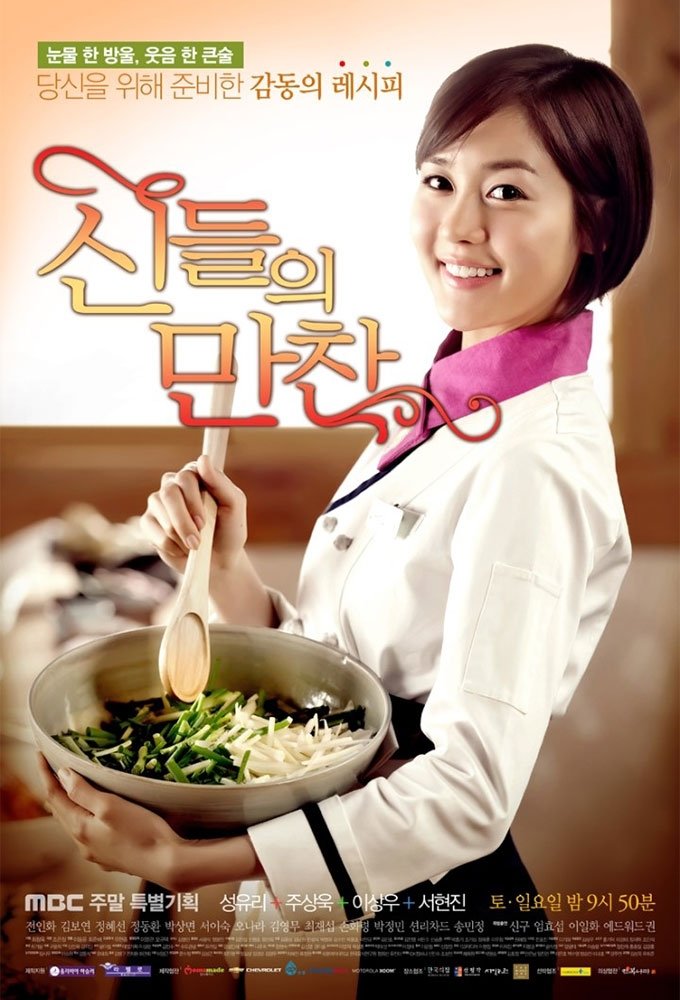
Two years later MBC ran Feast of the Gods over 32 weekend episodes, and this one is where the genre gets ambitious. The setting is Arirang, a fictional royal cuisine restaurant that claims lineage to the Joseon court's surasang. The show is really about two rivalries stacked on top of each other: an older generation of chefs (Sung Do-hee vs Baek Seol-hee) fighting for the title of master chef, and then the next generation played by Sung Yu-ri and Seo Hyun-jin repeating the same war a lifetime later. What sells it, and why it deserves a rewatch even now, is that Korean royal cuisine (궁중요리) is treated as a legitimate character with lineage of its own. The show's food consultants pulled from actual Joseon-era recipe compendia. This is the K-drama that got a lot of younger Korean viewers interested in traditional plating and the idea that a bowl of rice on a Joseon table said something specific about who you were and where you sat. That said, at 32 episodes it does drag in the middle third, a familiar problem for weekend dramas of that era.
Let's Eat (2013): The Show That Basically Invented Mukbang TV
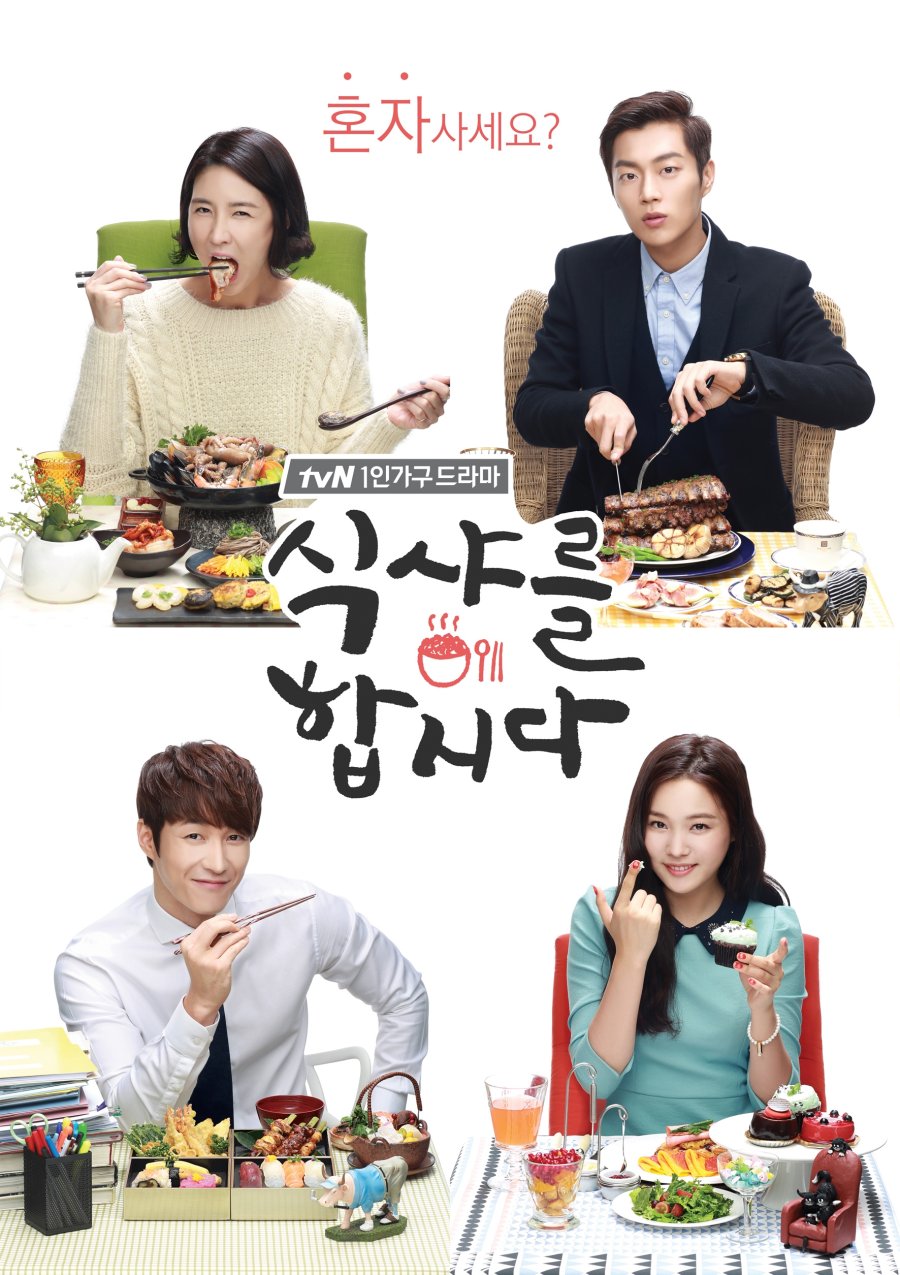
People credit YouTube for the 먹방 explosion, but tvN's Let's Eat did the format work first. Airing November 2013 through March 2014, the show's central character Goo Dae-young (Yoon Doo-joon) is not really a lead in the traditional sense. He is a professional gourmand whose job in the story is basically to eat and describe what he is eating in slow, obsessive detail, on camera, at length. Full minutes of screen time are him at a table narrating texture and heat while the divorced lead Lee Soo-kyung watches from the next apartment. That structure, one person watching another eat with pleasure, was novel in 2013 and became the visual grammar the whole solo mukbang genre later borrowed. It also had a murder subplot for reasons that never fully paid off, but nobody watched Let's Eat for the mystery. They watched for the noodles. The show pulled a 7.9 average on MyDramaList across 8,800-plus voters, which for a food procedural with no A-list cast is a very healthy number.
Wok of Love (2018): Jjajangmyeon as Redemption Arc
Return to writer Seo Sook-hyang (yes, the same writer as Pasta, which is not accidental) for SBS's Wok of Love in 2018. This one traded Italian for Chinese-Korean, meaning jjajangmyeon and tangsuyuk, and threw in a former hotel chef, a reformed gangster, and a heiress who has lost her money. All three land at a failing neighborhood 중국집 that they end up running together. The industry-inside detail: 2PM's Junho trained with actual chef Kim Jung-rae for a full month before shooting so his wok work would read as real. Chef Kim went on record with Naver saying Junho got natural enough with fire that he could pass for a working line cook. That kind of prep budget only goes into a drama that a network trusts. Wok of Love landed at an 8.0 on MyDramaList with 17,600 voters, well above Pasta's numbers, which tells you something about how the genre had matured by 2018. The jjajangmyeon itself is used the way pasta was in the 2010 show: a specific dish becomes the emotional metaphor. The three leads are 짜장 ingredients that only work when combined properly.

Why Food K-Dramas Travel So Well Abroad
Sitting inside the K-content industry for the last decade, I can tell you the export math on food shows is quietly excellent. Two mechanics do most of the work. First, PPL (product placement). A single featured food or beverage brand appearance in a hit K-drama can command 100,000 to 500,000 dollars per episode depending on placement, and food-adjacent shows have naturally many placement slots (drinks in glasses, snacks on tables, real restaurants used as sets). Producers can fund a large chunk of the shoot on brand deals alone, which is why food dramas keep getting greenlit even when the ratings are only okay. Second, and this is the more interesting number, Netflix's internal telemetry has consistently shown that food K-dramas over-index for what they call repeat-view rate. Viewers rewatch food dramas the way they rewatch cooking shows or nature documentaries, in the background, at bedtime, during a meal. That behavior is worth serious money to a streamer whose whole model is engaged watch minutes. It is also why Let's Eat and its two sequels quietly stayed on Netflix's Korea catalogue for years while flashier titles got rotated off.
There is a smaller mechanic worth naming too: screenshotability. A well-lit shot of 김치찌개 bubbling in a stone pot or a chef finishing a plate of jjajangmyeon becomes a Reddit meme, a Twitter reply image, a fan-made recipe card. That gives food dramas free organic promotion that action shows and romances do not get. It is the closest thing K-drama marketing has to a cheat code.
What Ties These Four Restaurant K-Dramas Together
Pasta gave the genre its blueprint. Feast of the Gods gave it lineage. Let's Eat gave it a viewer behavior (solo food watching) that outlived the show itself. Wok of Love proved the formula still worked eight years later with a completely different cuisine. If you have never watched a restaurant-set K-drama, start with Wok of Love (fastest pace, best romance), then go back to Pasta if you want the origin story. Skip nothing about the 요리 sequences. The 셰프 (chef) work in these shows is often the best part.
Explore More of Korea with Daebak
Want to bring a little piece of Korea into your life? The Daebak Box is packed with the best Korean snacks, ramen, and cultural goodies delivered monthly to your door.


