

Table of Contents
I've spent enough time in the K-content orbit to know that idols don't randomly rave about food. When Woozi from SEVENTEEN says the strawberry jam in a certain sandwich is "the hidden kick," and half a dozen other groups back him up on the same product, that's not organic word of mouth. That's a snack culture forming inside a very specific place: the fourth-floor cafeteria at the SBS Inkigayo studio.
The 인기가요 샌드위치 (Inkigayo sandwich) is the go-to snack idols eat between pre-recordings and live cuts on Sunday afternoons. It sounds like a mess on paper (chopped cabbage tossed with mayo, ketchup, and sugar; mashed egg and potato salad; a smear of strawberry jam pressed between white bread), and yet it became one of the most photographed foods in K-pop from 2018 to 2020.
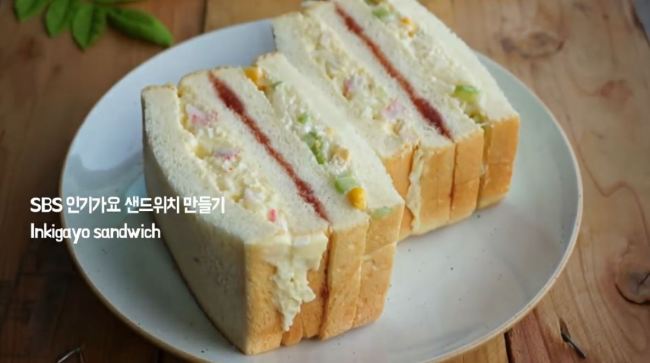
Why a cafeteria sandwich became a K-pop artifact
Music show pre-recordings run brutally long. A group might arrive at 목동 SBS by 6 a.m., rehearse camera blocking, wait through eight other artist slots, film a pre-record, then wait again for the live broadcast. There is nowhere to properly eat. Waiting rooms ban food. The only option is the fourth-floor cafeteria, and that cafeteria has one signature product.
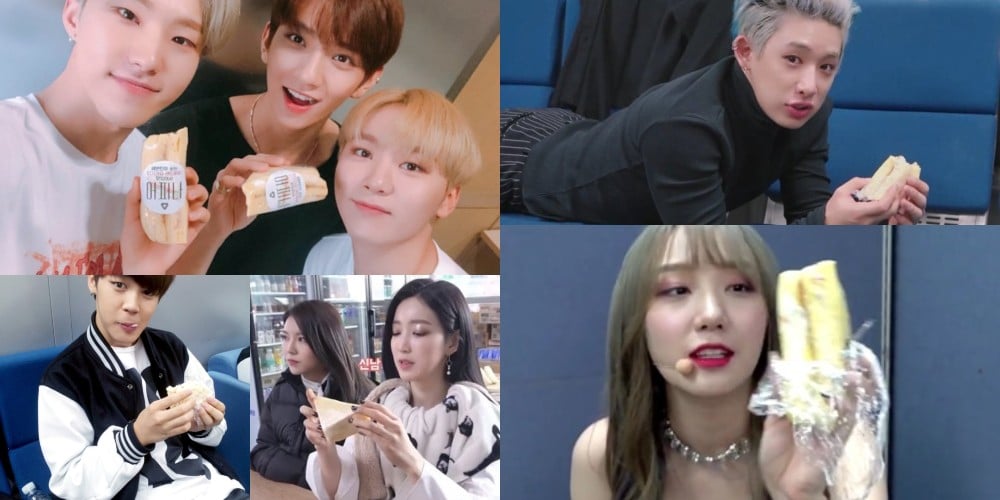
The sandwich, made by 서미혜 (Seo Mi-hye) who has run the cafeteria since 2006, gained traction slowly among 아이돌 from around 2014. It broke into public view in 2018 when SEVENTEEN's Seungkwan reportedly had the idea to buy a stack of them for Carats waiting outside in the summer heat. Hoshi, Seungkwan, and Joshua posted photos of themselves sticking labels on the packaging. That single fan service moment did what six years of insider chatter couldn't.

The insider signal fans learned to read
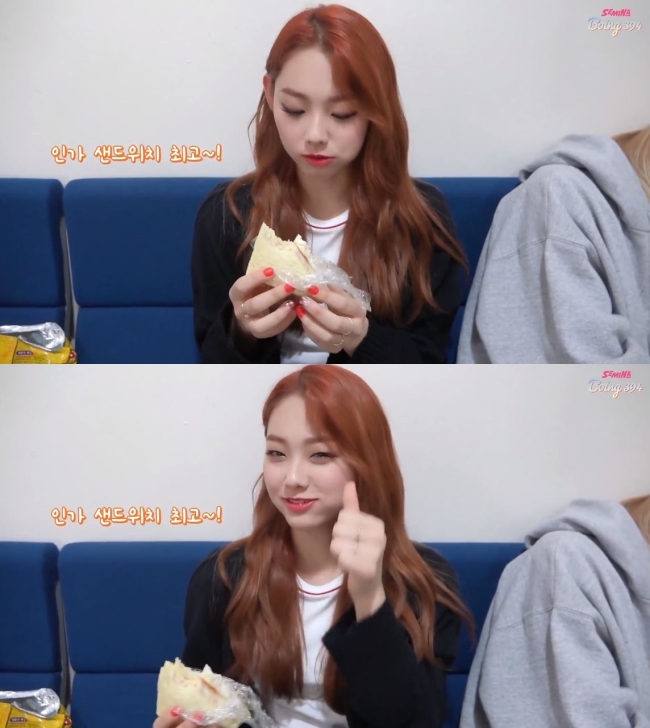
Once the sandwich became recognizable, its function shifted. An idol posting a selfie holding an Inkigayo sandwich meant one very specific thing: "I just finished my 인기가요 pre-recording." Fans learned this without anyone spelling it out. Groups newer to the industry, or on their first comeback, posted the sandwich to signal they had officially crossed into 음악방송 (music show) rotation. Established artists posted it as low-key confirmation that a comeback cycle was underway.
BIGBANG's Seungri, on the variety show "We Will Channel You," revealed a wilder layer. Because artists can't eat in waiting rooms, everyone ends up in that fourth-floor cafeteria at the same time. Seungri claimed some idols would slip their phone numbers under the plastic wrap of an Inkigayo sandwich and pass it to another idol they had a crush on. Whether or not he was speaking from personal experience (Kwanghee immediately called him out on it), the story exists because the sandwich was already the shared physical object of that room.

The small-business layer nobody quite explains
Here is the industry insight most fan blogs skip: the SBS cafeteria and its sandwich operation are run by a third-party small business, not by SBS itself. Each sandwich went for roughly 3,500 KRW, and payment worked on a running tab. An entertainment agency manager cited by Korean outlets said guests would name the singer and the agency and settle up later. That is why the sandwich felt personal in a way corporate-catered food never does. One woman was building a menu around the idols she saw week after week, and idols repaid her by turning her sandwich into a piece of K-pop folklore.
The convenience store industry noticed fast. In August 2018, 7-Eleven Korea launched an "Inkigayo Sandwich" product for around 2,200 KRW. GS25 and CU followed with their own versions (Inki Cafeteria Sandwich, Idol Sandwich). Buffet chain Ashley added an Inki Sandwich to its lineup. There was even a trademark scuffle: 7-Eleven had to rebrand its version to "Ginseng Sandwich" after using the Inkigayo name without SBS Contents Hub clearance. Six months later they released a second version, swapping strawberry jam for blueberry.
The fan mechanic and why it worked
The appeal for fans overseas wasn't the taste. It was proximity. If a Carat in Manila or a MOA in Berlin couldn't visit a 팬미팅 in Seoul, they could still walk into a 편의점 on their Korea trip, buy the ₩2,200 replica, and eat the same weird sweet-savory sandwich their bias posted about. That is a very specific kind of parasocial economy: the object itself is cheap, universally accessible, and directly linked to a place fans can't enter. K-pop is full of these small ritual objects (lightsticks, photocards, official merch), but the sandwich was different because it originated inside the actual working life of an 아이돌, not from a marketing team.
What happened to it
Eric Nam confirmed on his podcast around 2020 that the original sandwich was no longer being sold at the Inkigayo cafeteria. Kep1er's Yujin later revealed the same. The 편의점 versions still rotate through, and homemade recipes still trend on YouTube every time a new K-pop generation discovers them. The bridge itself, though, has largely been replaced by Weverse and Bubble, where idols now send direct chat updates instead of cafeteria snapshots.
That is why the sandwich matters as a moment. It was the last pre-platform artifact of intimacy between idols and fans, a physical object that traveled from a fourth-floor cafeteria to a global TikTok recipe. Small business, weird ingredient list, no marketing plan, and it became one of the most quietly influential foods in K-pop history.
If you want the closest thing to backstage snacking without a plane ticket, our SnackFever Box drops a curated mix of the Korean 편의점 snacks idols actually grab between schedules.


