

Table of Contents
"Film Out" landed on April 2, 2021, and on paper it looked like just another Japanese single from BTS. In practice, it was a textbook 일본 진출 play, the kind of move Korean labels run when they want to keep building equity in the world's second-biggest music market without burning their Western momentum. Co-composed by Jungkook with UTA and back number's Iyori Shimizu, tied to the live-action Signal film, and engineered for Japan's specific listening culture, this single was less about a comeback and more about HYBE's long game.
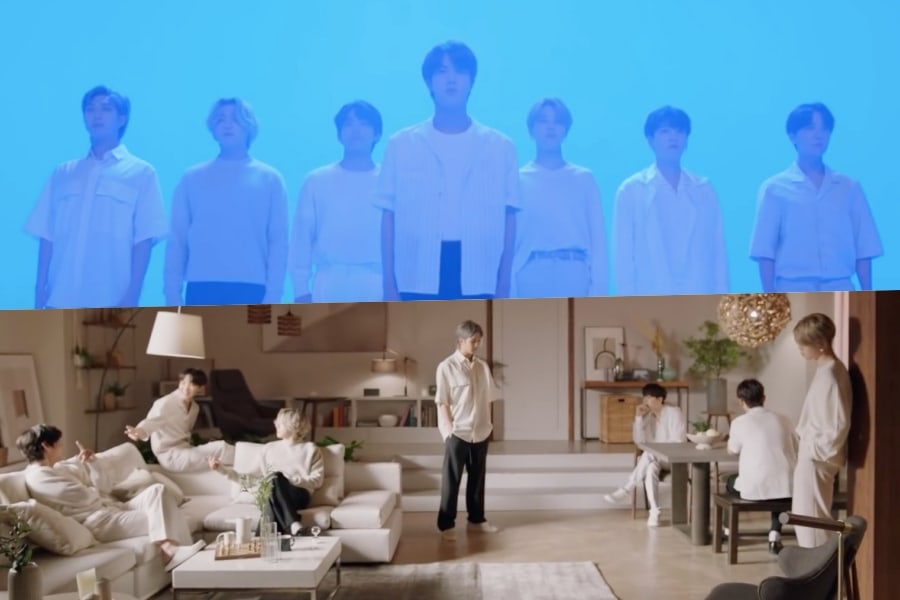
Why Japan Singles Are Never Throwaways for K-pop Acts
People outside the K-content space sometimes assume Japanese-language releases are "side projects" for K-pop groups, B-team material between the real Korean comebacks. That read is wrong, and it has been wrong for over a decade. Japan is K-pop's number two revenue source after Korea itself, and for the big four labels (HYBE, SM, JYP, YG) the Japan unit is a profit center that often outperforms domestic releases in pure cash terms. The reason is brutally simple: Japan still buys physical CDs at scale that the rest of the developed world abandoned years ago. A 일본 시장 single can move 200,000 to 500,000 physical copies in week one for a top-tier act, and physical sales pay multiples of what streaming pays per listener.
So when BTS rolled out "Film Out," it wasn't a vanity exercise. It was 영업, in the most literal Korean industry sense, calculated relationship-building with a market where loyalty has to be earned in the local language. Japanese fans, broadly speaking, want to feel that an act respects their market enough to record in Japanese, not just translate a Korean hit. Big Hit (rebranding to HYBE at the time) understood this, which is why every BTS Japanese-language single since 2014 has been treated as a genuine release, not a cash grab.
The UTA + back number Connection: Real Industry Currency
The detail most casual coverage missed: "Film Out" was co-composed by UTA and Iyori Shimizu, the lead vocalist of back number. UTA is one of Japan's most prolific commercial pop composers, and back number is a mid-tier-mainstream J-pop rock trio that has been a quiet hit machine for over a decade, the kind of act whose songs soundtrack convenience-store playlists and J-drama opening sequences. Getting them onto a BTS credit list is not a casual feature. It is elite Japan industry placement, the equivalent of a Korean act in the U.S. landing Max Martin or Jack Antonoff.
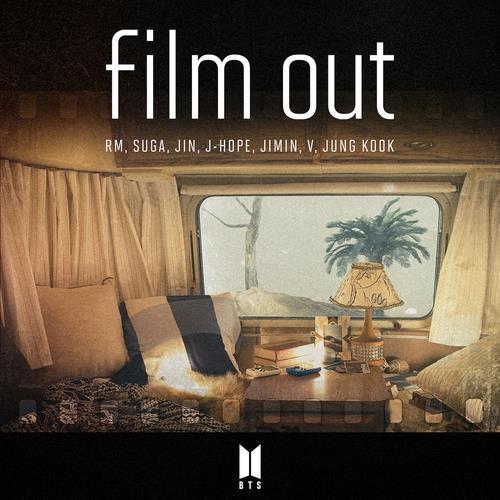
What does this buy you? Credibility with Japanese mass-market fans who, by default, distrust foreign acts trying to "go Japanese." A song co-written by a known Japanese composer reads as a real collaboration, not a translated import. That perception matters. It is the difference between a polite chart placement and a song getting picked up by Japanese radio, in-store playlists, karaoke catalogs, and J-drama tie-ins, the slow-burn channels that keep a song earning for years instead of one chart cycle.
Soundtrack Tie-Ins: Japan's Standard Strategy, Played Correctly
"Film Out" was tied to the Japanese movie adaptation of Signal, the same beloved tvN time-crossing drama that had a cult Korean fanbase. This is not coincidence. Soundtrack tie-ins are the standard Japan-market play, run by basically every major K-pop label. TWICE x Pokemon, TOMORROW X TOGETHER x the Aiming anime franchise, ENHYPEN x various game soundtracks, the pattern repeats because it works. The OST credit guarantees radio rotation, gets the song into TV ad spots, and ropes in fans who would never search out a K-pop act on their own but will absolutely buy a single tied to a movie they cared about.
For BTS specifically, the Signal tie-in was sharper than usual because Signal as IP already had emotional weight in both Japan and Korea. The Japanese live-action carried the same wistful, time-folding tone as the drama, and "Film Out" was written to match. The lyrics, with Jungkook's input, are about memory and loss layered over a soft pop-rock arrangement that sounds nothing like "Dynamite" from a year prior. That sonic gap was deliberate. Japanese OST work rewards restraint and emotional ballad textures, not Western-radio bops, and the production reflected that homework.

The Oricon Number One: What Charts Actually Mean
"Film Out" hit number one on Oricon's weekly digital singles chart for the week of March 29 to April 4, 2021, moving 32,947 downloads across just three release days. Bigger context: this was BTS's first time topping that specific Oricon chart, even though they had previously dominated the weekly digital album and streaming rankings. Why is 32,947 a small number compared to Western chart benchmarks but still a meaningful 오리콘 win? Because Oricon is fundamentally physical-CD weighted in its main flagship charts, and even in the digital singles category, getting Japanese audiences to actually pay-per-download (rather than stream) requires organized fan activity. ARMY-Japan ran the playbook, hitting iTunes Japan, Line Music, AWA, and mora simultaneously to lock the position.
The same week, "Film Out" went number one on iTunes Top Songs in 99 territories worldwide, and the MV cleared 100 million YouTube views in 27 days, the fastest of any BTS Japanese MV. Stack those three data points and the picture is clear: a Japanese-language OST single, with Japanese co-writers, became one of BTS's most globally efficient releases of 2021. That is not an accident. It is what happens when a label correctly reads a market.
Why BTS Still Drops Japanese-Language Tracks (Even With Global English Hits)
The question that gets asked in every Reddit thread: with "Dynamite" and "Butter" proving English-language tracks could dominate the Billboard Hot 100, why does BTS still bother with Japanese-language singles? The labels-side answer is unsentimental. Japan's CD-buying culture means physical singles convert directly to gross margin in a way streaming simply does not. A Japanese album release for a top-tier K-pop act can clear over 1 million physical units, and at roughly $20 to $25 per CD that is meaningful eight-figure revenue from a single market. Streaming royalties for the same listener count would not come close.

There is also a cultural-debt argument that Korean labels take seriously. Japan was the first major international market to embrace K-pop in the late 2000s and through the 2010s, well before North America paid attention. Acts like BoA, Tohoshinki, KARA, and Girls' Generation built their non-domestic revenue base in Japan. Walking away from that market because Western markets opened up would look like ingratitude to the Japanese fan base that funded a decade of growth. So labels keep the Japan unit fully active, even when an act has a Hot 100 hit. BTS has been particularly disciplined about this, releasing Japanese singles and full Japanese albums at roughly the same cadence whether their Korean comebacks happened or not.
The "Film Out" Long Tail That Most Coverage Missed
By late 2021, "Film Out" was still charting on Billboard Japan Hot 100 for 30+ weeks and was sitting on 200+ million YouTube views. The track also holds the biggest Spotify streaming debut for a Japanese-language song, an achievement that gets less press because Spotify is a smaller player in Japan than the rest of the world. None of that was random. It was the predictable outcome of doing Japan strategy right: real Japanese collaborators, a culturally weighted tie-in, a song designed for the local sonic palette, and a release window that respected Japanese fan-buying patterns.
For anyone who has worked in the K-content space for any length of time, "Film Out" reads as a clinic in how a top-tier K-pop act should treat Japan in the post-streaming era. Not as a bolt-on, not as a translation exercise, but as a legitimate creative market that pays differently and rewards different things. The 한 (deep emotional weight) carried by the lyrics, the restraint of the production, and the strategic respect for Japanese music-industry norms, that combination is what separates 진출 (real market entry) from a label just dropping a Japanese version of a Korean hit and hoping.

Explore More of Korea with Daebak
Want to bring a little piece of Korea into your life? The Daebak Box is packed with the best Korean snacks, ramen, and cultural goodies delivered monthly to your door.


