


Table of Contents
Let me say the quiet part first. What we call an "아이돌 closet" in 2026 is not really a closet. It is a rotating warehouse of luxury sponsorship, a HYBE or YG or SM stylist team on retainer, a quarterly budget line that sometimes runs into the hundreds of millions of won, and a fandom that treats every 공항 패션 (airport fashion) frame as an inventory audit. I have watched this side of the industry for over a decade, and the shift from the mid-2010s "label uniform" era to today's ambassador-driven personal wardrobes is one of the cleanest examples of how Korean idols became global marketing infrastructure for LVMH and Kering. This piece walks through five closets that matter, and the industry mechanic sitting behind each of them.
Why an idol closet stopped being a costume rack and became a portfolio
The old model, pre-2016, was simpler. Stylists at the label pulled outfits from a shared warehouse. Idols in the same group often shared jackets between shoots. The closet was operational, not personal. What changed everything was G-Dragon becoming the first Asian male global ambassador for Chanel in 2016, which the Korea Herald has since called the moment K-pop crossed into permanent front-row luxury territory. Once one idol had that deal, every label understood the leverage. By 2023 Jimin of BTS became the first Asian male global ambassador for Dior. Dior's parent LVMH watched its stock move measurably in the days after the announcement, and Allkpop reported the sell-out of every Dior product Jimin was photographed with inside 48 hours.
The appeal point most Western fashion coverage misses: Korean idol closets are read as identity signals by fandoms, not just aesthetics. A K-pop fan in Sao Paulo or Riyadh can list, from memory, which season Jennie wore which Chanel jacket. That level of granular closet-tracking does not exist for Western pop stars. It is the reason a $5 million to $20 million annual global-ambassador contract is now standard math at Kering and LVMH for a top-tier Korean idol. The closet is the product.
1. Jennie, BLACKPINK: the Chanel closet and the Marant off-duty layer
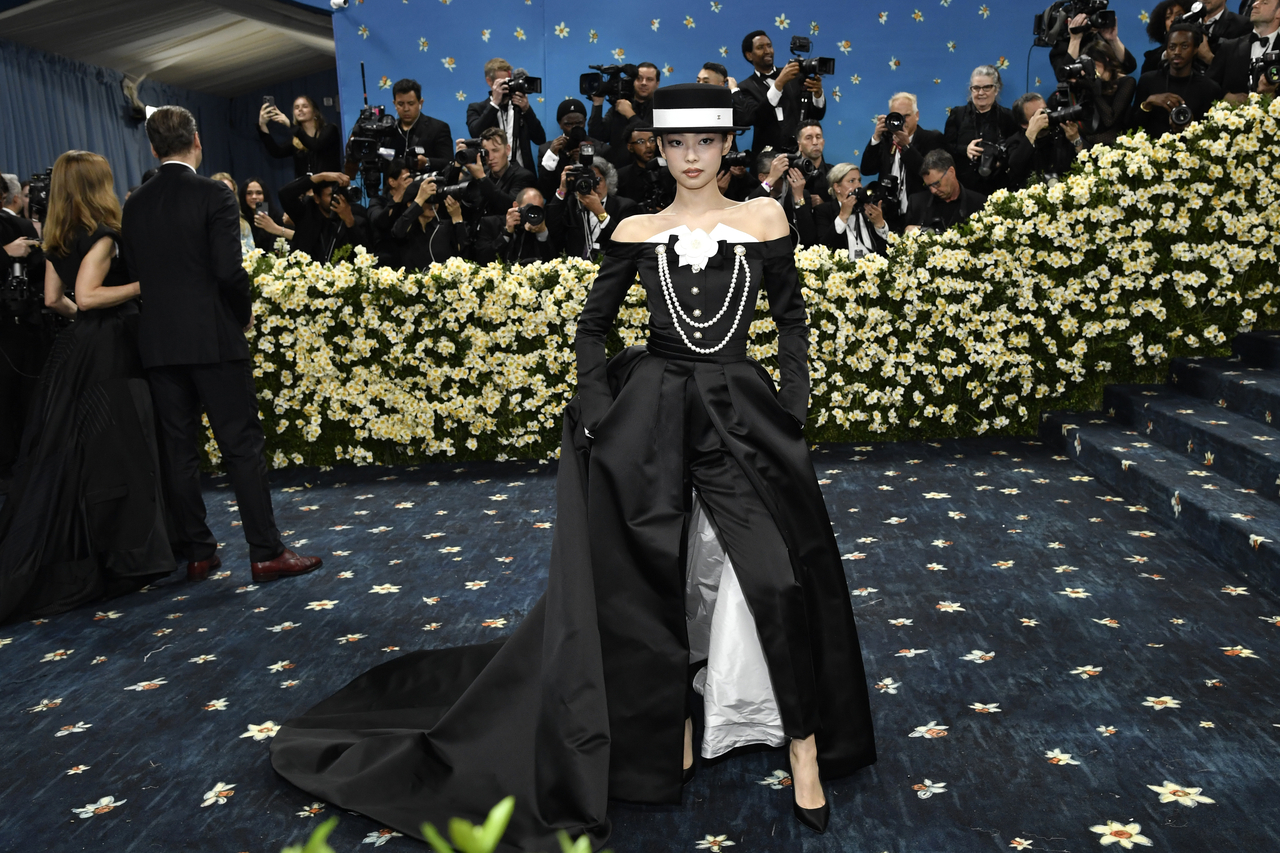
Jennie is the case study everyone in the industry uses. Nicknamed "Human Chanel" in the Korean press for years before the ambassador contract was even signed, she is the rare idol whose personal shopping instinct maps almost exactly onto the brand identity she represents. Chanel appointed her a global brand ambassador in 2023, and the Korea Herald has documented the compounding effect: her Met Gala 2025 appearance in head-to-toe Chanel drew more international coverage than most of the other invitees combined.
What the fandom actually tracks, though, is the off-duty layer. Isabel Marant boots, vintage denim, and a rotating collection of sneakers that Korean sneaker forums (Kream, Musinsa) have estimated at north of $1 million in retail value across her documented rotation. Jennie's stylist team leans on the Marant, Ganni, and Acne Studios pieces for airport 착장 (outfit) precisely because head-to-toe Chanel would read as trying too hard. This is the sophisticated version of the game. Sponsor at the tentpole event, personal wardrobe at Incheon. The fandom rewards the second one more.
Industry read: Jennie's ambassador contract with Chanel is widely reported in Korean trade press as one of the largest ever signed by an Asian celebrity, and OA Entertainment (her post-YG label) built its business plan around that leverage. The closet is the collateral.
2. G-Dragon: Chanel, Peaceminusone, and 500-plus pairs of documented sneakers
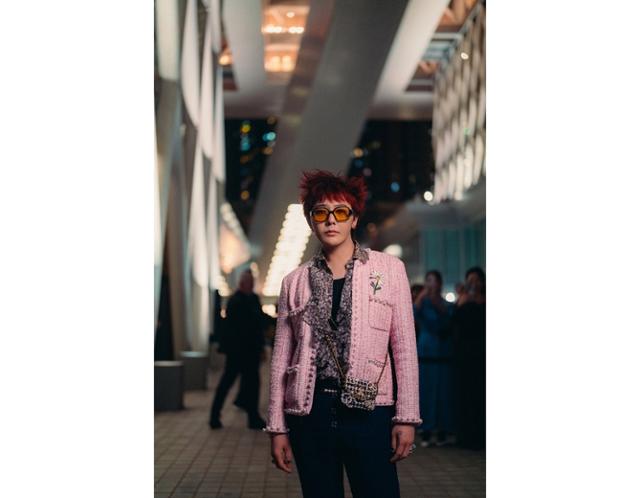
G-Dragon's closet is the one closet in K-pop that doubles as a brand. Peaceminusone, the fashion label he co-founded in 2016, sits inside his personal wardrobe alongside his Chanel ambassador pulls, meaning he is both walking billboard and product designer at the same time. Fans who catalog his rotations (there are dedicated Naver cafes for this) put his documented sneaker collection at over 500 pairs, with the Peaceminusone x Nike Air Force 1 Para-Noise and Kwondo 1 collaborations serving as his own personal collector items. The Korea Times has repeatedly framed his fashion influence as one where the closet moves the market: military-style slippers he was photographed in sold out in Korea within days.
The industry mechanic behind G-Dragon's closet is unlike anyone else's. Because he owns Peaceminusone, his airport looks generate direct revenue for a company he owns. That vertical is the aspirational template every idol-turned-founder (Lisa's LLOUD, Jennie's OA) now studies. Chanel's continued relationship with him post-BIGBANG hiatus, and his 2025 Chanel front-row appearances, prove the ambassador logic works even when the idol takes multi-year breaks. His closet is the currency that never depreciates.
3. V of BTS: Celine, Cartier, and the vintage Hawaiian shirt inventory

V (Kim Taehyung) is the anti-Jennie in closet philosophy. Where Jennie wears the sponsor, V wears the archive. He is a Celine global ambassador and a Cartier ambassador, both major LVMH- and Richemont-adjacent deals, but his personal rotation leans hard into 1970s Hawaiian shirts, vintage Ralph Lauren cardigans, and old Kodak film cameras hanging off his neck like accessories. Soompi has run entire feature pieces on V's personal style, calling out his preference for wide flowing black pants paired with bold button-downs from Hermes, Louis Vuitton, and Burberry when he is not in Celine.
The appeal point here is that V's closet reads as taste, not sponsorship. That distinction is worth money. His Celine ambassador contract with LVMH still leverages the vintage-collector reputation, and Celine's Hedi Slimane-era campaigns lean into that Americana-through-a-Korean-lens aesthetic that V embodies. The vintage Hawaiian shirts (many of which fans have identified as 1960s to 1970s originals, priced at $800 to $3,000 on collector sites) are the reason his airport fashion trend cycle lasts longer than most other idols. A sponsored look is dated in one season. A vintage one is never dated.
4. Rosé of BLACKPINK: Saint Laurent, minimalist luxury, and the "she is Saint Laurent" model

Rose became a Saint Laurent global ambassador in 2020, and iPrice tracked interest in the brand spiking over 1,000 percent in some Southeast Asian markets within weeks of the announcement. That is the raw ROI proof point Kering executives now cite when internally justifying seven- and eight-figure K-pop deals. Saint Laurent creative director Anthony Vaccarello has been on the record calling Rose "the first ever" and repeatedly saying "she is Saint Laurent," which in fashion-house language is code for a decade-plus commitment, not a single season.
What separates Rose's closet from Jennie's is the tonal choice. Where Jennie leans decorative Chanel tweed, Rose stays sharp, monochrome, sculpted. Minimalist luxury. That is the exact identity Saint Laurent under Vaccarello has been rebuilding, and Rose's personal wardrobe (slip dresses, black tailored blazers, cropped leather jackets, the occasional Bottega Veneta accessory) mirrors the house language almost perfectly. The Koreaboo, Soompi, and Allkpop coverage treats her closet as an ongoing brand collaboration rather than a wardrobe. That is the ambassador model working at full efficiency.
5. Jimin of BTS: Dior, sculptural pieces, and the sell-out mechanic
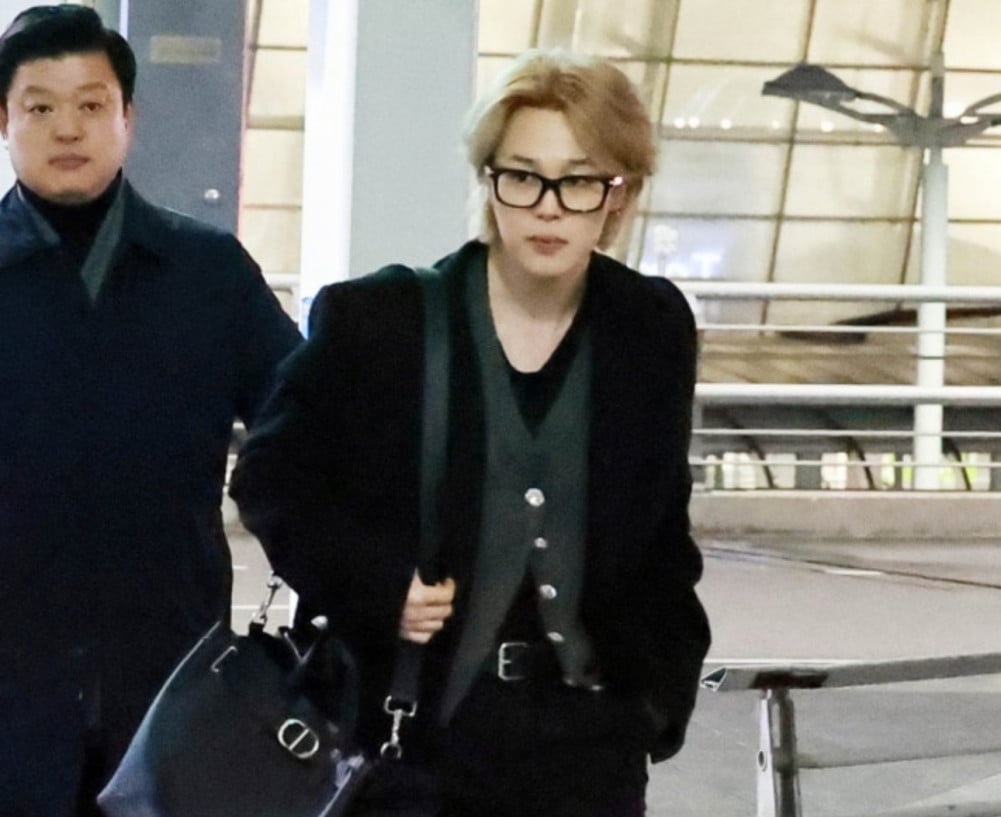
Jimin's 2023 announcement as Dior's first Asian male global ambassador is the case Kering and LVMH internal decks now use to prove causation, not just correlation. Allkpop reported at the time that Dior stock reached an all-time high within days of the announcement, and every Dior store from Cheongdam to Ginza reportedly saw walk-in traffic spikes as fans went in to buy anything Jimin had touched. That is the Jimin Effect, and it is measurable in a way most brand deals cannot claim.
His personal closet leans sculptural: dramatic silhouettes, Dior menswear pieces with strong structural lines, oversized coats, and the recent (February 2026) airport look that Allkpop covered where the Dior medium Normandy calfskin tote sold out worldwide within a day. That kind of pull is why HYBE reportedly budgets multi-hundred-million-won quarterly clothing allowances for its ambassador-tier idols. The math is straightforward. A single sell-out event covers the entire quarter's clothing spend several times over. The closet is a self-funding line item.
Airport fashion, or how the Korean fandom invented the closet audit
Any conversation about idol closets has to name the mechanic that made them public: 공항 패션. Korean fan sites, Naver cafes, and now Weverse and X communities have built a decade-plus infrastructure of 공항 (airport) paparazzi documentation. Every Incheon and Gimpo departure and arrival is photographed by fansite masters (called 홈마) whose telephoto rigs cost more than the outfits themselves. Those photos get color-corrected, uploaded, and cross-referenced against ambassador contracts, previous appearances, and price databases within hours. The idol closet became a public artifact because of this workflow.
The industry consequence is that no top idol can wear anything unaccounted for. If a Jimin scarf is not identifiable by brand and season, the fandom will identify it within the day. That surveillance is exactly why HYBE, YG, SM, and JYP retain full-time stylist consultancies (some of them former Vogue Korea editors) whose entire role is to source, catalog, and pre-clear every piece. The multi-million-won quarterly wardrobe budget is not a splurge, it is a compliance line.
The post-2020 luxury pivot: LVMH and Kering treat K-pop as their global marketing pipeline
Zoom out and the picture is unambiguous. Since 2020, LVMH and Kering have signed more Korean idol ambassadors than any five-year period in either group's history. Dior, Celine, Louis Vuitton, Cartier, Bulgari, Gucci, Saint Laurent, Chanel, Bottega Veneta, Miu Miu, and Prada each have at least one major Korean idol ambassador as of 2025 to 2026. The Korea Herald in May 2025 called it a hierarchy-forming trend inside K-pop itself, with fans ranking idols partly by brand prestige. That is a real cultural side effect, and Korean labels have started internally discussing how to manage it.
But the raw commercial logic is not debatable. A Korean idol brand deal delivers global brand lift in 20-plus markets simultaneously, at conversion rates Western celebrity endorsements have not matched since the 1990s Michael Jordan era. Kering CEO Francois-Henri Pinault and LVMH's Bernard Arnault have both publicly discussed Korean cultural exports as central to their next decade of Asia growth. That means more ambassador contracts, larger wardrobe pipelines, and more closets that read as luxury portfolios rather than personal fashion.
The closet is the idol, and vice versa
The final industry read: the old K-pop era where every member of a group wore the same coordinated stage costume is completely over. Post-2020 groups (NewJeans, LE SSERAFIM, TWS, RIIZE) are all being launched with pre-negotiated ambassador pipelines, meaning members are effectively shopping from different luxury houses on day one of their debut. The "closet as identity" model has replaced the "label uniform" model permanently. What the closet says about the idol is now part of the artist positioning, not incidental to it.
That is what makes an idol closet in 2026 worth reading closely. It is a portfolio of contracts, a fandom-tracked identity signal, a corporate compliance file, and a personal taste statement all at once. Jennie, G-Dragon, V, Rose, and Jimin each solved that puzzle differently, and each solution generated a market impact the labels can point to when the next round of ambassador negotiations opens. The closet is the resume now. The clothes are almost incidental to what they represent.
Bring the K-pop Aesthetic Home with Daebak Box
Want a monthly hit of the same Korean lifestyle sensibility that shapes idol closets, without the LVMH price tag? The Daebak Box ships hand-picked Korean lifestyle, beauty, snack, and pop-culture goods straight to your door every month. Consider it the entry-level access to the same aesthetic ecosystem your favorite 아이돌 is operating inside.


