


Table of Contents
Ask any KTO campaign strategist which season generates the highest inbound tourism spend, and they will point at spring. Korea's 꽃 축제 (flower festival) window from late March to early May routinely clocks around two billion dollars in tourism revenue by the KTO's own accounting, and the flowers themselves are not just backdrops. They are the calendar the whole country lives by. After more than a decade working alongside Korean cultural marketing teams, I have learned that when a Korean colleague texts you a 벚꽃 photo, they are not sending a nature snap, they are announcing the season. Here is the actual working guide to the five flowers that define Korea, why each one carries the cultural weight it does, and how the Hallyu machine has quietly turned them into some of the country's most exportable visual assets.

무궁화 Mugunghwa (Rose of Sharon): The National Flower That Refuses to Quit
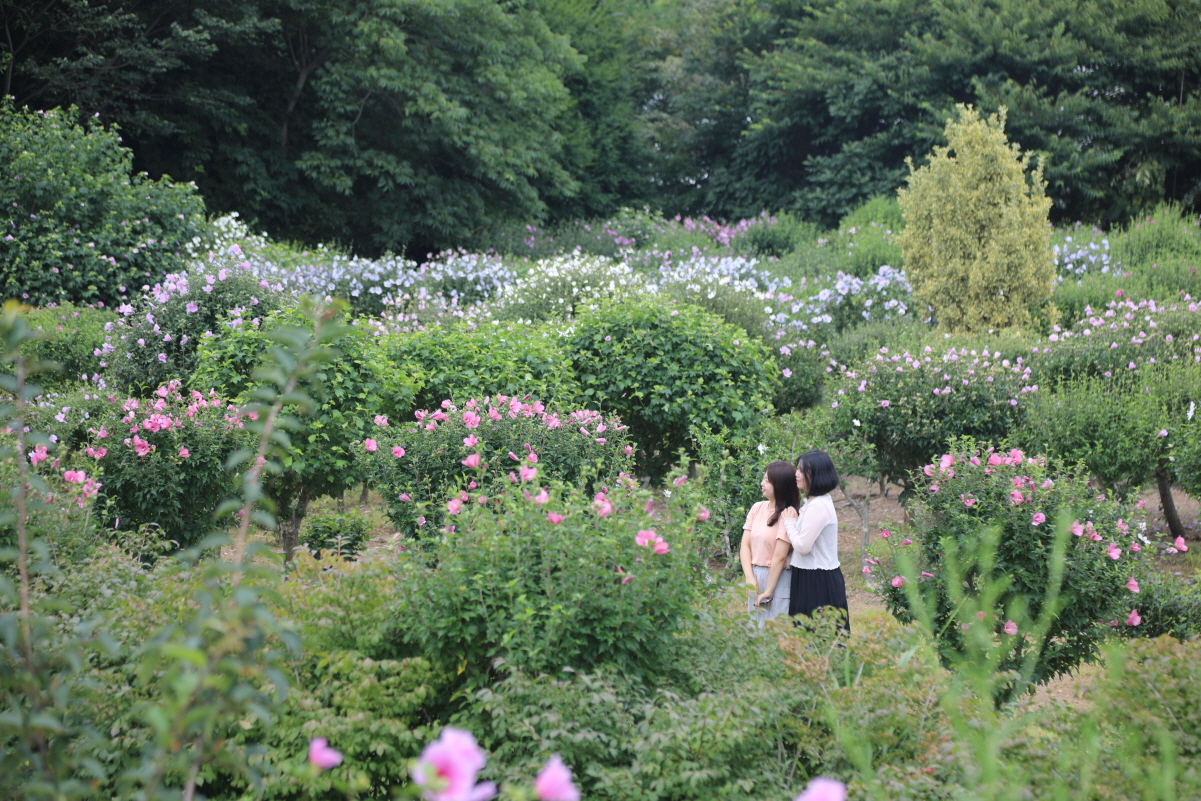
무궁화 was designated South Korea's official national flower in 1949, a year after the founding of the Republic, though the flower had already been shorthand for Korean identity since the 애국가 (national anthem) referenced "무궁화 삼천리 화려강산." The name itself is the point. 무궁 (mugung) translates as "eternal, without limit," and the plant lives up to that. A single Hibiscus syriacus bush pushes out fresh blooms every day for about 100 days between July and October, drops them by nightfall, and does it again the next morning. This is not a poetic exaggeration, it is horticultural fact. That daily rebloom is exactly why the flower was tied to the concept of 애국 (patriotism) and Korean perseverance under Japanese colonial rule, when planting 무궁화 was quietly political. Today the Korea Forest Service uses Liberation Day (August 15) as its anchor moment for 무궁화 exhibitions at spots like Chollipo Arboretum in Taean and Sejong National Arboretum. The flower rarely dominates a K-drama frame the way cherry blossoms do, and that absence is telling. 무궁화 is closer to a passport stamp than a mood board, it carries state weight, not romantic weight. The one exception worth watching is the men's national football team, which in 2025 introduced a purple mugunghwa kit for the friendly against Mexico, a design decision that read as intentional national-symbol activation for a global broadcast audience.
The Spring Calendar Locals Actually Follow: 개나리 → 진달래 → 벚꽃
If you want to look like you know Korea, do not just talk about cherry blossoms. Talk about the order. Locals track spring in a very specific sequence, and each flower carries its own signal. 개나리 (forsythia) opens first, usually in early to mid March. 진달래 (Korean azalea, the wild mountain variety) follows in late March and into April, splashing hillsides pink before anything else. 벚꽃 (cherry blossom) is the finale, hitting Seoul in early April and lasting maybe ten days if the weather cooperates. What makes this calendar culturally meaningful is that Koreans do not treat spring as one season, they treat it as three flower windows, and industry campaigns from tourism to K-pop comebacks are timed against them. HYBE and JYP have both quietly moved release dates to hit peak cherry blossom weekend traffic in Yeouido and Jinhae. That is not accidental, that is calendar strategy.
개나리 Gaenari (Forsythia): Seoul's Actual Official Flower
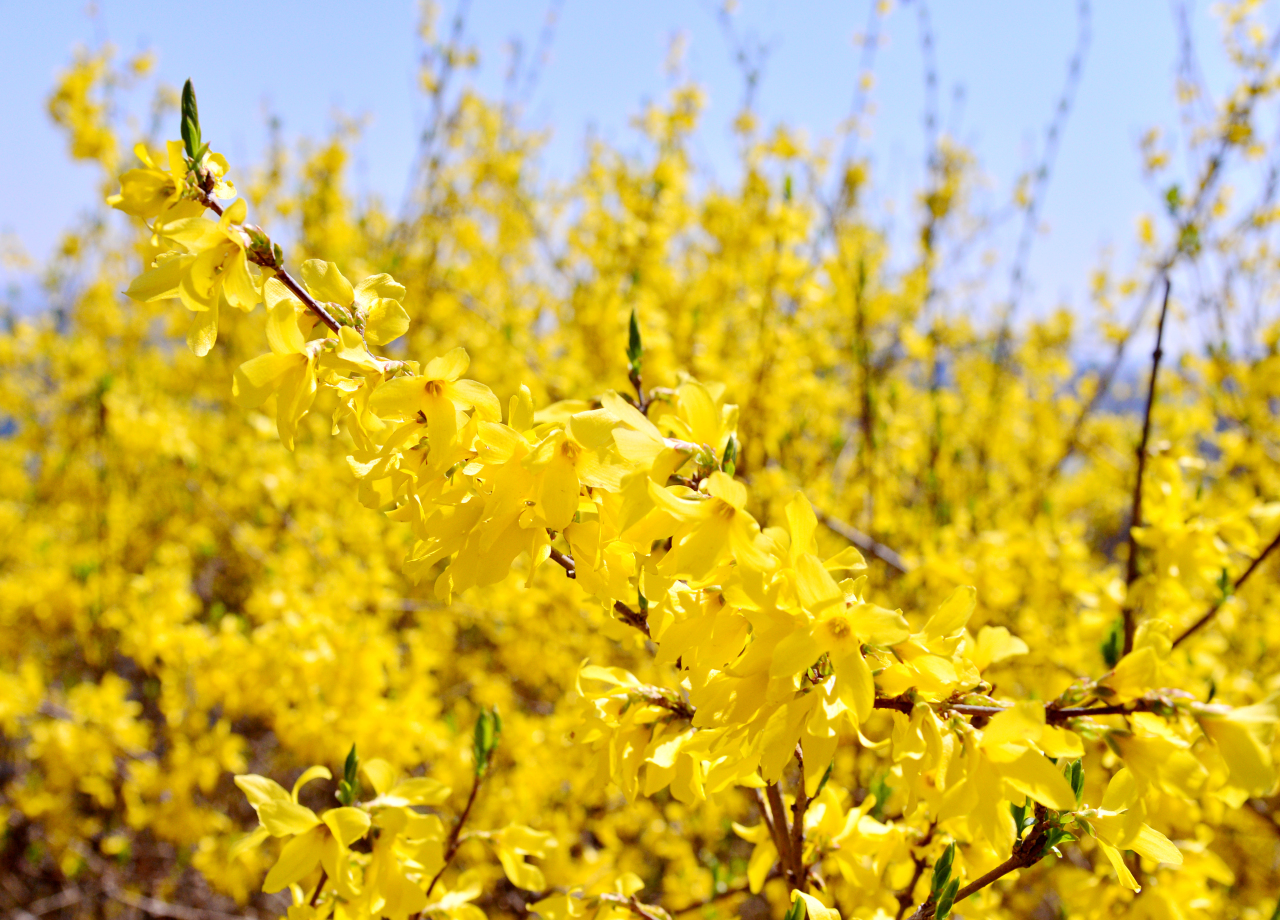
Here is a trivia point most tourism guides bury. 개나리 (forsythia, Forsythia koreana) is the official city flower of Seoul, not 벚꽃. The 95-meter Eungbongsan in Seongdong-gu holds Korea's only major forsythia festival, blanketing the slope with roughly 200,000 bushes of Corona-yellow blooms every early April. Trains on the Gyeongui-Jungang line run past the yellow mountain and photographers wait for that exact composition. The appeal here is specifically Korean. 개나리 is not a manicured garden flower, it is scrappy, it grows on roadsides and apartment perimeters and elementary school walls, and every Korean adult has 개나리 in their childhood 봄 memories. That is why a hansik restaurant will nail a 개나리 photograph to the wall and it reads as warmth rather than kitsch. The industry insight is that Seoul city government has spent the last decade using forsythia yellow as its de facto seasonal branding color, from bus stop banners to Han River festival lighting, precisely because the association is already baked into the collective memory.
진달래 Jindallae (Azalea): The Flower That Means Love, With a Poet Attached
If 무궁화 means 애국 and chrysanthemum means 절개, 진달래 means 사랑 (love), and every literate Korean knows exactly why. The 1922 poem "진달래꽃" by Kim Sowol is on the middle school syllabus and it is arguably the most quoted poem in modern Korean literature. The narrator scatters azalea petals in the path of a leaving lover, telling them to walk on the flowers without tears, which is basically the entire Korean romantic aesthetic in twelve lines. When a K-drama writer needs a shorthand for tragic devotion, they reach for 진달래. The wild mountain azalea blooms in April, coating slopes on Ganghwa Island's Goryeosan Mountain and Yeongju's Sobaeksan National Park with the kind of dense pink haze that Chinese and Japanese tourism outlets started re-sharing on Xiaohongshu and Instagram around 2023, driving a measurable spike in April inbound bookings that KTO now factors into its spring campaign spend. Note the distinction locals make between 진달래 (edible wild variety, used for 화전 pancakes and 진달래주 wine) and 철쭉 (royal azalea, toxic, purely ornamental). Getting that wrong at a Korean dinner table gets you laughed at.

벚꽃 Beotkkot (Cherry Blossom): The Flower Hallyu Actually Sells to the World
Let me be direct. 벚꽃 is the flower that pays the bills. The 2026 Yeouido Spring Flower Festival, according to Korea Times reporting, pulled peak crowds along the 1.7-kilometer Yeouiseoro behind the National Assembly, and Jinhae's Gunhangje still draws over two million visitors during a single ten-day window in early April. Cherry blossoms are also the specific flower that broke Korean visual identity into global consciousness, and the case study I always cite is Winter Sonata. The 2002 KBS drama that arguably launched the Korean Wave in Japan used a snow-covered Nami Island in winter as its iconic image, but the show's spring flashback cherry blossom scenes with Bae Yong Joon and Choi Ji Woo are what set Japanese and Southeast Asian tourists booking Namiseom pilgrimages by the busload for the following fifteen years. When Netflix drops a K-drama with a 벚꽃 scene now, marketing teams treat it as guaranteed evergreen thumbnail content. What people outside the industry underestimate is how much of the appeal is choreographed. Yeouido gets more foreign visitor traffic than Jinhae partly because it is a 20-minute subway ride from Hongdae, and KTO knows exactly which lens Instagram travelers will pull out at which spot. That is not a criticism, that is smart tourism planning.
여름 and 가을: Beyond Spring, the Flower Year Keeps Going
Foreigners tend to close the book after 벚꽃, and that is where they miss the second half of the story. Summer belongs to 연꽃 (lotus, especially the Buyeo Seodong Lotus Festival in Chungcheongnam-do) and 나팔꽃 (morning glory), both flowers with heavy Buddhist and folk symbolism that show up in temple murals and 민화 folk paintings. The real seasonal star of autumn is 국화 (chrysanthemum). Korean chrysanthemum culture is closer to Chinese scholar-poet tradition than to Japanese imperial iconography. 국화 sits in the Four Noble Plants (사군자) of Confucian art alongside plum, orchid, and bamboo, and it symbolizes 절개, roughly translated as unyielding integrity in the face of adversity. This is why 국화 is the standard funeral flower in Korea, not because of a color code, but because the flower stands for principled endurance. That symbolism also explains why the Iksan Ten Million Chrysanthemum Festival in Jeollabuk-do (late October to early November) reads as culturally serious in a way that a Western pumpkin festival would not. Nearly ten million cultivated blooms, sculptural installations, and light displays, all coded through a specific Confucian aesthetic frame.

K-Drama Flower Imagery: How Hallyu Turned Flowers Into Emotional Grammar
Once you start watching K-dramas for their flowers, you cannot unsee it. Winter Sonata's cherry blossoms are the origin case, but the more sophisticated example is Goblin (도깨비, 2016), where hydrangeas (수국) became the show's unofficial secondary flower after the buckwheat scenes drove a Canada travel boom. What Goblin's set designers understood is that 수국 changes color based on soil pH, from pink to blue, and they used that instability to visually mirror Gong Yoo's character arc. That is not accidental, that is deliberate flower semiotics for a global streaming audience. Business Proposal (2022) uses 튤립 (tulips) in almost every important scene as a color-coded emotional cue. Reply 1988's opening sequence returns to 개나리 as a nostalgia trigger for anyone who grew up in Seoul before the neighborhood gentrification. The industry mechanic worth naming is that Korean production designers have consciously built a shared flower vocabulary that international audiences now read fluently, which means a well-placed 진달래 or 국화 in the frame communicates emotional context faster than dialogue can. That is efficient storytelling, and it is one of the underrated reasons K-content has punched above its weight globally.
Which One Speaks to You?
Whether you are drawn to the quiet daily persistence of 무궁화, the wistful poetry of 진달래, the childhood-Seoul warmth of 개나리, the Instagram-ready explosion of 벚꽃, or the funereal gravitas of 국화, Korea's flowers are all doing more emotional work than they let on. Tell us in the comments which one landed hardest for you, and which K-drama flower moment lives rent-free in your head.
Explore More of Korea with Daebak
Want to bring a little piece of Korea into your life? The Daebak Box is packed with the best Korean snacks, ramen, and cultural goodies delivered monthly to your door.


