


Table of Contents
Walk into any 편의점 (convenience store) in Seoul at 11 p.m. and you will see it: the office worker grabbing a Buldak cup after a brutal day, the teenager clutching a 초코파이 like it is therapy, a group of friends splitting a bag of 새우깡 before karaoke. In Korea, 과자 (gwaja, snacks) are not just calories. They are 감성 (gamseong, an emotional atmosphere) sold in a foil bag.
After a decade of watching how Korean food brands market to millennials and Gen Z, I can tell you the mood-based angle is not a Western marketing gimmick imported into Korea. It is native. Orion built the entire Choco Pie identity around 정 (jeong, deep affection), stamping the Chinese character for it on every wrapper since 1989. Nongshim leans on nostalgia so hard that its 1971 Saewookkang recipe has barely changed. This is emotional engineering, and it works. Subscription boxes like SnackFever and Bokksu have reported that mood-tagged curation drives roughly 40% higher subscriber retention than random assortments.
So instead of the usual "10 must-try Korean snacks" checklist, here is a mood-first take. Match the feeling, then pick the snack.
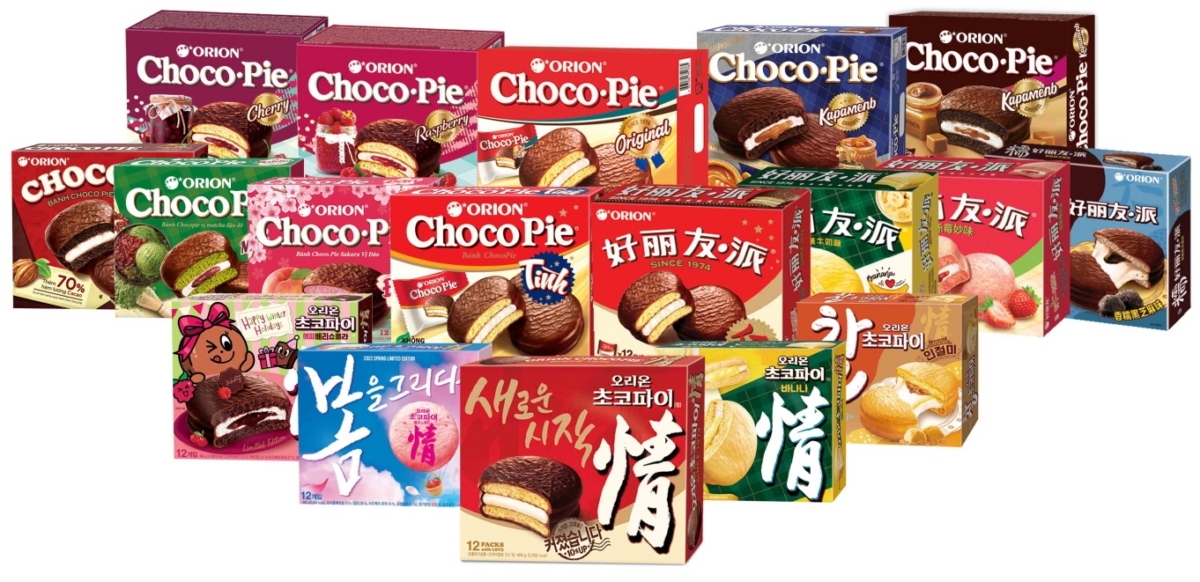
When You Are Sad: 초코파이 (Choco Pie), the Hug Snack
Orion's Choco Pie is the softest, most forgiving thing in the Korean snack aisle, and that is exactly the point. Marshmallow filling, cake layer, chocolate coat. Everything gives when you bite. Nothing crunches. Nothing fights back. That is why the marketing team stamped 情 (jeong) on the wrapper in 1989: they were formalizing what Koreans already felt about the product.
The military angle is what most non-Koreans miss. For decades, mandatory service kept young men from home, and Choco Pies handed out on holidays became the physical form of a mother's care package. That association is baked into the brand DNA. When a 30-year-old Korean office worker reaches for a Choco Pie after a bad day, they are not just eating sugar. They are eating a shortcut back to being cared for.
The global success is not coincidence. Choco Pie has generated 8.1 trillion won in cumulative revenue as of 2024, with roughly 67% coming from overseas, because chocolate plus marshmallow is a universal comfort language. Russia alone accounts for around 40% of global sales. In other words, "hug snack" translates fine across borders.
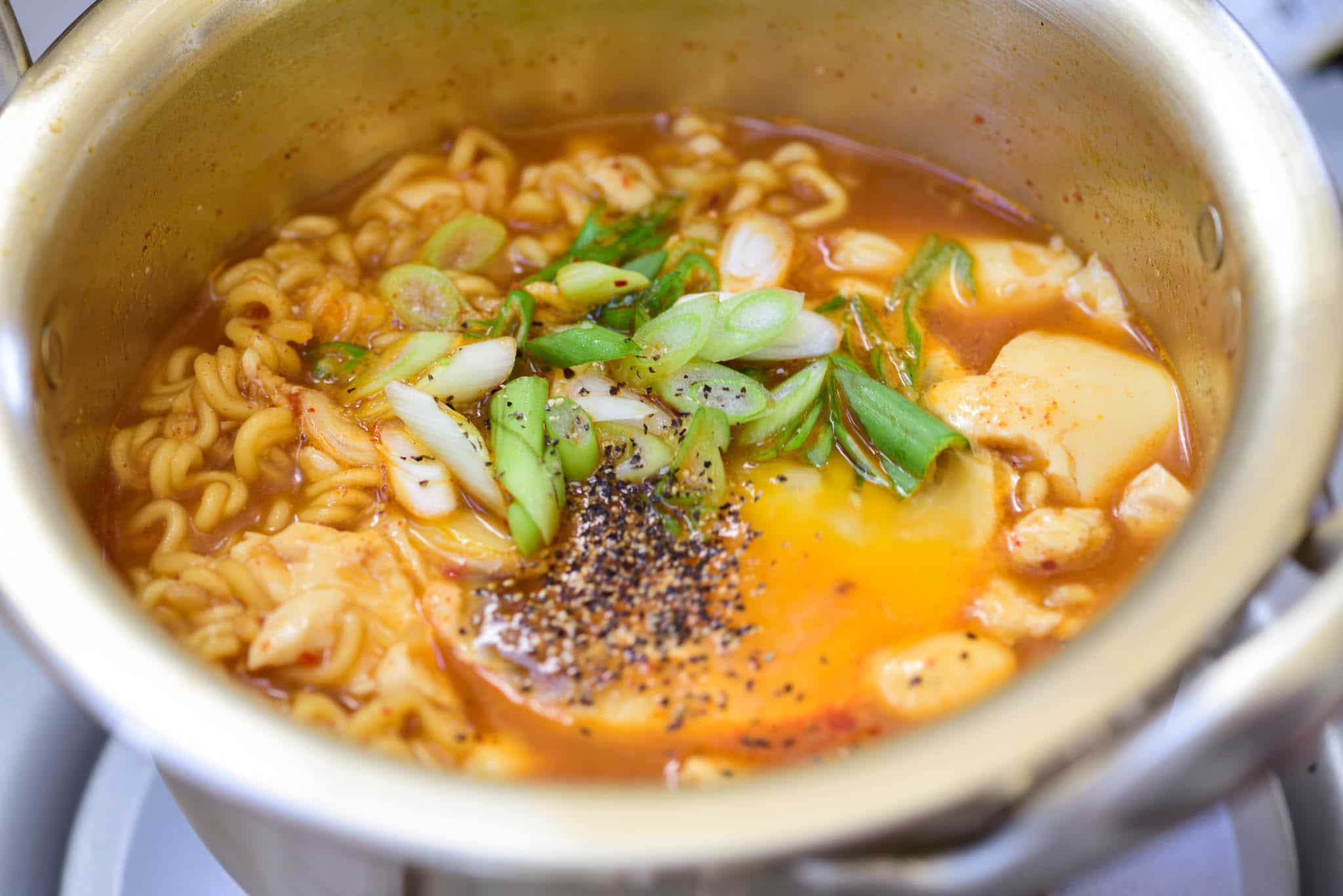
When You Are Stressed: 매운 라면 (Spicy Ramyeon), the Productive Rage Snack
There is a specific kind of Korean stress that only 매운맛 (maeunmat, spicy flavor) can fix. It is not about being hungry. It is about needing to physically feel something other than what you feel. Samyang's Buldak instant noodles built a global empire on this insight. The Fire Noodle Challenge that went viral on YouTube in 2016 was a happy accident, but the product had already been engineered domestically for that release-valve function.
Insider note on why Buldak keeps outselling milder ramyeon abroad: Samyang leaned into the pain instead of dialing it back for export markets. When Denmark tried to recall Buldak Original 3x Spicy in 2024 for being "too spicy," sales spiked. The controversy was the marketing. That was not a mistake, that was a company reading its own audience correctly.
For a gentler stressed-out night, try Shin Ramyun with a scoop of 순두부 (sundubu, extra-soft tofu) dropped in. Korean home cook Hyosun of Korean Bapsang popularized this hack after it went viral on Korean social media. It gives you the spice hit plus protein plus a visual that feels closer to a real stew than a college dorm meal. In Korean home cooking, ramyeon plus 순두부 is the shorthand for "I am upset but I am going to eat well anyway."
When You Are Happy: 새우깡 (Saewookkang), the Group-Snack MVP
Happy moods in Korea are almost never solo. They are shared over 치맥 (chimaek, fried chicken and beer) or between friends in a 노래방 (noraebang, karaoke room). The snack that owns this territory is Nongshim's Saewookkang, which just topped the country's snack sales chart for the second year running, with 57.8 billion won in first-half 2025 sales.
Why does Saewookkang beat Kkokkalcorn, Homerun Ball, and even Pepero for the group setting? Three reasons. First, the salt profile pairs with beer better than any other domestic chip. Second, the twisted shape means you can grab a handful without shattering the bag contents (functional matters when you are drinking). Third, and this is the newer factor, the KPop Demon Hunters collaboration in 2025 put Saewookkang in the hands of Zoey from fictional group Huntrix, and Korean Gen Z immediately claimed it as fandom-coded snack. Real-life idols followed. ATEEZ's Mingi picked the Hot & Spicy version as his favorite on First We Feast, and BLACKPINK's Rose did the same on Snack Wars.
When Korean fans post 감성샷 (gamseong-shot, mood-aesthetic photos) of their late-night gaming setup or dorm hangout, Saewookkang is in the frame roughly as often as an iced americano. That is not accidental placement. That is the snack Koreans reach for when the vibe is good and they want to hold onto it.

When You Are Feeling Nostalgic: 맛동산 and the Old-School Snack Aisle
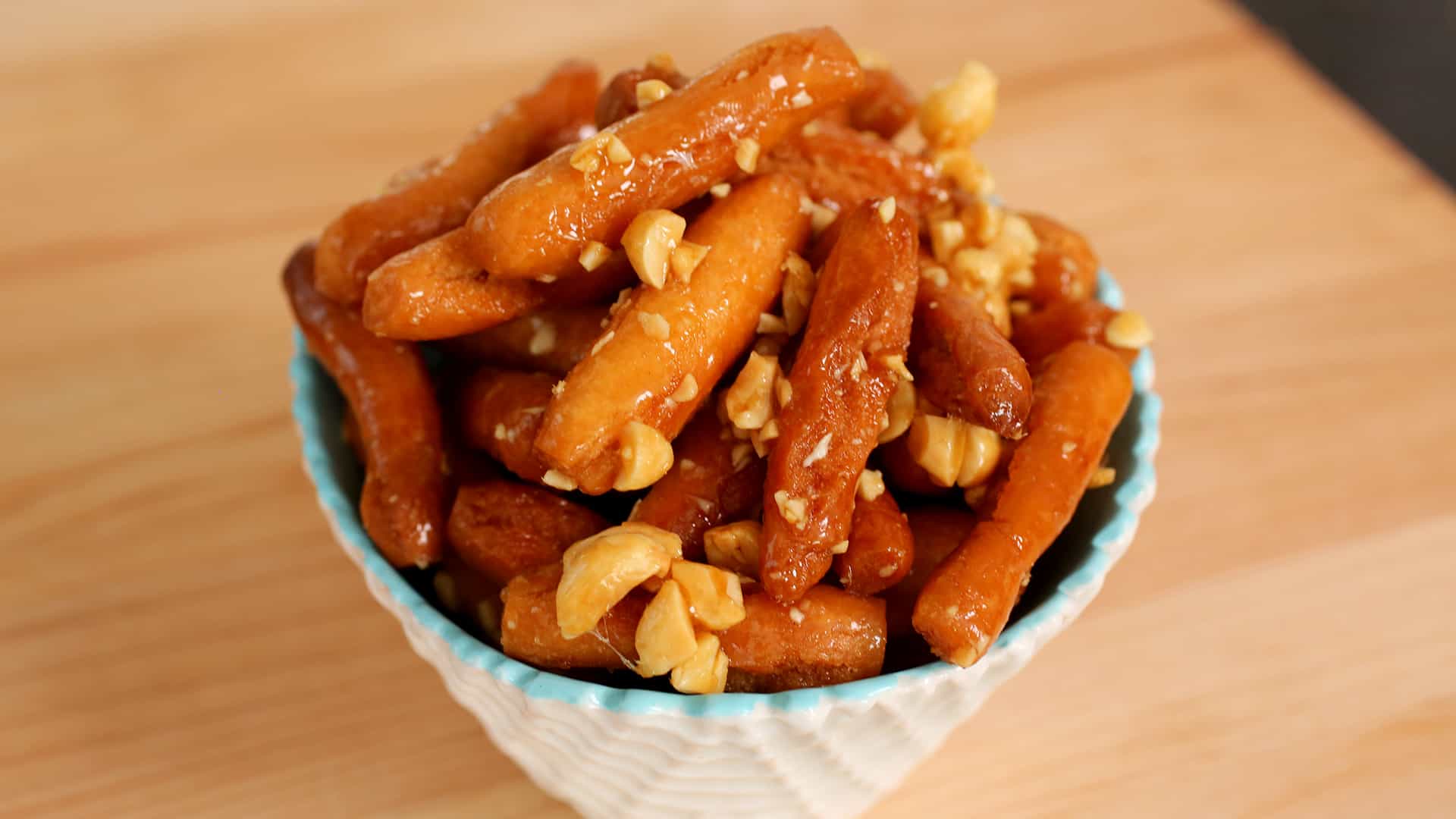
If Choco Pie is the modern comfort snack, Matdongsan is the ancestor. Launched by Haitai in 1975, these crunchy peanut-glazed cookies belong to the same nostalgic tier as 뽀빠이 (Ppobbaeggi, Popeye), 새우깡, and 오징어땅콩 (Ojingeo Ttangkong): mid-1970s Korean snacks that Boomer, Gen X, and even millennial Koreans grew up eating from packaging that has barely changed. Haitai reports 2.8 billion packs of Matdongsan sold since 1975, which works out to roughly 55 packs per Korean citizen, ever.
Here is the industry detail most people do not know: Haitai claims their Matdongsan factory plays traditional Korean music while the dough ferments for 20 hours. Whether that changes the taste or is just great PR, it captures why nostalgia snacks in Korea are packaged as heritage products, not "old" products. Newtro (new + retro) is a real marketing category in Korean confectionery, and brands lean into decades-old formulas as an authenticity flex.
When Korean-American home cook Maangchi recreates Matdongsan from scratch for her YouTube audience, the comments fill with "my halmoni bought this every week" and "I have not eaten one since 1998." That is what nostalgia snacks do. They collapse time. Pair one with a hot barley tea and a rerun of "Reply 1988" and the effect is close to time travel.
The 감성 Marketing Behind It All
Here is the thing Western food brands still miss about Korean snack culture. In the West, snacks are usually sold on function (protein, low carb) or fun (limited-edition Doritos). In Korea, the strongest lever is 감성 (gamseong), which loosely translates as "emotional atmosphere" or "the mood you inhabit." Ads for 초코파이 do not talk about cocoa content. They show a mother sending a Choco Pie to her son on his first day of military service, and 30 million Korean adults recognize themselves in that image.
That is why Korean snack subscription boxes (SnackFever, Bokksu, Daebak) consistently outperform generic international snack boxes. They are not shipping calories. They are shipping the feeling of a Seoul convenience store run at midnight, translated for a global audience. Mood-based curation is not a gimmick abroad because it was never a gimmick at home.
So next time you catch yourself in a specific mood, try the Korean answer. It is more curated than you think.
Explore Korean Snacks with Daebak
Love Korean food? Match your mood every month with authentic Korean 과자 and ramen delivered straight to your door via the SnackFever Box by Daebak, curated from Seoul convenience store shelves to your feelings.


