


Table of Contents
Edible flowers in Korean cuisine are not an Instagram trend that a cafe in Seongsu invented last summer. The Korean pantry has been eating and drinking flowers since at least the Goryeo dynasty, and if you have spent any real time inside the Hallyu food economy, you already know that hwajeon (화전), 진달래주 (jindallae-ju, azalea rice wine), and 국화차 (gukhwacha, chrysanthemum tea) are the three anchors that everything else, from buttercream flower cakes to KTO's gastronomic tourism push, is quietly built on top of. I have been working in and around K-content and Korean food marketing for over a decade, and this is the piece I wish more foreign readers had before they wrote off pretty-plated 화전 as "just a rice cake with a petal on it."

Hwajeon (화전) and Why 삼짇날 Still Matters
Hwajeon is a soft, chewy glutinous-rice disc pan-fried in a shallow slick of sesame or vegetable oil, with fresh petals pressed onto the top so they seal into the surface as it cooks. Azalea in spring, roses in summer, chrysanthemums in autumn, that is the seasonal wheel, and the honey drizzle at the end is what turns it from "peasant snack" into dessert. Here is the part most food blogs skip: hwajeon is culturally locked to 삼짇날 (Samjinnal), the third day of the third lunar month, when Joseon-era women would carry a pan and a bag of glutinous rice flour up into the mountains, pick wild 진달래 azalea petals on the spot, and cook the whole thing outdoors as a picnic ritual called 화전놀이 (hwajeon-nori, literally "flower cake play"). That is where the appeal lives. It is not just a pretty pancake, it is one of the very few female-led leisure rituals in the Joseon calendar, a rare permission slip to leave the courtyard and be loud in the mountains after a long winter. Modern K-food creators who film hwajeon for Instagram without mentioning the 놀이 part are, honestly, missing 80 percent of the story.

진달래 (Jindallae) and Dugyeonju, the Azalea Wine You Cannot Fake
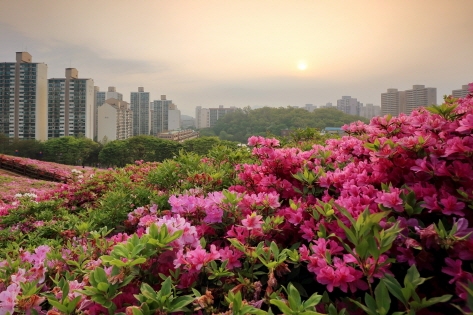
The 진달래 (Korean azalea, Rhododendron mucronulatum) is genuinely edible, which puts Korea in a very small club globally. Most rhododendron species are toxic. Jindallae is the exception, and Koreans built two full categories around that fact: hwajeon as the food side, and 두견주 (dugyeonju), Myeoncheon's azalea rice wine, as the drinking side. Dugyeonju is not a "kimchi jjigae of alcohols," it is Important Intangible Cultural Heritage No. 86-2, a designation the Korean government hands out sparingly. Only three regional liquors, Gyeongju Gyodong Beopju, Munbaeju, and Myeoncheon Dugyeonju, hold that specific tier. The wine itself is a light-yellow cheongju around 18 percent ABV, made by mixing dried azalea petals with glutinous rice and malt (nuruk), then slow-fermenting at low temperature so the flower aroma survives instead of burning off. The appeal, if you have actually tasted it, is that it does not taste "floral" in the perfume sense. It tastes like a clean rice wine with a memory of azalea, which is a much harder thing to engineer, and it is why the export tier of Korean traditional liquor keeps circling back to dugyeonju every time the Ministry of Culture pushes a new food-tourism campaign.
국화차 (Gukhwacha): The Hanbang Tea Foreigners Still Underrate
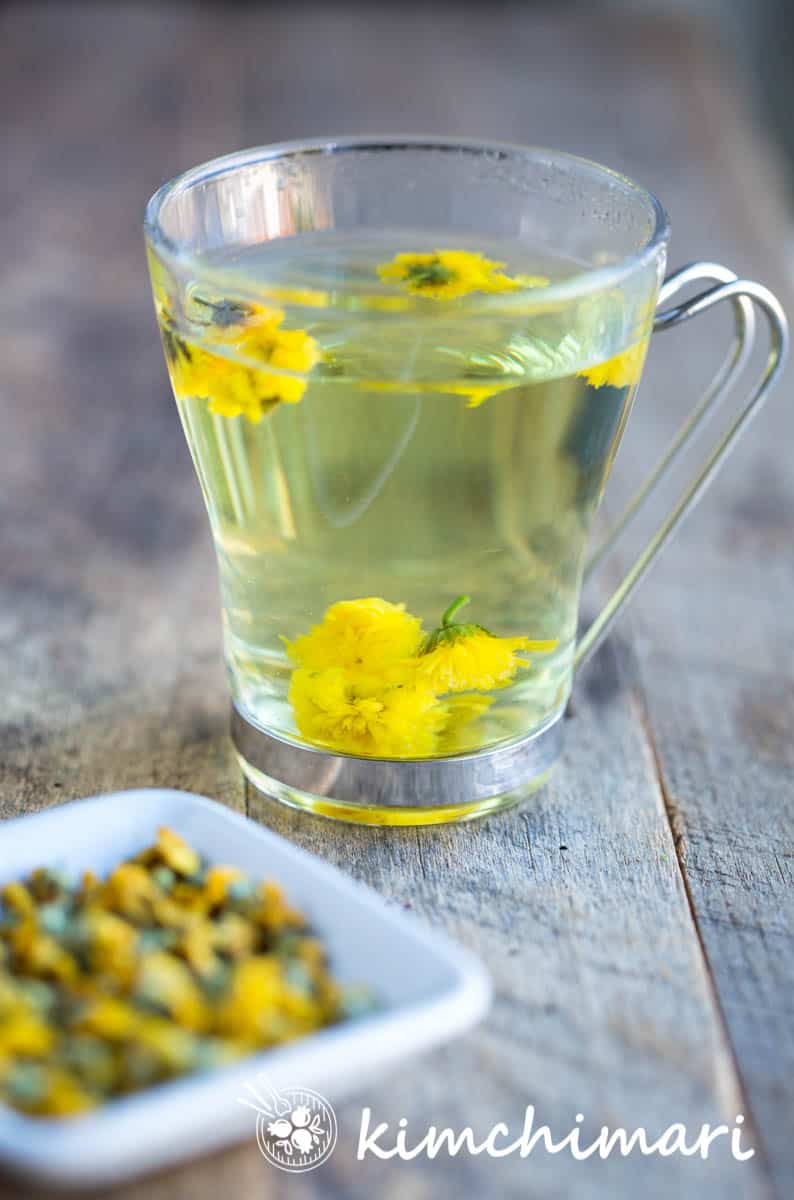
Gukhwacha, chrysanthemum tea, is the third anchor and probably the most exportable of the three. Made from Indian chrysanthemum flowers picked just before they fully open, then blanched, dried on hanji paper, and steeped whole so the buds bloom in the cup, it steeps to a golden hue that lands somewhere between chamomile and jasmine but is honestly its own thing. Korean 한방 (hanbang, traditional medicine) has used it for centuries as a "cooling" herb, a term that maps roughly onto anti-inflammatory in modern language, and doctors in the Joseon court prescribed it for headaches, blurry vision, and mild fever. Here is the industry angle you rarely see written down: gukhwacha is currently sitting inside what Korean tea buyers call the "Golden Age category," meaning teas that halmaennial (grandma + millennial) drinkers are re-adopting after fifteen years of coffee dominance. Retail data from convenience-store PB lines confirms it. Whenever Chosun-era wellness aesthetics get another drama moment, whether it is Under the Queen's Umbrella or a variety show set in Bukchon, chrysanthemum tea sales tick up in the following quarter. That is not coincidence, that is placement working exactly as intended.
From 화전 to Buttercream: How Instagram Ate the Category
The modern floral dessert wave in Seoul, buttercream flower cakes at Lucia, edible-petal lattes at Lovin' Her, dried-flower plating at Arriate in Hongdae, is not a break from tradition. It is a direct commercial extension of the 화전 aesthetic, just re-plated for a phone camera. Seoul cake designers like Hyungyun Choi built entire international followings by piping buttercream peonies and roses onto short, dense Korean-style rice-cream cakes, and the through-line back to 꽃산병 (kkot-sanbyeong, the moulded rice cake with imprinted flower patterns that Joseon families made for weddings) is right there if you know what to look for. What people actually love about Korean floral desserts, in my experience running food marketing decks, is the restraint. Korean cake culture uses fresh cream instead of the heavy American buttercream, and the sweetness stays low, so the flower on top reads as a design element rather than sugar theater. That is a real product-thinking difference, and it is the reason the aesthetic scaled globally instead of staying a local curiosity.
KTO's Gastronomic Tourism Play and the Premium Tier
The Korea Tourism Organization is now leaning hard into food as the reason to fly in. Their 2024 to 2025 "K-Local Food Trip: 33 Must-Try Destinations" campaign, launched at Pyongyangok in Seodaemun with a Michelin-starred Italian chef and a British YouTuber on the promo team, reads on paper like a jjimdak-and-soju roadshow. But the strategic subtext is different. About 60 percent of international tourists in 2023 and 2024 listed food or gourmet tours as their primary reason for coming to Korea, which is why the KTO is quietly building a premium tier on top of the mass campaign, and edible-flower experiences (화전 workshops in hanok villages, dugyeonju tastings tied to the Amisan azalea trail, hanbang tea flights in Insadong) sit squarely inside that premium slot. Flowers-on-a-plate photograph well, they justify a higher price point, and they let regional destinations like Dangjin and Andong get a share of tourism spend that would otherwise flow entirely to Seoul. If you are watching how K-content and K-food commercially converge, this is where the next five years of margin lives.

Have You Tried Any of These?
If you are in Seoul in spring, chase 화전 in a hanok cafe in Bukchon or Seongbuk. If you are chasing something rarer, order Myeoncheon dugyeonju online through a licensed Korean traditional-liquor retailer, or plan a Dangjin day trip in April when Amisan is pink. And gukhwacha is the easy on-ramp, any Korean grocery abroad will stock a decent bag of dried buds, and one flower per cup is all you need. Tell us in the comments which flower food or drink you would try first, and if you have already tasted any of these, drop the story.
Explore Korean Snacks with Daebak
Love Korean food? Get authentic Korean snacks and ramen delivered straight to your door with the SnackFever Box by Daebak.


