

Table of Contents
If Paris pours its summer into the Seine and New York piles it onto Central Park lawns, Seoul does it along the Hangang (한강, Han River), and specifically inside the eleven riverfront parks the city runs under the umbrella brand of Hangang Park (한강공원). I have spent more than a decade watching Korean tourism campaigns swing between K-pop concerts, palace hanbok photo ops, and food street tours, and one pattern is now obvious: since 2020, the domestic tourism story has quietly reorganized itself around the Hangang. The pandemic pushed everyone outdoors, TikTok "Seoul summer" reels amplified that shift, and the Seoul Metropolitan Government (서울시) responded by pouring roughly 50 billion won a year into the Hangang program budget. The Hangang Summer Festival (한강몽땅 여름축제) is where all that investment shows up as a public product.
Why the Hangang Summer Festival Became Seoul's Signature Event
The festival started in 2013 as a semi-scattered lineup of water fights, film screenings, and marching band performances. In its early years it drew about 3 to 5 million visitors across the summer window. By the late 2010s the city government was reporting more than 10 million people per season, and post-pandemic figures have climbed toward 12 million. That number is not just about summer heat. It is about a specific product-market fit: Seoul is a dense city with limited large green spaces, the average apartment does not have a yard, and international visitors want an "outside daily life" scene that palace tours cannot deliver. The Hangang parks are the answer, and the summer festival is the moment when the city puts its full programming stack on them.
The industry read is that Hangang programming is not directly profitable. The city runs most events at zero or near-zero admission. Where it does pay off is the tourism halo: hotel bookings in Yeouido (여의도), Yongsan, and Gangnam during festival weekends run notably tighter, and convenience store operators GS25 and CU quietly report their highest single-day sales along Hangang park perimeters during the summer window. That halo is why the Seoul Metropolitan Government treats the festival as infrastructure rather than event marketing.
Water Sports and Leisure: Yeouido to Ttukseom Is the Playground
The first thing most visitors want is water. The Hangang has been rehabilitated over four decades from an industrial channel into a river clean enough for the mayor to publicly swim in, and that shift is what unlocked the current sports program. Ttukseom (뚝섬) Hangang Park is where the serious water sports live: stand-up paddleboarding (SUP), kayaking, windsurfing, and wakeboarding are all bookable through the city portal, with sessions running roughly 10,000 to 30,000 won per hour. Yeouido gets the bigger crowds because of subway access, but Ttukseom is where you go if you actually want to move.

The appeal here is not exotic scenery. The Hangang is wide, gray-blue, and framed by residential apartments. What sells the sessions is accessibility. In most global cities, a beginner SUP or kayak lesson requires a coastal trip, gear rental fees, and a full-day plan. In Seoul you can take Subway Line 2 to Ttukseom, walk ten minutes, and be on the water inside an hour. That single logistical fact is the reason first-time paddlers dominate the sign-up lists. The city knows this and prices the programs at the entry level: two-hour SUP is around 20,000 won, kayak singles around 15,000, and yacht group sessions from 28,000. Nothing here is designed to make money on the fee. It is designed to convert a curious visitor into a returning one.
Beyond the sports zone, the festival runs river cruises from Yeouido as its higher-end product. The Special Hangang Picnic Cruise (Yeouido to Nodeulseom) runs roughly between 11:30 in the morning and 4:40 in the afternoon, with round-trip tickets in the mid-teens to low-20s in won. In the evening the same waterway hosts the E-Land Music Cruise and Fireworks Cruise, which have made regular appearances in K-drama scenes (What's Wrong with Secretary Kim and Lovely Runner both feature Hangang cruise sequences). That drama footprint is not accidental. Seoul's tourism agency actively supports production placements on the river because a five-second cruise cutaway in a globally streamed K-drama is worth more than a full-year print ad campaign.
Bamdokkaebi Night Market and Yeouido After Dark
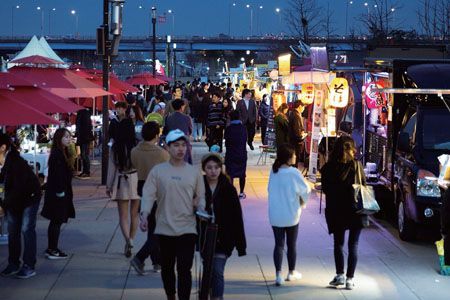
The Bamdokkaebi Yasijang (밤도깨비 야시장, Night Goblin Night Market) is worth its own entry. The city launched the concept in 2015, timed for the warmer months only, with the tagline that the market "appears at night and disappears by dawn." Peak weekend nights at Yeouido pull well over 100,000 visitors. In a 2016 Seoul Metropolitan Government survey of foreign residents asking which city policy they liked best, the Bamdokkaebi markets took first place, beating the civic complaint portal and the Seoul Station 7017 skygarden project. That result is telling. What tourists actually want in Seoul is not another palace to photograph; it is a curated street-food and craft market with English-friendly signage.
The Yeouido edition is the largest, with around 40 food trucks and 50 street vendors, running roughly 6 PM to 11 PM on Fridays and Saturdays. The theme leans international rather than strictly Korean (Vietnamese banh mi, Turkish kebab, Mexican churros all show up), which was a deliberate positioning move by the Seoul Tourism Organization. The reasoning was that visitors already have easy access to Korean food across Seoul; the market's value is compressing global street food into a Hangang-view picnic setting they cannot get anywhere else. Sales-per-truck data that leaked from the pilot phase reportedly ran three to four times higher than a comparable weekday Seoul food-truck spot, which is why the format keeps expanding to Banpo, Cheonggye, and DDP.
The Banpo Rainbow Fountain: Seoul's Free Nightly Show

Banpo Bridge (반포대교) is a double-decked road bridge with the pedestrian Jamsu Bridge running underneath, and since 2009 it has been fitted with 380 water jets that spray choreographed arcs of colored water into the Hangang. Guinness certified it as the world's longest bridge fountain. In peak summer (July and August), the Moonlight Rainbow Fountain (달빛무지개분수) show runs six times daily at noon and then every half hour from 7:30 PM to 9:30 PM, twenty minutes per set. Off-season the schedule drops to five shows.
The fountain is set to a mix of Korean and international pop, the choreography shifts each summer, and it is genuinely free. That last point is the strategic move. Seoul is a city where free public spectacles are surprisingly rare (most museum specials and light shows require paid tickets), so a nightly light-and-water show on the world-record fountain becomes an easy anchor for a Hangang evening. The picnic move is: pick up chicken and beer from a nearby convenience store, spread a mat on the Banpo lawn, watch the 8 PM show, then walk over to Sebitseom (세빛섬, the artificial island lit up in three colors) for coffee. That sequence is arguably the single most recommended Seoul summer evening in every English-language guide right now, and it costs about 25,000 won total.
Concerts, Films, and Silent Discos Under the Bridge
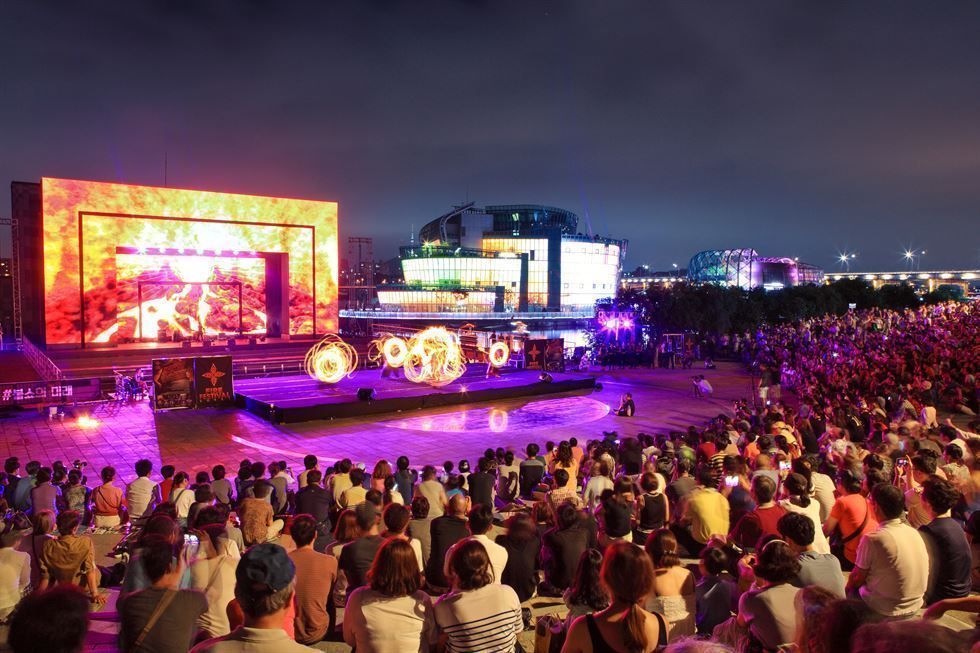
Beyond fireworks and water, the festival runs a densely programmed cultural lineup that changes each year but broadly falls into three tracks. The first is music. The Hangang Summer Music Picnic sets up a stage against the sunset with jazz, indie, and popera acts, usually free. The Hangang Jazz Festival slots in on selected weekends at Banpo with Jarasum Jazz sending a spinoff lineup. The K-pop label side has been circling this space too. In 2025 the Seocho District Office and the Seoul Metropolitan Government partnered with HYBE on a Seventeen anniversary concert on Jamsu Bridge, closing the bridge to cars for a full evening. That level of label-city coordination signals where the format is heading: expect more headline K-pop nights on Hangang bridges in coming summers.
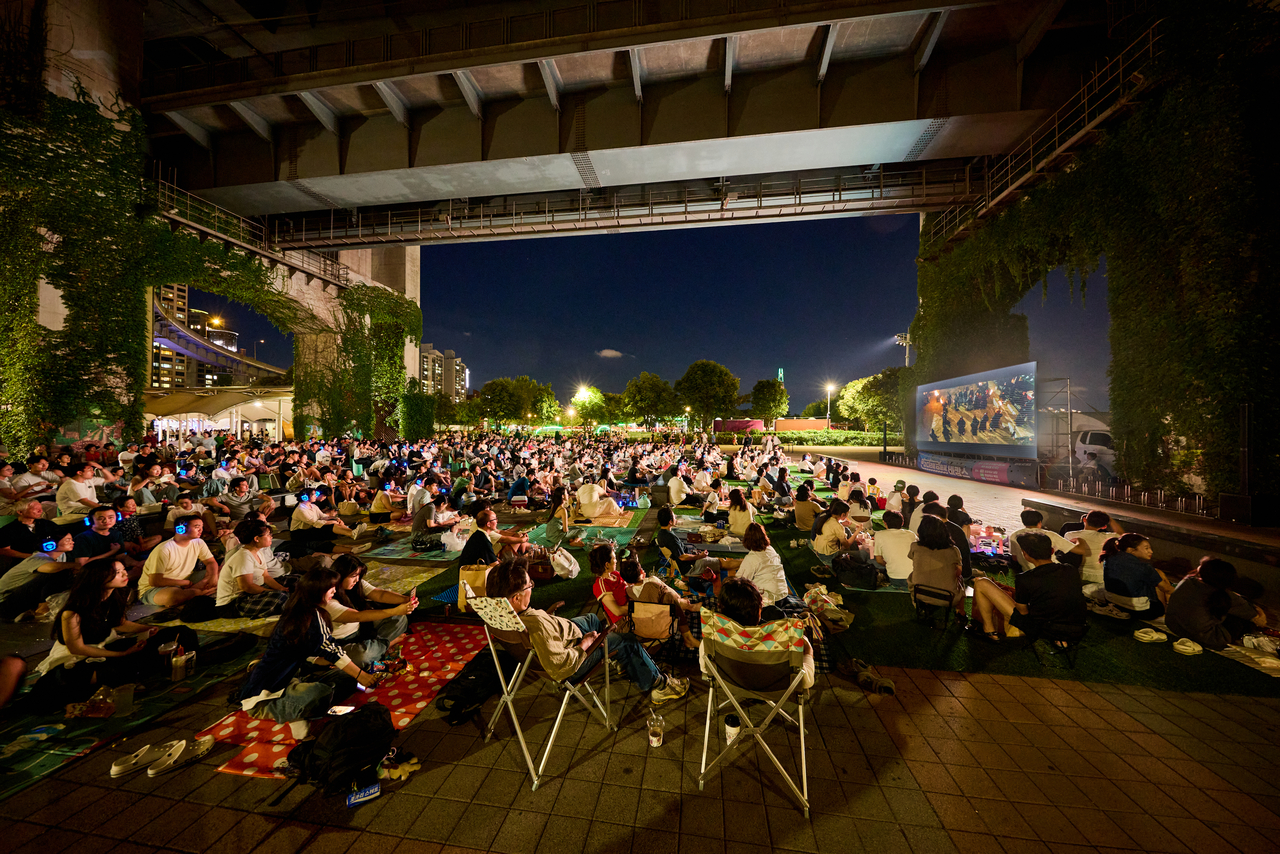
The second track is film. The Hangang Under-the-Bridge Film Festival runs classic Korean cinema and contemporary hits on Saturday evenings from 8 to 10 PM at Cheonho, Ttukseom, Yeouido, and Mangwon parks. The bridge underpasses solve two practical problems: they cut the summer heat by a few degrees thanks to concrete mass, and they block the ambient light bounce off the river that would otherwise wash out a projected image. The third track is more experimental: the Silent Disco Party (Mute Seoul) hands out wireless headphones so hundreds of people can dance in what looks like silence to any passer-by. Tickets are around 5,000 won at booking. The format is deliberately Instagrammable, which is exactly why the city keeps funding it: a single viral silent-disco clip does more Seoul tourism marketing than a paid campaign.
Chimaek, Convenience Stores, and the Real Seoul Picnic Culture
All the programming above is the packaged version. The unprogrammed version, and arguably the more Korean version, is the chimaek (치맥) picnic. Chimaek is the compound of chicken and maekju (맥주, beer), and it is the default order for a Hangang summer evening. Every Hangang park has convenience stores at the entrance, and every convenience store in Korea sells chilled beer, banchan, ramyeon, and increasingly bookable pizza and fried chicken bundles. The chicken chains (BBQ, BHC, Kyochon, Nene) actually run designated Hangang delivery zones with GPS coordinate handoffs, which locals treat as normal but foreign visitors find delightfully absurd on first encounter.
The appeal of a Hangang chimaek picnic is not really the food. It is the low-friction sociability. You can arrive alone, sit on a bench, order chicken to a park coordinate, and be halfway through a beer within twenty minutes of walking off the subway. The overall vibe is calmer and safer than most global riverside picnic scenes, which is a large part of why solo travelers keep filing "Seoul is so easy" reactions on TikTok. The city knows this, which is why it keeps Hangang park operating hours long, keeps public toilets clean, and only lightly enforces alcohol rules in designated zones.
Practical Notes: When and Where to Go
The festival's core window each year runs from late July into mid-August, roughly a three-week block. The eleven main parks in scope are Yeouido, Ttukseom, Banpo, Jamwon, Jamsil, Gwangnaru (광나루), Mangwon (망원), Nanji, Yanghwa, Ichon, and Gangseo. Yeouido is the default first stop for tourists thanks to Subway Lines 5 and 9 access, plus the Yeouinaru station riverside exit that lands you directly at Mulbit Plaza. Banpo is the pick for the fountain and the fireworks nights. Ttukseom is the water sports pick. Nanji has the biggest camping infrastructure. Mangwon has the youngest, most Hongdae-adjacent crowd.
Practical tips that guides usually miss: bring your own picnic mat if you can (rentals sell out on peak Saturdays), download the KakaoTaxi and Baemin (배민, food delivery) apps before arrival because they run in English and are the fastest way to fill a picnic, and check the fountain schedule day-of because heavy rain kills the show and Seoul summers are increasingly monsoon-heavy. If you want a genuinely quieter picnic, Nodeul Island (노들섬) between Yongsan and Dongjak trades subway convenience for open sightlines and a fraction of the crowd density.
Why the Hangang Summer Festival Deserves a Slot on Any Seoul Itinerary
The Hangang Summer Festival is not a single event you buy a ticket for. It is a curated overlay on a river that already does most of the work. What the Seoul Metropolitan Government adds is scheduling density: on any given festival weekend, there is a jazz set at 6 PM, a Bamdokkaebi market from 6 to 11, a rainbow fountain show at 8, a bridge cinema at 8 to 10, and a silent disco at 9. Most of it is free. Most of it is walking distance from a subway exit. That kind of dense free evening programming is genuinely hard to find in most global capitals, and it is the specific reason the Hangang has quietly taken over the "what did you do in Seoul" answer for international visitors post-2020.
If you have a Seoul summer trip on the calendar, plan at least one full Hangang evening. Bring a picnic mat, budget for chicken and beer, arrive by 6 PM, and let the festival programming pull you across two parks. It is, more than any palace tour or K-drama location run, the Seoul experience the locals actually keep for themselves.
Want to keep that Hangang summer feeling going after you head home? The Daebak Box is our monthly subscription of hand-picked Korean snacks, K-beauty, K-pop and lifestyle finds, curated by the same team that writes these guides. It is the closest you can get to a Hangang picnic haul without booking the flight.


