


Table of Contents
Let me start with the read that most K-pop coverage misses. When a Korean American kid moves to Seoul at fifteen, gets trained under a mid-tier label, debuts into a Japan-focused group, walks away seven years later, and then ends up on a Broadway stage singing Korean, he is not just an interesting career arc. He is a template. Kevin Woo (우성현) has been running that template in real time for almost two decades, and the reason he keeps showing up in conversations about Rose, John Park, Eric Nam, and now KATSEYE is that he was doing the 재미교포 (Korean American) bridge work before the industry had a name for it. I have watched this side of Hallyu for over a decade, and the interviews Kevin gives about K-pop, K-snacks, and Asian American representation are more than nostalgia. They are a working blueprint for how the industry got here.

Who Kevin Woo actually is, and why the industry keeps calling him back
The short bio is simple. Born in San Francisco in 1991 to Korean parents, he grew up bilingual, moved to Seoul at fifteen to train, and debuted as the lead vocalist of the boy group 유키스 (U-KISS) in August 2008 under NH Media. The longer read is the interesting part. Kevin left home mid-adolescence for an industry that in 2006 to 2008 was still figuring out what to do with 재미교포 trainees. Second-generation groups (U-KISS, MBLAQ, SHINee, 2PM) were being built as pop-friendly, dance-heavy products for a Korean and Japanese domestic market, and the assumption was that the American passport was a career footnote. Kevin proved the opposite over the next fifteen years. The American upbringing became the whole story.
His run through K-pop has been unusual in its consistency. U-KISS from 2008 to 2017. Japanese-language hit run with a sold-out Nippon Budokan concert in September 2013 that Soompi covered as a career-defining moment for the group. Departure at contract expiration in 2017 (Allkpop reported the exit as amicable, not the messy label split the fandom feared). Solo transition. K-pop TV hosting on After School Club, the KBS World show that became the entry point for global fans learning K-pop names. Musicals in Seoul. Broadway. Anderson .Paak's directorial debut film in 2026. A Saja Boys vocal role in the smash animated hit KPop Demon Hunters. UTA signing. That is not the arc of a former idol coasting on nostalgia. That is a working artist who chose bridge work as a career category before the industry knew it needed one.
The U-KISS years: NH Media, the Japan pivot, and what a mid-tier label bought

NH Media (later restructured as NHEO Entertainment) was never HYBE or SM. It was a mid-tier label with a specific business plan: build a boy group that would work in Korea, and then aggressively monetize Japan. U-KISS was the poster child for that model. Japanese-language releases through AVEX Trax, tour-heavy Japan schedules, TV appearances on Music Station, and a fandom (KISSme) that skewed hard toward Osaka and Tokyo more than Seoul in ticket-sales terms. Their September 2013 Nippon Budokan concert was the payoff. Fourteen thousand seats sold out, part of a national tour that moved north of eighty thousand tickets. Second-generation Japan strategy done right.
The appeal point most Western fans get wrong: U-KISS was not chasing Korean chart dominance. NH Media had done the math. A Korean No. 1 was worth a small windowed spike. A Japanese arena run was worth eighteen months of stable revenue and merchandise. That is why Kevin (fluent English, functional Japanese from the years touring, native Korean) was such an anchor asset. He could handle the TV variety segments, the Japanese fan meetings (팬미팅), and the English press when U-KISS did their 2013 US tour. Multilingual utility is not glamorous. It is what kept mid-tier groups alive in the pre-streaming era. Kevin was the useful one, and his interviews from that era consistently downplay it in a way that reads as classic Korean humility but is also, industry-side, undervaluing his own leverage.
2017: the departure that looked like an ending and was actually the pivot
When Kevin's contract with NHEO expired in March 2017, Allkpop framed the announcement as a mutual, amicable exit. Inside K-pop that language usually means one of two things. Either the artist walked because the next contract terms were bad, or the label walked because the group was cost-heavy relative to declining Korean chart returns. Both were probably true for U-KISS in 2017. Second-generation groups were being aged out by third-gen dominance (BTS, EXO, Twice, GOT7), the domestic market for 20-plus-year-old male idols was thinning, and Japan was starting to shift toward its own local groups. The math no longer justified the retainer.
What Kevin did next is the part that separated him from most contract-expiry exits. He did not chase another Korean label. He moved his career center of gravity back to the United States, launched a US-focused solo effort with the 2018 single "Ride Along," did the KCON LA and New York circuit as a solo act, and started building the Asian American media presence (US TV debut on Good Day LA in 2019) that most K-pop alumni never bother with because it does not pay in Korean-market terms. The 2019 Good Day LA performance of "Over You," which Allkpop covered in detail, was one of the first times a former Korean idol had done a mainstream US morning-show music segment as himself, not as part of a group promo. Small optical event. Big industry signal.
KPOP the Musical: Broadway 2022, and why the short run still mattered

Kevin joined KPOP the Musical as Jun Hyuk of the fictional boy group F8, alongside f(x)'s Luna, Miss A's Min, and SPICA's Bohyung. Previews started at Circle in the Square Theatre on October 13, 2022, official opening November 20, and the show closed in December 2022 after a much-shorter-than-planned run. Casual dismissal of the show as a flop misses what it actually did. The Korea Times, in its 2024 retrospective on Korean Broadway talent, called out KPOP as the first Broadway musical about Korean culture, with co-composer Helen Park becoming the first Asian woman nominated for Best Original Score. Short run, structural achievement.
The appeal point for Kevin was specific and Kevin has said it in multiple interviews. Broadway was a lifelong dream, and being the vehicle for AAPI representation on a first-of-its-kind musical carried weight independent of the box office. Koreaboo covered his announcement post carefully, quoting his emphasis on representing the AAPI community at "a time like this," which anyone who follows the AAPI-hate-crime discourse of 2021 and 2022 will read as directly connected. Industry read: Broadway did not need to be a hit for Kevin's career. It needed to be the credibility marker that pivoted him from "former K-pop idol" to "Korean American performer with multi-market credentials." It worked. Anderson .Paak cast him in K-Pops (2026 release) partly on that Broadway credit. UTA signed him in October 2025 partly on that credit.
The K-snack nostalgia that keeps showing up in his interviews

Kevin talks about K-snacks in interviews the way American musicians talk about diner food. It is muscle memory, not marketing. His most-repeated childhood snack references (초코파이, the Orion original from 1974, and 새우깡, the Nongshim shrimp cracker from 1971) hit a specific 재미교포 identity note. These were the two snacks Korean immigrant parents kept in the pantry not because they were the tastiest available options in San Francisco or Los Angeles, but because they were tangible connective tissue back to Korea. 초코파이 for after-dinner comfort. 새우깡 for the shareable moment when a Korean kid brings snacks to a mixed-friends hangout and has to decide whether to explain the flavor to their non-Korean friends or just let them figure it out.
Kevin has told this exact story in multiple interviews (Notes on K-pop, PAPER Magazine, Bunnipop). The specific memory he keeps returning to is bringing 새우깡 to school in California and watching his friends react to the umami-forward shrimp seasoning. It is a small vignette that carries the whole 재미교포 experience in miniature: pride, slight embarrassment, curiosity from friends, the eventual conversion when one of them decides they actually love it. That is why K-snack coverage in his interviews reads warmly instead of performatively. He is not selling nostalgia. He is describing his actual childhood. In his 2019 Daebak interview he recommended Shin Ramyun as the entry-level Korean food for anyone new to it, framed exactly as most Koreans would frame it: not the spiciest, not the fanciest, just the default that everyone in the diaspora keeps in the pantry.
Asian American representation, without the buzzword veneer
Kevin's public commentary on Asian American representation predates the 2020-plus surge of media attention. He has been on the record since 2019 (Good Day LA, KCON panels) about wanting to be a bridge between K-pop and mainstream US pop, and the language he uses in those interviews is notably practical. Not "representation matters" as slogan, but "there was no template for me at fifteen, and I want the next kid to have one." The distinction is real. Kevin talks about the mentorship logic, not the moral logic. What that translates to in industry terms: he actively takes meetings with younger US-based Korean and Asian American artists, has done panel and podcast conversations with HYBE-Geffen affiliated talent, and has been a low-key connector between the Korean K-pop training system and the Los Angeles pop industry ecosystem.
The appeal point that fans have picked up on: Kevin is one of the very few Korean American K-pop alumni who never fully repatriated. He kept a foot in both markets. That is why his commentary on KATSEYE, the HYBE and Geffen Records global girl group that debuted in 2024, carries weight. He is not a Korean-market executive spinning talking points. He is a working Korean American artist who ran the same bridge experiment (K-pop training, US-market execution) on solo scale a decade earlier. What KATSEYE is doing at group scale in 2024 to 2026, Kevin was quietly building the case for from 2017 onward.
The pioneer template: what Rose, John Park, Eric Nam, and now KATSEYE inherited
Look at the trajectories that came after Kevin's 2008 debut and 2017 solo pivot, and the pattern is clear. Rose (born New Zealand, raised Australia, YG training, YG solo, Saint Laurent ambassador, English-language solo hit "APT." with Bruno Mars) is the highest-profile version of the same bridge pattern. John Park (Korean American, born Chicago, Superstar K2 finalist, moved to Seoul for a career) is another. Eric Nam (born Atlanta, Korean American, K-pop TV host turned solo artist and podcast owner) is a third. Each one figured out the same thing Kevin figured out first. You can be a Korean-market credentialed artist and a US-market credentialed artist at the same time, if you are willing to work the seams between the two industries instead of picking one.
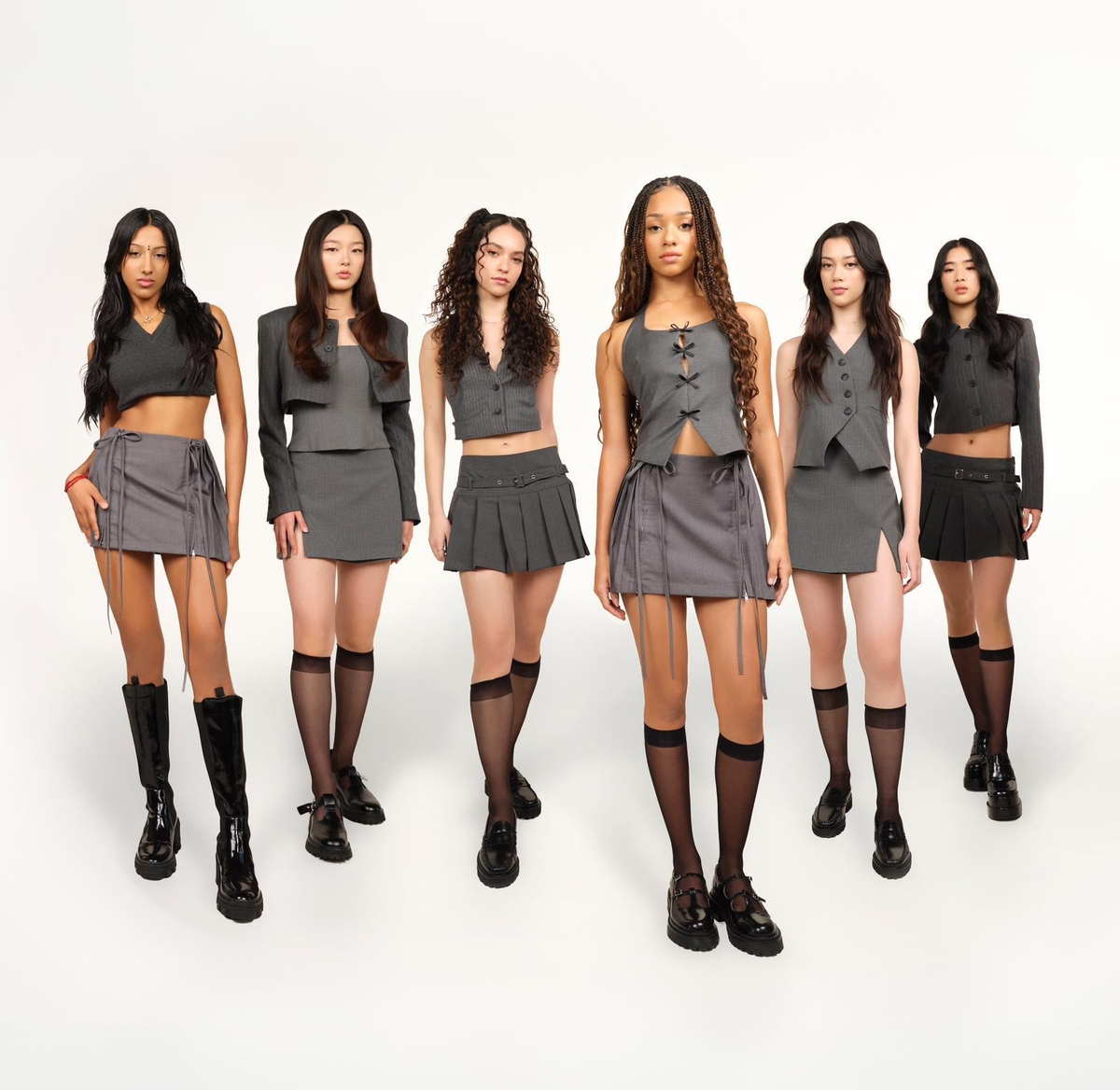
KATSEYE is the group-scale version of the same play. Six members from six different national contexts (US, Switzerland, Philippines, South Korea), HYBE's Korean training system paired with Geffen's American distribution muscle, English-language debut targeting the US market with K-pop production values. The Korea Herald covered the debut as a first-of-its-kind experiment. From an industry standpoint it was not first-of-its-kind. It was the industrial-scale version of what Kevin Woo, Rose, Eric Nam, and their peers had already validated at solo scale. The commercial thesis was: Korean training system plus non-Korean market execution plus multilingual talent equals globally scalable pop product. Kevin's fifteen-year career was one of the longest-running proof points for that thesis before HYBE and Geffen decided to formalize it as a corporate strategy.
Where Kevin sits in 2026: the second life that is louder than the first
The 2025 to 2026 stretch has been Kevin's most visible run since U-KISS peak. The Saja Boys vocal role in KPop Demon Hunters (the animated Netflix hit, where Kevin sang for Mystery Saja) put his voice in front of a fandom the size of the entire third-gen K-pop audience at once. UTA signing in October 2025 gave him access to Beverly Hills-tier talent representation with real crossover ambition. Anderson .Paak's K-Pops (January 2026 theatrical release, TIFF and Tribeca festival runs earlier) is a Netflix-adjacent film where Kevin plays the rival K-pop idol Kang. The King of Mask Singer appearance on MBC in October 2025 dropped hints of future U-KISS-adjacent activity, which materialized as UX1, the November 2025 unit reunion with Hoon and Kiseop and December concerts in Osaka and Tokyo. He is running four career tracks (solo, unit reunion, film acting, animated film vocal) simultaneously.
The appeal point for long-time fans: Kevin never seems to close doors. He walked away from U-KISS in 2017 and eight years later reunited with two members for a unit that plays exactly the Japan-focused rooms U-KISS used to sell out. He built a solo career and still kept the group loyalty. He pursued Broadway and still kept the K-pop TV work. That "and, not or" career logic is the second half of the Kevin Woo template that the current generation of Korean American K-pop crossover artists is copying. Rose does the YG group work and the American solo work. Eric Nam does K-pop TV and English-language podcasts. The template is: never fully leave, never fully commit to only one market. Kevin was doing that structurally by 2019. The industry caught up.
What the interview arc has always been about, quietly
Read Kevin's interviews across fifteen years and one theme keeps recurring, even in the fluffiest snack-and-Instagram Q&As. He talks about the K-pop industry as something he is inside and outside at the same time. He code-switches between Korean, English, and industry Japanese without flagging it. He references NCT 127 and MONSTA X sell-outs in the US market as evidence of what K-pop can become, without positioning himself as a competitor. He recommends 신라면 (Shin Ramyun) as the gateway food and 초코파이 as the childhood memory, both delivered in the exact tone you would hear from any Korean American cousin at a family dinner. He never performs Korean-ness for a Western audience or American-ness for a Korean audience. That refusal to code-perform in either direction is the reason the interviews age well.
The industry read on Kevin Woo in 2026 is straightforward. He is one of the last active bridge figures from the second-generation K-pop cohort, and he is more visible now than he was during U-KISS's Budokan peak. The K-snack nostalgia, the Asian American representation commentary, and the K-pop career longevity are not three separate stories. They are the same story told three ways. A 재미교포 kid who moved to Seoul at fifteen, spent a decade inside the Korean idol system, walked out at the right moment, and used the next decade to prove the bridge model works. What we are watching now, with KATSEYE and KPop Demon Hunters and Anderson .Paak's K-Pops and every English-language K-pop crossover of 2025 and 2026, is the industrial harvest of what Kevin's solo-scale experiments demonstrated first.
Bring the K-snack Nostalgia Home with Daebak Box
If Kevin's talk about 초코파이 after dinner and 새우깡 shared with friends made you crave the pantry-staple side of Korean culture, the Daebak Box is the same idea, delivered monthly. Curated Korean snacks, lifestyle goods, beauty finds, and pop culture picks shipped straight to your door. It is the low-friction way to keep the K-culture connection Kevin talks about, without booking a Seoul flight.


