


Table of Contents
Ever heard of blood sausage? If not, that is completely all right. In many countries around the world, blood sausage is a beloved staple, and Korea is no exception. Walk through any Korean traditional market, and you will see plump, glossy coils of sundae (순대) steaming behind glass cases, sliced into thick rounds and served with a sprinkle of salt or a side of spicy dipping sauce.
What Exactly Is Sundae?
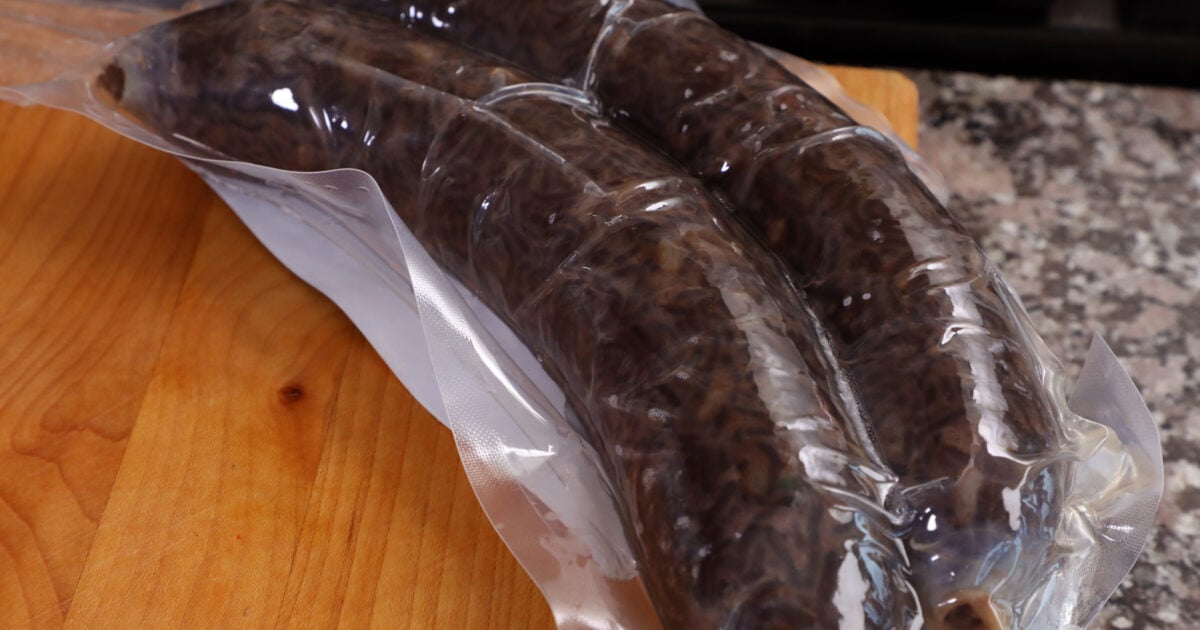
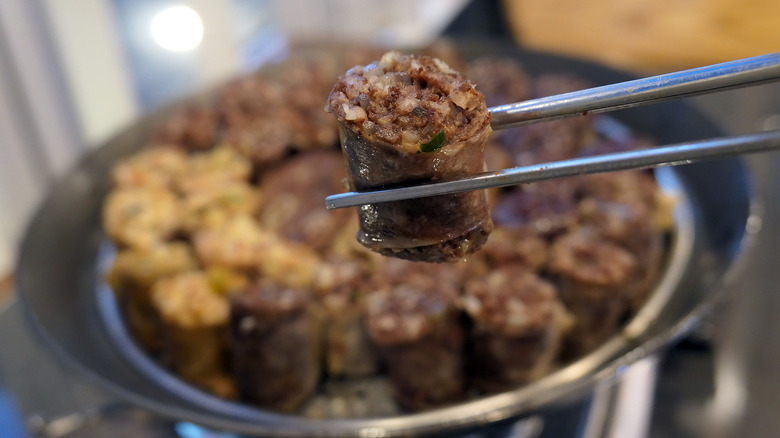
Sundae, sometimes romanized as soondae, is a traditional Korean sausage made by stuffing a natural casing (usually pig or cow intestine) with a savory mixture of pork blood, dangmyeon (sweet potato glass noodles), glutinous rice, and aromatics like scallions, garlic, and crushed perilla seeds. The filling is gently steamed inside the casing until the noodles bloom and the blood sets into a tender, almost custardy texture.
The flavor is rich, mildly savory, and surprisingly delicate. The blood gives sundae a deep earthy taste, while the noodles and rice keep each bite soft and satisfying. Most vendors sell it sliced into coins, served alongside steamed liver, lung, and a heap of coarse salt for dipping.
A Street Food with a Thousand-Year History
Sundae has been around for a very long time. Some food historians trace versions of stuffed-intestine sausages on the Korean peninsula back to the Goryeo era, with written references appearing in 19th-century cookbooks like Gyuhap Chongseo (1809) and Siuijeonseo (late 1800s). The dish reflects an old principle of Korean cooking: waste nothing. When a pig was butchered, every part was used, and the intestines became a vessel for whatever grains, vegetables, and seasonings were on hand.
For centuries sundae was a celebratory food, eaten after large butchering days or during winter. After the Korean War, refugees from the northern regions, especially Hamgyong Province, popularized heartier varieties like Abai sundae in places like Sokcho, while Seoul vendors turned it into the on-the-go snack we know today.
The Most Popular Varieties
Sundae is not a single dish but a whole family of regional and stylistic variations. Here are the ones you are most likely to meet in Korea today.
- Chapssal sundae (찹쌀순대): The most common street-market version. The casing is stuffed mostly with glutinous rice and a generous amount of pork blood, producing chewy, sticky slices.
- Dangmyeon sundae (당면순대): The familiar glass-noodle style sold by countless pojangmacha. It is lighter, springier, and easy to snack on.
- Abai sundae (아바이순대): A Sokcho specialty from Hamgyong-style cuisine. It uses thick pig large intestine and a heartier rice-and-vegetable filling, often sliced into massive coins.
- Baek sundae (백순대): The white sundae. Made without blood, it is paler and milder, and is typically served stir-fried with vegetables.
- Pi sundae (피순대): The classic blood-heavy version from Jeolla Province, where the filling is darker and the flavor more intense. Jeonju has built an entire identity around it.

How Koreans Eat Sundae
The simplest and most iconic way to eat sundae is straight from a market vendor: sliced rounds piled into a paper cup, served with a pinch of salt seasoned with ground perilla or red pepper. But sundae also shows up in heartier dishes that have become staples in their own right.
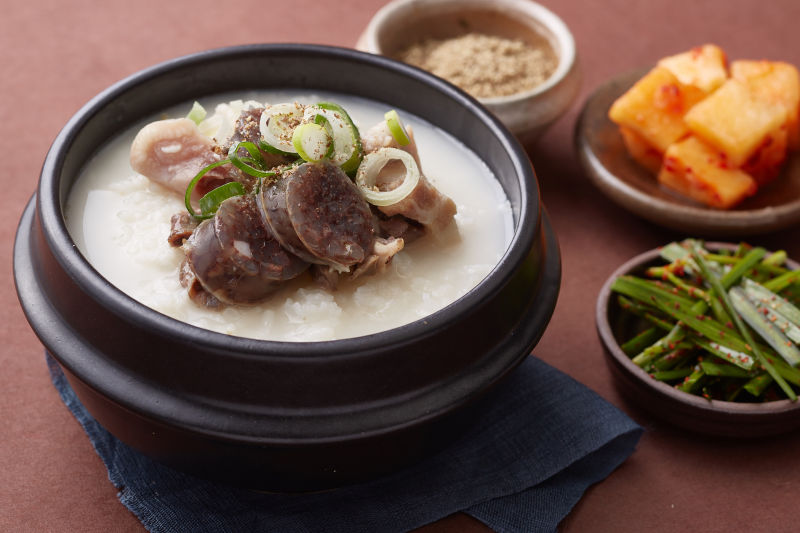
Sundaegukbap (순대국밥) is a steaming bowl of pork-bone broth packed with sundae slices, pork meat, and a scoop of rice. It is the kind of bowl you order after a long night out, when you need something warm and grounding. Sundae bokkeum (순대볶음) takes the sausage in a different direction: stir-fried with cabbage, perilla leaves, chili paste, and tteok, it is fiery, sweet, and chewy all at once.

Where to Try Sundae in Korea
If you want to taste the full range of Korean blood sausage, plan a trip to Sillim Sundae Town in southern Seoul. Locals call it the unofficial sundae capital of the country. A few blocks of narrow alleys are lined with restaurants serving sundae in every imaginable form: gukbap, bokkeum, jeongol hot pots, steamed plates, and more. Many of the shops have been around for decades and are run by the same families.
Outside Seoul, head to Sokcho on the east coast for hearty Abai sundae, or to Jeonju Nambu Market in the southwest for the deeply flavored pi sundae that the region is famous for. In Busan, look for it served in steamy bowls of dwaeji gukbap alongside the city's signature pork soup.
Is It Worth Trying?
For many travelers, the word "blood sausage" sounds intimidating. But sundae is gentler than the name suggests. It is more about texture (springy, soft, a touch sticky) than it is about a sharp blood flavor. The first bite usually leads to surprise, the second to curiosity, and the third to ordering another cup.
Sundae is also a window into Korean food culture. It is a dish born of resourcefulness, perfected by generations of market grandmothers, and now reimagined by young chefs as a fine-dining ingredient. Whether you eat it standing under a red tent at midnight or seated in a polished Seoul bistro, you are tasting something that has been on Korean tables for hundreds of years.
Explore Korean Snacks with Daebak
Love Korean food? Get authentic Korean snacks and ramen delivered straight to your door with the SnackFever Box by Daebak.


