


Table of Contents
When most Western listeners think Korean music, the mind jumps straight to K-pop's four-member training-camp perfection. That's HYBE and SM real estate. But if you spend a Friday night in 홍대 (Hongdae), Seoul's indie corridor, the sound leaking from clubs like Rolling Hall and FF is guitar-forward, imperfect, and often written by the same person singing it. Korea's 얼터너티브 (alternative) scene has spent two decades quietly assembling a canon that now tours Coachella, sells out Wembley-sized arenas in Seoul, and outstreams idol B-sides on Melon. Here are five bands who define why the Korean 인디씬 (indie scene) is worth your ear.
1. Nell (넬): Woollim's Reluctant Rock Prophets

Here's an industry oddity most K-pop fans miss: Woollim Entertainment, the label that built INFINITE and LOVELYZ, also housed Nell for a decade. That's an idol factory bankrolling a shoegaze-leaning modern rock band, which basically never happens in the Korean 발라드 (ballad) and idol ecosystem. Why did it work? Because Nell's frontman Kim Jong-wan writes the kind of melancholic hooks that translate straight to drama OSTs and coffee-brand ads, and Woollim knew catalog value when it saw it.
Nell got their start the old-fashioned way, playing 라이브 하우스 (live house) clubs in Hongdae before Seo Taiji himself, godfather of modern K-pop, pulled them out of the underground and signed them to his boutique label Goesoo Indigene in 2002. That endorsement matters. Seo is the reason bands like Nell get taken seriously in a market that culturally privileges idol groups. If you're only going to sample one Nell song, make it "기억을 걷는 시간" (Time Spent Walking Through Memories). It's the track that turned university radio into a Nell pipeline for a decade.
2. JANNABI (잔나비): The Retro Revival That Ate Streaming
JANNABI is the case study every Korean indie manager pulls up when pitching investors. In 2019, MBC's variety juggernaut 놀면 뭐하니? (Hangout with Yoo) surfaced their year-old ballad "주저하는 연인들을 위해" (For Lovers Who Hesitate) during a segment, and within weeks the song re-entered the top of every Korean chart. It eventually crossed the half-billion-stream mark on domestic platforms. That's the Korean variety-show discovery pipeline working exactly as indie labels pray it will.
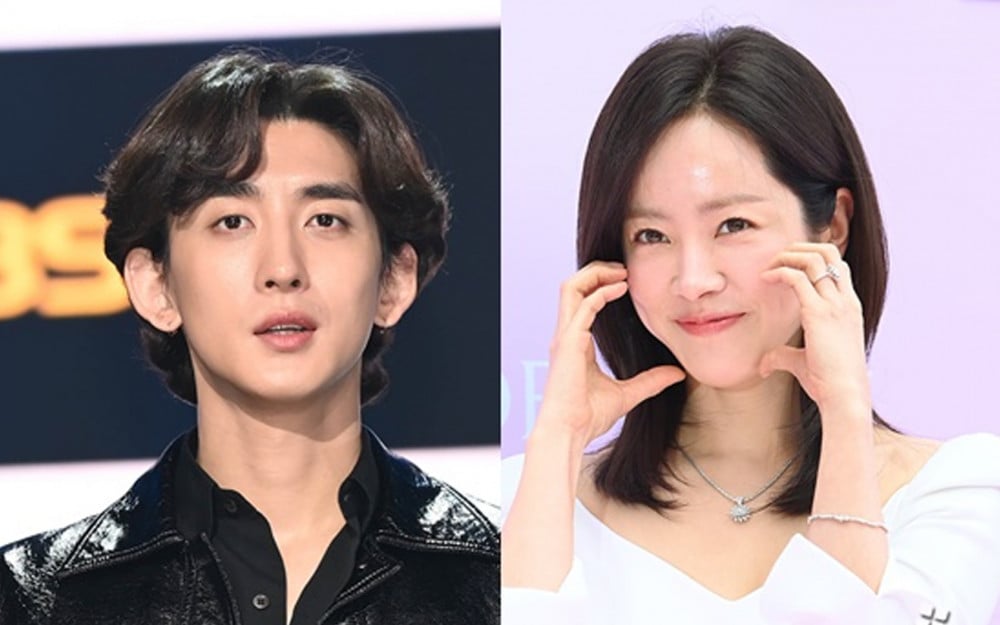
The Jannabi appeal isn't complex to explain, but it's hard to fake. Frontman Choi Jung-hoon writes like a Korean Freddie Mercury raised on 70s AM gold, all crooning falsetto and vintage-warm production. In a music market saturated by hyper-produced K-pop, a band that sounds like it recorded to tape at a Gangnam studio in 1976 hit different. Also worth noting: Choi is now publicly dating actress Han Ji-min, which sent Jannabi's back catalog surging on Melon again in 2024. Fame in Korea compounds.
3. SE SO NEON (새소년): Hwang So-yoon's Global Breakout

Every generation of Korean indie throws up one artist whose stage presence rewrites what a "band frontperson" is allowed to look like. For the late 2010s, that's Hwang So-yoon (황소윤). Androgynous, guitar in hand, husky-voiced, and completely uninterested in Melon-friendly aegyo styling, she and drummer Park Hyun-jin took Rookie of the Year at the 2018 Korean Music Awards, then kept building. That combination of visual and vocal singularity is why BTS's RM name-dropped SE SO NEON on livestream and later collaborated with Hwang on "Smoke Sprite," which hit iTunes No. 1 in 62 countries.
What separates SE SO NEON from a lot of the domestic indie pack is deliberate bilingual songwriting. Hwang laces English phrases through Korean choruses in a way that isn't marketing-department pandering, it's just how her creative brain works. That opens international festival slots (John Cale invited her onstage in 2019) without hollowing out the Korean listener base. It's also why she pulled more nominations than aespa at the 2025 Korean Music Awards, which is the kind of stat that makes major-label A&R teams pay attention.
4. The Black Skirts (검정치마): The Anti-Algorithm Auteur

The Black Skirts is technically one man: Cho Hyu-il, stage name Holiday Cho, a 1.5-generation Korean American who came back to Seoul via New Jersey. His 2008 debut "201" still gets cited by Korean indie musicians as the Rosetta Stone album, the record that proved you could release deeply personal Korean-language rock without a major-label push and still soundtrack a generation. His 2017 project "Team Baby" cemented the cult. But here's the industry twist: Cho has actively pulled his own catalog from streaming platforms at various points and pushed fans toward LPs and physical purchases.
That is a strategic choice, not a bug. In a market where Korean indie labels typically earn only 10 to 20 percent of revenue from streaming, and where Spotify and Melon payouts to non-idol artists are famously thin, a Black Skirts LP release functions as an anti-algorithm event. Fans queue at Kyobo, indie shops sell out same-day, and the artist retains creative control instead of chasing playlist adds. Younger indie musicians in 홍대 (Hongdae) study this playbook. It works because Holiday Cho's writing is worth the friction, moody bedroom pop with a Sanullim-era Korean pop sensibility underneath the American indie surface.
5. HYUKOH (혁오): From 무한도전 to Coachella

HYUKOH's origin is the textbook Korean viral-band arc. In 2015, variety heavyweight 무한도전 (Infinite Challenge) featured Oh Hyuk and his band on a music special, and Korean Twitter melted. Within 48 hours, HYUKOH went from a Hongdae four-piece signed to Tablo's HIGHGRND label to a household name. What kept them relevant after the viral moment was Oh Hyuk's willingness to reject the follow-up-single treadmill. Instead, HYUKOH pivoted to international touring, mixing Korean, Chinese, and English lyrics in ways that specifically targeted the pan-Asian and diaspora audience nobody else was courting.
That bet paid off at Coachella 2019, where HYUKOH performed alongside BLACKPINK. Being the second Korean act after Epik High to play the festival gave the band, and by extension Korean indie as a category, a legitimacy stamp with Western booking agents. Their sound is nostalgic in a way that's hard to place, guitar textures that borrow from Chinese city pop, Japanese shibuya-kei, and Kim Chang-wan Band-era Korean rock. If K-pop is engineered for global palatability, HYUKOH is engineered for the person who buys vinyl. That's the point.
Why This Scene Matters
Korean indie labels typically run on annual revenues in the ₩1 to 3 billion (about USD 750K to 2.2M) range, live-heavy and low-margin. Nobody in this world is building a Weverse-scale empire. What they're doing instead is proving that Korean music has a serious rock and alternative tradition running parallel to the idol machine, and that a decade of quiet Hongdae work can eventually book you at Coachella. Nell, JANNABI, SE SO NEON, The Black Skirts, and HYUKOH are the five entry points. Start with any of them and the rabbit hole opens up fast.
Explore More Korean Culture with Daebak Box
If Korean alternative rock is your gateway drug into deeper 한류 (Hallyu) territory, the Daebak Box is built for exactly that curiosity. Each monthly box curates snacks, lifestyle picks, and cultural surprises straight from Korea, the same country producing the bands above. Subscribe once and you'll get a physical taste of the culture behind the music.


