


Table of Contents
In Korea, a birthday without a cake is not a birthday, it is a complaint waiting to happen. Walk into any Tous Les Jours at 9pm on a Tuesday and the cake fridge is the brightest, busiest corner of the store, not the bread shelves. For anyone working in K-content marketing, this matters: the cake on the table in that idol's V Live, the cake the protagonist cuts in episode 14, the cake the YouTuber unboxes at 50K subs, all of it sits on top of a domestic bakery industry that has quietly become one of the most design-forward in the world.

Why Cakes Sit at the Center of Korean Birthday Culture
The first thing to understand is that buying a cake for someone's 생일 (birthday) or anniversary is not extravagant in Korea. It is the floor, not the ceiling. Skipping it reads as forgetful, not frugal. That cultural baseline is what made the SPC Group's Paris Baguette and CJ's Tous Les Jours into giants. They did not just sell bread, they converted neighborhood bakeries into a 24/7 cake economy, with refrigerated display cases stocked from morning open to last train. By the time you finish work in Gangnam at 10pm, you can still grab a 생크림 케이크 on the walk home, and it will look exactly like the one on the chain's Instagram.
The industry mechanic here is density. Korea has roughly 1,400 Paris Baguette stores and over 1,300 Tous Les Jours locations on the peninsula, which means in most of Seoul you are never more than a five-minute walk from a fresh whipped-cream cake. That convenience reset the price-to-occasion ratio. A cake stopped being a special-order item and became a Tuesday-night impulse. Fans abroad often ask why K-drama characters seem to produce a cake out of nowhere for every plot beat. The answer is logistical, not sentimental: they can.
Why Korean Cake Tastes Different: Sugar Dial Down, Texture Up
Try a slice of American buttercream cake after a slice of Korean fresh cream cake and you will notice the gap immediately. Korean cakes are lighter, less sweet, and noticeably airier. The cream is whipped to a fluffier peak with less sugar folded in, and the sponge is built for what Koreans call 촉촉한 식감 (a moist, chewy mouthfeel). The sugar dial is just turned way down compared to anything you would find at a US grocery store bakery.
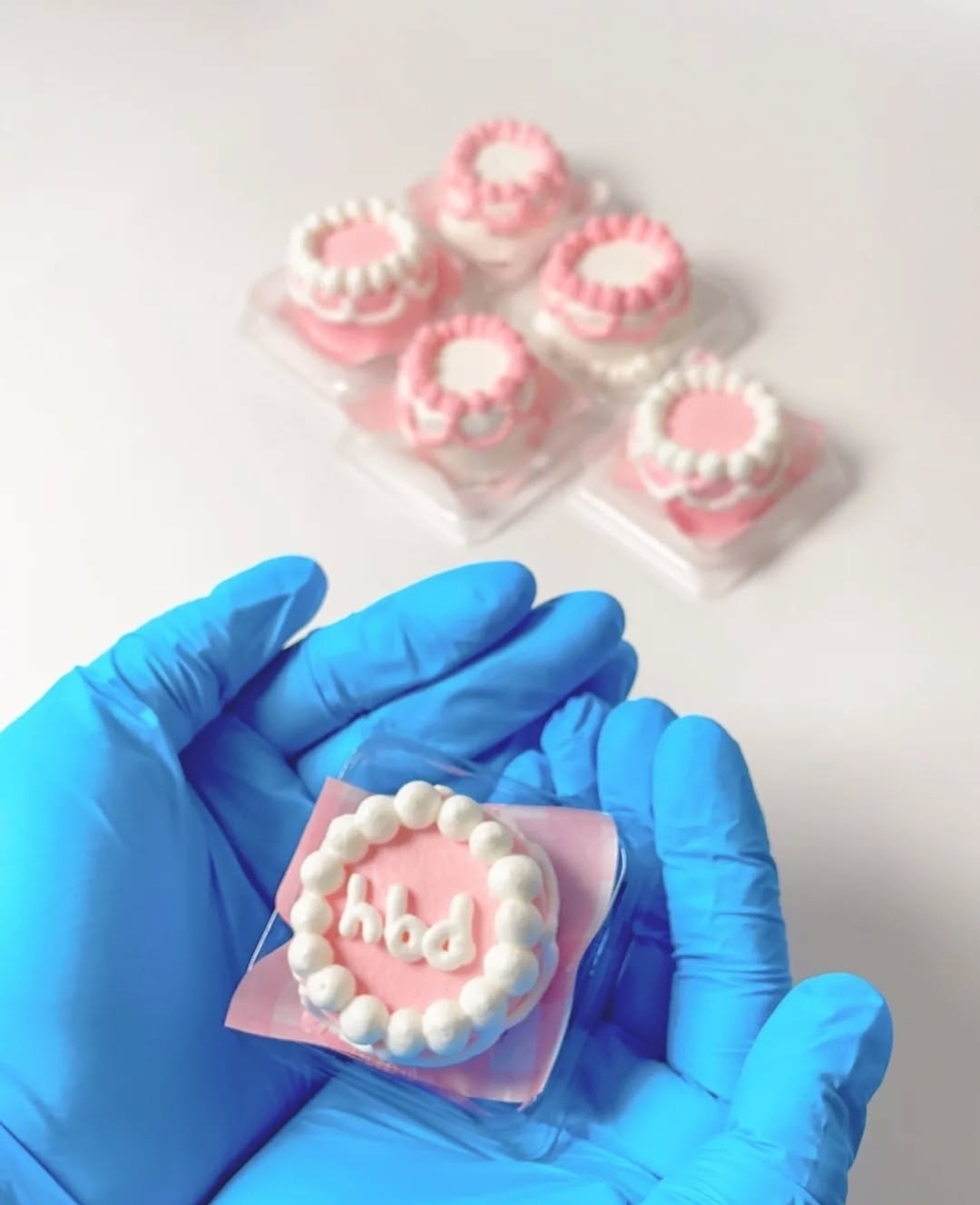
Part of this is dietary pattern. Korean home cooking does not rely on dessert as a daily course, so tolerance for very sweet finishes is genuinely lower. Part of it is the broader East Asian preference for clean, soft, almost dairy-forward textures over dense or fudgy ones. The result is a cake that pairs naturally with the post-meal Americano, and that can be eaten in two or three slices without anyone feeling sick. That texture-first philosophy is exactly why the recent "tiny cake" wave took off in Seoul, with small studios like Circus Rabbit selling palm-sized, single-serving fresh cream cakes that are basically the Korean cake aesthetic concentrated.
The 캐릭터 케이크 Boom: How Naver SmartStore Bakers Took Over
If you opened Instagram in Korea any time after 2019, you saw it: pastel buttercream cakes hand-piped with cartoon characters, the kind of cake that looks like it walked out of a Sanrio store. The 캐릭터 케이크 (character cake) format was technically imported, lettering cakes from Brooklyn, character buttercream from Bangkok, but Korean bakers absorbed it through a very specific aesthetic filter. They muted the palette. They cut the sugar. They borrowed from Korean illustration, with Kakao Friends, Pochacco, Sanrio characters, and webtoon mascots showing up on tops piped in soft pinks, sage greens, and creamy yellows. The result is a category that reads as 한국식 minimalism even when the character on top is technically Japanese IP.
The business model is what most foreign observers miss. The character cake economy in Korea is almost entirely run by small studio operators, usually one or two bakers working out of a 5-pyeong (about 16 square meter) studio, taking commissions through Naver SmartStore and Instagram DM, not Paris Baguette. Customers DM a reference image, the baker confirms availability for the pickup date, and the cake gets made fresh that morning. The chains tried to compete with seasonal character collabs, and SPC's Pokemon cake drop literally caused secondhand-market scalping when it sold out, but the bespoke piped cake is still a cottage industry. That is exactly why fans abroad can never quite replicate the look, the supply chain only exists inside Korea.

Fresh Cream, Fruit, Rolled, Mujigae: The Core Cake Repertoire
Underneath all the trend cycles, Korea's cake repertoire is surprisingly tight. Five formats do most of the work.
생크림 케이크 (Fresh Cream Cake) is the default. Vanilla sponge, fresh whipped cream, optional strawberry or peach layer. Every chain sells one, every home baker starts here. It is the cake that shows up on 99% of Korean birthday tables.
Fruit Cake (과일 케이크) is the special-occasion upgrade. Mango from Jeju, in-season Korean strawberries, sometimes durian for the adventurous, layered between sponge and cream. The cake itself is usually understated so the fruit reads as the gift.
무지개떡 케이크 (Mujigae-tteok Cake) is the heritage move. Rainbow rice cake layered in three to five colors, traditionally with 쑥 (mugwort) green, lemon yellow, and strawberry pink, served at 돌잔치 (first birthday celebrations) and at weddings. It is denser and chewier than a sponge cake, and the colors carry meaning, not just decoration.
롤케이크 (Rolled Cake) is the cafe staple. Thin sponge rolled around cream, usually flavored with 녹차 (green tea/matcha) or chocolate. This is the cake you slice into eight pieces and eat with a friend at a study cafe.
Pepero Cake is the seasonal stunt, ringed with Pepero sticks for Pepero Day on November 11. More on the calendar economics in a moment, because that one cake explains a lot about how Korean bakeries plan their entire year.
The Cafe Pivot: When Dessert Became Destination
Around 2015 something flipped. Cake stopped being something you brought home from the bakery and became the reason you went to the cafe. Cafe Knotted started selling cakes whose entire pitch was photographic, fat slices of strawberry shortcake propped at exactly the right angle for Instagram. Doré Doré built a whole brand around its rainbow cake in Garosu-gil, the kind of cross-section that 100% of customers photograph before tasting. Magnolia Bakery's Korea rollout, MORI cake studio, Layered, and a long tail of one-location ateliers all leaned into the same insight: in Korea, cake is experience, not closing course.

The MZ세대 (Millennial and Gen Z) effect is the real engine here. Birthday parties stopped being living-room events and became Insta-events. The cake is content first, dessert second. Bakeries that figured this out shifted to a design-first model, hiring pastry chefs with backgrounds in styling and photography rather than just classical patisserie. The 인스타 감성 (Instagram aesthetic) factor is now baked, literally, into product development meetings. If a cake does not photograph well in natural light against a pastel wall, it does not get made.
Pepero Cake and the Calendar Economy of Korean Baking
Korean bakeries do not just react to seasons, they engineer them. Pepero Day on November 11 was famously seeded by Lotte's marketing team in the 1990s and has since metastasized into a full-blown gift holiday, with Pepero cakes, Pepero towers, and Pepero gift boxes filling every Tous Les Jours from late October. Then Christmas hits and the entire industry pivots to whole cakes again. White Day (3/14), Pepero Day (11/11), Christmas Eve, Lunar New Year, Chuseok, and 돌잔치 season, each of these is a planned demand spike, and chains run capacity models around them the way American retailers plan around Black Friday.
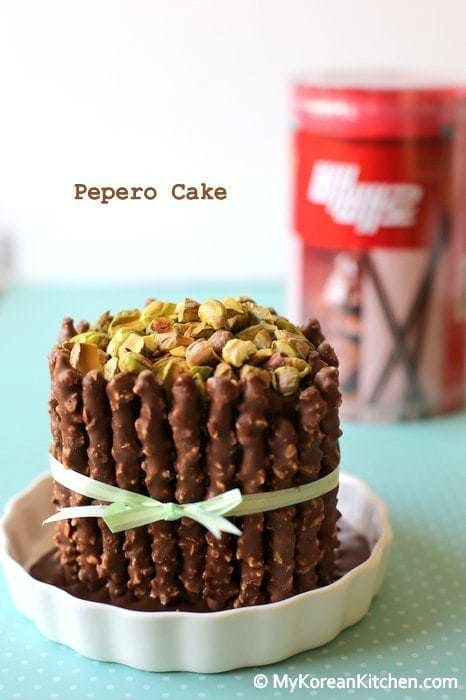
This is why a fan in the US trying to celebrate Pepero Day with their bias group will discover something interesting: the cake category has more SKUs in November in Seoul than any other month except December. The calendar economy is not a niche, it is the backbone. Independent studios time their character cake drops around the same calendar, with Halloween, Christmas, and Lunar New Year as the three biggest commission spikes of the year.
What This Means for Anyone Watching Korean Cake Culture from Abroad
The short version: Korea built a cake culture that is denser, lighter, prettier, and more event-driven than almost anywhere else. Big chains made cake an everyday object. Small studios made it an art object. The MZ generation made it content. And the calendar made all of it run on a clock. If you have ever wondered why every K-drama has a cake scene that hits, why every idol birthday post features a cake that looks airbrushed, why every Korean cafe has at least one whole cake in the case, this is the system underneath. It is not magic. It is logistics, taste, and a very strong sense of aesthetic discipline.
Explore Korean Snacks with Daebak
Love Korean food? Get authentic Korean snacks and ramen delivered straight to your door with the SnackFever Box by Daebak.


