


Table of Contents
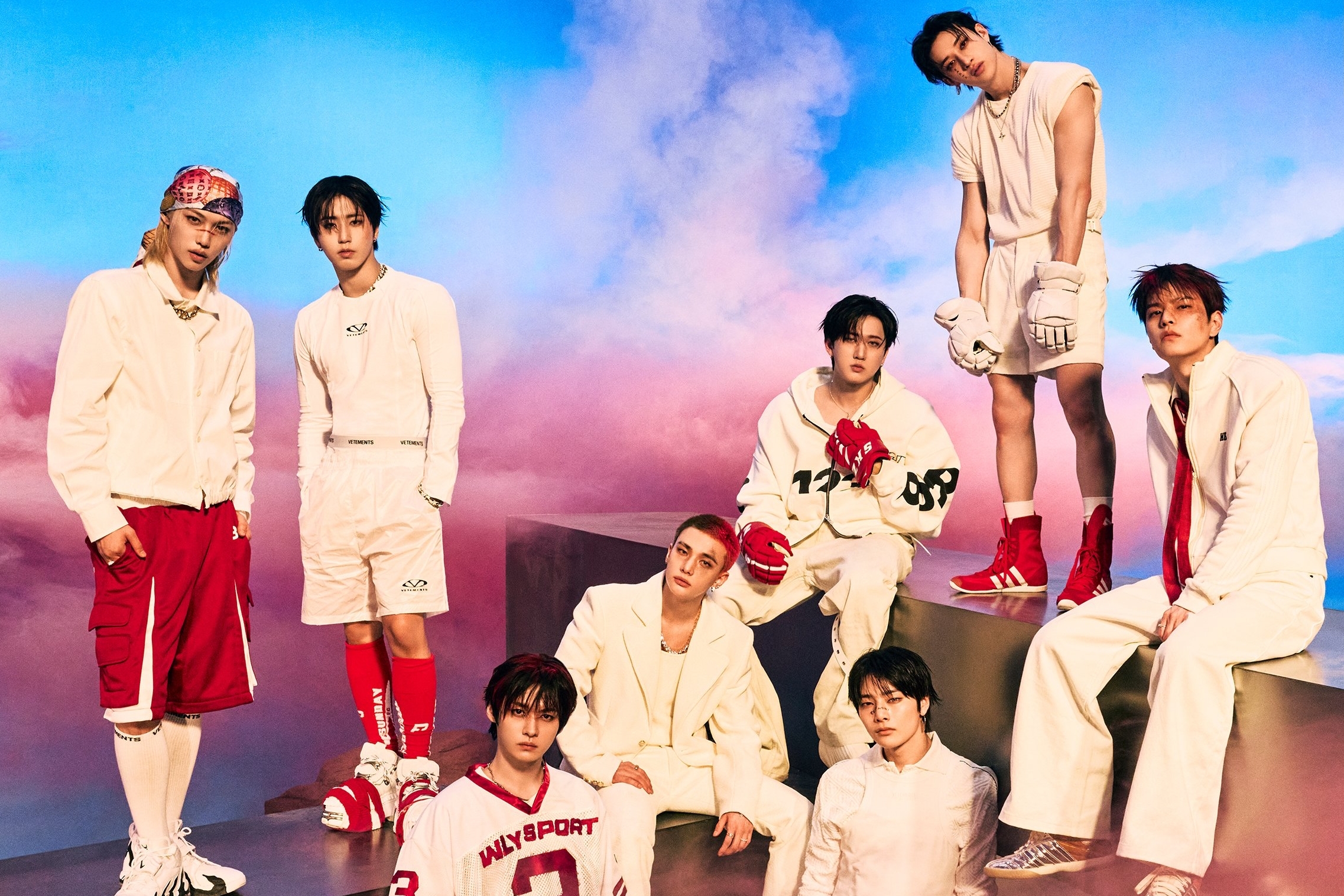
Been tracking JYP Entertainment's roster since GOT7 launched in 2014, and here is the honest read on why Stray Kids became the label's most important asset since 2PM: JYP quietly abandoned the pure A&R model with them. 스트레이 키즈 (Stray Kids) debuted January 2018 out of the Mnet survival show of the same name, and the founding decision that mattered was letting 방찬 (Bang Chan), 창빈 (Changbin), and 한 (Han), collectively 3RACHA, write and produce most of the group's music. That is not a minor structural tweak. That is JYP betting the boy group of the decade on 자체제작 (self-producing) rather than the industry-standard external writer and producer pipeline. Eight years later, the Billboard record vindicates the bet in a way no other 4th-gen boy group can match.
The 2018 debut and the 3RACHA blueprint
The 3RACHA piece is the real founding fact. Bang Chan, Changbin, and Han were writing and dropping tracks on SoundCloud before the group had a company name attached. When JYP put them through the Mnet survival show format, the underlying deal was: keep the production autonomy. That is unusual. Most K-pop groups spend their first three years being packaged by external A&R teams while members earn writing credits slowly. Stray Kids landed with 3RACHA already scoring most of their tracks, from District 9 through God's Menu and Back Door. Bang Chan's KOMCA (Korea Music Copyright Association) credit total crossed 140 by 2022, making him the youngest artist in the top ten writers. That is not fan-cafe flattery, that is the copyright ledger.
Why the self-producing model rewrote JYP's math
Here is the industry mechanic most Western coverage flattens. External producers, whether Teddy Park for YG or the Kenzie era at SM, cost real royalty percentages per track, and every A-side that hits Billboard has three to five external writer names sharing the split. When 3RACHA writes and produces, JYP retains a larger margin per unit sold, and the group gets an ownership stake in its own catalog that translates directly to future publishing revenue. Multiply that across the 100-plus tracks Stray Kids have released and the difference over ten years runs into nine-figure won. This is why HYBE, SM, and YG have all since accelerated their own self-producing pipelines. Stray Kids proved the model scales without collapsing the sound, and now the template is industry-wide.
Nine straight Billboard 200 No. 1s: what BTS could not do
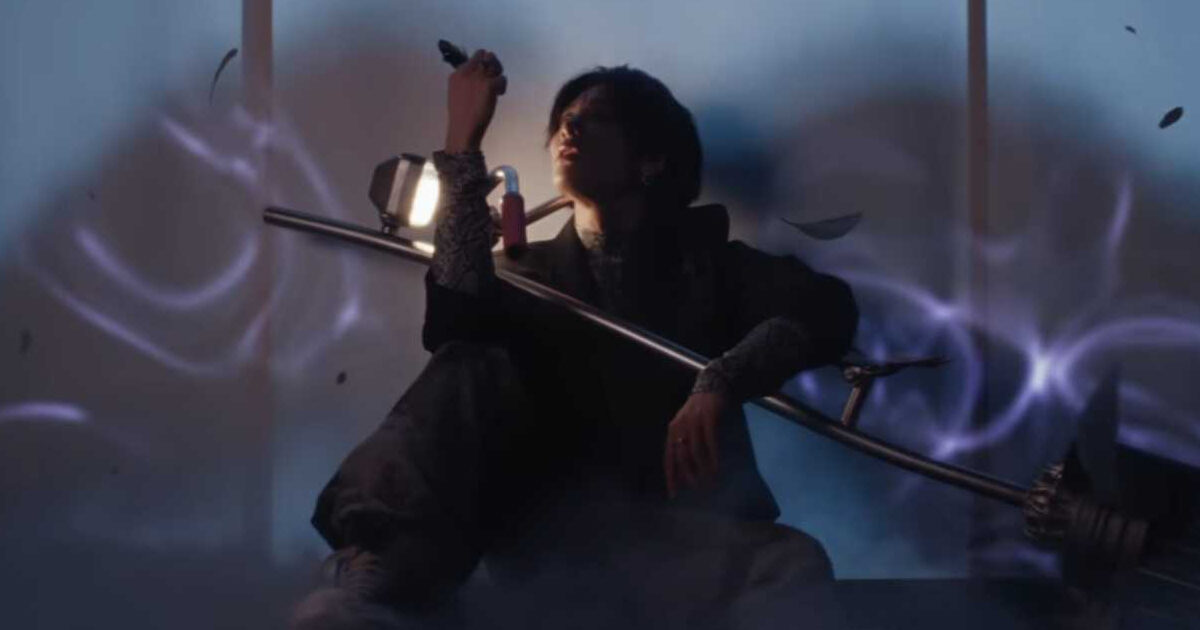
The record that matters. As of August 2026, Stray Kids became the first act in the 70-year history of the Billboard 200 to debut its first nine charting albums at No. 1. The streak: Oddinary (2022), MAXIDENT, 5-STAR, ROCK-STAR, ATE, HOP, KARMA, SKZ IT TAPE 'DO IT', and This & That. BTS has the deeper cumulative catalog on the Billboard 200, but never a streak where every single charting album debuted at No. 1. Stray Kids also passed BTS, Linkin Park, and Dave Matthews Band as the group with the most No. 1 albums this century, and tied the Rolling Stones for the second most all-time behind the Beatles. KARMA moved 313,000 equivalent album units in its first week, a career high per Luminate.

STAY: the fandom mechanic behind the sales artillery
Every K-pop group has a fandom name, but the operational question is: does the fandom actually convert into first-week album units? 스테이 (STAY) does, at a level that outperformed BLACKPINK's BLINKs and post-2023 BTS ARMY in physical album shipping. The reason is the album version economy: Stray Kids releases four to seven physical versions of every album (Standard, Limited, Digipak, Frame, member solo covers, JYP Shop exclusive), each with a random photocard drawn from an eight-member pool. STAY buys multiple copies to complete photocard sets, which is standard K-pop economics, but the Stray Kids version count and photocard rarity system is calibrated tighter than the industry average. That is the appeal point most non-fans miss: the fanbase understands the collection loop and voluntarily runs the sales artillery.
From Lollapalooza to Rock in Rio: the global tour rotation
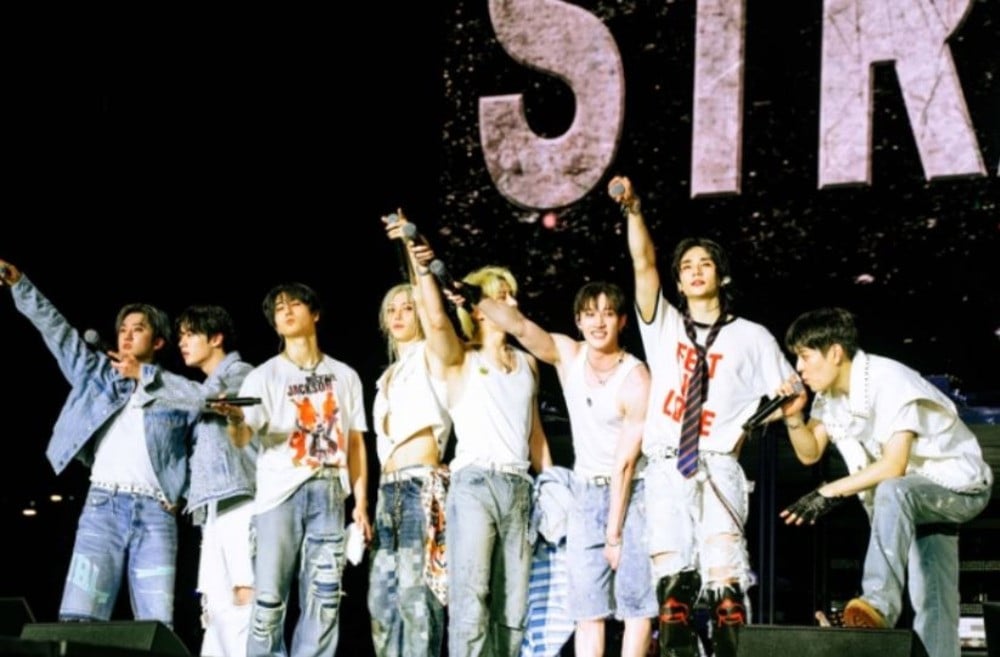
Stray Kids became the first K-pop act to headline both Lollapalooza Paris (2023) and Lollapalooza Chicago (2024), and in late 2025 they announced they will headline Rock in Rio 2026, again as the first K-pop act. The dominATE World Tour, which kicked off in Seoul August 2024 with four sold-out KSPO Dome shows, was projected to draw around 2.2 million fans across Latin America, North America, and Europe. That number would make it the largest K-pop tour audience in history. The Korea Times' Lee Gyu-lee documented the Seoul opener in detail, and the throughline was Changbin's line after the show: "Stray Kids ate the stage and STAY devoured the audience seats." That is the mechanic. The group and the fandom perform as one unit.

The Republic Records deal and the 2025-2026 comeback strategy
The under-covered move is JYP's US infrastructure play. Stray Kids sit under a Republic Records (Universal Music Group) distribution and marketing partnership in the US, which is the same lane HYBE built for BTS with Columbia and later Geffen. That deal is why KARMA's first-week traditional album sales of 296,000 landed at No. 1 on the US best-sellers of the week, not just the Billboard 200. The 2025 and 2026 rollout is deliberate: full-length album (KARMA) in August 2025, EP (SKZ IT TAPE 'DO IT') in November 2025, EP (This & That) in August 2026, tour underneath all of it, Weverse video content between drops, JYP Shop exclusive merch bundles per version. It is the modern K-pop release calendar executed with US retail muscle behind it. The next question is whether Stray Kids submits for a Grammy after the BTS-era boycott ended, and the Korea Herald has been tracking that decision.
Explore More of Korea with Daebak
If the industry read on Stray Kids, 3RACHA's 자체제작 model, and the STAY fandom mechanics gave you a taste for the Hallyu-insider perspective on K-pop, the Daebak Box is a monthly deep dive: curated Korean snacks, ramen, K-pop merch, and cultural picks delivered straight to your door. Subscribe, and let each month arrive with the same energy as a first-listen drop from your bias group.


