


Table of Contents
After a decade watching Korean corporates, government ministries, and Hallyu agencies negotiate the very specific rituals of gift exchange, here is the honest read: what looks like a casual present in Korea is almost always a coded relationship signal. The wrapping, the envelope color, the way you hand it over, even the item you deliberately do not give, all of it is read fluently by the person on the receiving end. Foreigners tend to obsess over choosing the right object. Koreans focus on doing the transfer correctly. That distinction is the entire game.

The 두 손 (Two Hands) Rule Is Non-Negotiable
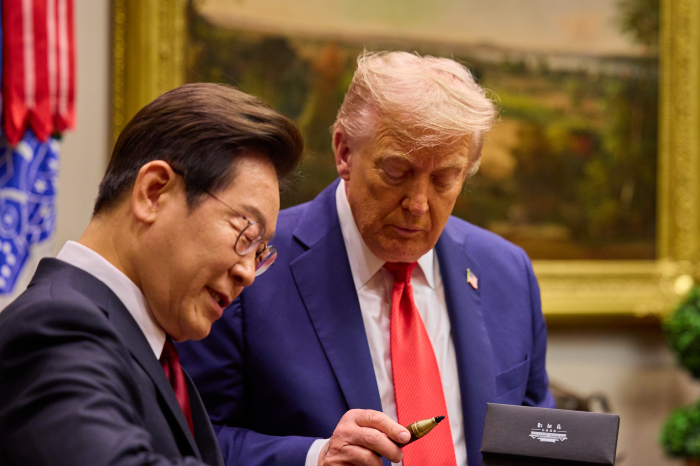
Start with the mechanic every guide underrates. When you present a gift or receive one from someone older, more senior, or on the other side of a business relationship, you use both hands. Not one hand while the other rests in your pocket. Both. The receiver mirrors the gesture. If you have watched a Korean corporate gifting ceremony on the news, this is why the choreography looks almost slow. It is intentional. The two hands transfer is a physical acknowledgment that the gift is important enough to occupy your full attention, and it signals respect for the giver in a culture where age hierarchy 나이 위계 is still central. Get this wrong with your Korean boss or your future in-laws and the gift itself becomes irrelevant. I have seen a perfectly chosen ₩200,000 Korean pear box quietly downgrade the giver's standing because it was extended with one careless hand.
세뱃돈 (New Year Money): Crisp New Bills, White Envelope, No Substitutes
세뱃돈 (sebaetdon), the Lunar New Year cash children and unmarried adults receive after performing 세배 (the deep bow) to elders, is the most reliably-followed gift ritual in the country. The rules are strict. Bills must be crisp and new, ideally straight from the bank branch that opens a special exchange window every January. The envelope is white with red or gold trim, never garish. The amount scales by age: preschoolers receive ₩10,000, elementary schoolers ₩30,000 to ₩50,000, middle and high schoolers ₩50,000, university students and recent grads up to ₩100,000. Married adults do not receive 세뱃돈, they give it, which is why Korean weddings quietly redistribute this obligation across an entire extended family. The industry data on this is unusual: Korean banks report a measurable spike in ₩50,000 note demand every January, and one major bank publicly stated it prints roughly 12 million fresh notes specifically for the 세뱃돈 window each year. That is a real, planned annual event, not folklore.
Wedding 축의금 and Funeral 부의금: Get the Envelope Right or Get Talked About
Life-event cash envelopes are where foreigners most often stumble. For weddings, 축의금 (chuguigeum, congratulatory cash) is the near-universal gift. The going rate for a colleague or casual friend is ₩50,000 to ₩100,000. For close relations, family, longtime friends, senior mentors, the bracket climbs to ₩200,000 to ₩300,000. You write your name and your relationship to the couple on the front of the envelope. Wedding accountants log every entry into a ledger, and the couple's parents will remember your line for years. Overpaying signals you want the couple to feel indebted. Underpaying without a note of explanation gets your name quietly flagged in the family group chat.
Funeral 부의금 (buuigeum) or 조의금 (jouigeum), condolence money, follows the same amount tiers as weddings. The critical rule is the envelope color: white, always white. Yellow, pink, or any celebratory color is a serious cultural error and will visibly upset the bereaved family. Cash is deposited at the reception table where a family member enters it into the ledger, same as weddings. Send it via a trusted colleague if you cannot attend, but never skip it entirely for someone in your close professional or social network. That silence gets remembered too.
The Corporate 명절 Gift Market Is a ₩3 to 5 Trillion Machine
Here is the industry number Western coverage of Korean culture almost never names. The Korean corporate 명절 (myeongjeol, major holiday) gift market, driven overwhelmingly by Chuseok and Seollal, moves roughly ₩3 to ₩5 trillion in retail value annually. Department stores build entire seasonal floors for it, and Q3 revenue for major supermarket chains is measurably higher in Chuseok years with an early lunar date. The single top-selling ceremonial gift item, year after year, is the CJ Foods Spam gift set. Yes, Spam. A boxed assortment of canned pork, sesame oil, and specialty cooking oils, sold in tiers from roughly ₩30,000 to ₩150,000. It is the most requested corporate gift in Korea by unit volume, outperforming imported wine, tea, and even fresh fruit boxes. The reason is practical: Spam is universally consumed, storable, and reads as a considered gift because it is not what the recipient would casually buy for themselves. That is the Korean gift logic in one product.
Business Gifts: Korean Pear Box, Ginseng, Honey, and the ₩50 to 100K Sweet Spot
For business relationships, the standard price band is ₩50,000 to ₩100,000. Above that starts to feel obligatory and awkward. Below it reads as a token. The three ceremonial gift categories that never miss are: Korean 배 (pear) boxes packed in individual paper cradles from Naju or Cheonan orchards, red ginseng 홍삼 (hongsam) sets from Korea Ginseng Corporation, and premium 꿀 (honey) or 참기름 (sesame oil) sets. Fresh fruit is safest for a Korean client you do not know well, ginseng is safest for an elder recipient, and honey and oil sets are the go-to for a colleague you want to acknowledge without over-signaling. One insider note: if the pear box arrives with any bruised fruit, the gift is basically ruined in Korean etiquette terms. Which is why premium pear brands sell ₩200,000 boxes with hand-inspected fruit and same-day cold chain delivery. It is a real logistics category.
김영란법 (2016 Kim Young-ran Act) Rewrote the Rules Overnight
The single biggest structural change to Korean gift culture in the last decade is the 김영란법, formally the Improper Solicitation and Graft Act, passed in 2016. The law caps gifts to public officials, teachers, and journalists at ₩50,000, and meals at ₩30,000 per person. Agricultural and fisheries gifts got a special exception raised to ₩150,000 during holidays. The impact was immediate. Corporate gift budgets restructured overnight, luxury Chuseok gift sets that used to top ₩500,000 per box were reformulated to fit the cap, and the entire premium gift market pivoted toward "김영란 세트" (Kim Young-ran-compliant sets) specifically priced at ₩49,900 or ₩149,900. If you work with any Korean public sector counterpart, that ₩50,000 ceiling is a hard legal line, not a suggestion.

The Absolutely-Never List: Shoes, Clocks, Knives, Green Hats
Some gift categories are actively cursed in Korean culture and giving them, even innocently, can end a relationship. Shoes to a boss or romantic partner: superstition holds they will walk away from you. This is taken half-seriously enough that Korean couples still swap a small coin for the "purchase" of the shoes to break the curse. A wall clock or watch to an elder: the word for clock 시계 sounds close to a phrase associated with running out of time, and it carries funeral connotations. Knives or scissors: symbolically "cutting" the relationship. Green hats: this one is imported from Chinese superstition but has taken hold in Korean corporate circles, where a green hat signals infidelity in the partner. Skip all of these categories entirely. A safe substitute is almost always a fruit box or ginseng set.
답례품 (Return Gift): Not Optional, Ever
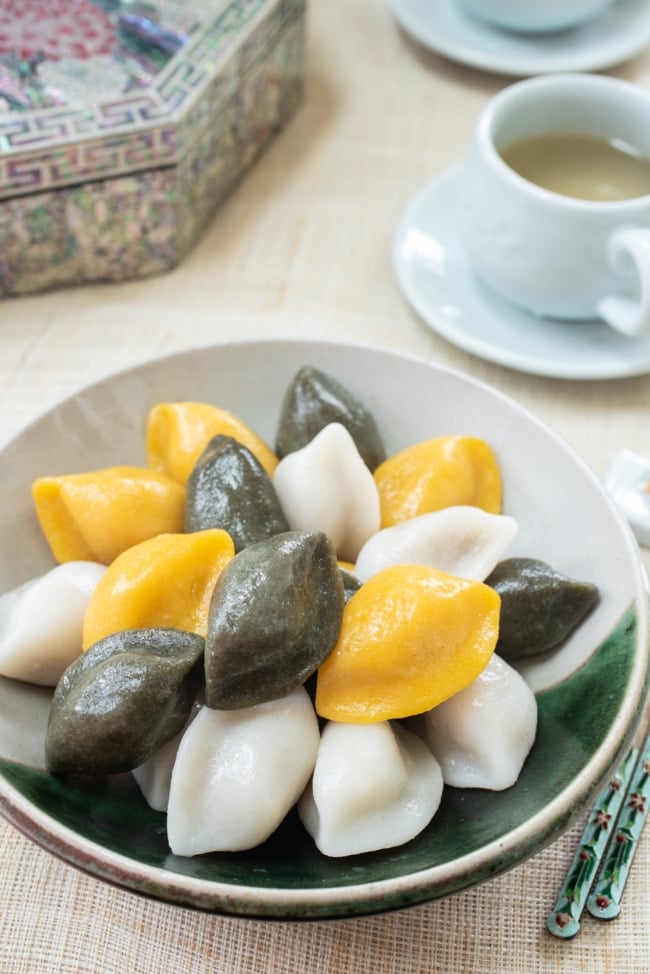
The most important etiquette rule Western guides skip: if you receive a gift in Korea, you owe a 답례품 (dapryepum, return gift) within one to three months. This is not a nice-to-have. It is a structural expectation. The return gift should be roughly 50 to 70 percent of the value of what you received, not equal or higher (equal reads as debt-clearing, higher reads as competitive). For wedding cash, the couple returns 답례떡 (return rice cakes) or a small boxed dessert to guests within days. For business gifts, the return arrives at the next natural holiday. Miss this, and you signal that the original gift meant nothing to you. Get it right, and you have quietly extended the relationship for another cycle. This reciprocity engine is why Korean gift-giving looks so choreographed to outsiders: everyone is tracking, in the background, whose turn it is next.
The truth is that Korean gift culture is less about generosity and more about relationship maintenance across time. The two hands rule, the crisp new bills, the color of the envelope, the return gift due in eight weeks: they are all mechanisms for saying "I am paying attention to this relationship, and I intend to keep paying attention." Once you see the system, the specific gifts almost pick themselves. Want to keep exploring the small rituals that shape Korean daily life, from holiday gift sets to convenience-store snack culture? The Daebak Box ships a curated selection of Korean snacks, K-beauty finds, and pop culture picks every month so you can keep a piece of Seoul in your rotation year round.


