


Table of Contents
Paris is the city Western pop-culture reporting still misses when it writes about the Korean Wave in Europe. London gets the K-drama Netflix coverage, Berlin gets the K-indie festival name-checks, and Barcelona gets the K-content convention slot. Paris quietly does something bigger. Roughly one in every five K-pop albums shipped to continental Europe lands in France, the country runs the highest per-capita Korean cultural consumption on the continent by KOFICE's own multi-year tracking, and every major French luxury maison has a Korean idol on the ambassador roster right now. I have watched the French market evolve since the SMTown Paris Zenith date in 2011, and what has happened between that concert and the current LVMH-Kering ambassador rotation is a very specific playbook that Korean labels and Paris brands built together. Here is the on-the-ground read.
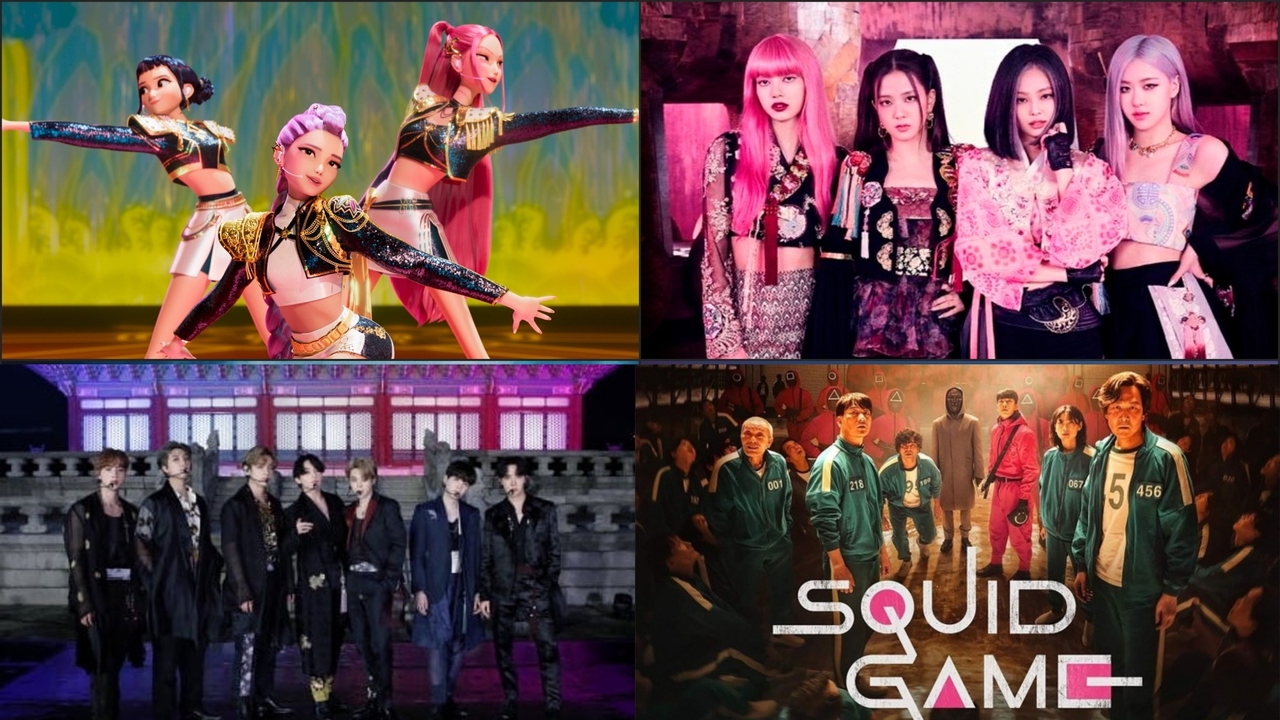
SMTown Paris 2011: The Night Europe Stopped Underestimating K-pop
Start here, because everything follows from it. On 10 June 2011, SM Entertainment booked Le Zenith de Paris for a 6,000-capacity SMTown Live World Tour date featuring Girls' Generation, SHINee, TVXQ, Super Junior, and f(x). Tickets sold out in fifteen minutes. Two hundred fans camped in front of the Louvre demanding a second date. SM added Sunday 12 June. That sold out too. Local French press ran think-pieces about the flash mob at the Louvre for weeks. What is easy to forget now is what those numbers meant at the time. SMTown Paris was the first mega K-pop concert on European soil, and it happened before Gangnam Style, before Halyu had a European entertainment media beat, before French daytime TV knew the word aegyo. Six thousand people paid a stadium-tour ticket price to see a Korean-language variety-format concert on a continent where no K-pop act had ever done a headline show. That is the moment SM CEO Kim Young-min, the man behind the pivot, was quietly telling the label's international team that Europe was ready before anyone in the West believed it.
The specific reason Paris became the entry point rather than London or Berlin is worth pulling apart. French pop-culture reception has a deep tradition of embracing Asian content as a serious cultural category rather than a novelty. The country's manga and anime market has been the largest in Europe since the 1990s. French bookstores treat Japanese and Korean manhwa as their own aisle, not an import curiosity. That means when SM shipped an SMTown lineup to Paris in 2011, it landed in a media ecosystem already primed to take Asian pop seriously. The UK press wrote about SMTown Paris as a curiosity. Le Monde wrote about it as a cultural moment. That framing difference is precisely why every K-pop tour since has treated Paris as its European anchor date, and why the audience arrives fluent in Korean-fandom vocabulary rather than needing a translator explainer.

BTS at Bercy 2018 and La Defense Arena 2019: The Ticket-Buyer Repricing
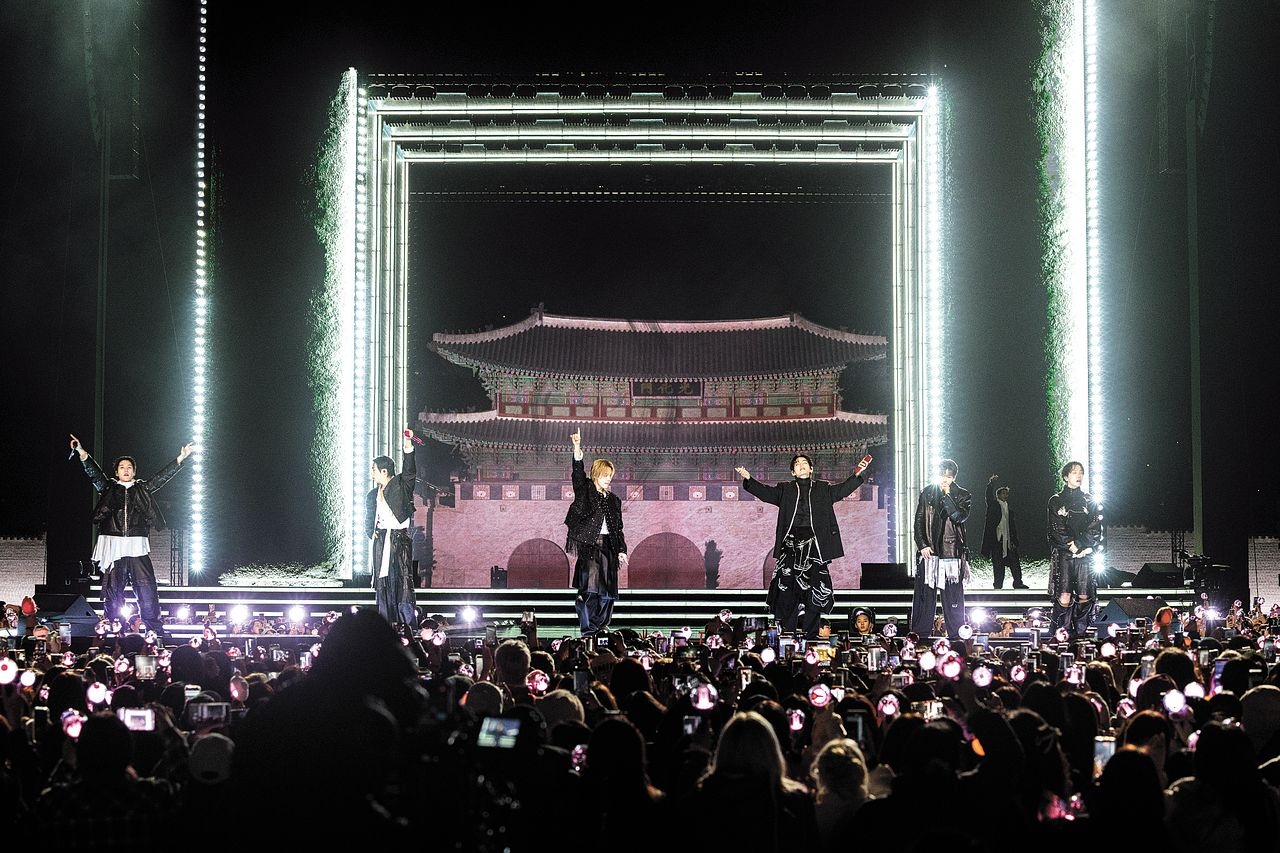
Ask anyone on the Live Nation France buyer side what the single most important K-pop booking in French history was and the answer arrives in two beats: BTS at AccorHotels Arena Bercy in October 2018, then BTS at La Defense Arena in June 2019. The first show sold both nights of a 20,000-seat arena run. The second show upgraded to Paris' largest indoor venue (40,000-capacity) for two consecutive nights on the Love Yourself: Speak Yourself tour, and again cleared the room to capacity. Between those two runs, BTS pushed the effective ceiling for a K-pop act in France from roughly one arena weekend to a proper stadium-tier weekend, and the promoter side had to rewrite the P&L assumptions in front of them. Every K-pop booking that came after (TWICE at La Seine Musicale, ATEEZ at Accor Arena, SEVENTEEN at La Defense, Stray Kids at Stade de France on the ATE tour) traces back to what French promoters saw at that BTS Bercy weekend. Not a fluke. A repeatable stadium fandom.
What French K-pop concert-goers do differently, and the reason the market economics work the way they do, is the physical-album attach rate. UK ARMY is younger and school-age; US ARMY is bigger and whale-driven on VIP tiers; French ARMY sits in between, but with a distinct behavior: they buy albums after the show, not before. Live Nation France reports and the Fnac x K-Town buyer data both show that on a K-pop show night at Bercy or La Defense, the Fnac and Cultura CD sections spike the following morning as concertgoers pick up the physical album they just heard live. That translates to about 20 to 30 percent higher French physical-album per-attendee spend than the equivalent US arena crowd. When you see a K-pop label doing a French-market physical exclusive photocard or a limited-edition CD box for a tour date, that is why. France is the album-attach test market for continental Europe, and the labels know it. The rough industry sizing that circulates in Seoul is roughly 150 to 200 billion won per year in French K-pop consumer spend across concert tickets, physical albums, merchandise, and fan-membership platforms. Small by comparison to Japan or the US, but the highest-yield-per-fan market in Europe.
Paris Fashion Week: The Front-Row Economics That Rewrote Korean Idol Contracts
The other half of Paris' K-culture story is what happens two blocks off the Champs-Elysees for four weeks a year. Paris Fashion Week is not just a fashion moment for K-pop. It is the single most important brand-ambassador negotiation window on the entire Hallyu calendar. BLACKPINK's Jennie became Chanel's House Ambassador in 2018 and her Chanel Rue Cambon front-row appearances now function as international-press-day headlines that Chanel's marketing team explicitly plans quarterly earnings guidance around. Rose is a Saint Laurent (YSL) ambassador and her Anthony Vaccarello front-row seat is a Kering set-piece. Jimin (Dior), V (Cartier), NewJeans Danielle (Burberry), Le Sserafim (Louis Vuitton) all rotate through Paris ambassador spots every March and September. The specific reason this became structural rather than one-off: LVMH and Kering both discovered post-2020 that a single Instagram post of a Korean idol wearing head-to-toe Dior at the Musee Rodin generates more search-lift for the collection than any traditional runway press coverage. That is not marketing theory, that is what the LVMH internal marketing dashboard actually shows.
What this reprised for the Korean side is the ambassador contract economics. Pre-2018, a Korean idol brand deal was structured as a Korean-market endorsement with maybe a Japanese add-on. Post-2018, an LVMH or Kering global ambassador contract runs multi-year, seven-figures in USD, and includes travel-and-styling budgets for four Paris Fashion Week appearances per year plus Milan, London, and New York. HYBE, SM, YG, and JYP restructured their idol solo-brand teams around this reality between 2020 and 2023. The reason your favorite idol's Instagram grid is now half Chanel or Dior product placement and half comeback teaser is that the ambassador revenue line is a legitimate labeled agency P&L category, and Paris is the highest-frequency stop on the annual rotation. When you see Jennie shot on the Ritz Paris rooftop during Chanel's Metiers d'Art show, that image is not just a fashion moment. It is a scheduled deliverable in an ambassador contract that was negotiated in Seoul and signed off in Paris.

Korean Cultural Center Paris and the Restaurant Cluster That Feeds It
The anchor institution worth naming is the Centre Culturel Coreen at 2 avenue d'Iena in the 16th arrondissement. Established by the Korean Embassy in 1980 and expanded into its current gallery-plus-library footprint through the 2010s, it functions as the Korean Ministry of Culture's cultural HQ for continental Europe. Free-entry rotating exhibitions, permanent Korean-language library, monthly K-cinema screenings partnered with Publicis Cinemas on the Champs-Elysees, and the annual Festival du Film Coreen a Paris (the biggest Korean film festival in continental Europe) every October to November. That festival is where French cineastes first watched a lot of Bong Joon-ho and Park Chan-wook pre-Parasite, and it does specific soft-power work that KOCIS and the Ministry of Culture back with real budget every year. If you want to understand where French K-drama tastemakers, French K-content journalists, and Paris-based Korean-Studies academics actually cross paths, it is the Centre Culturel Coreen calendar, not the concert tour dates.
Layered on top of that is the Paris Korean restaurant map, which has quietly become the best Korean food scene in continental Europe. The Opera and Passage de la Sorbonne clusters carry the anchor names: Bibim (contemporary bibimbap in the 1st arrondissement), Song (traditional Korean home-cooking near Etienne Marcel), Mandoobar (the mandu-and-tartare 8-seat counter in the 2nd that Le Fooding put on the guidebook), Manna (Korean BBQ near Opera), and Jantchi (long-running bibimbap in the 1st). What makes the Paris Korean-food cluster different from London New Malden or Berlin's Kreuzberg spots is the French fine-dining influence on the plating and technique side. Mandoobar's chef Kwon Yoon-hae runs a French tasting-menu ratio of plate composition to protein weight that no Korean-diaspora restaurant in London or Berlin does. The Korean bosses running these Paris kitchens went through Le Cordon Bleu or Ecole Ferrandi before opening their own place. That is the specific texture, and it is why French food critics started giving Korean restaurants Michelin Bib Gourmand recognition (Mandoobar, notably) years before comparable recognition arrived in London or Berlin.
K-drama and Streaming: Squid Game's Paris Moment
The streaming half of the Paris K-culture story starts with Squid Game hitting Netflix France as the number-one show in October 2021 and sitting at number one for a run that broke internal Netflix France engagement records for a non-French, non-English title. Every K-drama that landed on Netflix France afterward benefited from that specific ceiling being broken. All Of Us Are Dead, Physical: 100 (a Korean unscripted show cracking French top 10 is genuinely rare), Extraordinary Attorney Woo, My Name, and Squid Game 2 and 3 all charted French top-10 within their opening week. The specific French audience response to K-drama is worth pulling apart. What French viewers respond to is the exact same class-and-institution machinery of the writing that British viewers respond to, but with a French twist: French viewers read K-drama villain framings (chaebol, prosecutor, hospital administrator, corrupt police captain) through the country's own institutional-critique tradition from Cedric Klapisch, Costa-Gavras and Xavier Beauvois. K-drama's institutional-villain structure ports almost cleanly. That is why French K-drama viewership per-capita is meaningfully higher than German or Italian K-drama viewership per-capita, and Netflix France's algorithm-tuned recommendation model has picked up on the signal.

The BTS x Louis Vuitton and BLACKPINK x Chanel Loop
What ties the concert and the fashion and the K-drama threads together in Paris is a specific brand-partnership loop that emerged in 2020 to 2021 and now runs on autopilot. BTS became Louis Vuitton's global house ambassadors in April 2021 (Virgil Abloh's men's collection FW21 Seoul-shot fashion film was the debut) and the entire membership-plus-Bang Si-hyuk relationship with Bernard Arnault has continued through Abloh's passing, through Pharrell Williams taking over LV Men's, and through both LV's subsequent K-pop-focused capsule drops in Paris. BLACKPINK's Chanel and Dior and Celine relationships (Jennie / Rose / Jisoo / Lisa each individually) run parallel through Kering and LVMH. What the industry math looks like on the Paris side: each idol Fashion Week appearance drives estimated 40 to 60 million dollars in earned media value for the sponsoring maison per LVMH internal figures cited to WWD, and the incremental cost is a private-jet-and-styling budget of roughly 300,000 to 500,000 dollars per idol per week. That is a 100x return on marketing spend. No other single ambassador category (Hollywood actor, French footballer, Chinese entertainer) delivers that ratio in 2024. That is the specific reason every LVMH and Kering house is doubling its K-pop ambassador roster right now, and why the September 2024 Paris Fashion Week schedule was the K-pop-heaviest in the event's history.
The insider read on where this loop goes next: watch for K-pop group members individually signing separate ambassador contracts with competing houses inside the same conglomerate. Jennie signed a personal-manager arrangement outside YG in 2023 for exactly this reason, and her post-YG-departure ambassador economics are cited internally at Odd Atelier as the reference deal that BLACKPINK's other members are re-negotiating around. When you see NewJeans members split across Burberry / Chanel / Louis Vuitton in the next Paris Fashion Week cycle, or Le Sserafim members individually signing to different maisons, that is the specific replay of the Jennie playbook. Paris Fashion Week is the venue where those deals get physically activated, and the September and March calendars in Paris are the moments Korean labels quietly test the ambassador upgrades.
Practical Read for a Paris Visit
If you have 48 hours in Paris and want to sample the K-culture footprint properly, the compact itinerary that actually works: Metro 9 to Iena for a morning at the Centre Culturel Coreen (free entry, one hour for the current exhibition), Metro 1 or walk to Opera for a Mandoobar lunch reservation (book two weeks ahead), Metro 4 to Odeon for a Passage de la Sorbonne bibimbap-and-banchan run at Jantchi, then back to Champs-Elysees for whatever K-pop show or Publicis Cinema Korean film screening is on the calendar. Skip the tourist round-ups; the reliable current sources are the Centre Culturel Coreen official events calendar and the personal Instagram of the Passage de la Sorbonne restaurants (Bibim and Mandoobar both post reservation windows). Paris' K-culture map reads as diffuse until you actually walk it, and then it snaps into a specific shape: one government cultural outpost at Iena, one restaurant-cluster spine from Opera to the 1st arrondissement, and a Bercy and La Defense concert calendar that has permanently moved into the same tier as any European major-market pop city. That is genuinely a big deal, and it happened faster than anyone in the 2010s Hallyu-forecasting business bet on.
Bring a Little Seoul Home from Paris
Whether you just left a Bercy show, a Mandoobar tasting, or a Publicis Cinema Korean film premiere and want to keep the K-culture rush going at home, the Daebak Box is stocked with the K-pop, K-drama, and Korean lifestyle picks we cover in this Global South Korea series. Think of it as your monthly Paris-to-Seoul bridge in a box.


