


Table of Contents
Churros aren't Korean. They aren't even remotely native to the peninsula. But walk into any 디저트 카페 in Hongdae or Gangnam today and you'll see them piled next to the bingsu menu, dressed up in sugar dust and sold in paper cones alongside iced Americanos. Somewhere between 2012 and now, this Spanish import got quietly rebuilt for the Korean market, and the version that emerged has almost nothing to do with what you'd get on a Madrid street corner.
Why Korea's Version Doesn't Look Like the Spanish Original
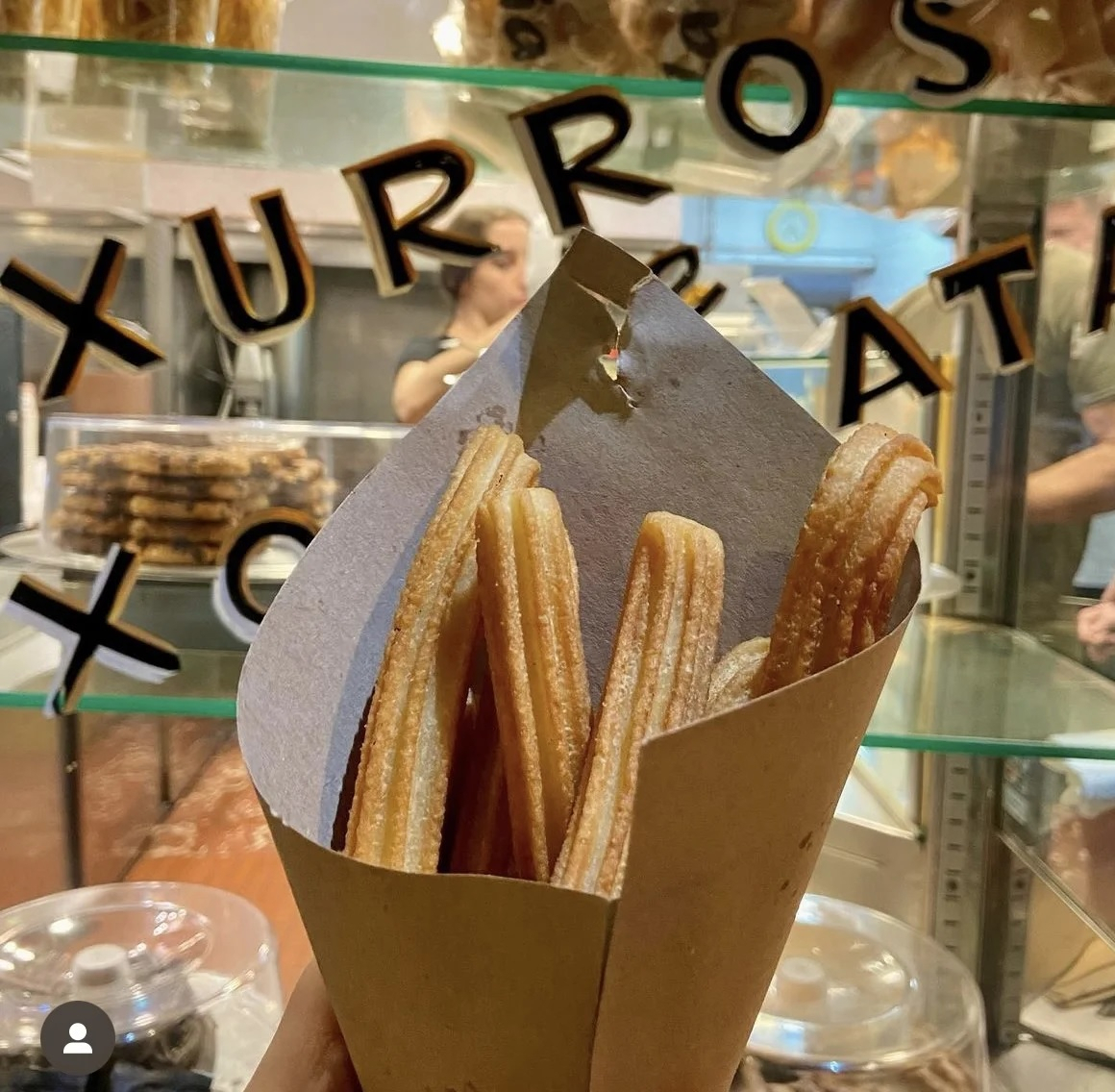
The Spanish churro is a breakfast object. It's thick, ridged, and eaten dunked into an almost pudding-like hot chocolate before 9am. The Korean 츄러스 doesn't play that role at all. It's a dessert cafe item, thinner, smaller, engineered to photograph well and pair with an iced latte around 3pm.
That reshaping isn't accidental. Korean dessert culture skews toward composition and shareability, and a foot-long deep-fried log doesn't fit an Instagram grid. Chains cut the length, narrowed the ridge, and shifted the eating occasion. What arrived as a heavy Iberian breakfast left as a light, sugar-coated 간식 that fits the same slot as macarons or croffles.
Street Churros and the 2012 Boom That Made Churros a Cafe Category
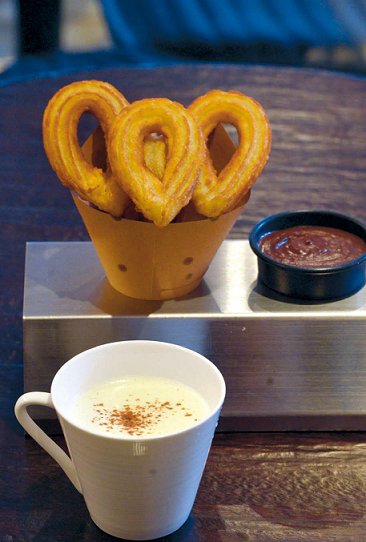
Street Churros (스트릿츄러스) launched in 2012 and became the single company most responsible for turning churros into a Korean category. Within a few years the chain crossed 150 locations, opened U.S. franchises in Los Angeles and New York, and locked in shelf presence at CGV cinemas, Lotte Cinema concession stands, and dozens of mall food courts.
The Street Churros formula wasn't invention, it was packaging. Fried on demand, tossed in cinnamon sugar or matcha, served with dips (Nutella, cream cheese, strawberry) that a Spanish churrería would consider heresy. That last part matters. The dip-based upsell doubles the ticket price and gives every visit a photo hook, which is exactly what an MZ세대 clientele signals value through.

Cinnamon-Sugar Won, and Chocolate Lost the Korean Palate
In Spain, the churro is basically a delivery mechanism for thick, bitter drinking chocolate. In Korea, chocolate barely made it onto the menu as a primary flavor. Walk the Street Churros counter today and cinnamon-sugar (시나몬 슈가) is the default coating, matcha is the seasonal pull, and chocolate appears mostly as a dipping sauce, not a coating.
There's a palate logic behind this. Korean dessert consumers historically skew away from dark bitter chocolate. The dominant sweet references are milk chocolate, cream, honey, red bean, and sweet potato, all on the softer, rounder end of the sugar curve. Push a 70 percent dark chocolate coating on a mass market snack and you lose the average customer within a bite. Cinnamon-sugar sidesteps that entirely, delivering warm spice and sweetness without the bitterness tax.
The 쫀득한 Chewy Interior That Korean Consumers Actually Want
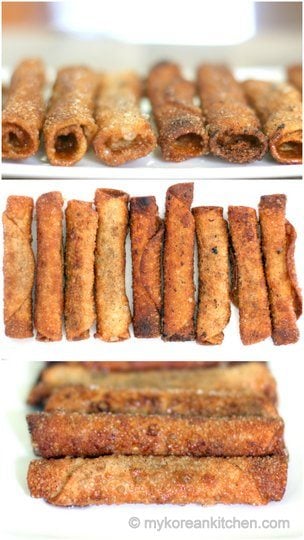
Ask a Korean customer what makes a good churro and 쫀득한 will come up before crispy will. That word doesn't have a clean English translation. It's the specific chewy, slightly bouncy texture of a well-made tteok or a fresh mochi, and Korean palates seek it out across a startling range of foods, from bagels to fried chicken skin to, yes, churros.
To hit that texture, many Korean churro shops blend rice flour (쌀가루) or glutinous rice flour into the standard wheat dough. The result is denser, chewier, and holds its bite even after five minutes on a table. A traditional Spanish churro would be considered underdone by a Korean pastry chef, since the crisp-outside, hollow-inside model reads as light and dry rather than satisfying. This is the same texture logic that made croffles (크로플) explode in 2020, and the same logic that keeps mochi donuts on cafe menus. Chewy is the through line, and Korean churros were engineered around it long before Western food media caught on.
The Mall Food Court Playbook Behind the Churros Chain Boom
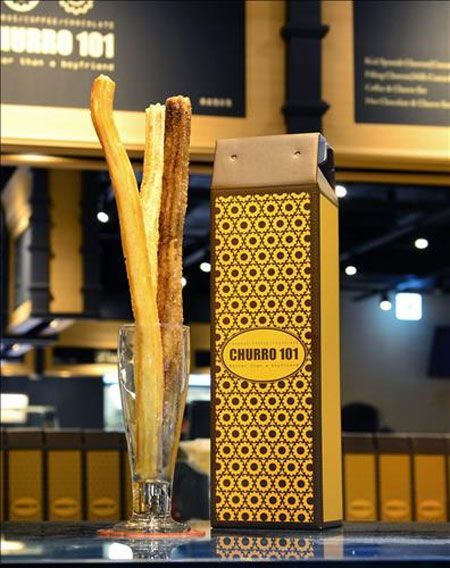
The Korean churros boom isn't just a food story, it's a real estate story. Street Churros, Churro 101, Dear Churros, and the wave of copycat brands that followed all optimized for a specific store footprint: three to five pyeong (about 10 to 16 square meters), one fryer, two staff, and one high-traffic doorway. That format slots neatly into mall food courts, cinema lobbies, and subway station commercial zones, all environments where per-square-meter rent is brutal but foot traffic is guaranteed.
Compare that with a full-service dessert cafe, which needs at least 15 pyeong to seat customers and pay three to four baristas. The churros kiosk is roughly one-quarter the rent burden with a much higher ticket velocity, since the average transaction takes under 90 seconds. That economic logic is why churros stalls colonized every large Korean shopping complex between 2013 and 2018, and it's why the brand structure survived even after the initial hype cooled. Chains that started as trend-driven food and beverage bets ended up as durable retail infrastructure, running quiet, dependable margins from tiny 매장 that nobody notices until they want a snack.
Explore Korean Snacks with Daebak
Love Korean food? Get authentic Korean snacks and ramen delivered straight to your door with the SnackFever Box by Daebak.


