


Table of Contents
Every Korean film and drama executive I have worked with over the last decade has the same private theory about food scenes. They are the cheapest, most measurable marketing lever in the entire K-content playbook. A single 15-second shot of Song Kang-ho slurping noodles in Parasite moved more Nongshim inventory in one week than a year of Chapagetti ad spend. A 삼겹살 (samgyeopsal) grill scene in Reply 1988 rewired how American home cooks think about Korean pork belly a full three years before COVID pushed K-food into every US supermarket. And when Park Seo-joon spoons up a bubbling clay pot of 순두부찌개 (sundubu jjigae) in Itaewon Class, the DanBam pub goes from prop to a real Seoul restaurant with a tourist waitlist. Recreating these food scenes at home is not just fandom cosplay. It is participating in the most efficient distribution mechanism K-content ever invented.
The K-drama food scene ROI Western brands still refuse to believe
Talk to anyone who works PPL at CJ ENM or the marketing team at Nongshim and they will confirm the same thing off record. Korean food scenes in dramas outperform paid TV placement by a factor most Western brand managers refuse to believe. The reason has to do with a specific quirk of how Korean audiences (and increasingly, global audiences on Netflix and Viki) discover food. When a hit drama shows a signature dish, Naver search volume for that dish spikes 200 to 400 percent within 48 hours and stays elevated for two to six weeks. YouTube 먹방 (mukbang) creators pile onto the same dish within 12 hours because they know the tag has just gone hot. That combined signal is what pulls the dish onto Home Plus shelves, Amazon Fresh, and eventually the H Mart weekly circular halfway across the world.
The industry mechanic that makes this scale is contract-based, not accidental. Multi-episode brand integration through CJ CheilJedang, Nongshim, and Ottogi is negotiated at least a year in advance of a tvN or Netflix Korea shoot. A Bibigo 만두 hero shot is not stumble-into-the-frame casual, it is a line item. The exception is when the writer specifically bakes a non-branded dish into the plot for emotional weight, which is exactly what happened with 부대찌개 in Reply 1988 and 순두부찌개 in Itaewon Class. Those dishes moved on story merit alone, which is why they hit harder with international viewers who tune out obvious PPL.
짜파구리 (Jjapaguri): the noodle Parasite turned into a permanent product line
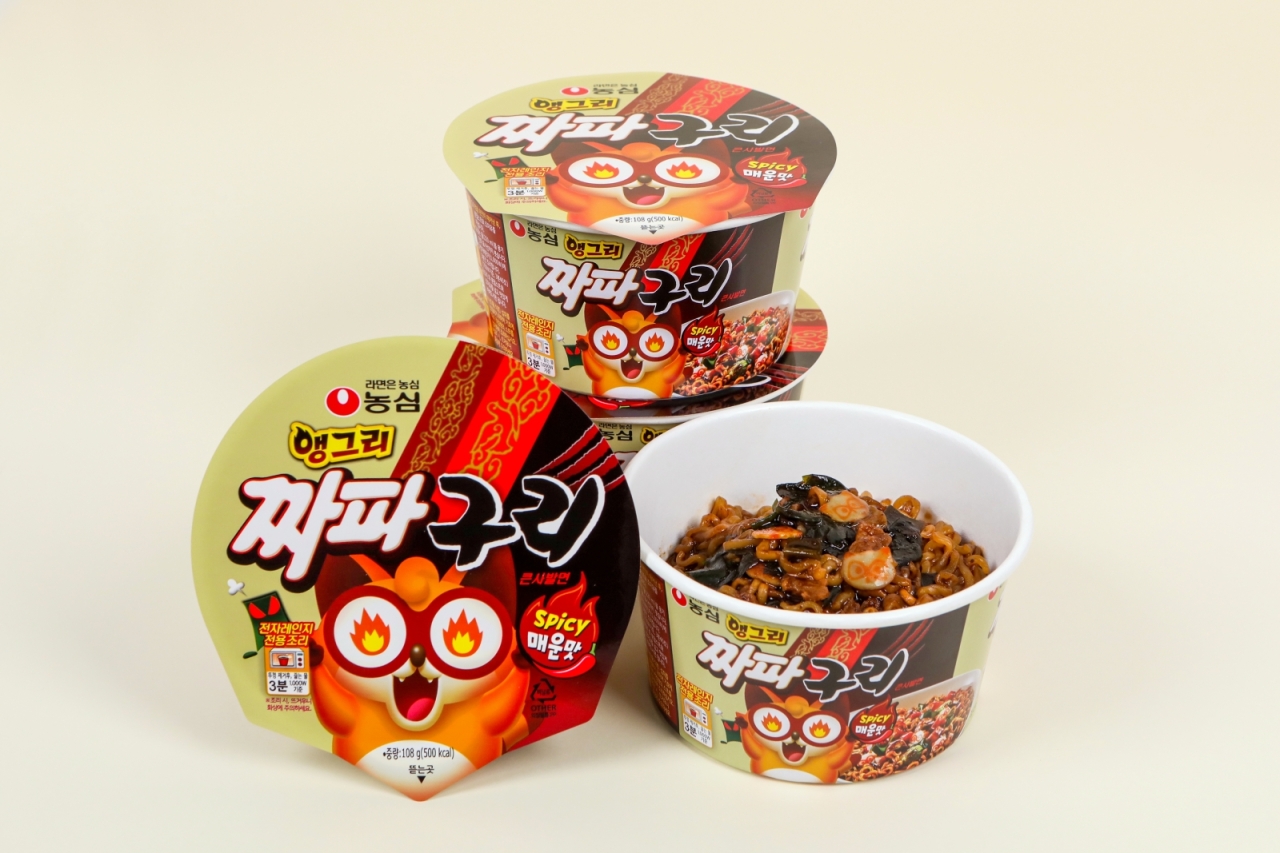
Let me be precise about what Bong Joon-ho actually did to Nongshim's balance sheet. In the week after Parasite swept the 2020 Oscars, combined 짜파게티 (Chapagetti) and 너구리 (Neoguri) sales jumped roughly 60 percent domestically and stayed elevated for months. Nongshim's own filings via The Korea Herald show ramen revenue crossed 2 trillion KRW for the first time in 2020, driven partly by the 짜파구리 halo and partly by pandemic pantry demand piling on top. Nongshim USA posted 26.5 percent year-on-year growth. Within eight weeks of the Oscar win, Nongshim launched an actual instant Chapaguri cup noodle with an "Angry" spicy variant specifically for the US and European retail wave. That is not a licensing deal, that is a product line spun up in a quarter because the internal Nongshim revenue model finally caught up to what the movie was doing.
What almost every Western food blog got wrong is treating 짜파구리 as a Parasite invention. It is not. Korean kids have been mixing 짜파게티 and 너구리 since the mid-1990s as a cheat code for "I want 자장면 flavor plus soup-noodle chew in a single pot." Bong Joon-ho weaponized a food hack that was already viral in 초등학교 lunchboxes and turned it into the movie's cleanest metaphor for class collision. The Park family orders it (aspirational, jajang noodles for kids), the housekeeper tops it with 한우 sirloin (a $30 upgrade the working class would never), and the Kim family gets ordered to make it in seven minutes flat. Every frame of that noodle carries the whole thesis of the movie. That is why the scene converted so hard commercially.
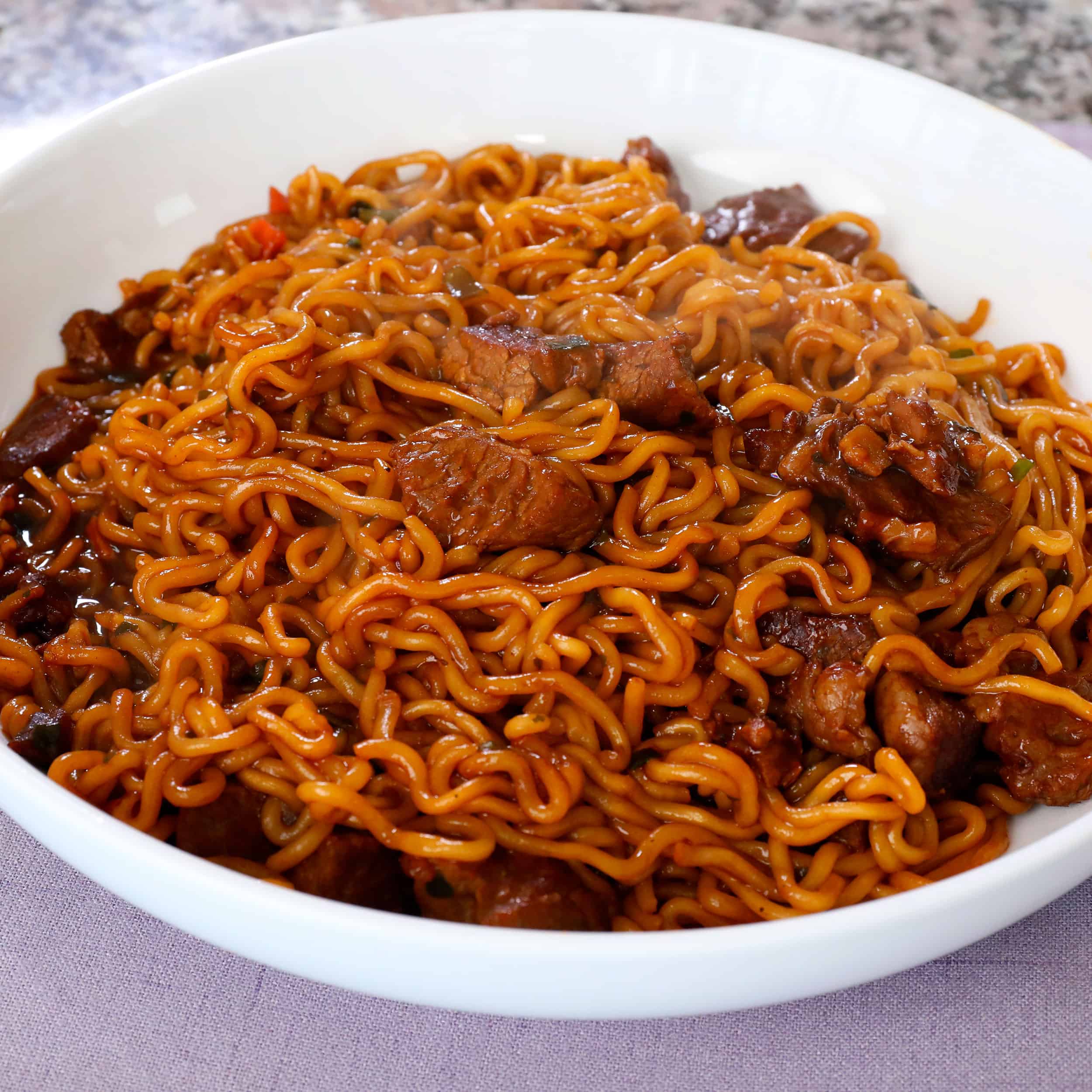
The recipe at home is embarrassingly simple, which is part of the appeal for post-Oscar audiences who Googled it that Monday. Boil one packet of Chapagetti and one of Neoguri together in 3 cups of water for 2 to 3 minutes. Drain but save 1 cup of noodle water. Return to pot with Chapagetti's black bean powder, half the Neoguri spice packet, and the seasoning oil. Mix. For the Parasite-accurate 한우 version, sear a ribeye cut into half-inch cubes with butter for 3 minutes and fold on top. Maangchi's version is the one most non-Korean home cooks copy. The appeal point Western food writers keep missing is not the flavor mash-up. It is the price sleight-of-hand. Two packets of 1,500 KRW instant noodles plus a $12 steak feels indulgent for less than $18, which is the class comedy of the movie built directly into the recipe.
삼겹살 (Samgyeopsal): how Reply 1988 normalized Korean BBQ for the Western home kitchen
Reply 1988 aired on tvN in late 2015 and did something the K-food export industry had been trying and failing to do for a decade. It normalized 삼겹살 as a home-cooking, family-communion dish for a Western audience that until then thought Korean BBQ was strictly a night-out group activity. The Ssangmun-dong neighborhood scenes where Deok-sun's family (Sung Dong-il, Lee Il-hwa) crowd around a portable gas burner and grill pork belly are the emotional backbone of the whole series. That scene template got recreated in every Korean-American household drama since, and the Seoul-inspired 삼겹살 restaurant chains in Manila, Singapore, and Los Angeles that opened between 2016 and 2020 all cite Reply 1988 as the reason customers were suddenly ready.

The industry insider read is that pre-Reply 1988, most non-Korean home cooks assumed 삼겹살 required a restaurant vent hood and a special grill. Reply 1988 quietly dismantled that assumption by showing families doing it on a cheap tabletop burner in a linoleum kitchen with the windows cracked. That normalization is why H Mart's frozen pork belly SKU count expanded significantly in the years after, and it is why Beyond Kimchee's home samgyupsal guide (which is genuinely the setup I would send a friend who has never done this) does not bother with fancy equipment. Holly Ford's home method is a cast iron skillet on a portable butane burner, thick-sliced fresh pork belly with no marinade, a bowl of 쌈장 (ssamjang), a pile of perilla leaves (깻잎), and Korean green onion salad (파무침) shredded thin with 고춧가루 and vinegar. Total setup cost is under $60 including the burner.
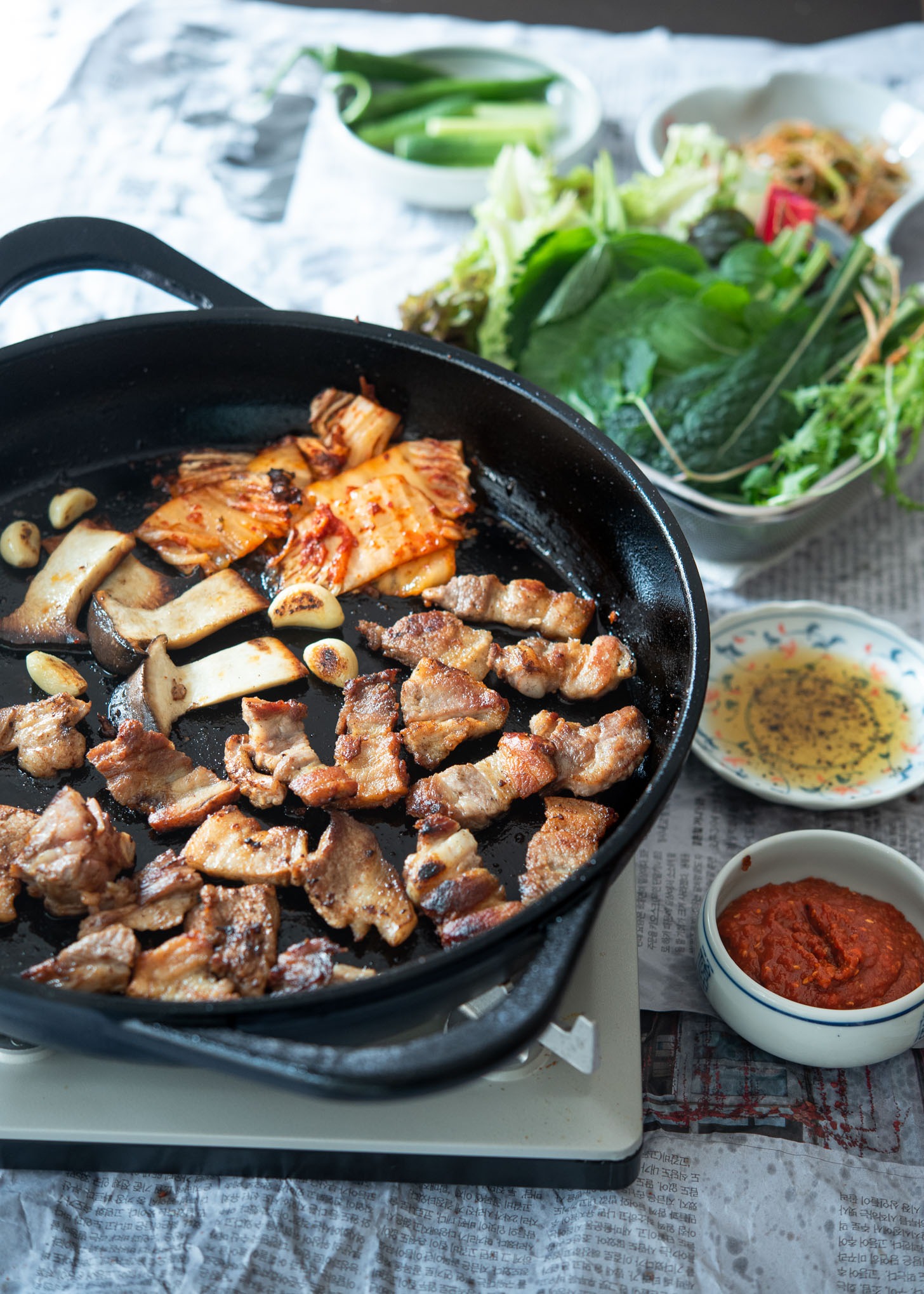
The appeal point Reply 1988 nailed and Western food coverage still under-explains is that 삼겹살 is Korea's most communal dish because everyone is forced to grill for someone else. There is always one person on grill duty and they are cooking for the whole table, then someone else takes over so grill-person can eat. That rotation is the family bonding mechanic disguised as dinner. It is the reason the Ssangmun-dong scenes hit so hard. The grill was the acting partner. Recreate this at home with a $30 portable burner and one skillet, add lettuce, kkaennip, ssamjang, and grilled garlic, and you have replicated 60 percent of the show's emotional wattage before anyone has touched the meat.
순두부찌개 (Sundubu jjigae): the Itaewon Class stew that runs DanBam's whole plot
Itaewon Class debuted on JTBC in early 2020 and made 순두부찌개 the most-Googled Korean stew of that Q1, full stop. The dish appears in Episodes 5, 7, and 16, and it is the dish Park Saeroyi (Park Seo-joon) uses to earn back the loyalty of his rival's chef in Episode 7. Kim Da-mi's character praises it as the dish that "spreads warmth through your body on a cold day," and by the finale, the pot on the DanBam stove is basically a co-star. What Korean cookbook copy tends to skip is that 순두부찌개 in the drama was written to signal exactly one thing. Saeroyi's philosophy that a small business can win by being obsessive about one dish. Every DanBam scene is a variation on that thesis, and the stew is the anchor.
The real-world outcome was that the fictional DanBam pub in Itaewon got recreated as an actual restaurant (registered under "Seoul Bam" on Korean maps but often called TanBam by the operators) and 순두부찌개 recipe searches on Naver spiked hard the week after Episode 7 aired. My Korean Kitchen's version by Sue is the one most global fans found through search that same week, and her recipe page has been the top English-language sundubu result ever since. The reason her recipe won is that she made the crucial call most English-language sundubu explainers skip. Use Korean chili oil, not just chili powder, and cook the aromatics first before the broth. That order is what gives DanBam-style 순두부찌개 its bright red color and the specific depth of flavor that photographs well on camera.
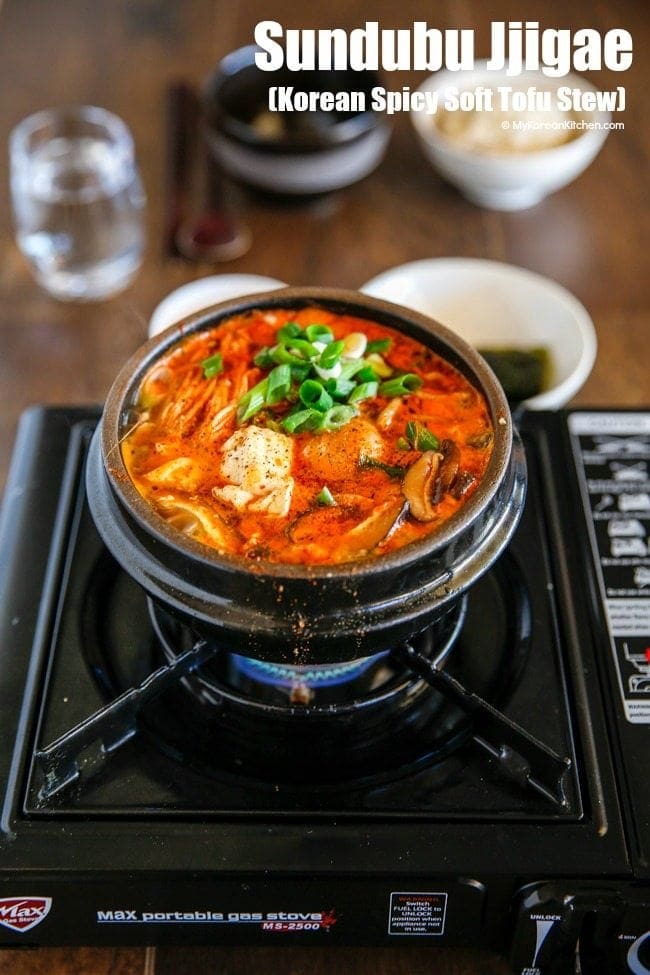
The 15-minute home version follows Sue's method almost line for line. Heat 1 tablespoon of Korean chili oil in a small pot over medium-low, stir in 2 tablespoons of 고춧가루 and a teaspoon of minced garlic for one minute (do not burn the chili, this is the whole game). Add cleaned littleneck clams and a handful of shrimp, splash of Korean fish sauce and 국간장, stir 30 seconds. Pour in 1.5 cups of anchovy-kelp dashi and boil hard for 3 minutes. Slide in a tube of soft 순두부 in big spoonfuls, drop enoki and thinly sliced shiitake, crack an egg on top, cover 2 minutes. Finish with green onion, sesame oil, and a crack of pepper. Serve in the pot, bubbling, with a bowl of rice. The appeal point for a non-Korean home cook is that this is the rare Korean stew where the ingredients are shockingly forgiving. Skip the seafood entirely and use kimchi and pork instead (Saeroyi's kimchi 순두부찌개 version in Episode 5), and it still works. The dish is designed to be a one-pan platform for whatever is in the fridge, which is exactly why DanBam served it every night.
Why these three dishes travel: the visual grammar of Korean food porn
The reason 짜파구리, 삼겹살, and 순두부찌개 all became global export dishes off the back of K-content is that they share a single visual property that most cuisines lack. They are language-independent. You do not need Korean or Bong Joon-ho subtitles to understand a slow-pour of black bean sauce over noodles, or the sizzle of pork belly hitting a grill, or the volcanic red bubble of a 뚝배기 hitting a table. The mechanics of the dish are the marketing. Compare this to French sauces, which require a sommelier's vocabulary to appreciate on camera, or Japanese kaiseki, which reads as expensive but not accessible. Korean stews and grills read as cook mechanics you can copy. That is why 먹방 as a genre took off from Korea specifically and not from any other food culture. The dish is the pitch.
The other reason these travel is that they are all designed around a home-kitchen constraint Korean grandmothers have optimized for a hundred years. One pot, high heat, big flavor, cheap ingredients. 짜파구리 is instant noodles. 삼겹살 is unmarinated pork belly. 순두부찌개 is broth plus tofu. None of the three requires a specialty pan, a temperature probe, or a technique from culinary school. That is not accidental, it is the actual reason Korean home cooking scaled globally in the 2016 to 2024 window. K-drama food scenes just gave the West permission to try them.
The one-run K-drama pantry that unlocks all three dishes
If this article convinces you to run one grocery mission, here is the exact list. One box of Chapagetti and one of Neoguri (Nongshim, both under $2 each, both in every H Mart or Weee!). One pack of thick-sliced fresh 삼겹살 (Trader Joe's carries a solid version now, but Korean grocery is better). One tube of soft 순두부 (Pulmuone brand is the freezer aisle standard). One tub of 고추장 (Chung Jung One or Wang), one bag of 고춧가루, one bottle of Korean chili oil (or make Sue's version at home), one packet of anchovy-kelp 다시팩, one bottle of 국간장 (this is the load-bearing seasoning across all three dishes, do not skip). Butter and one ribeye for the Parasite-accurate 짜파구리. Lettuce, 깻잎, and 쌈장 for the Reply 1988-style 삼겹살 wrap. Enoki mushrooms and a can of clams for Itaewon Class-grade 순두부찌개. Under $80 at any Korean grocery, and you are set for a full week of K-drama menu recreation.
The final Hallyu insider point I would give anyone starting this run is do not obsess over serving vessels. The Korean 뚝배기 is beautiful and it does hold heat, but a heavy cast iron pot from Target does 90 percent of the job. What matters is that the food arrives at the table bubbling. The visual of the bubble is the K-drama food scene. Recreate that, and the character of the dish shows up regardless of what dish it is served in.
Explore Korean Snacks with Daebak
Love Korean food? Get authentic Korean snacks and ramen delivered straight to your door with the SnackFever Box by Daebak.


