


Table of Contents
Korean summer heat is not the same as Western summer heat. It sits at 33°C with 85 percent humidity for weeks, and the country builds a very specific habit around ice: 아이스크림 pulled straight from the 편의점 (convenience store) freezer on the walk home, 빙수 (bingsu) at a café with a friend, 슬러시 (slushie) for schoolkids after class. This is not a special-occasion category. It is a daily-purchase category, and the industry that feeds it is bigger than most people outside Korea realize.
The $1.5 billion habit almost nobody outside Korea talks about
Korean 아이스크림 is a highly consolidated industry. Three players do most of the work: Lotte Confectionery, Binggrae, and Haitai (now under the Lotte umbrella after the 2019 Haitai Confectionery deal). Together they clear roughly $1.5 billion in annual sales, and the freezer chest at any GS25, CU, or 7-Eleven is essentially their showroom.
Here is the mechanic outsiders miss. These companies do not treat ice cream as a seasonal category. They treat it as a permanent-fixture SKU that has to earn its slot in the freezer year-round, because 편의점 owners sign volume-based supply contracts and rotate poor performers ruthlessly. That is why price points on classic bars have barely moved for 15 years. When a Melona still hits the 1,300 won line in 2026, that is not inertia. It is protected pricing to keep the daily-purchase habit intact. Break the price, break the habit.
빙수: how a red bean dessert became a $100 hotel headliner
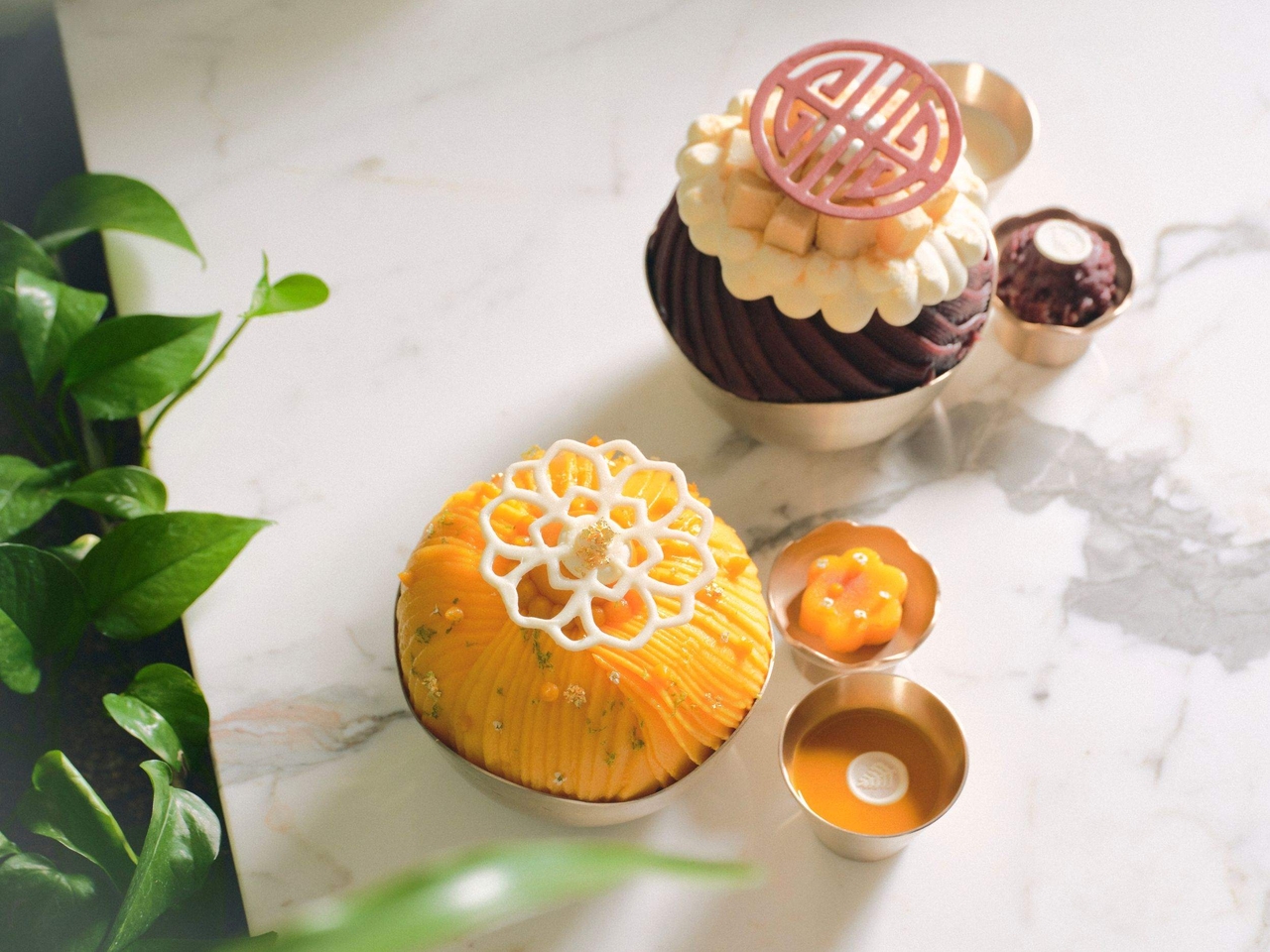
The 빙수 evolution is one of the most instructive stories in modern Korean food culture. Through the 1990s, 팥빙수 was the default: crushed water ice, canned 팥 (red bean), chopped fruit, a squeeze of condensed milk, and that was the whole spec. Then in 2013 a chain called 설빙 (Sulbing) opened a Busan pilot store, swapped water ice for shaved frozen milk (눈꽃빙수, snowflake bingsu), and put a mango tornado on the menu at 12,000 won. That one product-format change reset the entire dessert category.
By 2018 Sulbing had crossed 500 locations, and every hotel in Seoul rushed out a "premium bingsu" line. Today the Shilla Seoul's apple mango bingsu prices at 130,000 won, and the Four Seasons goes higher at 149,000 won with a two-mango base, a hollow mango sphere that cracks open at the table, and edible garnishes. The appeal is not the ice. It is the same experiential-consumption logic driving BTS meet-and-greets and Shilla hotel high tea: young Koreans in their 20s and 30s are paying for the story they get to post, not the calorie count. Inha University's Lee Eun-hee calls this "small luxury" behavior, and the bingsu category is basically the poster child.

Why Melona (1992) became the export weapon
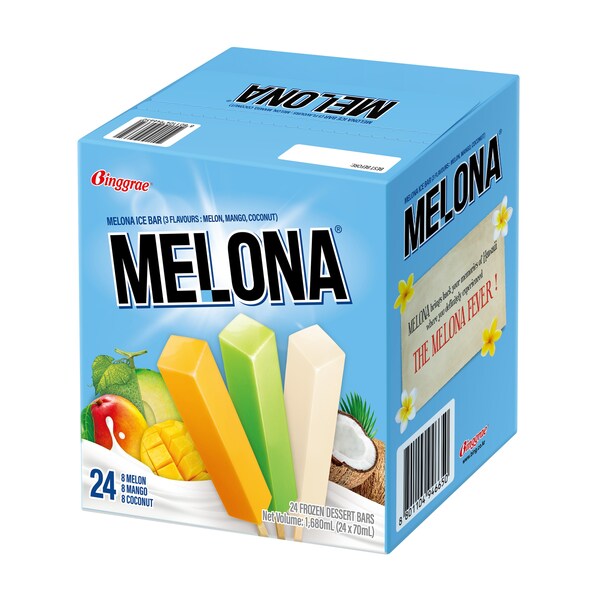
Binggrae released Melona in 1992 with a very deliberate bet. Cantaloupe and honeydew melon were rare enough in Korea in the early 1990s to feel almost imported-luxury, and the honeydew melon flavor essentially did not exist in the Western frozen dessert vocabulary. Binggrae's R&D team spent 1991 in Southeast Asia figuring out fruit availability and flavor benchmarks. The launch year cleared 21 billion won in sales, which for a single SKU in the Korean market at the time was massive.
What the industry noticed is what happened next abroad. The smooth, creamy, almost soft-serve texture on a stick was different enough from Western ice pops (which are typically icy and water-based) that Korean-American families in Hawaii and California started buying it as a nostalgia SKU in the mid-1990s. Binggrae leaned in, opened a San Francisco subsidiary in 2016, and today Melona holds roughly 70 percent of Korean ice bar sales in the U.S., moves through H-Mart, Weee, Costco, and Amazon, and is exported to over 30 countries. The lesson every Korean food exporter still cites internally: a flavor that feels familiar in Asia but novel in the West is worth more than a "premium Asian" spin on an existing Western flavor. Melona did not translate green tea for Americans. It sold them something they had never tasted before.
싸만코 and the rest of the 편의점 freezer canon
싸만코 (Samanco), released by Binggrae in 1990, is a fish-shaped ice cream sandwich modeled on 붕어빵, the winter carp-shaped street pastry. Vanilla ice cream, a thin layer of 팥, wafer shell. The reason Samanco works as a year-round SKU rather than just a summer bar is that the wafer stays crisp in the freezer, which most sandwich formats cannot pull off. It is the rare Korean ice cream that also sells hard in winter, when Koreans are eating the hot 붕어빵 version outdoors.
The rest of the freezer canon is essentially a museum of Korean confectionery R&D from the 1970s and '80s. 누가바 (Nougat Bar, 1974) with a milk-chocolate coating over vanilla. 비비빅 (B.B.Big, 1975), the red bean bar that older Koreans still buy on instinct because their mothers introduced it to them as a first popsicle. 바밤바 (Babam Bar, 1976) with roasted chestnut ice cream, tapping into 군밤 (winter night-market roasted chestnut) nostalgia. 돼지바 (Dwe Ji Bar, 1983), literally "Pig Bar," with strawberry jam center and a cookie-crumb chocolate crust. 캔디바 (1985) with a soda-flavored shell aimed at kids. And 월드콘 (World Cone, 1986), whose sales still climb year over year, largely because the extra chocolate layer at the bottom of the cone stops the drip, a design trick Western cone brands still have not copied at scale.

The 500원 슬러시 that anchors every 편의점 summer
The slush machine at the front of a GS25 or CU is one of the most protected price points in Korean retail. 슬러시 has held between 500 and 1,000 won for over 15 years, and 편의점 franchise owners keep it there on purpose. Here is the mechanic: a middle-schooler walks in on a hot afternoon for a 슬러시, spends 500 won, and then reflexively adds a bag of 새우깡 or a 삼각김밥 (triangle kimbap) at 1,500 won because the basket is already open. The 슬러시 is the anchor draw. The rest of the basket is the actual profit.
This is why during Korea's 2022 to 2023 inflation waves, when almost every 아이스크림 SKU quietly moved up 10 to 15 percent, 슬러시 pricing held flat. The same logic protects Melona. Category anchors do not adjust. Everything else does.
Why these treats age so well in Korea (and abroad)
What Western observers miss about Korean ice cream is the emotional layer. The 30-something Koreans buying 비비빅 in 2026 are not chasing flavor. They are buying nostalgia from their elementary school 하교길 (walk home). The 20-year-old buying 월드콘 is doing it because they saw their parents drop it into a cart in the '90s. Korean confectionery marketing knows this and leans in hard: Binggrae runs 응답하라 (Reply)-style throwback campaigns every summer featuring 1990s idols, and Lotte does the same with 월드콘 packaging redesigns that nod to old wrappers. The reason a 40-year-old ice cream bar can still command prime shelf space in a 편의점 is that it is not competing with new SKUs on taste. It is competing on emotional resonance, which is a much slower market to move.
For the Korean-American and global diaspora market, that emotional layer transfers directly. A Melona at H-Mart is not really a popsicle purchase. It is a Sunday afternoon childhood memory, priced at $1.50. Binggrae figured that out earlier than most Korean food exporters, and it is still the reason Melona keeps expanding shelf space in Costco Australia, Albert Heijn in the Netherlands, and Tang Frères in France. Sell the memory. The ice cream comes with it.

Explore Korean Snacks with Daebak
Love Korean food? Get authentic Korean snacks and ramen delivered straight to your door with the SnackFever Box by Daebak.


