


Table of Contents
If pajeon is Korea's everyday comfort food, haemul pajeon is its festive, indulgent cousin. Loaded with squid, shrimp, oysters, and clams alongside thick ropes of green onion, this crispy seafood pancake is a must-order at Korean BBQ restaurants, street food stalls, and pojangmacha (outdoor drinking tents) across the country. Paired with a cold glass of makgeolli on a rainy afternoon, there is nothing quite like it.
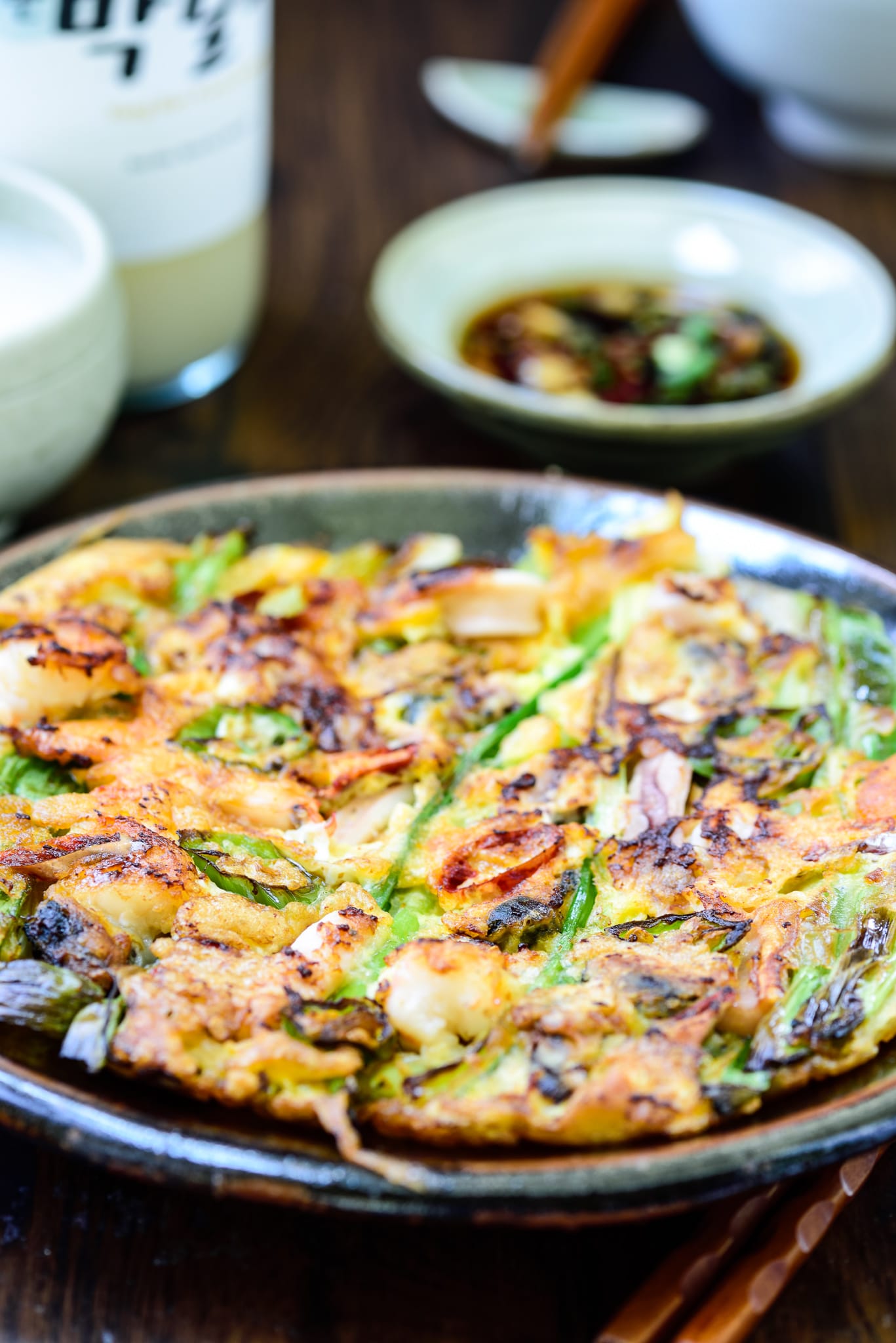
What Is Haemul Pajeon?
Haemul pajeon (해물파전) is a Korean savory pancake that combines the classic pajeon (scallion pancake) with a generous mix of seafood. The word haemul (해물) means seafood in Korean, while pajeon (파전) refers to the scallion-based pan-fried pancake. The result is a substantial dish that functions as an appetizer, side dish, or even a light meal. The batter is thinner than most Western-style pancakes, allowing the seafood and green onion to shine through, and the whole pancake is cooked in a generous amount of oil until both sides are deeply golden and crispy. The interior stays slightly chewy and moist thanks to the natural juices released by the seafood as it cooks. It is sliced into pieces and served immediately with a soy and vinegar dipping sauce.
From Busan to Every Korean Table
The most celebrated version of haemul pajeon comes from Dongnae, a district in Busan, Korea's southern port city. Dongnae pajeon (동래파전) is a regional specialty with a longer history than the modern version: it traditionally features a thicker, more custardy batter, layers of beef, seafood, and vegetables, and green onion pieces arranged decoratively on top. Because Busan sits on the coast, access to fresh seafood has always been excellent, and the Dongnae style reflects that abundance. Today, haemul pajeon has spread far beyond Busan and is found on menus from Seoul to New York. But ordering it fresh from a street stall in Busan on a drizzly evening remains one of the quintessential Korean food experiences.
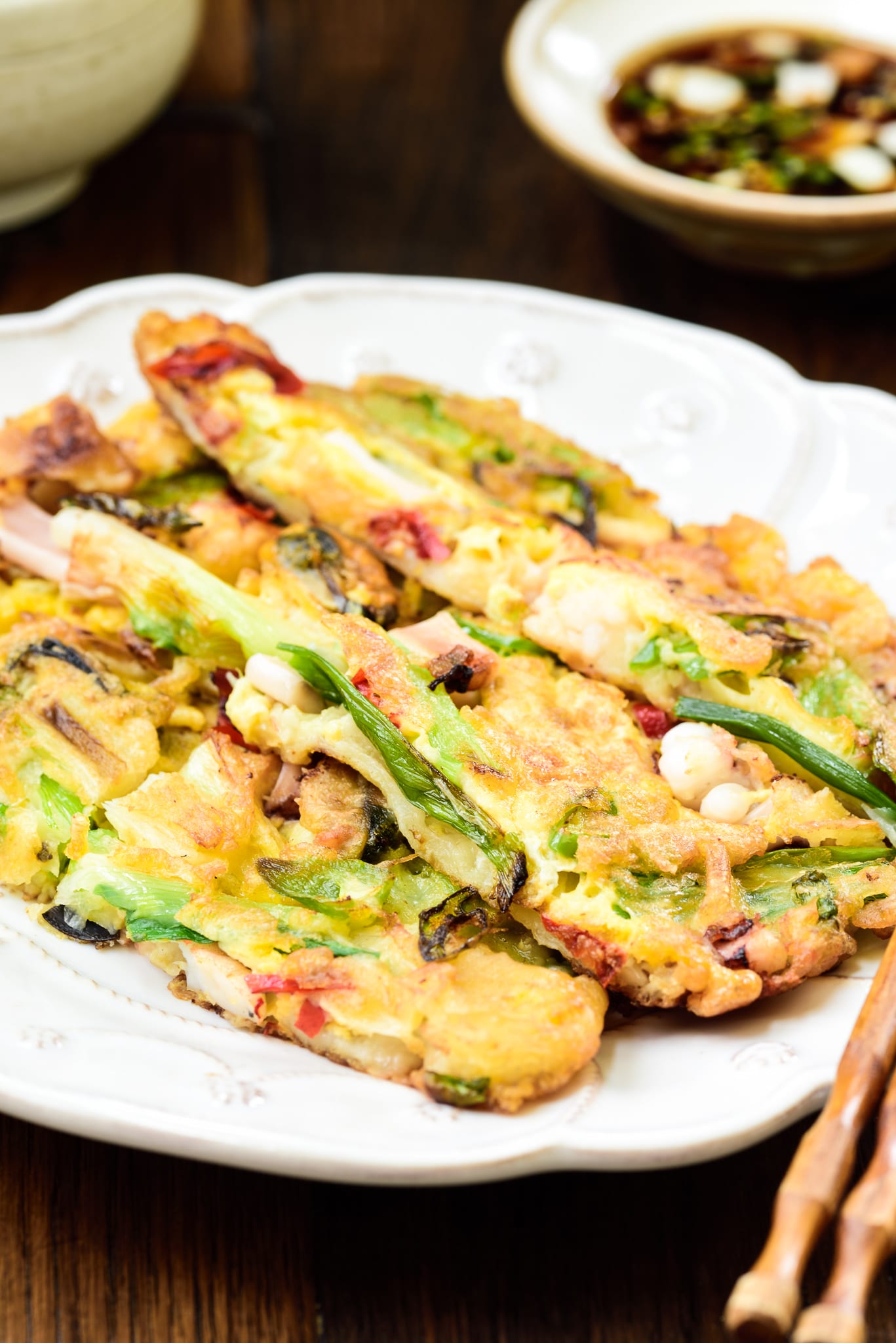
The Best Seafood to Use
Haemul pajeon is wonderfully flexible when it comes to the seafood component. The most common combination includes squid (cut into rings or bite-sized pieces), peeled shrimp, oysters, and clams. Squid adds a satisfying chew and mild brininess, shrimp bring sweetness and color, oysters contribute richness, and clams give a clean ocean flavor. Mussels work well too, especially if fresh. You do not need to use all of these: many home cooks use just two or three types of seafood, and some simply use a pre-mixed frozen seafood blend for convenience. The key is to not add too much seafood, as an overloaded pancake can be difficult to keep together and may not cook evenly. Aim for a ratio where the seafood is visible and plentiful but the batter still holds everything in a coherent pancake.
The Batter: How to Get It Crispy Every Time
The batter for haemul pajeon is the difference between a soggy, sad pancake and a shatteringly crispy one. Most recipes combine all-purpose flour with a starch (potato starch or rice flour) in a roughly 2-to-1 ratio, which lightens the batter and promotes crisping. The liquid should be ice cold: some cooks use chilled water, while others swear by a cold sparkling water or even a small amount of beer for extra lightness. The batter should be mixed minimally, just until combined, since overmixing develops gluten and makes the pancake tough rather than tender. Oil is essential: use a neutral oil and add enough to generously coat the pan. Let the pancake cook undisturbed over medium-high heat until the edges look set and golden before attempting to flip. Pressing down on the pancake after flipping helps the interior cook through evenly.
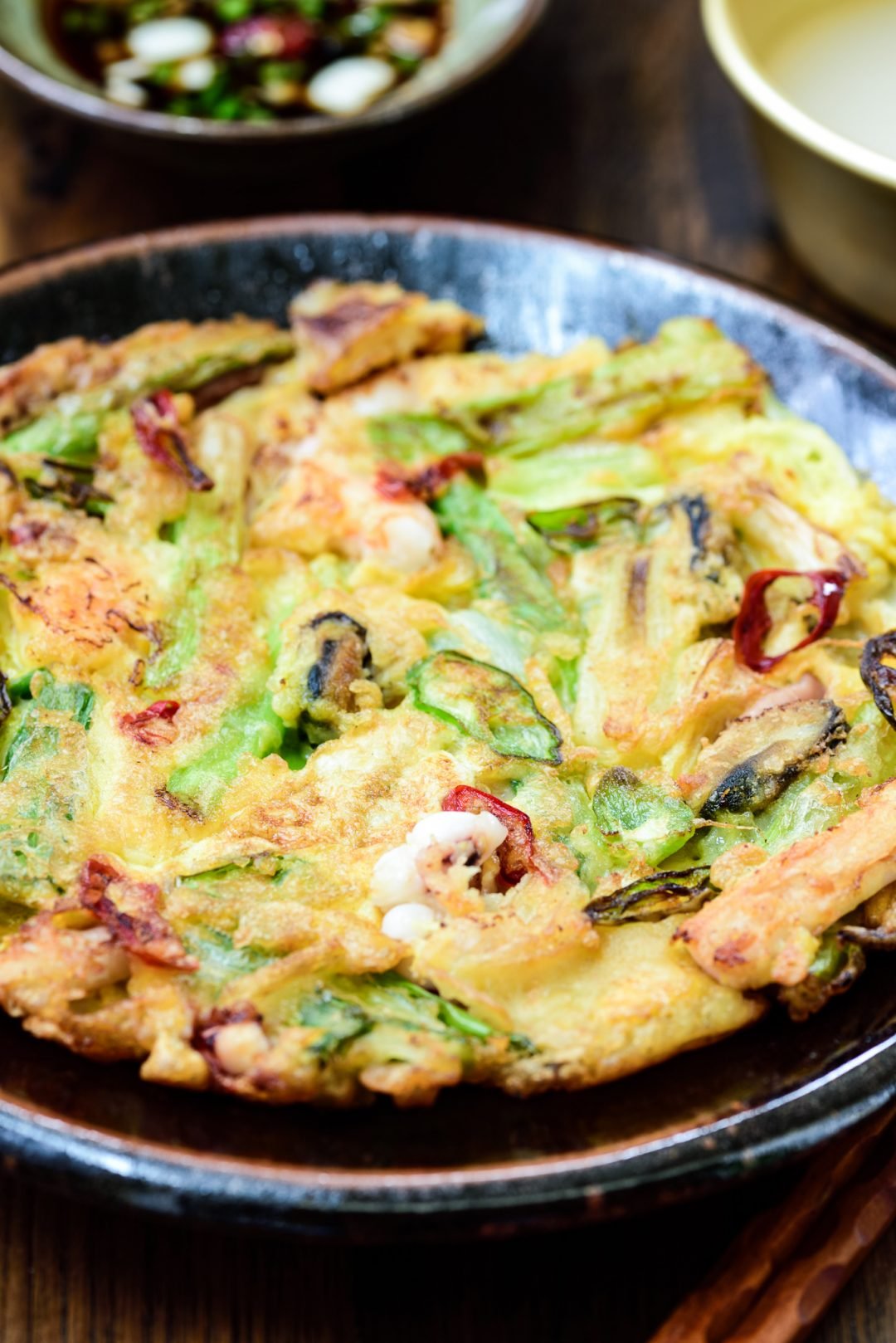
How to Make Haemul Pajeon at Home
Start by preparing your seafood: pat everything dry with paper towels, as excess moisture is the enemy of a crispy pancake. Make the batter by whisking together all-purpose flour, potato starch, a beaten egg, and cold water until just combined. Season with salt and a pinch of white pepper. Scatter the seafood and green onion pieces into the batter. Heat a non-stick or cast-iron skillet over medium-high heat, add 2 to 3 tablespoons of neutral oil, and pour in the batter, spreading it into an even round. Cook for 3 to 4 minutes until the bottom is golden, then carefully flip using two spatulas if needed, and cook the other side for another 3 minutes. For the dipping sauce, mix soy sauce, rice vinegar, a little sesame oil, gochugaru, and sliced green onion. Serve the pancake immediately, cut into wedges, with the dipping sauce on the side.
Explore Korean Snacks with Daebak
Love Korean food? Get authentic Korean snacks and ramen delivered straight to your door with the SnackFever Box by Daebak.


